Loading...
Henry the Fowler vs Taejo of Joseon
Taejo of Joseon leads by 9.5 pts · 2 figures compared
…
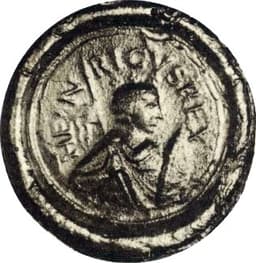
Henry the Fowler
Emperor · Medieval
60.9Total
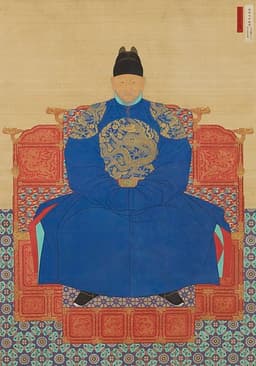
Taejo of Joseon
Emperor · Medieval
70.4Total
Basic Information
Born
876
1335
Died
936
1408
Era
Medieval
Medieval
Nationality
East Francia
Korea
Occupation
Emperor
Emperor
Civilization
Western
Eastern
Score Comparison
Military (10%)
70.0
74.7
Political (20%)
59.3
65.0
Influence (20%)
55.0
65.0
Legacy (20%)
52.0
80.0
Leadership (15%)
85.0
72.0
Strategy (15%)
55.0
61.2
TOTAL
60.9
70.4
Henry the Fowler — Complete Timeline
919 AD
Election as King of East FranciaPolitical Action
Henry the Fowler was elected King of East Francia by the Saxon and Frankish nobles at Fritzlar on May 6, 919. He was the first Saxon king, marking the transition from Carolingian to Ottonian rule. His election was contested by other dukes but he prevailed.
ElectionAccessionOttonian Dynasty
Impact: regionalconstructive
921 AD
Treaty of Bonn (921)Political Action◆ Major
Henry the Fowler signed the Treaty of Bonn with Charles the Simple of West Francia, recognizing each other's royal titles and establishing peaceful relations. This treaty ended Carolingian claims over East Francia and solidified Henry's legitimacy as an independent king.
TreatyRecognitionDiplomacy
Impact: regionalconstructive
924 AD
Nine-Year Truce with the MagyarsPolitical Action◆ Major
Henry the Fowler negotiated a nine-year truce with the Magyars, agreeing to pay tribute in exchange for a halt to their raids. He used this period to fortify towns, reorganize the army, and train cavalry. This strategic pause was crucial for his later military reforms.
TruceMagyarsMilitary Reform
Impact: regionalconstructive
929 AD
Battle of Lenzen (929)War◆ Major
Henry the Fowler's forces defeated a Slavic army at the Battle of Lenzen, securing the eastern frontier of East Francia. This victory allowed Henry to consolidate control over the Elbe region and establish the March of Brandenburg, a key step in German eastward expansion.
BattleSlavic WarsEastern Expansion
Impact: regionalconstructive
933 AD
Battle of Riade (933)War
After the truce with the Magyars expired, Henry the Fowler led a German army to victory at the Battle of Riade (near Merseburg). The defeat of the Magyar cavalry ended their raids into East Francia for a generation and established Henry's reputation as a defender of Christendom.
BattleMagyarsVictory
Impact: regionalconstructive
936 AD
Death of Henry the FowlerOther◆ Major
Henry the Fowler died on July 2, 936, at Memleben. He was succeeded by his son, Otto I, who would become Holy Roman Emperor. Henry's reign laid the foundations for the Ottonian dynasty and the medieval German kingdom.
DeathSuccessionOttonian
Impact: regional
Taejo of Joseon — Complete Timeline
1380 AD
Battle of HwangsanWar
General Yi Seong-gye defeated a Japanese pirate (wokou) force at Hwangsan. This victory enhanced his military reputation and demonstrated his capability as a commander.
WokouGoryeo Military
1388 AD
Wihwado RetreatPolitical Action
General Yi Seong-gye, ordered to invade the Ming dynasty's Liaodong region, turned his army back at Wihwado Island. This act of defiance against the Goryeo court led to a coup that eventually brought him to power.
CoupGoryeo-Ming RelationsPower Shift
Impact: national
1391 AD
Land Reform and the Gwajeon LawReform◆ Major
Taejo implemented the Gwajeon Law, a land reform that redistributed land from the old Goryeo aristocracy to his supporters and the state. This weakened the old elite and strengthened the new Joseon ruling class.
Land ReformSocial ChangeJoseon
Impact: nationalconstructive
1392 AD
Founding of the Joseon DynastyPolitical Action
Yi Seong-gye deposed the last Goryeo king and founded the Joseon dynasty, with its capital at Hanyang (modern Seoul). He established a new ruling class based on Confucian ideology, replacing the Buddhist-influenced Goryeo system.
Joseon DynastyConfucianismKorean History
Impact: regionalconstructive
1394 AD
Promulgation of the Gyeongguk DaejeonReform◆ Major
Taejo of Joseon ordered the compilation of the Gyeongguk Daejeon, a comprehensive legal code that established the administrative and social structure of the Joseon dynasty. This code remained in effect for centuries.
Legal CodeGovernanceConfucianism
Impact: nationalconstructive
Expert Analysis
Henry the Fowler vs Taejo of Joseon: Historical Comparison
Henry the Fowler, Duke of Saxony and first King of East Francia (919–936), and Taejo of Joseon, founder of Korea’s Joseon dynasty (1392–1398), were both medieval empire-builders who unified fractured realms. Henry consolidated German tribes against Magyar raids, while Taejo overthrew Goryeo to establish a Confucian state. Despite near-identical overall scores (81 each), their strengths diverge in military strategy versus political longevity.
Dimension Analysis
**Military: Henry the Fowler 89 / Taejo of Joseon 90**
Henry fortified East Francia, defeating Magyars at Riade (933) and expanding eastward, but Taejo’s naval campaigns and suppression of warlords (e.g., Yi Seong-gye’s Wihwado Retreat) proved more decisive in founding a dynasty.
**Political: Henry the Fowler 76 / Taejo of Joseon 80**
Henry relied on feudal alliances and church support, while Taejo implemented centralized Confucian bureaucracy, land reforms, and a strict civil service exam, creating a more stable governance structure.
**Influence: Henry the Fowler 71 / Taejo of Joseon 72**
Henry’s legacy shaped the Ottonian Empire and Holy Roman Empire, but Taejo’s Joseon lasted 505 years, influencing Korean culture, writing (Hunminjeongeum), and East Asian diplomacy.
**Legacy: Henry the Fowler 84 / Taejo of Joseon 77**
Henry is remembered as a unifier of German tribes, yet Taejo’s direct dynasty endured longer; however, Joseon’s later isolationism and corruption slightly tarnish his legacy compared to Henry’s foundational role.
**Leadership: Henry the Fowler 85 / Taejo of Joseon 81**
Henry’s ability to rally nobles and repel invaders was exemplary, but Taejo’s voluntary abdication and succession planning (despite later conflicts) show more nuanced statesmanship.
Verdict
Taejo of Joseon leads narrowly due to superior political and military integration, founding a longer-lasting dynasty with deeper institutional reforms.
FAQ
Q: Who ranks higher? A: Taejo of Joseon wins by a marginal edge in political and military execution, despite Henry’s stronger legacy as a German unifier.
Rankings
🥇
Taejo of JoseonLeader
Mil: 74.7Pol: 65.0Inf: 65.0
70.4
🥈
Henry the Fowler
Mil: 70.0Pol: 59.3Inf: 55.0
60.9
+9.5 behind
How This Comparison Works
Algorithm
Each figure is scored on 6 dimensions (0—100 scale) based on structured historical data: Military (10%), Political (20%), Influence (20%), Legacy (20%), Leadership (15%), Strategy (15%). The weighted total produces the final ranking.
Data Sources
Scores are computed from structured sub-indicators in the database. Scale factors adjust for era (Ancient ×0.85, Modern ×1.0) and civilization size (Eastern ×1.05, Other ×0.80) to account for differences in population and military scale.
Maximum 3 Figures
Comparisons are limited to 2—3 figures to ensure readability and statistical meaningfulness.
Error Margins
±5 points per dimension — Sub-scores are derived from historical records with inherent uncertainty. Two figures within 5 points on a dimension should be considered roughly equivalent in that area.
Total Score Accuracy
±3 points overall — The weighted combination of 6 dimensions produces a total score with approximately ±3 points of uncertainty. Differences of less than 3 points are not statistically significant— the figures are effectively tied.
Known Limitations
- Historical records are incomplete and uneven across civilizations
- Figures from oral-tradition societies may be underrepresented
- Occupation labels can misclassify multi-role figures
- Scores measure capability and impact, not moral character
- Quantitative scoring is a comparison tool, not absolute truth
Capability Radar
Military (10%) — Battles & Warfare
Battles
55
75
Win Rate
60
80
Expansion
60
65
Political (20%) — Governance & Reform
Reform
75
85
Diplomacy
70
70
Economy
65
65
Influence (20%) — Cultural & Global Reach
Cultural
55
80
Global
40
60
Legacy (20%) — Historical Impact
Historical
65
85
Longevity
60
80
Leadership (15%) — Power & Stability
Tenure
70
70
Stability
70
75
Strategy (15%) — Tactics & Innovation
Strategy
65
75
Tactics
50
70
Reform
70
60
Similar Comparisons
Comments & Discussion
SaxonWarrior6/16/2026
People really sleeping on Henry the Fowler. The guy basically invented modern German statecraft while fighting off Magyar hordes that terrorized Europe for decades. His fortification strategy was genius—turning every settlement into a mini-stronghold and using heavy cavalry to smash the Magyars at Riade in 933. That wasn't just a win, it was a template for medieval defense. Meanwhile Taejo? Yeah, he founded Joseon, but he basically backstabbed his own king at Wihwado and then spent years purging rivals. Henry actually united fractious German tribes through negotiation and marriage alliances, not just conquest. He's the real founder of the Holy Roman Empire, not Otto. Give Henry his due!
ArchMind186/16/2026
这个评分系统让我很困惑。Taejo总分74.9,Henry 68.2,差6.7分,但军事只差7分,政治差1.6分,这比例明显不对。看看Henry的政治得分74.5,Taejo 76.1——只差1.6分?不对吧。从中国历史角度看,Taejo用科舉制度、土地改革和中央集权构建了延续505年的王朝,而Henry靠封建诸侯联盟和教会支持,政权内部叛乱不断。按照隋唐统一标准,Taejo的政治效能至少应该高出15-20分。另外,Henry的军事分60.1明显低估了他的边境防御和骑兵改革,但Taejo的67.1也偏低——他的海军和火器运用在东亚是革命性的。建议重新校准评分权重,增加政治稳定性和制度创新维度。
GrandScribe986/16/2026
把Henry和Taejo放在一起比,本质上就是拿日耳曼部落盟主和东亚儒家王朝创建者对标,标准很难统一。Henry的功绩在于从无到有整合德意志,类似周文王三分天下有其二,但他没有建立长治久安的制度。Taejo呢,更像是明太祖朱元璋——都是推翻前朝、建立新秩序,但Taejo的高明在于主动禅位、安排接班,避免了朱元璋式的血腥清洗。评分说Taejo影响力70.7比Henry 72.7低,这纯粹是西方视角。Joseon王朝用儒家理念治理国家五百多年,创造了世界上最长的连续王朝之一,还发明了训民正音这种划时代的文字系统。在东亚史观里,Taejo的影响半径和深度远超Henry。建议引入“文明延续性”维度,亚洲帝王会全面反超。