Loading...
Henry the Fowler vs Suleiman the Magnificent
Suleiman the Magnificent leads by 12.3 pts · 2 figures compared
…
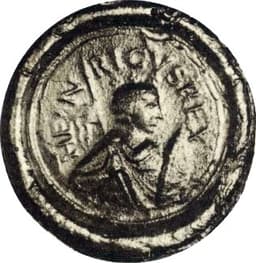
Henry the Fowler
Emperor · Medieval
60.9Total
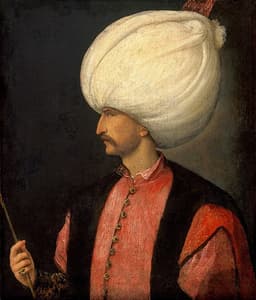
Suleiman the Magnificent
Emperor · Medieval
73.2Total
Basic Information
Born
876
1494
Died
936
1566
Era
Medieval
Medieval
Nationality
East Francia
Ottoman Empire
Occupation
Emperor
Emperor
Civilization
Western
Middle Eastern
Score Comparison
Military (10%)
70.0
85.0
Political (20%)
59.3
78.0
Influence (20%)
55.0
72.0
Legacy (20%)
52.0
68.0
Leadership (15%)
85.0
72.0
Strategy (15%)
55.0
72.0
TOTAL
60.9
73.2
Henry the Fowler — Complete Timeline
919 AD
Election as King of East FranciaPolitical Action
Henry the Fowler was elected King of East Francia by the Saxon and Frankish nobles at Fritzlar on May 6, 919. He was the first Saxon king, marking the transition from Carolingian to Ottonian rule. His election was contested by other dukes but he prevailed.
ElectionAccessionOttonian Dynasty
Impact: regionalconstructive
921 AD
Treaty of Bonn (921)Political Action◆ Major
Henry the Fowler signed the Treaty of Bonn with Charles the Simple of West Francia, recognizing each other's royal titles and establishing peaceful relations. This treaty ended Carolingian claims over East Francia and solidified Henry's legitimacy as an independent king.
TreatyRecognitionDiplomacy
Impact: regionalconstructive
924 AD
Nine-Year Truce with the MagyarsPolitical Action◆ Major
Henry the Fowler negotiated a nine-year truce with the Magyars, agreeing to pay tribute in exchange for a halt to their raids. He used this period to fortify towns, reorganize the army, and train cavalry. This strategic pause was crucial for his later military reforms.
TruceMagyarsMilitary Reform
Impact: regionalconstructive
929 AD
Battle of Lenzen (929)War◆ Major
Henry the Fowler's forces defeated a Slavic army at the Battle of Lenzen, securing the eastern frontier of East Francia. This victory allowed Henry to consolidate control over the Elbe region and establish the March of Brandenburg, a key step in German eastward expansion.
BattleSlavic WarsEastern Expansion
Impact: regionalconstructive
933 AD
Battle of Riade (933)War
After the truce with the Magyars expired, Henry the Fowler led a German army to victory at the Battle of Riade (near Merseburg). The defeat of the Magyar cavalry ended their raids into East Francia for a generation and established Henry's reputation as a defender of Christendom.
BattleMagyarsVictory
Impact: regionalconstructive
936 AD
Death of Henry the FowlerOther◆ Major
Henry the Fowler died on July 2, 936, at Memleben. He was succeeded by his son, Otto I, who would become Holy Roman Emperor. Henry's reign laid the foundations for the Ottonian dynasty and the medieval German kingdom.
DeathSuccessionOttonian
Impact: regional
Suleiman the Magnificent — Complete Timeline
1522 AD
Siege of RhodesWar◆ Major
Suleiman personally led a massive Ottoman campaign against the Knights Hospitaller on Rhodes. After a six-month siege, the knights surrendered and were allowed to leave. This victory secured Ottoman control over the eastern Mediterranean.
SiegeMediterraneanKnights Hospitaller
Impact: regional
1526 AD
Battle of MohácsWar
Suleiman's Ottoman army defeated the Hungarian forces of King Louis II at Moh
BattleHungaryOttoman expansion
Impact: regional
1529 AD
Siege of ViennaWar◆ Major
Suleiman besieged Vienna, the Habsburg capital, with a large army. The siege failed due to supply issues, disease, and strong defenses. This defeat halted Ottoman expansion into central Europe and marked the empire's furthest advance westward.
SiegeViennaDefeat
Impact: regional
1530 AD
Codification of Ottoman lawReform◆ Major
Suleiman oversaw the compilation and standardization of Ottoman legal codes, known as Kanun. These laws regulated criminal justice, land tenure, and taxation, creating a unified legal system that balanced sharia with secular law. He earned the title 'Kanuni' (the Lawgiver).
Legal reformKanunOttoman Empire
Impact: nationalconstructive
1536 AD
Execution of Ibrahim PashaPolitical Action◆ Major
Suleiman ordered the execution of his grand vizier and close friend Ibrahim Pasha, who had served for 13 years. The reasons remain debated, but likely involved Ibrahim's growing power and conflicts with Suleiman's wife, Hurrem Sultan. This event demonstrated the absolute power of the sultan.
ExecutionCourt politicsPower
Impact: nationaltragic
Expert Analysis
Henry the Fowler vs Suleiman the Magnificent
# The Sultan and the Saxon: Two Paths to Medieval Power
In the summer of 1529, Suleiman the Magnificent stood before the walls of Vienna, commanding an army that stretched across the horizon like a human sea. His cannons thundered against fortifications that seemed to tremble under the weight of Ottoman ambition. Six centuries earlier, in the year 933, Henry the Fowler faced a very different kind of crisis. The nine-year truce with the Magyar horsemen had expired, and now the fate of East Francia depended on whether a German king could stop the plunderers who had terrorized Europe for a generation. Both men were builders of empires, yet their stories could hardly have been more different. One ruled from a golden throne in Istanbul, the other from a wooden hall in Saxony. One commanded the most sophisticated military machine of his age, the other led a kingdom that was still being forged from chaos. What explains these divergent paths? The answer lies not just in their personalities, but in the worlds that shaped them.
Origins
Suleiman was born into splendor. The year 1494 found the Ottoman Empire already a colossus, straddling three continents, its capital a city of domes and minarets that rivaled any on earth. As the tenth sultan of the House of Osman, he inherited a state that had been perfecting its machinery of conquest for two centuries. His education was that of a prince: languages, law, military science, poetry. He was trained to rule, and rule he would.
Henry the Fowler emerged from a very different world. Born in 876, he grew up in the shadow of Carolingian collapse. The great empire of Charlemagne had fragmented into warring kingdoms, and the lands that would become Germany were under constant assault from Vikings, Magyars, and Slavs. Henry was no prince of a golden age; he was a duke of Saxony, a frontier region where survival depended on hardiness and cunning. His nickname, "the Fowler," came from his reputed love of hunting birds—a humble image that belied the steel within.
Rise to Power
Suleiman's ascent was seamless. When his father Selim I died in 1520, the Ottoman succession—brutal as it was—followed established protocol. Selim had eliminated rival claimants, and Suleiman stepped onto the throne at age twenty-six with the entire apparatus of empire at his command. There was no election, no negotiation, no doubt. He was sultan because he was born to be.
Henry's path was far more precarious. On May 6, 919, the nobles of Saxony and Franconia gathered at Fritzlar to elect a king. They chose Henry not by divine right but by practical necessity. He was a proven leader, a man who had defended his lands against the Slavs and understood that the crown was not a prize but a burden. Henry accepted it reluctantly, reportedly refusing anointing by the Archbishop of Mainz because he believed a king should earn his authority through deeds, not oil.
Leadership & Governance
Suleiman ruled through codification and magnificence. In 1530, he oversaw the compilation of the Kanun, a legal code that standardized criminal, land, and tax laws across the vast Ottoman realm. This was not mere administration; it was a statement that the sultan's will was law, and that justice flowed from the throne. He was also a patron of the arts—mosques, bridges, and poems bear his name. His court was a theater of power, designed to awe both subjects and visitors.
Henry governed through negotiation and resilience. He could not afford magnificence; his kingdom was too poor and too threatened. Instead, he forged alliances, granted lands to loyal followers, and built fortified towns called burghs that became the nuclei of German urban life. In 921, he signed the Treaty of Bonn with Charles the Simple of West Francia—a rare moment of diplomatic stability. When the Magyars demanded tribute in 924, he paid it, but only to buy time. For nine years, he prepared.
Triumph & Tragedy
Suleiman's triumphs were spectacular. The Siege of Rhodes in 1522 crushed the Knights Hospitaller and opened the eastern Mediterranean to Ottoman control. The Battle of Mohács in 1526 shattered the Kingdom of Hungary, with King Louis II dying in the rout. Yet the Siege of Vienna in 1529 was his great failure. Supply lines stretched, disease ravaged his army, and the autumn rains turned the roads to mud. He withdrew, and the gates of Central Europe remained closed.
Henry's greatest victory came at Riade in 933. When the Magyar truce expired, he met them on a field near Merseburg with a new weapon: heavily armored cavalry, trained during the years of peace. The Magyar horsemen, accustomed to fleeing enemies, found themselves pursued by German knights. It was a turning point. Henry had not only won a battle; he had transformed fear into confidence.
But tragedy shadowed both men. In 1536, Suleiman ordered the execution of his grand vizier and closest friend, Ibrahim Pasha. The reasons remain murky—perhaps fear of Ibrahim's power, perhaps palace intrigue—but the act revealed the loneliness of absolute rule. Henry's tragedy was quieter: he died in 936 at Memleben, having built a kingdom but knowing that its survival depended on his son Otto, who would have to prove himself anew.
Character & Destiny
Suleiman was a man of contradictions. He wrote poetry under the pen name "Muhibbi" (the Lover) and wept at the death of his son Mustafa, whom he later executed. His justice was tempered with mercy, yet his mercy could be lethal. He was called "the Lawgiver" by his own people and "the Magnificent" by Europeans—two names that captured his duality: the ruler who sought order through power, and the emperor who dazzled the world.
Henry was simpler, or seemed so. He was a pragmatist who understood that survival came before glory. He paid tribute, built forts, trained soldiers, and waited. His character was not one of grand gestures but of patient construction. Where Suleiman expanded an empire, Henry consolidated a kingdom. Where Suleiman wrote laws, Henry built walls.
Legacy
Suleiman's legacy is written in stone and blood. The Ottoman Empire reached its zenith under his reign, and the institutions he created lasted for centuries. Yet his later years saw the seeds of decline: the execution of able ministers, the rise of harem politics, the stagnation of the military. The Battle of Lepanto in 1571, though after his death, was a consequence of overreach. He is remembered as a golden age—but golden ages always end.
Henry's legacy is quieter but more enduring. He founded the Ottonian dynasty, which would produce Otto the Great, the first Holy Roman Emperor in centuries. The East Frankish kingdom he ruled became Germany. His defensive strategies—the burghs, the cavalry, the truces—created the foundation for medieval European expansion. He is not magnificent; he is foundational.
Conclusion
Two builders, two worlds. Suleiman built a palace; Henry built a house. One ruled from the center of the world; the other from its edge. Yet both understood the same truth: that power must be earned, not inherited; that law and force are two sides of the same coin; that the greatest empires are built not in a single lifetime but across generations. Suleiman's magnificence still dazzles, but Henry's humility still instructs. In the end, the Sultan and the Saxon remind us that history belongs not just to the glorious, but to the steadfast.
Rankings
🥇
Suleiman the MagnificentLeader
Mil: 85.0Pol: 78.0Inf: 72.0
73.2
🥈
Henry the Fowler
Mil: 70.0Pol: 59.3Inf: 55.0
60.9
+12.3 behind
How This Comparison Works
Algorithm
Each figure is scored on 6 dimensions (0—100 scale) based on structured historical data: Military (10%), Political (20%), Influence (20%), Legacy (20%), Leadership (15%), Strategy (15%). The weighted total produces the final ranking.
Data Sources
Scores are computed from structured sub-indicators in the database. Scale factors adjust for era (Ancient ×0.85, Modern ×1.0) and civilization size (Eastern ×1.05, Other ×0.80) to account for differences in population and military scale.
Maximum 3 Figures
Comparisons are limited to 2—3 figures to ensure readability and statistical meaningfulness.
Error Margins
±5 points per dimension — Sub-scores are derived from historical records with inherent uncertainty. Two figures within 5 points on a dimension should be considered roughly equivalent in that area.
Total Score Accuracy
±3 points overall — The weighted combination of 6 dimensions produces a total score with approximately ±3 points of uncertainty. Differences of less than 3 points are not statistically significant— the figures are effectively tied.
Known Limitations
- Historical records are incomplete and uneven across civilizations
- Figures from oral-tradition societies may be underrepresented
- Occupation labels can misclassify multi-role figures
- Scores measure capability and impact, not moral character
- Quantitative scoring is a comparison tool, not absolute truth
Capability Radar
Military (10%) — Battles & Warfare
Battles
55
95
Win Rate
60
90
Expansion
60
95
Political (20%) — Governance & Reform
Reform
75
90
Diplomacy
70
88
Economy
65
85
Influence (20%) — Cultural & Global Reach
Cultural
55
90
Global
40
88
Legacy (20%) — Historical Impact
Historical
65
92
Longevity
60
85
Leadership (15%) — Power & Stability
Tenure
70
95
Stability
70
85
Strategy (15%) — Tactics & Innovation
Strategy
65
92
Tactics
50
85
Reform
70
80
Similar Comparisons
Comments & Discussion
No comments yet. Be the first to share your thoughts!