Loading...
Henry the Fowler vs Parakramabahu VI
Parakramabahu VI leads by 3.9 pts · 2 figures compared
…
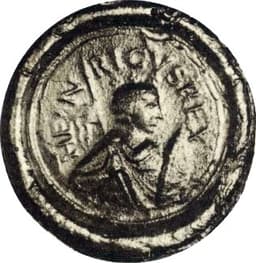
Henry the Fowler
Emperor · Medieval
60.9Total

Parakramabahu VI
Emperor · Medieval
64.8Total
Basic Information
Born
876
1412
Died
936
1467
Era
Medieval
Medieval
Nationality
East Francia
Sri Lanka
Occupation
Emperor
Emperor
Civilization
Western
Indian
Score Comparison
Military (10%)
70.0
72.5
Political (20%)
59.3
72.0
Influence (20%)
55.0
60.0
Legacy (20%)
52.0
56.0
Leadership (15%)
85.0
85.0
Strategy (15%)
55.0
50.0
TOTAL
60.9
64.8
Henry the Fowler — Complete Timeline
919 AD
Election as King of East FranciaPolitical Action
Henry the Fowler was elected King of East Francia by the Saxon and Frankish nobles at Fritzlar on May 6, 919. He was the first Saxon king, marking the transition from Carolingian to Ottonian rule. His election was contested by other dukes but he prevailed.
ElectionAccessionOttonian Dynasty
Impact: regionalconstructive
921 AD
Treaty of Bonn (921)Political Action◆ Major
Henry the Fowler signed the Treaty of Bonn with Charles the Simple of West Francia, recognizing each other's royal titles and establishing peaceful relations. This treaty ended Carolingian claims over East Francia and solidified Henry's legitimacy as an independent king.
TreatyRecognitionDiplomacy
Impact: regionalconstructive
924 AD
Nine-Year Truce with the MagyarsPolitical Action◆ Major
Henry the Fowler negotiated a nine-year truce with the Magyars, agreeing to pay tribute in exchange for a halt to their raids. He used this period to fortify towns, reorganize the army, and train cavalry. This strategic pause was crucial for his later military reforms.
TruceMagyarsMilitary Reform
Impact: regionalconstructive
929 AD
Battle of Lenzen (929)War◆ Major
Henry the Fowler's forces defeated a Slavic army at the Battle of Lenzen, securing the eastern frontier of East Francia. This victory allowed Henry to consolidate control over the Elbe region and establish the March of Brandenburg, a key step in German eastward expansion.
BattleSlavic WarsEastern Expansion
Impact: regionalconstructive
933 AD
Battle of Riade (933)War
After the truce with the Magyars expired, Henry the Fowler led a German army to victory at the Battle of Riade (near Merseburg). The defeat of the Magyar cavalry ended their raids into East Francia for a generation and established Henry's reputation as a defender of Christendom.
BattleMagyarsVictory
Impact: regionalconstructive
936 AD
Death of Henry the FowlerOther◆ Major
Henry the Fowler died on July 2, 936, at Memleben. He was succeeded by his son, Otto I, who would become Holy Roman Emperor. Henry's reign laid the foundations for the Ottonian dynasty and the medieval German kingdom.
DeathSuccessionOttonian
Impact: regional
Parakramabahu VI — Complete Timeline
1420 AD
Construction of the Temple of the Tooth in KotteCultural◆ Major
Parakramabahu VI built a new Temple of the Tooth in his capital, Kotte. This reinforced Kotte's status as the religious and political center of the island.
BuddhismArchitectureCapital
Impact: nationalconstructive
1430 AD
Patronage of Literature and ArtsCultural◆ Major
Parakramabahu VI's court was a center of literary and artistic activity. He patronized poets and scholars, leading to a flourishing of Sinhalese literature, including the 'Sandesa' (message) poems.
LiteraturePatronageCultural Renaissance
Impact: nationalconstructive
1450 AD
Unification of Sri LankaWar
Parakramabahu VI unified the entire island of Sri Lanka under his rule for the first time since Parakramabahu I. He conquered the Kingdom of Jaffna in the north and brought the entire island under Kotte's control.
UnificationConquestMilitary Campaign
Impact: national
Conquest of the Kingdom of JaffnaWar◆ Major
Parakramabahu VI's forces, led by his adopted son Sapumal Kumaraya, conquered the Kingdom of Jaffna. This brought the Tamil north under Sinhalese rule and ended the Aryacakravarti dynasty.
ConquestMilitary CampaignTamil Kingdom
Impact: national
Expert Analysis
Henry the Fowler vs Parakramabahu VI
### The King Who Refused a Crown
In the spring of 919, on the plains of Fritzlar, a delegation of Frankish nobles offered the crown of East Francia to a Saxon duke named Henry. He refused it. The gesture was not modesty but calculation. Across the Indian Ocean, four centuries later and a world away, another ruler, Parakramabahu VI of Kotte, seized a different kind of crown—one forged from conquest and poetry. Between Henry the Fowler, who built a kingdom on truces and tributes, and Parakramabahu VI, who unified Sri Lanka through war and verse, lies a profound contrast in how power is won, wielded, and remembered. Their stories reveal two faces of medieval kingship: the patient architect and the brilliant consolidator.
### Origins: The Soil and the Sea
Henry was born in 876 into a world of fragmentation. The Carolingian Empire had crumbled; East Francia was a patchwork of duchies—Saxony, Franconia, Swabia, Bavaria—each ruled by proud nobles who owed no loyalty to a distant king. Henry’s father, Otto the Illustrious, was a Saxon duke, but Saxony was a frontier land, pressed by Slavic tribes to the east and Magyar raiders from the steppes. Henry grew up in the shadow of the sword, learning that survival meant negotiation as much as battle.
Parakramabahu VI, born in 1412, inherited a different geography. The island of Sri Lanka was no stranger to unity: the great Parakramabahu I had ruled all of it in the twelfth century, but by the fifteenth, the Sinhalese heartland was divided into fractured kingdoms—Kotte, Kandy, Jaffna. Kotte itself was a coastal kingdom, enriched by trade with China and the Middle East. Parakramabahu VI grew up in a court where spice merchants and Buddhist monks mingled, where power came not just from land but from the sea lanes that brought wealth and ideas. His world was one of cultural flowering, but also of simmering rebellions and Tamil kingdoms in the north.
### Rise to Power: The Elected and the Inherited
Henry’s path to kingship was a masterclass in political patience. When the East Frankish nobles gathered at Fritzlar in 919 to elect a new king, they passed over the Carolingian claimant and chose Henry, a Saxon duke who had proven his military competence. Yet Henry’s first act was to decline the crown, forcing Archbishop Heriger of Mainz to place it on his head anyway. This was not modesty; it was a signal. Henry understood that his authority depended on the consent of the duchies, not on divine right. He spent his early reign securing that consent through a mix of diplomacy and force, crushing a rebellion in Swabia and forcing the Duke of Bavaria to submit.
Parakramabahu VI’s rise was more direct. He was a prince of the Kotte royal line, and when he came to power around 1412, he moved swiftly to assert control. But his true turning point came in 1450, when he launched a campaign to unify the entire island. His forces, led by his adopted son Sapumal Kumaraya, conquered the Kingdom of Jaffna in the north, bringing the Tamil regions under Sinhalese rule for the first time in centuries. Where Henry built his kingdom through truces and treaties, Parakramabahu VI built his through conquest—a difference born of circumstance. Henry faced a fractured nobility he had to woo; Parakramabahu faced a fragmented island he could subdue.
### Leadership & Governance: The Truce and the Temple
Henry’s greatest political achievement was his handling of the Magyars, the nomadic raiders who terrorized Europe. In 924, he negotiated a nine-year truce, paying tribute to buy time. He used that time to build fortified towns, train a new cavalry, and reorganize his army. When the truce expired in 933, he met the Magyars at the Battle of Riade and crushed them. This was not just a military victory; it was a political one. By defeating the Magyars, Henry proved that his patient strategy—paying tribute to gain breathing room—had been wisdom, not weakness.
Parakramabahu VI governed through culture. In 1420, he constructed a new Temple of the Tooth in his capital Kotte, housing the sacred relic of the Buddha. This was not mere piety; it was a declaration that Kotte, not the older capitals of Anuradhapura or Polonnaruwa, was now the island’s religious and political heart. His court became a center of literary patronage, where poets like Sri Rahula Thera wrote in elegant Sinhala verse. Parakramabahu VI understood that unity required more than swords; it required a shared identity, woven from religion and art.
### Triumph & Tragedy: Victory Without Successors
Henry’s triumph was the Battle of Riade in 933, where his reformed army routed the Magyars. But his greatest victory was institutional: he founded the Ottonian dynasty, which would produce the first Holy Roman Emperor in his son, Otto I. Henry died in 936 at Memleben, having secured his kingdom’s borders and its future. His tragedy was that he never wore the imperial crown—he was a king, not an emperor—but his legacy was that his son would.
Parakramabahu VI’s triumph was the unification of Sri Lanka in 1450, a feat unmatched since the twelfth century. But his tragedy was that the unity did not last. After his death in 1467, the kingdom fragmented again. His adopted son Sapumal Kumaraya ruled briefly, but rebellions and succession struggles soon undid the work of a lifetime. Where Henry built a dynasty, Parakramabahu VI built a moment.
### Character & Destiny: The Architect and the Poet
Henry’s character was shaped by the frontier. He was pragmatic, patient, and unglamorous. He paid tribute to buy time, he negotiated with enemies, and he refused a crown to win loyalty. His decisions were driven by a cold-eyed realism: he knew that power in a fractured kingdom came from consent, not conquest. Parakramabahu VI was the opposite—a visionary who believed in the power of culture and conquest. He built temples, patronized poets, and launched wars. His decisions were driven by a desire for unity, but also by a kingly ambition that could not tolerate division.
### Legacy: The Dynasty and the Dream
Henry the Fowler is remembered as the founder of the Ottonian dynasty, the father of the Holy Roman Empire. His legacy is institutional: he created a kingdom that would dominate Europe for centuries. Parakramabahu VI is remembered as the last great Sinhalese king before colonial fragmentation. His legacy is cultural: the literature and art of his court remain a golden age in Sri Lankan memory. One built a machine of power; the other built a monument of culture.
### Conclusion
Standing in the ruins of Kotte, one might feel the weight of what was lost. Standing in the cathedral of Magdeburg, one might feel the weight of what endured. Henry the Fowler and Parakramabahu VI both unified their worlds, but they did so with different tools—one with a truce, the other with a temple. Their stories remind us that kingship is never just about power; it is about what a ruler chooses to leave behind. Henry left a dynasty. Parakramabahu left a dream. Both, in their own ways, shaped the world that came after them.
Rankings
🥇
Parakramabahu VILeader
Mil: 72.5Pol: 72.0Inf: 60.0
64.8
🥈
Henry the Fowler
Mil: 70.0Pol: 59.3Inf: 55.0
60.9
+3.9 behind
How This Comparison Works
Algorithm
Each figure is scored on 6 dimensions (0—100 scale) based on structured historical data: Military (10%), Political (20%), Influence (20%), Legacy (20%), Leadership (15%), Strategy (15%). The weighted total produces the final ranking.
Data Sources
Scores are computed from structured sub-indicators in the database. Scale factors adjust for era (Ancient ×0.85, Modern ×1.0) and civilization size (Eastern ×1.05, Other ×0.80) to account for differences in population and military scale.
Maximum 3 Figures
Comparisons are limited to 2—3 figures to ensure readability and statistical meaningfulness.
Error Margins
±5 points per dimension — Sub-scores are derived from historical records with inherent uncertainty. Two figures within 5 points on a dimension should be considered roughly equivalent in that area.
Total Score Accuracy
±3 points overall — The weighted combination of 6 dimensions produces a total score with approximately ±3 points of uncertainty. Differences of less than 3 points are not statistically significant— the figures are effectively tied.
Known Limitations
- Historical records are incomplete and uneven across civilizations
- Figures from oral-tradition societies may be underrepresented
- Occupation labels can misclassify multi-role figures
- Scores measure capability and impact, not moral character
- Quantitative scoring is a comparison tool, not absolute truth
Capability Radar
Military (10%) — Battles & Warfare
Battles
55
60
Win Rate
60
65
Expansion
60
55
Political (20%) — Governance & Reform
Reform
75
65
Diplomacy
70
60
Economy
65
65
Influence (20%) — Cultural & Global Reach
Cultural
55
60
Global
40
40
Legacy (20%) — Historical Impact
Historical
65
65
Longevity
60
55
Leadership (15%) — Power & Stability
Tenure
70
70
Stability
70
70
Strategy (15%) — Tactics & Innovation
Strategy
65
60
Tactics
50
55
Reform
70
50
Similar Comparisons
Comments & Discussion
RavenWing6/16/2026
Henry the Fowler was a master of strategic patience while Parakramabahu VI was a flashy poet-warrior. Henry refused a crown in 919 to avoid noble feuds, then manipulated the dukes into submission through marriage alliances and the Magyars' defeat at Riade in 933. Parakramabahu’s conquests were impressive but short-lived—his kingdom crumbled after his death. Give me a builder who unified Germany over a tin-pot conqueror any day.
断戟书生6/16/2026
把亨利·捕鸟者和波罗伽罗摩巴忽六世相比,简直像拿围棋高手比象棋棋王。亨利在919年拒绝加冕,不是谦逊,是阴险的政治算盘——他用这一招挑拨诸公爵内斗,再以934年里阿德战役的胜利巩固权威。而斯里兰卡那位?靠屠杀和诗歌掩人耳目,他死后王权瞬间崩溃。真王者靠权谋,不靠虚华。
ShieldScribe6/16/2026
Both were standard medieval strongmen, not visionaries. Henry bribed and bullied his way to dominance—his 926 truce with the Magyars was paid in tribute, not swords, and he left Germany weak for Otto I to fix. Parakramabahu VI slaughtered rival Kandyan nobles and forced Sinhalese poetry into state propaganda for petty glory. Neither created lasting institutions; they just postponed collapse. Overrated icons of patriarchal myth.
墨船渔父6/16/2026
实事求是地说,亨利和波罗伽罗摩巴忽六世都是被历史夸大的普通统治者。亨利的最大成就不是才智,而是925年与波希米亚的婚姻同盟弄拙成巧;波罗伽罗摩巴忽六世1450年统一锡兰时,葡萄牙人已在印度洋磨刀,他竟沉迷于写《孔雀王诗》。真正的英雄该有远见,而非仅于童话涂金。
SapphireAxe6/16/2026
A fascinating pair—Henry as pragmatic fox, Parakramabahu as peacock king. Yet both succeeded locally: Henry’s 920s domestic consolidation allowed the Ottonians to dominate for a century, while Parakramabahu’s patronage of Sinhala literature fostered a golden age of poetry. The real lesson? Leadership adapts to context. Henry’s refusals built trust in a fragmented Europe; Parakramabahu’s war-and-verse spectacle cemented identity in a brief Sri Lankan heyday.