Loading...
Henry the Fowler vs Parakramabahu I
Parakramabahu I leads by 5.2 pts · 2 figures compared
…
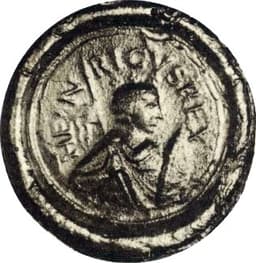
Henry the Fowler
Emperor · Medieval
60.9Total
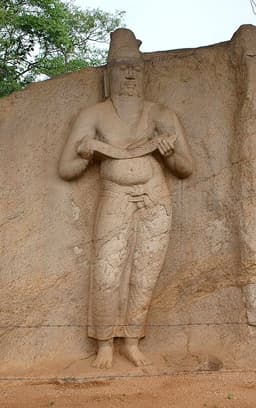
Parakramabahu I
Emperor · Medieval
66.1Total
Basic Information
Born
876
1123
Died
936
1186
Era
Medieval
Medieval
Nationality
East Francia
Sri Lanka
Occupation
Emperor
Emperor
Civilization
Western
Indian
Score Comparison
Military (10%)
70.0
82.0
Political (20%)
59.3
72.0
Influence (20%)
55.0
61.0
Legacy (20%)
52.0
52.0
Leadership (15%)
85.0
82.0
Strategy (15%)
55.0
65.4
TOTAL
60.9
66.1
Henry the Fowler — Complete Timeline
919 AD
Election as King of East FranciaPolitical Action
Henry the Fowler was elected King of East Francia by the Saxon and Frankish nobles at Fritzlar on May 6, 919. He was the first Saxon king, marking the transition from Carolingian to Ottonian rule. His election was contested by other dukes but he prevailed.
ElectionAccessionOttonian Dynasty
Impact: regionalconstructive
921 AD
Treaty of Bonn (921)Political Action◆ Major
Henry the Fowler signed the Treaty of Bonn with Charles the Simple of West Francia, recognizing each other's royal titles and establishing peaceful relations. This treaty ended Carolingian claims over East Francia and solidified Henry's legitimacy as an independent king.
TreatyRecognitionDiplomacy
Impact: regionalconstructive
924 AD
Nine-Year Truce with the MagyarsPolitical Action◆ Major
Henry the Fowler negotiated a nine-year truce with the Magyars, agreeing to pay tribute in exchange for a halt to their raids. He used this period to fortify towns, reorganize the army, and train cavalry. This strategic pause was crucial for his later military reforms.
TruceMagyarsMilitary Reform
Impact: regionalconstructive
929 AD
Battle of Lenzen (929)War◆ Major
Henry the Fowler's forces defeated a Slavic army at the Battle of Lenzen, securing the eastern frontier of East Francia. This victory allowed Henry to consolidate control over the Elbe region and establish the March of Brandenburg, a key step in German eastward expansion.
BattleSlavic WarsEastern Expansion
Impact: regionalconstructive
933 AD
Battle of Riade (933)War
After the truce with the Magyars expired, Henry the Fowler led a German army to victory at the Battle of Riade (near Merseburg). The defeat of the Magyar cavalry ended their raids into East Francia for a generation and established Henry's reputation as a defender of Christendom.
BattleMagyarsVictory
Impact: regionalconstructive
936 AD
Death of Henry the FowlerOther◆ Major
Henry the Fowler died on July 2, 936, at Memleben. He was succeeded by his son, Otto I, who would become Holy Roman Emperor. Henry's reign laid the foundations for the Ottonian dynasty and the medieval German kingdom.
DeathSuccessionOttonian
Impact: regional
Parakramabahu I — Complete Timeline
1153 AD
Unification of Sri LankaWar
Parakramabahu I unified the entire island of Sri Lanka under his rule after a series of military campaigns. He defeated the rulers of Ruhuna and other regional kingdoms, ending a period of fragmentation.
Impact: national
1160 AD
Construction of Parakrama SamudraOther◆ Major
Parakramabahu I constructed the Parakrama Samudra, a massive man-made sea of interconnected tanks and canals near Polonnaruwa. This irrigation system, covering over 5,000 acres, was a major engineering achievement.
Impact: regionalconstructive
1165 AD
Invasion of BurmaWar◆ Major
Parakramabahu I launched a naval invasion of Burma (Pagan Kingdom) in retaliation for a trade dispute. The Sinhalese fleet captured the port of Kusumiya and sacked the city, demonstrating Sri Lanka's naval power.
Impact: regional
Reform of the Buddhist SanghaReform◆ Major
Parakramabahu I convened a council to purify the Buddhist Sangha. He expelled corrupt monks and re-established discipline, strengthening Theravada Buddhism in Sri Lanka.
Impact: nationalconstructive
1170 AD
Construction of Polonnaruwa VatadageCultural◆ Major
Parakramabahu I built the Polonnaruwa Vatadage, a circular relic house for the Tooth Relic of the Buddha. This structure is considered a masterpiece of Sinhalese architecture.
Impact: nationalconstructive
Expert Analysis
Henry the Fowler vs Parakramabahu I
# The Two Unifiers: Henry the Fowler and Parakramabahu I
Imagine two men, living centuries apart on opposite sides of the world, each facing the same fundamental challenge: a fractured kingdom, bleeding from foreign raids, and a people desperate for order. One stands on a muddy battlefield in Saxony, the other beside a vast man-made lake in Sri Lanka. Their tools differ—iron swords and irrigation canals—but their ambition is identical: to forge unity from chaos. Yet their paths diverged in ways that reveal how geography, culture, and timing shape the fate of rulers. This is the story of Henry the Fowler and Parakramabahu I, two medieval unifiers who built empires on very different foundations.
Origins
Henry the Fowler was born in 876 into the turbulent world of East Francia, a patchwork of Saxon, Frankish, and Bavarian duchies constantly threatened by Magyar horsemen from the east and Viking raiders from the north. His nickname, "the Fowler," supposedly came from his love of bird hunting, but his life was no sport. The Carolingian Empire had collapsed, and German nobles were fighting for scraps. Henry’s father, Otto the Illustrious, was a Saxon duke, but the family’s power was local, not royal. Henry grew up in a world where loyalty was earned through strength, not inherited through bloodlines.
Parakramabahu I, born in 1123, inherited a different crisis. Sri Lanka’s Sinhalese civilization had flourished for centuries under the Anuradhapura kingdom, but by his birth, the island was fragmented into warring principalities. The Chola Empire of South India had invaded and occupied parts of the island, and the Buddhist Sangha—the monastic order that anchored Sinhalese identity—had grown corrupt. Parakramabahu was raised in the royal court of Polonnaruwa, surrounded by the ruins of a once-great civilization and the memory of foreign domination. His father, King Manabharana, was a regional ruler, and young Parakramabahu learned early that unity would require both sword and scripture.
Rise to Power
Henry’s ascent was a matter of noble election. On May 6, 919, the Saxon and Frankish nobles gathered at Fritzlar and chose him as King of East Francia. It was not a coronation—Henry refused the traditional anointing, perhaps to avoid offending the powerful Church—but a pragmatic agreement. He was a first among equals, not an absolute monarch. His power rested on his ability to negotiate, not command.
Parakramabahu’s rise was bloodier. He spent years fighting his own relatives, including his uncle, to claim the throne. In 1153, after a series of campaigns, he unified the entire island of Sri Lanka under his rule. While Henry was elected, Parakramabahu conquered. This difference was not a matter of personality but of context: Henry faced a confederation of German nobles who could reject him, while Parakramabahu ruled a land where kingship was traditionally absolute—once the rivals were dead.
Leadership & Governance
Henry the Fowler’s genius lay in patience. In 924, the Magyars—dreaded horse archers who had terrorized Germany for decades—were at his doorstep. Instead of fighting, he negotiated a nine-year truce, agreeing to pay tribute. It was a humiliating move, but Henry used those years wisely. He fortified towns, trained heavy cavalry, and built a network of fortified burghs—fortified settlements that would protect local populations. When the truce expired in 933, he met the Magyars at the Battle of Riade and crushed them. His strategy was defensive, methodical, and patient—a reflection of a ruler who understood that time was his greatest weapon.
Parakramabahu governed through bold, visible projects. He constructed the Parakrama Samudra, a massive man-made sea of interconnected tanks and canals near Polonnaruwa, completed around 1160. This irrigation system transformed agriculture, ensuring food security for generations. He also reformed the Buddhist Sangha in 1165, expelling corrupt monks and re-establishing discipline. His military campaigns were equally ambitious: in 1165, he launched a naval invasion of Burma’s Pagan Kingdom, retaliating for a trade dispute. Where Henry built walls, Parakramabahu built waterworks. Where Henry negotiated truces, Parakramabahu launched fleets.
Triumph & Tragedy
Henry’s greatest moment came at the Battle of Riade in 933, where he proved that his nine years of preparation had not been wasted. The victory was decisive, ending Magyar raids into Germany for decades. His tragedy was one of incompleteness: he died on July 2, 936, at Memleben, before he could see his son Otto crowned Holy Roman Emperor. His legacy was a foundation, not a finished cathedral.
Parakramabahu’s triumph was the sheer scale of his ambition. The Parakrama Samudra remains one of the largest man-made reservoirs in the world, a testament to his vision. But his tragedy was overreach. The invasion of Burma, while successful, drained resources and strained the kingdom. After his death in 1186, the unified kingdom he built quickly fragmented. His achievements were monumental but brittle.
Character & Destiny
Henry the Fowler was a pragmatist. He knew when to bend—paying tribute to the Magyars—and when to strike. His nickname, "the Fowler," suggests a man who understood the art of waiting, of letting the prey come to him. Parakramabahu was a builder, a man who believed that stone and water could impose order on chaos. His motto might have been the famous Sinhalese saying: "Let not a drop of rain water go to the sea without being useful to man." Where Henry worked with time, Parakramabahu worked against it, trying to freeze his kingdom into a perfect shape.
Legacy
Henry the Fowler is remembered as the founder of the Ottonian dynasty, the first Saxon king of East Francia, and the father of Otto the Great, who would become Holy Roman Emperor. His legacy is institutional: the burghs, the fortified towns, the military reforms that became the backbone of medieval Germany. He is a quiet figure in history, often overshadowed by his son.
Parakramabahu I is remembered as the greatest king of medieval Sri Lanka. His name is synonymous with the Parakrama Samudra, the irrigation works, and the cultural flowering of Polonnaruwa. He is a national hero, celebrated in poems and chronicles. But his kingdom did not outlast him by more than a generation.
Conclusion
Both men sought to unify fractured lands, but they faced different fractures. Henry’s Germany was a frontier of warring tribes and foreign raiders; his solution was defense, patience, and institution-building. Parakramabahu’s Sri Lanka was a civilization in decline, needing restoration; his solution was construction, conquest, and cultural purification. Henry’s legacy endured because he built systems, not monuments. Parakramabahu’s legacy dazzles because he built monuments, not systems. Which is more lasting? The question lingers, like the waters of the Parakrama Samudra, still reflecting the sky after a thousand years.
Rankings
🥇
Parakramabahu ILeader
Mil: 82.0Pol: 72.0Inf: 61.0
66.1
🥈
Henry the Fowler
Mil: 70.0Pol: 59.3Inf: 55.0
60.9
+5.2 behind
How This Comparison Works
Algorithm
Each figure is scored on 6 dimensions (0—100 scale) based on structured historical data: Military (10%), Political (20%), Influence (20%), Legacy (20%), Leadership (15%), Strategy (15%). The weighted total produces the final ranking.
Data Sources
Scores are computed from structured sub-indicators in the database. Scale factors adjust for era (Ancient ×0.85, Modern ×1.0) and civilization size (Eastern ×1.05, Other ×0.80) to account for differences in population and military scale.
Maximum 3 Figures
Comparisons are limited to 2—3 figures to ensure readability and statistical meaningfulness.
Error Margins
±5 points per dimension — Sub-scores are derived from historical records with inherent uncertainty. Two figures within 5 points on a dimension should be considered roughly equivalent in that area.
Total Score Accuracy
±3 points overall — The weighted combination of 6 dimensions produces a total score with approximately ±3 points of uncertainty. Differences of less than 3 points are not statistically significant— the figures are effectively tied.
Known Limitations
- Historical records are incomplete and uneven across civilizations
- Figures from oral-tradition societies may be underrepresented
- Occupation labels can misclassify multi-role figures
- Scores measure capability and impact, not moral character
- Quantitative scoring is a comparison tool, not absolute truth
Capability Radar
Military (10%) — Battles & Warfare
Battles
55
75
Win Rate
60
80
Expansion
60
70
Political (20%) — Governance & Reform
Reform
75
80
Diplomacy
70
70
Economy
65
75
Influence (20%) — Cultural & Global Reach
Cultural
55
65
Global
40
40
Legacy (20%) — Historical Impact
Historical
65
70
Longevity
60
60
Leadership (15%) — Power & Stability
Tenure
70
85
Stability
70
80
Strategy (15%) — Tactics & Innovation
Strategy
65
75
Tactics
50
70
Reform
70
65
Similar Comparisons
Comments & Discussion
No comments yet. Be the first to share your thoughts!