Loading...
Henry the Fowler vs Pachacuti
Pachacuti leads by 8.5 pts · 2 figures compared
…
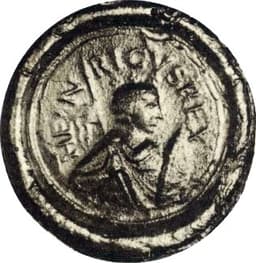
Henry the Fowler
Emperor · Medieval
60.9Total
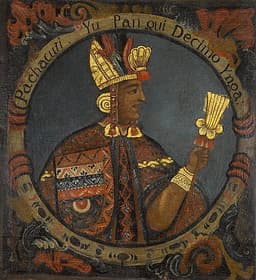
Pachacuti
Emperor · Medieval
69.4Total
Basic Information
Born
876
1418
Died
936
1472
Era
Medieval
Medieval
Nationality
East Francia
Inca Empire
Occupation
Emperor
Emperor
Civilization
Western
Other
Score Comparison
Military (10%)
70.0
78.5
Political (20%)
59.3
58.1
Influence (20%)
55.0
65.0
Legacy (20%)
52.0
72.0
Leadership (15%)
85.0
78.0
Strategy (15%)
55.0
69.2
TOTAL
60.9
69.4
Henry the Fowler — Complete Timeline
919 AD
Election as King of East FranciaPolitical Action
Henry the Fowler was elected King of East Francia by the Saxon and Frankish nobles at Fritzlar on May 6, 919. He was the first Saxon king, marking the transition from Carolingian to Ottonian rule. His election was contested by other dukes but he prevailed.
ElectionAccessionOttonian Dynasty
Impact: regionalconstructive
921 AD
Treaty of Bonn (921)Political Action◆ Major
Henry the Fowler signed the Treaty of Bonn with Charles the Simple of West Francia, recognizing each other's royal titles and establishing peaceful relations. This treaty ended Carolingian claims over East Francia and solidified Henry's legitimacy as an independent king.
TreatyRecognitionDiplomacy
Impact: regionalconstructive
924 AD
Nine-Year Truce with the MagyarsPolitical Action◆ Major
Henry the Fowler negotiated a nine-year truce with the Magyars, agreeing to pay tribute in exchange for a halt to their raids. He used this period to fortify towns, reorganize the army, and train cavalry. This strategic pause was crucial for his later military reforms.
TruceMagyarsMilitary Reform
Impact: regionalconstructive
929 AD
Battle of Lenzen (929)War◆ Major
Henry the Fowler's forces defeated a Slavic army at the Battle of Lenzen, securing the eastern frontier of East Francia. This victory allowed Henry to consolidate control over the Elbe region and establish the March of Brandenburg, a key step in German eastward expansion.
BattleSlavic WarsEastern Expansion
Impact: regionalconstructive
933 AD
Battle of Riade (933)War
After the truce with the Magyars expired, Henry the Fowler led a German army to victory at the Battle of Riade (near Merseburg). The defeat of the Magyar cavalry ended their raids into East Francia for a generation and established Henry's reputation as a defender of Christendom.
BattleMagyarsVictory
Impact: regionalconstructive
936 AD
Death of Henry the FowlerOther◆ Major
Henry the Fowler died on July 2, 936, at Memleben. He was succeeded by his son, Otto I, who would become Holy Roman Emperor. Henry's reign laid the foundations for the Ottonian dynasty and the medieval German kingdom.
DeathSuccessionOttonian
Impact: regional
Pachacuti — Complete Timeline
1438 AD
Conquest of the Chanka KingdomWar
Pachacuti led the Inca army to defeat the Chanka, a powerful rival, in a decisive battle near Cusco. This victory secured his position as Sapa Inca and initiated a period of rapid expansion, transforming the Inca from a small kingdom into a vast empire.
ConquestInca ExpansionChanka
Impact: regional
1440 AD
Reconstruction of CuscoCultural◆ Major
Pachacuti rebuilt Cusco as the imperial capital, designing it in the shape of a puma and constructing massive stone structures like Sacsayhuam
Urban PlanningArchitectureInca Empire
Impact: regionalconstructive
1450 AD
Initiation of Machu Picchu's ConstructionCultural◆ Major
Pachacuti ordered the construction of Machu Picchu, a royal estate and ceremonial site high in the Andes. The complex featured sophisticated dry-stone masonry and terraced agriculture, serving as a symbol of Inca engineering and a retreat for the emperor.
ArchitectureRoyal EstateInca Engineering
Impact: regionalconstructive
Expert Analysis
Pachacuti vs Henry the Fowler
# The Mountain and the Marsh: Two Founders of Empires
The snow-capped peaks of the Andes cast long shadows over the valley of Cusco in 1438, as a young prince named Cusi Yupanqui prepared to do what no Inca commander had done before: stand and fight against the invading Chanka. Half a world away and five centuries earlier, in the lowlands of East Francia, a Saxon duke named Henry watched from his fortress as Magyar horsemen swept across the countryside, burning villages and demanding tribute. Both men faced existential threats to their peoples. Both would answer those threats by building something entirely new. But the empires they founded—one of stone and mountain, the other of iron and law—could not have been more different. Why?
Origins
Pachacuti, whose name means "he who remakes the world," was born into a world of high-altitude kingdoms. The Inca were merely one among many warring tribes in the Peruvian highlands when he arrived in 1418. His father, the Sapa Inca Viracocha, ruled a modest territory around Cusco, constantly threatened by the powerful Chanka confederation to the south. Young Cusi Yupanqui grew up in a society without writing, without the wheel, without iron—but with an extraordinary capacity for organization and a deep reverence for the sun god Inti.
Henry the Fowler emerged from an equally fractured world. Born in 876, he was the son of Liudolf, a Saxon duke who had spent his life fighting against both Viking raiders and the crumbling Carolingian Empire. East Francia in the ninth century was a mosaic of stem duchies—Saxony, Bavaria, Swabia, Franconia—each ruled by proud nobles who acknowledged no central authority. The Magyar threat from the east was relentless, and the memory of Charlemagne's unified empire had faded into legend.
The contrast in their environments is striking. Pachacuti's world was vertical—narrow valleys separated by impassable peaks, where control of altitude meant control of trade and water. Henry's world was horizontal—endless plains and forests where armies could march for weeks without encountering natural barriers. Geography would shape everything about how they ruled.
Rise to Power
The Chanka crisis of 1438 became Pachacuti's moment of destiny. When the Chanka army approached Cusco, his father Viracocha fled the capital with his chosen heir. But the young prince Cusi Yupanqui refused to retreat. Gathering the remaining warriors, he led a desperate defense that somehow turned into a rout of the Chanka forces. The victory was so complete that the Inca nobility acclaimed him as Sapa Inca on the battlefield, forcing his father into retirement. In a single day, Pachacuti had transformed from a disregarded younger son into the absolute ruler of an expanding state.
Henry's path was more gradual. When the last Carolingian king of East Francia died in 911, the German nobles elected Conrad I, a Frankish duke, as their king. But Conrad failed to unite the duchies, and on his deathbed in 918, he recommended Henry the Fowler as his successor—advising that "the Saxon was the only man capable of saving the kingdom." The nobles gathered at Fritzlar on May 6, 919, and elected Henry as their king. Unlike Pachacuti's dramatic battlefield acclamation, Henry's rise was a political compromise, a recognition that only a strong duke could command the loyalty of other dukes.
Leadership & Governance
Pachacuti governed through transformation. He did not merely conquer—he remade. After defeating the Chanka, he rebuilt Cusco in the shape of a puma, with massive stone walls fitted so precisely that a knife blade could not slide between them. He established the system of *mitma*—relocating conquered peoples to break resistance and spread Inca culture. He created a centralized economy where all land belonged to the state, all labor was owed to the emperor, and all surpluses were stored in massive warehouses for redistribution. Machu Picchu, begun around 1450, was not a city but a royal estate, a physical manifestation of his absolute power carved into the living rock.
Henry ruled through negotiation and consolidation. He could not simply command the other German dukes—he had to win them. His strategy was patient and pragmatic. He made a treaty with Charles the Simple of West Francia in 921, recognizing both their royal titles and securing his western border. He then negotiated a nine-year truce with the Magyars in 924, paying tribute while secretly building fortified towns (*burgen*) throughout Saxony. Every ninth man was required to serve as a garrison soldier; every free man was trained to fight. When the truce expired in 933, Henry was ready. At the Battle of Riade, his newly professionalized army—heavy cavalry supported by infantry—shattered the Magyar raiders who had terrorized Europe for decades.
The difference in their methods reveals something profound. Pachacuti governed through awe and absolute control, using religion, architecture, and terror to bind his empire together. Henry governed through alliance and gradual institution-building, creating structures that would outlast any single ruler.
Triumph & Tragedy
Pachacuti's greatest triumph was the creation of an empire that stretched from modern Colombia to Chile—Tahuantinsuyu, the "Land of the Four Quarters." His administrative reforms, his road system spanning 25,000 miles, his agricultural terraces that fed millions—these were achievements that rivaled Rome. But his tragedy was the fragility of his creation. The Inca Empire had no writing, no money, no wheel. It depended entirely on the absolute authority of the Sapa Inca. When Spanish conquistadors arrived fifty years after Pachacuti's death in 1472, they found a system that could be decapitated by capturing one man.
Henry's triumph was more modest but more durable. He died in his bed at Memleben on July 2, 936, having secured his dynasty's future. His son Otto I would be crowned Holy Roman Emperor in 962, founding an institution that would last for nearly a millennium. Henry's tragedy was the limits of his ambition. He never claimed the imperial title, never attempted to recreate Charlemagne's empire. He was content to be king of the Germans, not emperor of the Romans.
Character & Destiny
Pachacuti was a visionary who believed he was destined to remake the world. His name itself declares his ambition. Every stone of Cusco, every terrace of Machu Picchu, every road that crossed the Andes was a statement of his will. He was ruthless—conquered peoples who resisted were executed or relocated—but also brilliant, creating systems of governance that allowed millions to live under a single ruler without coin or script.
Henry was a builder, not a visionary. His nickname "the Fowler" supposedly came from his love of hunting birds, suggesting a man more comfortable with practical matters than grand gestures. He accepted the world as it was and worked to improve it incrementally. Where Pachacuti demanded total submission, Henry offered partnership. Where Pachacuti built monuments, Henry built institutions.
Legacy
Pachacuti's legacy is visible today in the stones of Machu Picchu, in the terraces of the Sacred Valley, in the Quechua language still spoken by millions. His empire was destroyed, but its cultural DNA survived Spanish conquest. Modern Peru claims him as a founding father.
Henry's legacy is less visible but more structural. The Ottonian dynasty he founded gave Germany its first stable government, created the framework for the Holy Roman Empire, and established patterns of kingship that would influence European politics for centuries. He is remembered as the first true king of Germany, a man who turned weakness into strength through patience and prudence.
Conclusion
Standing at the edge of Machu Picchu, looking down at those perfect stone walls, one feels the weight of Pachacuti's ambition—a man who truly believed he could remake the world in his image. And standing at the site of Henry's fortress at Memleben, now nothing but a few foundation stones in a quiet field, one feels instead the weight of time and patience—a man who knew that empires are built not in a single lifetime but across generations. Both were founders. But Pachacuti built for eternity and got centuries; Henry built for centuries and got eternity. Perhaps that is the deepest difference between them: one sought to conquer the mountains, the other to cultivate the marsh. And in the end, the marsh proved more fertile ground for lasting power.
Rankings
🥇
PachacutiLeader
Mil: 78.5Pol: 58.1Inf: 65.0
69.4
🥈
Henry the Fowler
Mil: 70.0Pol: 59.3Inf: 55.0
60.9
+8.5 behind
How This Comparison Works
Algorithm
Each figure is scored on 6 dimensions (0—100 scale) based on structured historical data: Military (10%), Political (20%), Influence (20%), Legacy (20%), Leadership (15%), Strategy (15%). The weighted total produces the final ranking.
Data Sources
Scores are computed from structured sub-indicators in the database. Scale factors adjust for era (Ancient ×0.85, Modern ×1.0) and civilization size (Eastern ×1.05, Other ×0.80) to account for differences in population and military scale.
Maximum 3 Figures
Comparisons are limited to 2—3 figures to ensure readability and statistical meaningfulness.
Error Margins
±5 points per dimension — Sub-scores are derived from historical records with inherent uncertainty. Two figures within 5 points on a dimension should be considered roughly equivalent in that area.
Total Score Accuracy
±3 points overall — The weighted combination of 6 dimensions produces a total score with approximately ±3 points of uncertainty. Differences of less than 3 points are not statistically significant— the figures are effectively tied.
Known Limitations
- Historical records are incomplete and uneven across civilizations
- Figures from oral-tradition societies may be underrepresented
- Occupation labels can misclassify multi-role figures
- Scores measure capability and impact, not moral character
- Quantitative scoring is a comparison tool, not absolute truth
Capability Radar
Military (10%) — Battles & Warfare
Battles
55
85
Win Rate
60
90
Expansion
60
90
Political (20%) — Governance & Reform
Reform
75
92
Diplomacy
70
75
Economy
65
80
Influence (20%) — Cultural & Global Reach
Cultural
55
85
Global
40
65
Legacy (20%) — Historical Impact
Historical
65
80
Longevity
60
70
Leadership (15%) — Power & Stability
Tenure
70
85
Stability
70
82
Strategy (15%) — Tactics & Innovation
Strategy
65
88
Tactics
50
80
Reform
70
85
Similar Comparisons
Comments & Discussion
MountainMilitant6/16/2026
Calling this a comparison between equals is laughable. Pachacuti built an empire from *nothing* — no iron, no wheels, no writing — yet created the largest civilization in the pre-Columbian Americas. Henry just inherited a duchy and bullied some Magyar raiders into paying tribute. The Inca Emperor literally *remade the world* through visionary conquest and terraforming. Henry built a few forts and called it a kingdom. This isn't a debate; it's a slaughter.
数据拆台侠6/16/2026
说亨利“没有书面记录”是他的败笔简直是历史发明家。德国史学家维杜金德写的《萨克森史》明确记载了亨利在933年莱奇菲尔德击败马扎尔人,而印加人连个字母都没有,全靠结绳记事和口述传说。你让我拿哪份文件去核实帕查库蒂到底打了多少仗?印加历史就是政治宣传的糊涂账。
ClassicsCounter6/16/2026
The framing is flawed from the start. Henry the Fowler faced Magyar horsemen whose mobility terrified all of Europe; his creation of fortified towns (*Burgwälle*) and a standing cavalry fundamentally changed military history. Pachacuti fought tribal hill-fort warfare against the Chanka. Apples and oranges. One built a defensive network that preserved a kingdom; the other conquered neighbors who lacked cavalry, iron armor, or siege engines. The degree of difficulty is not even close.
城墙先生6/16/2026
搞笑的是,你们吹帕查库蒂修了马丘比丘,也不看看亨利在欧洲第一个系统化搞了“城堡政策”(Burgenordnung)。他要求每个地产主必须建堡垒,村民定期操练,这才压住了马扎尔人的闪电袭击。印加人是石头多,但亨利用的是制度——把封建领主拧成一股绳。没有他的堡垒网,就没有后来的神圣罗马帝国。石头会烂,制度不灭。
FowlerFanatic6/16/2026
Henry didn't just repel Magyars; he forced them to negotiate a nine-year truce in 926 by ransoming a captured prince. That's geopolitical savvy, not brute force. Pachacuti's response to the Chanka was a desperate last stand dressed up as prophecy. Henry bought time, reformed his army, *then* crushed the enemy at Riade in 933. That's how you found an empire: patience, strategy, and actual state-building. Mountains don't make states—laws and levies do.