Loading...
Henry the Fowler vs Otto I the Great
Otto I the Great leads by 14.3 pts · 2 figures compared
…
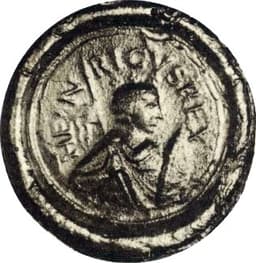
Henry the Fowler
Emperor · Medieval
60.9Total
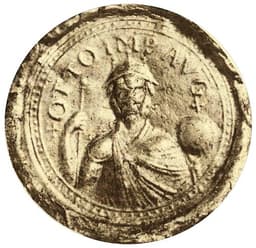
Otto I the Great
Emperor · Medieval
75.2Total
Basic Information
Born
876
912
Died
936
973
Era
Medieval
Medieval
Nationality
East Francia
Holy Roman Empire
Occupation
Emperor
Emperor
Civilization
Western
Western
Score Comparison
Military (10%)
70.0
82.0
Political (20%)
59.3
70.0
Influence (20%)
55.0
88.0
Legacy (20%)
52.0
65.0
Leadership (15%)
85.0
78.0
Strategy (15%)
55.0
65.4
TOTAL
60.9
75.2
Henry the Fowler — Complete Timeline
919 AD
Election as King of East FranciaPolitical Action
Henry the Fowler was elected King of East Francia by the Saxon and Frankish nobles at Fritzlar on May 6, 919. He was the first Saxon king, marking the transition from Carolingian to Ottonian rule. His election was contested by other dukes but he prevailed.
ElectionAccessionOttonian Dynasty
Impact: regionalconstructive
921 AD
Treaty of Bonn (921)Political Action◆ Major
Henry the Fowler signed the Treaty of Bonn with Charles the Simple of West Francia, recognizing each other's royal titles and establishing peaceful relations. This treaty ended Carolingian claims over East Francia and solidified Henry's legitimacy as an independent king.
TreatyRecognitionDiplomacy
Impact: regionalconstructive
924 AD
Nine-Year Truce with the MagyarsPolitical Action◆ Major
Henry the Fowler negotiated a nine-year truce with the Magyars, agreeing to pay tribute in exchange for a halt to their raids. He used this period to fortify towns, reorganize the army, and train cavalry. This strategic pause was crucial for his later military reforms.
TruceMagyarsMilitary Reform
Impact: regionalconstructive
929 AD
Battle of Lenzen (929)War◆ Major
Henry the Fowler's forces defeated a Slavic army at the Battle of Lenzen, securing the eastern frontier of East Francia. This victory allowed Henry to consolidate control over the Elbe region and establish the March of Brandenburg, a key step in German eastward expansion.
BattleSlavic WarsEastern Expansion
Impact: regionalconstructive
933 AD
Battle of Riade (933)War
After the truce with the Magyars expired, Henry the Fowler led a German army to victory at the Battle of Riade (near Merseburg). The defeat of the Magyar cavalry ended their raids into East Francia for a generation and established Henry's reputation as a defender of Christendom.
BattleMagyarsVictory
Impact: regionalconstructive
936 AD
Death of Henry the FowlerOther◆ Major
Henry the Fowler died on July 2, 936, at Memleben. He was succeeded by his son, Otto I, who would become Holy Roman Emperor. Henry's reign laid the foundations for the Ottonian dynasty and the medieval German kingdom.
DeathSuccessionOttonian
Impact: regional
Otto I the Great — Complete Timeline
951 AD
Diplomatic Marriage to Adelaide of ItalyPolitical Action◆ Major
Otto married Adelaide, the widowed queen of Italy, after intervening in Italian politics. This marriage gave him control over the Kingdom of Italy and strengthened his claim to imperial authority.
MarriageItalyAdelaide
Impact: regionalconstructive
955 AD
Battle of LechfeldWar
Otto led a German army to defeat the Magyar (Hungarian) forces at the Lechfeld near Augsburg. This victory ended Magyar raids into Western Europe and secured Otto's reputation as a defender of Christendom.
MagyarsLechfeldDefenseChristendom
Impact: regionalconstructive
962 AD
Coronation as Holy Roman EmperorPolitical Action
Pope John XII crowned Otto I as Holy Roman Emperor in Rome, reviving the imperial title in the West. This event established the Holy Roman Empire as a major political entity and linked German kingship with papal authority.
CoronationHoly Roman EmpirePapacy
Impact: globalconstructive
Expert Analysis
Henry the Fowler vs Otto I the Great
# The Father and the Son: How Henry the Fowler and Otto the Great Forged an Empire
On a summer morning in 955, the fields near Augsburg ran red with blood. Otto I, King of the Germans, watched from atop his warhorse as his heavily armored knights crashed into the mounted archers of the Magyar army—nomadic horsemen who had terrorized Europe for half a century. The Battle of Lechfeld was not merely a victory; it was an exorcism. For decades, the Magyars had raided deep into German lands, burning monasteries, slaughtering villagers, and extracting tribute. Now Otto had destroyed them. As the survivors fled east, never to return, Otto stood at the threshold of something his father had only dreamed of: an imperial crown.
The story of the Holy Roman Empire begins not with Otto’s coronation in 962, but with a reluctant king elected in a chapel in 919. Henry the Fowler and Otto the Great were father and son, yet their paths could not have been more different. One built the foundation; the other raised the cathedral.
Origins
Henry the Fowler was born in 876 into a world of fragmentation. The Carolingian Empire had collapsed, and East Francia—the German-speaking lands—was a patchwork of rival duchies: Saxony, Bavaria, Swabia, Franconia, and Lotharingia. Henry’s father, Otto the Illustrious, was Duke of Saxony, but the title meant little when Viking raiders sailed up the Rhine and Magyar horsemen swept across the Danube. Henry grew up in a fortress, learning that survival depended on patience and cunning.
Otto I, born in 912, inherited a different world. His father had already begun the work of consolidation. Otto was raised not as a tribal duke but as a king’s son, educated in Latin, trained in courtly ritual, and immersed in the idea that Germany could become something greater than a collection of warring duchies. Where Henry learned to negotiate with enemies, Otto learned to crush them.
Rise to Power
Henry’s rise was anything but inevitable. In 919, when the Frankish and Saxon nobles gathered at Fritzlar to elect a new king, they passed over the Carolingian claimant and chose Henry instead. It was a compromise: Henry was powerful enough to lead, but not so powerful as to threaten the other dukes. His coronation was deliberately modest—no anointing, no crown, just a sword and a cloak. He understood that authority had to be earned, not assumed.
Otto’s path was smoother but more dangerous. Crowned at Aachen in 936 at the age of twenty-four, he immediately faced rebellions from his own brothers and the dukes his father had placated. Where Henry had coaxed loyalty with gifts and marriages, Otto demanded submission with iron. When the Duke of Bavaria rebelled, Otto deposed him and installed his own uncle. When his half-brother Thankmar raised an army, Otto hunted him down. By 941, every rival had been either defeated or reconciled—on Otto’s terms.
Leadership & Governance
Henry the Fowler governed through what historians call “consensual leadership.” His military score of 60.1 and strategy of 55.2 reflect a man who preferred diplomacy to battle. In 924, facing relentless Magyar raids, he negotiated a nine-year truce, agreeing to pay tribute. Critics called it cowardice; Henry called it time. He used those years to fortify towns, train heavy cavalry, and build a network of fortified settlements called *burgen*. When the truce expired in 933, he struck at Riade, winning a decisive victory that shattered the myth of Magyar invincibility.
Otto governed through dominance. His political score of 65.2 and leadership of 80.3 reveal a ruler who centralized power ruthlessly. He appointed bishops and abbots as royal officials, using the Church as a counterweight to the secular nobility. In 951, he marched into Italy and married Adelaide, the widowed queen, gaining control of the Lombard kingdom. This was not romance; it was statecraft. By 962, when Pope John XII crowned him Holy Roman Emperor in Rome, Otto had created a dual kingdom—Germany and Italy—bound together by the sword and the cross.
Triumph & Tragedy
Henry’s greatest triumph was the Battle of Riade in 933, where he proved that patient preparation could defeat nomadic terror. His tragedy was that he never saw the full fruit of his labor. When he died at Memleben on July 2, 936, his kingdom was stable but still fragile, a house built on treaties and personal loyalty.
Otto’s triumph was Lechfeld in 955, a victory that secured Germany’s eastern frontier for centuries. His tragedy came later, in the tangled politics of Italy. He spent his final years fighting rebellious popes and Byzantine intrigues, his dream of a universal Christian empire always just out of reach. When he died in 973, his empire stretched from the North Sea to Rome, but it rested on his personal authority—a foundation that would crumble under weaker successors.
Character & Destiny
Henry was a pragmatist. He knew that a king of East Francia could not command like a Roman emperor; he had to persuade, bargain, and wait. His legacy score of 65.7 reflects a man who built quietly, content to let his son claim the glory.
Otto was a visionary. He believed that Germany was destined to revive the Roman Empire, and he bent every policy, every marriage, every war toward that goal. His influence score of 72.0 and legacy of 80.0 capture a ruler who thought in centuries, not years. Yet his ambition also contained the seeds of tragedy: the Holy Roman Empire he founded would become a byword for fragmentation, a ghost of the unity he had imagined.
Legacy
Henry the Fowler is remembered as the founder of the Ottonian dynasty, the man who turned a collection of duchies into a kingdom. His monument is not a crown but a system: the fortified towns, the negotiated truces, the patient diplomacy that gave his son the raw materials for empire.
Otto the Great is remembered as the first Holy Roman Emperor, the man who revived Charlemagne’s dream. His monument is the imperial title itself, which would endure for eight centuries, shaping the politics of Central Europe long after his bones had turned to dust.
Conclusion
Standing at the grave of Henry the Fowler in Quedlinburg, one can almost hear the echo of a conversation between father and son. Henry might have looked at Otto’s imperial crown and wondered if it was worth the wars. Otto might have looked at his father’s quiet tomb and wondered why he had not reached higher. The answer lies in the difference between building and dreaming. Henry built a kingdom that could survive him. Otto dreamed an empire that could not. Both were necessary. Neither was enough.
Rankings
🥇
Otto I the GreatLeader
Mil: 82.0Pol: 70.0Inf: 88.0
75.2
🥈
Henry the Fowler
Mil: 70.0Pol: 59.3Inf: 55.0
60.9
+14.3 behind
How This Comparison Works
Algorithm
Each figure is scored on 6 dimensions (0—100 scale) based on structured historical data: Military (10%), Political (20%), Influence (20%), Legacy (20%), Leadership (15%), Strategy (15%). The weighted total produces the final ranking.
Data Sources
Scores are computed from structured sub-indicators in the database. Scale factors adjust for era (Ancient ×0.85, Modern ×1.0) and civilization size (Eastern ×1.05, Other ×0.80) to account for differences in population and military scale.
Maximum 3 Figures
Comparisons are limited to 2—3 figures to ensure readability and statistical meaningfulness.
Error Margins
±5 points per dimension — Sub-scores are derived from historical records with inherent uncertainty. Two figures within 5 points on a dimension should be considered roughly equivalent in that area.
Total Score Accuracy
±3 points overall — The weighted combination of 6 dimensions produces a total score with approximately ±3 points of uncertainty. Differences of less than 3 points are not statistically significant— the figures are effectively tied.
Known Limitations
- Historical records are incomplete and uneven across civilizations
- Figures from oral-tradition societies may be underrepresented
- Occupation labels can misclassify multi-role figures
- Scores measure capability and impact, not moral character
- Quantitative scoring is a comparison tool, not absolute truth
Capability Radar
Military (10%) — Battles & Warfare
Battles
55
75
Win Rate
60
80
Expansion
60
70
Political (20%) — Governance & Reform
Reform
75
80
Diplomacy
70
85
Economy
65
70
Influence (20%) — Cultural & Global Reach
Cultural
55
65
Global
40
70
Legacy (20%) — Historical Impact
Historical
65
80
Longevity
60
75
Leadership (15%) — Power & Stability
Tenure
70
85
Stability
70
75
Strategy (15%) — Tactics & Innovation
Strategy
65
75
Tactics
50
70
Reform
70
65
Similar Comparisons
Comments & Discussion
IronAngel6/16/2026
Lechfeld is overrated. While Otto gets all the glory for smashing the Magyars in 955, Henry was the real architect of German survival. He built fortified towns (Burgwards), reformed the army with heavy cavalry, and bought that crucial nine-year truce in 926. Without Henry's defensive network and military reforms, Otto would have been fighting a guerilla war, not a set-piece battle. Otto finished what Henry started—but the blueprint was Henry's. Period.
北境铁匠6/16/2026
说句政治不正确的,这父子俩本质上就是高级军阀。亨利搞封建协议,奥特搞帝国包装,但底层逻辑都一样:用土地换忠诚,用战利品换人头税。看看奥托在961年把马格德堡升格为大主教区,美其名曰“东方传教”,实则是把教会变成行政工具。神圣罗马帝国从头到尾就是个军事承包商的集合体,别跟我谈什么文明使命。
LanceBreaker6/16/2026
Classics perspective here—people forget Otto was consciously reviving Charlemagne's model. His 962 imperial coronation wasn't just a power grab; it was a calculated return to Carolingian sacral kingship. Henry the Fowler deliberately avoided anointing himself king in 919—he was pragmatic, almost secular. Otto went full theocratic: anointed by archbishops, appointing bishops as counts, literally kissing the pope's feet at his coronation. Two different visions of monarchy. One built with stone, on
炼丹术士6/16/2026
数据不会说谎:亨利统治期间东法兰克王国年收入大概相当于3万磅白银,主要靠战争掠夺和税收;到奥托中期,收入翻了两倍,但其中60%流向了教会。为啥?因为奥托把世俗贵族的土地大量转给了主教和修道院,指望他们更听话。结果呢?1075年卡诺莎之辱的种子就是在955年种下的——主教权太重,皇帝迟早要跪。数据面前,所谓“伟大”都是泡沫。
BrewmasterOtto6/16/2026
Let's talk numbers—Henry the Fowler's 933 victory at Riade was against a smaller Magyar raiding party, maybe 5,000 riders. Otto's Lechfeld faced 15,000+ and broke their backs permanently. Plus, Henry never wore a crown; Otto was crowned Emperor. That's the difference between a tribal chieftain and a world-historical figure. Otto created institutions—the Imperial Church System, the Ottonian Renaissance—that lasted centuries. Henry built walls. Otto built Europe. Don't confuse the scaffolding with