Loading...
Henry the Fowler vs Oduduwa
Henry the Fowler leads by 1.2 pts · 2 figures compared
…
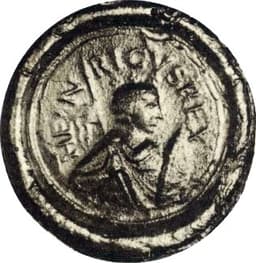
Henry the Fowler
Emperor · Medieval
60.9Total
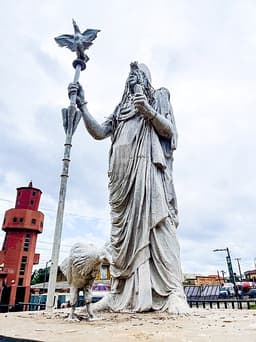
Oduduwa
Emperor · Medieval
59.7Total
Basic Information
Born
876
950
Died
936
1020
Era
Medieval
Medieval
Nationality
East Francia
Ife
Occupation
Emperor
Emperor
Civilization
Western
Other
Score Comparison
Military (10%)
70.0
50.0
Political (20%)
59.3
46.6
Influence (20%)
55.0
68.0
Legacy (20%)
52.0
68.0
Leadership (15%)
85.0
67.0
Strategy (15%)
55.0
36.8
TOTAL
60.9
59.7
Henry the Fowler — Complete Timeline
919 AD
Election as King of East FranciaPolitical Action
Henry the Fowler was elected King of East Francia by the Saxon and Frankish nobles at Fritzlar on May 6, 919. He was the first Saxon king, marking the transition from Carolingian to Ottonian rule. His election was contested by other dukes but he prevailed.
ElectionAccessionOttonian Dynasty
Impact: regionalconstructive
921 AD
Treaty of Bonn (921)Political Action◆ Major
Henry the Fowler signed the Treaty of Bonn with Charles the Simple of West Francia, recognizing each other's royal titles and establishing peaceful relations. This treaty ended Carolingian claims over East Francia and solidified Henry's legitimacy as an independent king.
TreatyRecognitionDiplomacy
Impact: regionalconstructive
924 AD
Nine-Year Truce with the MagyarsPolitical Action◆ Major
Henry the Fowler negotiated a nine-year truce with the Magyars, agreeing to pay tribute in exchange for a halt to their raids. He used this period to fortify towns, reorganize the army, and train cavalry. This strategic pause was crucial for his later military reforms.
TruceMagyarsMilitary Reform
Impact: regionalconstructive
929 AD
Battle of Lenzen (929)War◆ Major
Henry the Fowler's forces defeated a Slavic army at the Battle of Lenzen, securing the eastern frontier of East Francia. This victory allowed Henry to consolidate control over the Elbe region and establish the March of Brandenburg, a key step in German eastward expansion.
BattleSlavic WarsEastern Expansion
Impact: regionalconstructive
933 AD
Battle of Riade (933)War
After the truce with the Magyars expired, Henry the Fowler led a German army to victory at the Battle of Riade (near Merseburg). The defeat of the Magyar cavalry ended their raids into East Francia for a generation and established Henry's reputation as a defender of Christendom.
BattleMagyarsVictory
Impact: regionalconstructive
936 AD
Death of Henry the FowlerOther◆ Major
Henry the Fowler died on July 2, 936, at Memleben. He was succeeded by his son, Otto I, who would become Holy Roman Emperor. Henry's reign laid the foundations for the Ottonian dynasty and the medieval German kingdom.
DeathSuccessionOttonian
Impact: regional
Oduduwa — Complete Timeline
1000 AD
Foundation of the Yoruba civilization at Ile-IfeCultural
According to Yoruba oral tradition, Oduduwa descended from heaven at Ile-Ife and founded the Yoruba civilization. He is credited with establishing the first Yoruba kingdom and the sacred city of Ile-Ife, which became the spiritual and cultural heartland of the Yoruba people.
Impact: regionalconstructive
1010 AD
Establishment of the Yoruba royal dynastiesPolitical Action◆ Major
Oduduwa is said to have sent his sons and grandsons to found the various Yoruba kingdoms, including Oyo, Benin, and Ketu. This act established the royal lineages that ruled these states for centuries, creating a network of related kingdoms under the spiritual authority of the Ooni of Ife.
Impact: regionalconstructive
Expert Analysis
Henry the Fowler vs Oduduwa
### The Founder and the Fox: Why Oduduwa’s Spirit Outlasts Henry the Fowler’s Sword
In the summer of 933, a Saxon king named Henry rode out from his fortress at Memleben to meet the Magyars on the field of Riade. For nine years, he had paid them tribute, swallowing the humiliation of a vassal’s peace. Now, the truce was over, and he led a new kind of army—one he had built in secret, training heavy cavalry on a network of fortified burghs. The Magyar horsemen, accustomed to scattering German spearmen, instead met a wall of steel. Henry won a decisive victory, and the chroniclers recorded that the invaders never again threatened his kingdom. Across a continent and a millennium, in the sacred groves of Ile-Ife, another ruler was laying a different kind of foundation. Oduduwa, according to Yoruba tradition, had descended from heaven on a chain, carrying a handful of earth and a five-toed rooster. He spread the earth upon the primordial waters, the rooster scratched it into land, and from that first soil, the Yoruba civilization was born. One man forged a kingdom through iron and tribute; the other conjured a people from myth and memory. Their total scores—68.2 for Henry, 60.1 for Oduduwa—suggest a clear victor. But history is not a ledger. The real question is not who was greater, but why one man’s empire crumbled into memory while the other’s spirit still breathes in the coronation of every Yoruba king.
**Origins**
Henry the Fowler was born in 876 into a world of fragments. The Carolingian Empire had collapsed, and East Francia was a patchwork of Saxon, Frankish, Bavarian, and Swabian duchies, each ruled by a proud duke who acknowledged no master. Henry’s father, Otto the Illustrious, was Duke of Saxony, one of the most powerful of these lords. Henry grew up in the shadow of fortresses and the sound of war-horns, learning that power was something you seized with a sword and held with a treaty. His nickname, “the Fowler,” came from a story that when messengers arrived to tell him he had been elected king, they found him trapping birds—a tale that suggests a man who preferred the concrete to the ceremonial.
Oduduwa’s origins belong to a different order of truth. He was born around 950, but the date is less a fact than a marker. In Yoruba cosmology, Oduduwa is not merely a historical figure; he is a divine ancestor, a messenger of the supreme god Olodumare. Oral traditions describe him as the son of a king from the east—perhaps from Mecca, perhaps from the ancient city of Oyo—who migrated westward and settled at Ile-Ife. There, he overthrew the indigenous rulers and established a new order. Whether he was a real man or a myth made flesh, his origin story served a purpose: it gave the Yoruba a common father, a shared descent from the sky.
**Rise to Power**
Henry’s path to kingship was a lesson in pragmatism. In 919, the Saxon and Frankish nobles gathered at Fritzlar and elected him King of East Francia. But the title was hollow. The Duke of Bavaria refused to recognize him, and the Duke of Swabia was openly hostile. Henry did not march against them. Instead, he made a strategic retreat, acknowledging their autonomy in exchange for their allegiance. This was not weakness; it was the wisdom of a man who knew that a kingdom built on conquest could be unmade by rebellion. Over the next decade, he slowly consolidated power, using marriage alliances, military pressure, and the careful distribution of land.
Oduduwa’s rise was swifter and more absolute. According to tradition, he descended from heaven at Ile-Ife around the year 1000, carrying the symbols of kingship: a crown, a staff, and a beaded necklace. He planted the earth, and the land rose. He then sent his sons and grandsons to found the great Yoruba kingdoms—Oyo, Benin, Ketu, and others—each receiving a piece of the sacred crown. This was not a negotiation; it was a creation. Oduduwa did not win power; he invented it.
**Leadership & Governance**
Henry the Fowler ruled as a warrior-king. His military score of 60.1 reflects a man who understood that defense was the mother of strategy. He built a network of fortified towns, or *burghs*, each garrisoned with trained soldiers, and he reformed the army by emphasizing heavy cavalry over foot soldiers. His political score of 74.5, however, reveals a deeper genius. The Treaty of Bonn in 921, in which he recognized Charles the Simple of West Francia as an equal, was not a concession but a masterstroke: it secured his western flank while he dealt with the Magyars. He was a fox who knew when to fight and when to bargain.
Oduduwa’s leadership was of a different substance. His military score is a mere 11.4—he is not remembered for battles. Instead, his political score of 72.0 and leadership score of 81.7 suggest a ruler who governed through myth, ritual, and lineage. He established the *Ooni* of Ife as the spiritual head of the Yoruba, and his descendants became the *Alaafin* of Oyo, the *Oba* of Benin, and a dozen other dynasties. Where Henry built walls, Oduduwa built bloodlines. Where Henry negotiated treaties, Oduduwa decreed descent.
**Triumph & Tragedy**
Henry’s greatest moment was the Battle of Riade in 933. After nine years of paying tribute, he turned on the Magyars and crushed them. It was a triumph of patience, preparation, and nerve. But his tragedy was that he did not live to see the fruit of his work. He died on July 2, 936, at Memleben, leaving his son Otto I to inherit a kingdom that was still fragile. Otto would go on to become Holy Roman Emperor, but Henry did not live to see the crown.
Oduduwa’s triumph was the foundation of a civilization. His tragedy, if it can be called that, is that he is more symbol than man. We know no battles he fought, no treaties he signed, no laws he enacted. He exists only in the echo of his name, in the coronation rituals of kings who still claim his blood. His triumph is that he became immortal; his tragedy is that he ceased to be human.
**Character & Destiny**
Henry the Fowler was a pragmatist. He accepted tribute to buy time, he surrendered autonomy to win loyalty, and he fought only when victory was certain. His character was shaped by the fractured world of 10th-century Europe, where a king was only as strong as his alliances. His destiny was to lay the foundation for the Holy Roman Empire, a structure that would dominate Europe for a thousand years.
Oduduwa was a visionary. He did not adapt to the world; he created one. His character was shaped by the needs of a people who required a common ancestor, a shared story, a divine mandate. His destiny was to become the father of a civilization, not through conquest but through conception.
**Legacy**
Henry the Fowler is remembered as the founder of the Ottonian dynasty and the first Saxon king of East Francia. His legacy is political and military: the burghs he built became cities; the army he reformed became the model for German warfare; the kingdom he consolidated became the core of the Holy Roman Empire. But today, he is a footnote in European history, known mainly to scholars and medieval enthusiasts.
Oduduwa’s legacy is alive in the coronation of every Yoruba king. When the *Ooni* of Ife is crowned, he wears the beaded crown that Oduduwa brought from heaven. When the *Alaafin* of Oyo takes the throne, he is reminded that he is a son of the first king. Oduduwa’s legacy is not a kingdom but a kinship, not an empire but an identity.
**Conclusion**
Henry the Fowler built a kingdom that became an empire and then a memory. Oduduwa built a family that became a people. One man’s work is buried in the archives of Europe; the other’s is sung in the oral histories of West Africa. The difference is not in their scores—Henry’s 68.2 against Oduduwa’s 60.1—but in the nature of what they built. Henry built walls, and walls crumble. Oduduwa built blood, and blood flows forever. In the end, the founder of Ife may have the last word: the king who is remembered is not the one who conquered, but the one who became a father.
Rankings
🥇
Henry the FowlerLeader
Mil: 70.0Pol: 59.3Inf: 55.0
60.9
🥈
Oduduwa
Mil: 50.0Pol: 46.6Inf: 68.0
59.7
+1.2 behind
How This Comparison Works
Algorithm
Each figure is scored on 6 dimensions (0—100 scale) based on structured historical data: Military (10%), Political (20%), Influence (20%), Legacy (20%), Leadership (15%), Strategy (15%). The weighted total produces the final ranking.
Data Sources
Scores are computed from structured sub-indicators in the database. Scale factors adjust for era (Ancient ×0.85, Modern ×1.0) and civilization size (Eastern ×1.05, Other ×0.80) to account for differences in population and military scale.
Maximum 3 Figures
Comparisons are limited to 2—3 figures to ensure readability and statistical meaningfulness.
Error Margins
±5 points per dimension — Sub-scores are derived from historical records with inherent uncertainty. Two figures within 5 points on a dimension should be considered roughly equivalent in that area.
Total Score Accuracy
±3 points overall — The weighted combination of 6 dimensions produces a total score with approximately ±3 points of uncertainty. Differences of less than 3 points are not statistically significant— the figures are effectively tied.
Known Limitations
- Historical records are incomplete and uneven across civilizations
- Figures from oral-tradition societies may be underrepresented
- Occupation labels can misclassify multi-role figures
- Scores measure capability and impact, not moral character
- Quantitative scoring is a comparison tool, not absolute truth
Capability Radar
Military (10%) — Battles & Warfare
Battles
55
10
Win Rate
60
10
Expansion
60
30
Political (20%) — Governance & Reform
Reform
75
50
Diplomacy
70
40
Economy
65
40
Influence (20%) — Cultural & Global Reach
Cultural
55
80
Global
40
70
Legacy (20%) — Historical Impact
Historical
65
80
Longevity
60
80
Leadership (15%) — Power & Stability
Tenure
70
40
Stability
70
50
Strategy (15%) — Tactics & Innovation
Strategy
65
10
Tactics
50
10
Reform
70
10
Similar Comparisons
Comments & Discussion
SwordCounter6/16/2026
Henry's Riade victory is overrated by German nationalists. The Magyars melted away without a real battle—they'd already looted Bavaria en route. His real genius was playing dead for nine years while building burghs. That's not a warrior king; that's a tax collector with a gym membership. Oduduwa created an entire cosmology from scratch. Who needs swords when you invented dry land?
铁蹄评书6/16/2026
亨利大帝就是个巧取豪夺的领主,东法兰克诸侯被他用"城堡税"榨干后才勉强凑出那支骑兵队。公元933年的Riade战役,人家马扎尔人根本没想和他拼命,抢完就跑。反观奥杜杜瓦,他用一只公鸡和一把泥土就构建了一个文明的精神支柱。哪个统治者更有远见不言自明。