Loading...
Henry the Fowler vs Nyatsimba Mutota
Henry the Fowler leads by 4.4 pts · 2 figures compared
…
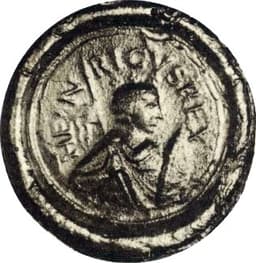
Henry the Fowler
Emperor · Medieval
60.9Total

Nyatsimba Mutota
Emperor · Medieval
56.5Total
Basic Information
Born
876
1400
Died
936
1450
Era
Medieval
Medieval
Nationality
East Francia
Mozambique
Occupation
Emperor
Emperor
Civilization
Western
Other
Score Comparison
Military (10%)
70.0
72.5
Political (20%)
59.3
68.0
Influence (20%)
55.0
59.0
Legacy (20%)
52.0
50.0
Leadership (15%)
85.0
40.0
Strategy (15%)
55.0
57.5
TOTAL
60.9
56.5
Henry the Fowler — Complete Timeline
919 AD
Election as King of East FranciaPolitical Action
Henry the Fowler was elected King of East Francia by the Saxon and Frankish nobles at Fritzlar on May 6, 919. He was the first Saxon king, marking the transition from Carolingian to Ottonian rule. His election was contested by other dukes but he prevailed.
ElectionAccessionOttonian Dynasty
Impact: regionalconstructive
921 AD
Treaty of Bonn (921)Political Action◆ Major
Henry the Fowler signed the Treaty of Bonn with Charles the Simple of West Francia, recognizing each other's royal titles and establishing peaceful relations. This treaty ended Carolingian claims over East Francia and solidified Henry's legitimacy as an independent king.
TreatyRecognitionDiplomacy
Impact: regionalconstructive
924 AD
Nine-Year Truce with the MagyarsPolitical Action◆ Major
Henry the Fowler negotiated a nine-year truce with the Magyars, agreeing to pay tribute in exchange for a halt to their raids. He used this period to fortify towns, reorganize the army, and train cavalry. This strategic pause was crucial for his later military reforms.
TruceMagyarsMilitary Reform
Impact: regionalconstructive
929 AD
Battle of Lenzen (929)War◆ Major
Henry the Fowler's forces defeated a Slavic army at the Battle of Lenzen, securing the eastern frontier of East Francia. This victory allowed Henry to consolidate control over the Elbe region and establish the March of Brandenburg, a key step in German eastward expansion.
BattleSlavic WarsEastern Expansion
Impact: regionalconstructive
933 AD
Battle of Riade (933)War
After the truce with the Magyars expired, Henry the Fowler led a German army to victory at the Battle of Riade (near Merseburg). The defeat of the Magyar cavalry ended their raids into East Francia for a generation and established Henry's reputation as a defender of Christendom.
BattleMagyarsVictory
Impact: regionalconstructive
936 AD
Death of Henry the FowlerOther◆ Major
Henry the Fowler died on July 2, 936, at Memleben. He was succeeded by his son, Otto I, who would become Holy Roman Emperor. Henry's reign laid the foundations for the Ottonian dynasty and the medieval German kingdom.
DeathSuccessionOttonian
Impact: regional
Nyatsimba Mutota — Complete Timeline
1430 AD
Founding of the Mutapa EmpirePolitical Action
Nyatsimba Mutota led a migration north from Great Zimbabwe and founded the Mutapa Empire in the Zambezi valley. He established a new capital at Zvongombe and began territorial expansion.
Impact: regionalconstructive
1440 AD
Conquest of the TavaraWar◆ Major
Nyatsimba Mutota conquered the Tavara people in the Zambezi valley, incorporating their territory into the Mutapa Empire. This victory secured control over fertile agricultural lands and trade routes.
Impact: regional
1445 AD
Establishment of the Mwenemutapa TitlePolitical Action◆ Major
Nyatsimba Mutota adopted the title Mwenemutapa, meaning 'lord of the conquered lands,' formalizing the imperial structure. This title became hereditary and defined the ruler's authority over conquered peoples.
Impact: regionalconstructive
Expert Analysis
Henry the Fowler vs Nyatsimba Mutota
### The King and the Conqueror: Two Founders, Two Worlds
On a spring morning in 919, in the small town of Fritzlar, a Saxon duke named Henry was offered a crown. The nobles of East Francia, weary of chaos, chose him not for his lineage but for his reputation as a pragmatist. Over a century later and thousands of miles south, in the sun-scorched Zambezi valley, another leader, Nyatsimba Mutota, led his people north from the crumbling stone walls of Great Zimbabwe, driven by drought and ambition. Both men founded dynasties. Both carved empires out of uncertainty. But their paths, their tools, and their legacies could not have been more different. Why did one become the architect of a Holy Roman Empire, while the other vanished into the margins of history? The answer lies not in their ambition—which was equal—but in the worlds they inhabited and the choices those worlds demanded.
### Origins
Henry the Fowler was born in 876 into the violent, fragmented landscape of post-Carolingian Europe. His father, Otto the Illustrious, was a Saxon duke, but the title carried little security. Raiding Vikings, feuding nobles, and the terrifying Magyar horsemen who swept out of the Hungarian plain made survival a daily struggle. Henry learned early that power came not from birthright alone but from the ability to forge alliances, pay tribute, and strike when the enemy faltered. The nickname "the Fowler" may have come from a legend that he was hawking when told of his election—a story that, true or not, captured his image as a man who could seize opportunity from the sky.
Nyatsimba Mutota, born around 1400, emerged from a different kind of crisis. Great Zimbabwe, the magnificent stone city that had dominated southern Africa for centuries, was in decline. Overgrazing, soil exhaustion, and political infighting had sapped its strength. Mutota was not a foreign invader but a prince of the ruling dynasty, and his solution was not to defend the old capital but to abandon it. He gathered his followers—warriors, farmers, and priests—and marched north into the fertile but hostile Zambezi valley. There, among the Tavara people, he would build anew. His origins were not of a fractured kingdom but of a civilization that had outgrown its cradle.
### Rise to Power
Henry’s rise was a masterclass in political patience. Elected king in 919, he faced a realm where dukes of Bavaria, Swabia, and Lorraine barely acknowledged his authority. He did not crush them by force. Instead, he used negotiation, marriage alliances, and the threat of the common enemy. In 921, he signed the Treaty of Bonn with Charles the Simple of West Francia, a diplomatic stroke that recognized his legitimacy without war. His greatest gamble came in 924, when he negotiated a nine-year truce with the Magyars—agreeing to pay tribute in exchange for peace. Critics called it cowardice. Henry called it time. He used those nine years to build fortified towns, train a new cavalry, and consolidate his rule.
Mutota’s rise was more direct. Around 1430, he led his migration north, and when he reached the Zambezi valley, he found the Tavara people divided and vulnerable. He did not negotiate. He conquered. By 1440, he had absorbed their territory into his expanding domain. His power was not built on treaties but on the submission of chieftains. He adopted the title *Mwenemutapa*—"lord of the conquered lands"—a name that announced his rule as absolute. Where Henry bought time, Mutota took it.
### Leadership & Governance
Henry’s leadership was defined by strategic restraint. He never called himself emperor; he remained a king among dukes. His reforms were subtle: he strengthened the Church as a unifying institution, encouraged the construction of stone fortresses, and built a professional army loyal to the crown rather than to local lords. His military genius was not in grand battles but in preparation. The Battle of Lenzen in 929, where his forces crushed a Slavic army on the eastern frontier, was a textbook example of disciplined infantry and cavalry coordination. But his crowning moment came in 933 at the Battle of Riade. When the Magyar truce expired, Henry met them not with tribute but with a well-trained, armored cavalry. The victory was decisive. He had transformed a tribute-paying kingdom into a rising power.
Mutota ruled differently. His empire was built on the extraction of gold and ivory, which flowed through Indian Ocean trade routes to Arabia and India. He did not build a bureaucracy or a standing army; he relied on personal loyalty and the fear his warriors inspired. His governance was that of a conqueror who integrated conquered elites by offering them positions in his court. The title *Mwenemutapa* was not just a name—it was a contract. It promised protection in exchange for absolute obedience. His military strategy was one of mobility and intimidation, not fortification. Where Henry built walls, Mutota built networks.
### Triumph & Tragedy
Henry’s greatest triumph was Riade. It was the moment a king who had been mocked for paying tribute proved that patience and preparation could break the cycle of fear. His tragedy was that he did not live to see the empire he founded reach its peak. He died on July 2, 936, at Memleben, and was succeeded by his son, Otto I, who would be crowned Holy Roman Emperor in 962. Henry never wore that crown, but he had made it possible.
Mutota’s greatest triumph was the founding of the Mutapa Empire itself. By the time of his death around 1450, he had created a state that would dominate the Zambezi valley for centuries. But his tragedy was the fragility of his creation. Without the institutional structures that Henry had built—without a Church, a written law, or a stable succession—the empire would eventually fracture. His descendants would fight over the throne, and the Portuguese, when they arrived in the 16th century, would exploit those divisions.
### Character & Destiny
Henry’s character was that of a fox: cunning, patient, and aware of his limits. He knew that a king who tried to do everything would accomplish nothing. His restraint was not weakness but wisdom. Mutota was a lion: bold, direct, and uncompromising. He saw the world as something to be taken, not negotiated. Their different personalities matched their different circumstances. Henry’s world was a chessboard of rival powers; Mutota’s was a frontier of open space. One needed diplomacy; the needed conquest.
### Legacy
Henry’s legacy is monumental. He founded the Ottonian dynasty, which would produce the first Holy Roman Emperors. His policy of fortification and church-building laid the groundwork for the medieval German kingdom. He is remembered as a unifier, a king who turned a collection of warring duchies into a coherent state.
Mutota’s legacy is more obscure but no less real. The Mutapa Empire endured for over two centuries, shaping the political and economic landscape of southern Africa. His title, *Mwenemutapa*, became synonymous with power. But because his empire left no written records, his story survives only in oral tradition and the accounts of Portuguese traders. He is a ghost in the historical record, a founder without a biography.
### Conclusion
Standing in the cool, stone halls of a German cathedral, one might find a statue of Henry—a king in armor, his hand on a sword, his eyes fixed on the future. Standing in the heat of the Zambezi valley, one finds only dust and the memory of a name. Both men built empires. Both faced impossible odds. But Henry’s world was one of parchment and stone, where power could be codified and passed down. Mutota’s world was one of blood and gold, where power was personal and perishable. Their differences are not a measure of worth but a reminder that history is not a single story—it is a thousand, each shaped by the soil it grew from.
Rankings
🥇
Henry the FowlerLeader
Mil: 70.0Pol: 59.3Inf: 55.0
60.9
🥈
Nyatsimba Mutota
Mil: 72.5Pol: 68.0Inf: 59.0
56.5
+4.4 behind
How This Comparison Works
Algorithm
Each figure is scored on 6 dimensions (0—100 scale) based on structured historical data: Military (10%), Political (20%), Influence (20%), Legacy (20%), Leadership (15%), Strategy (15%). The weighted total produces the final ranking.
Data Sources
Scores are computed from structured sub-indicators in the database. Scale factors adjust for era (Ancient ×0.85, Modern ×1.0) and civilization size (Eastern ×1.05, Other ×0.80) to account for differences in population and military scale.
Maximum 3 Figures
Comparisons are limited to 2—3 figures to ensure readability and statistical meaningfulness.
Error Margins
±5 points per dimension — Sub-scores are derived from historical records with inherent uncertainty. Two figures within 5 points on a dimension should be considered roughly equivalent in that area.
Total Score Accuracy
±3 points overall — The weighted combination of 6 dimensions produces a total score with approximately ±3 points of uncertainty. Differences of less than 3 points are not statistically significant— the figures are effectively tied.
Known Limitations
- Historical records are incomplete and uneven across civilizations
- Figures from oral-tradition societies may be underrepresented
- Occupation labels can misclassify multi-role figures
- Scores measure capability and impact, not moral character
- Quantitative scoring is a comparison tool, not absolute truth
Capability Radar
Military (10%) — Battles & Warfare
Battles
55
55
Win Rate
60
60
Expansion
60
65
Political (20%) — Governance & Reform
Reform
75
50
Diplomacy
70
55
Economy
65
50
Influence (20%) — Cultural & Global Reach
Cultural
55
45
Global
40
40
Legacy (20%) — Historical Impact
Historical
65
55
Longevity
60
50
Leadership (15%) — Power & Stability
Tenure
70
60
Stability
70
55
Strategy (15%) — Tactics & Innovation
Strategy
65
55
Tactics
50
50
Reform
70
40
Similar Comparisons
Comments & Discussion
TheFowler'sForge6/16/2026
Calling this a "comparison" is like comparing a blacksmith's hammer to a river reed. Henry turned bandit-ridden Saxony into a fortified kingdom with burgwards and a mobile cavalry against the Magyars. Mutota? He walked north and told people he was divine. One built a state through infantry tactics and tribute reform; the other built it through spiritual monopoly. Great Zimbabwe's walls didn't save his legacy—the Portuguese erased him. Henry's legal groundwork lasted a millennium.
ZambeziSilence6/16/2026
Mutota的帝国是建立在雨水和神殿上的,而亨利在莱希菲尔德战役(933年)之前就建好了城堡网络。一个种地,一个造城。凭什么用"统治者"这个词把他们并列?穆托塔的扩张靠的是干旱难民依附他的神灵光环,亨利打的可是马扎尔人——欧洲历史上最致命的游牧威胁之一。承认吧,如果没有葡萄牙人纪事,穆托塔连个日期都留不下。
DataSkeptic6/16/2026
Let's talk numbers: Henry's East Francia held roughly 300,000 square kilometers and maybe 2 million people. Mutota's Mutapa State, at its peak, might have controlled 200,000 square kilometers but with way lower population density—likely under 500,000. Henry minted coins, kept written tax rolls, and had chroniclers. Mutota had oral tradition and Portuguese trader notes. One is historically measurable; the other is archaeology and guesswork. There's no symmetry here—just a data imbalance masked by
旧地新痕6/16/2026
亨利活进了欧洲所有教科书的"王朝起源"章节,穆托塔的穆塔帕只在非洲区域史附录里短暂发光。为什么?因为亨利留下了一整套行政、外交和军事结构的文字记录,而穆托塔的继承者——像马托佩和尼扬赫维——全在葡萄牙人枪炮和传教士日记中变成"附庸"。历史比较从来不是公平对决,而是记录手段的比拼。穆托塔输在了没有羊皮纸。
MagyarSlayer6/16/2026
You want a real difference? Henry took the measure of the Magyar threat—he paid them tribute for nine years while building fortified towns and training heavy cavalry. That's strategic patience. When he finally broke the truce at Riade in 933, the Magyars never raided Saxony again. Meanwhile, Mutota's "empire" was basically a ritual migration: he led a group from Great Zimbabwe to the Zambezi, and his son had to conquer most of the territory. Henry founded a dynasty that shaped Germany; Mutota fo