Loading...
Henry the Fowler vs Moctezuma I
Henry the Fowler leads by 2.0 pts · 2 figures compared
…
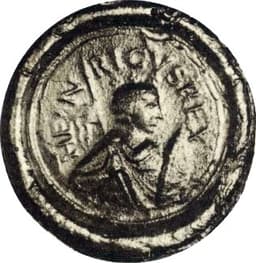
Henry the Fowler
Emperor · Medieval
60.9Total

Moctezuma I
Emperor · Medieval
58.9Total
Basic Information
Born
876
1398
Died
936
1469
Era
Medieval
Medieval
Nationality
East Francia
Aztec Empire
Occupation
Emperor
Emperor
Civilization
Western
Other
Score Comparison
Military (10%)
70.0
82.0
Political (20%)
59.3
45.0
Influence (20%)
55.0
58.3
Legacy (20%)
52.0
56.0
Leadership (15%)
85.0
66.0
Strategy (15%)
55.0
55.0
TOTAL
60.9
58.9
Henry the Fowler — Complete Timeline
919 AD
Election as King of East FranciaPolitical Action
Henry the Fowler was elected King of East Francia by the Saxon and Frankish nobles at Fritzlar on May 6, 919. He was the first Saxon king, marking the transition from Carolingian to Ottonian rule. His election was contested by other dukes but he prevailed.
ElectionAccessionOttonian Dynasty
Impact: regionalconstructive
921 AD
Treaty of Bonn (921)Political Action◆ Major
Henry the Fowler signed the Treaty of Bonn with Charles the Simple of West Francia, recognizing each other's royal titles and establishing peaceful relations. This treaty ended Carolingian claims over East Francia and solidified Henry's legitimacy as an independent king.
TreatyRecognitionDiplomacy
Impact: regionalconstructive
924 AD
Nine-Year Truce with the MagyarsPolitical Action◆ Major
Henry the Fowler negotiated a nine-year truce with the Magyars, agreeing to pay tribute in exchange for a halt to their raids. He used this period to fortify towns, reorganize the army, and train cavalry. This strategic pause was crucial for his later military reforms.
TruceMagyarsMilitary Reform
Impact: regionalconstructive
929 AD
Battle of Lenzen (929)War◆ Major
Henry the Fowler's forces defeated a Slavic army at the Battle of Lenzen, securing the eastern frontier of East Francia. This victory allowed Henry to consolidate control over the Elbe region and establish the March of Brandenburg, a key step in German eastward expansion.
BattleSlavic WarsEastern Expansion
Impact: regionalconstructive
933 AD
Battle of Riade (933)War
After the truce with the Magyars expired, Henry the Fowler led a German army to victory at the Battle of Riade (near Merseburg). The defeat of the Magyar cavalry ended their raids into East Francia for a generation and established Henry's reputation as a defender of Christendom.
BattleMagyarsVictory
Impact: regionalconstructive
936 AD
Death of Henry the FowlerOther◆ Major
Henry the Fowler died on July 2, 936, at Memleben. He was succeeded by his son, Otto I, who would become Holy Roman Emperor. Henry's reign laid the foundations for the Ottonian dynasty and the medieval German kingdom.
DeathSuccessionOttonian
Impact: regional
Moctezuma I — Complete Timeline
1428 AD
Conquest of the TepanecsWar◆ Major
Itzcoatl led the Triple Alliance forces in a war against the Tepanecs of Azcapotzalco, the dominant power in the region. The victory broke Tepanec hegemony and established Tenochtitlan as the leading city-state in central Mexico.
WarTepanec WarAztec Expansion
Impact: regional
Formed the Triple AlliancePolitical Action
Itzcoatl, as tlatoani of Tenochtitlan, formed the Triple Alliance with Texcoco and Tlacopan. This military and political pact created the Aztec Empire, enabling coordinated conquests and the subjugation of neighboring city-states in the Valley of Mexico.
Aztec EmpireAlliancePolitical Foundation
Impact: regional
1430 AD
Burned Historical CodicesCultural◆ Major
Itzcoatl ordered the burning of historical codices from conquered peoples, rewriting Aztec history to legitimize his rule and the empire's divine origins. This act destroyed pre-Aztec records and reshaped Mesoamerican historical memory.
Cultural DestructionHistorical RevisionAztec Ideology
Impact: regionaldestructive
Expert Analysis
Henry the Fowler vs Moctezuma I
### The Builder and the Emperor: Two Paths to Power in a Violent Age
On a dusty battlefield near Merseburg in 933, King Henry the Fowler watched his Saxon cavalry shatter the dreaded Magyar horsemen. It was a moment of deliverance. A generation earlier, the Magyars had been the terror of Europe, their raids reaching as far as the gates of Constantinople. Now, they were broken. A thousand miles away and a century earlier, in the Valley of Mexico, a different kind of victory was being prepared. Moctezuma I, then a young prince, was watching his uncle Itzcoatl forge a triple alliance that would turn Tenochtitlan from a city of lakes into the heart of an empire. Both men would be called emperors. Both would build nations from the wreckage of old orders. But the worlds they built—and the ways they built them—could not have been more different.
### Origins: The Lake and the Forest
Henry was born in 876 into the chaos of post-Carolingian Europe. The great empire of Charlemagne had splintered into warring kingdoms. Henry’s father, Otto the Illustrious, was a Saxon duke, a leader of a people who had themselves been conquered by Charlemagne only a few generations earlier. The Saxons were a hardy, forest-dwelling folk, their identity forged in resistance to Frankish domination. Henry grew up in a world where loyalty was local, where a king’s authority reached only as far as his horsemen could ride. His education was not in books but in the practical arts of war, hunting, and the careful management of noble egos.
Moctezuma I, born in 1398, came from a world of stone and water. Tenochtitlan, his city, was an island fortress built in the middle of a shallow lake. The Aztecs, or Mexica, were latecomers to the Valley of Mexico, a people of humble origins who had clawed their way to power through military service and sheer audacity. Moctezuma’s uncle, Itzcoatl, was the man who transformed their fortunes. The young prince was raised in the shadow of the great pyramid temples, where the gods demanded blood and the state was a machine of war and ritual. Where Henry learned to negotiate with proud dukes, Moctezuma learned to command armies and to read the omens in the stars.
### Rise to Power: Election and Inheritance
Henry’s path to power was a matter of careful politics. In 919, after the death of the last Carolingian king of East Francia, the Saxon and Frankish nobles gathered at Fritzlar. They elected Henry as their king. It was an election, not a birthright. Henry had to earn his crown, and he did so by demonstrating that he could defend them. His first act was to refuse the traditional anointing by a bishop—a gesture that signaled he would be a king of warriors, not a puppet of the church.
Moctezuma’s rise was more direct. He was a prince of the blood, a nephew of the tlatoani—the speaker—of Tenochtitlan. When Itzcoatl died in 1440, Moctezuma inherited the throne. There was no election, no negotiation. The power passed from uncle to nephew, as it had been planned. But this was not a peaceful inheritance. Moctezuma had to prove himself immediately, leading his first campaign within months of taking power. In the Aztec world, a tlatoani who could not conquer was a tlatoani who would not last.
### Leadership & Governance: The Art of Consolidation
Henry’s genius was not in conquest but in consolidation. He inherited a kingdom that was little more than a loose confederation of duchies—Saxony, Franconia, Swabia, Bavaria. His first task was to make them feel like one kingdom. He did this not by force but by marriage, by treaty, and by the sheer force of his personality. He signed the Treaty of Bonn in 921 with Charles the Simple of West Francia, a diplomatic masterstroke that recognized each other’s legitimacy and ended decades of border warfare. But his greatest challenge was the Magyars. In 924, he negotiated a nine-year truce, paying them tribute. It was a humiliating necessity. But Henry used those nine years to build. He fortified towns, trained a new cavalry, and organized his realm for war. When the truce expired in 933, he was ready. The victory at Riade was not just a military triumph; it was the birth of a kingdom that could defend itself.
Moctezuma governed through a different logic. The Aztec Empire was a machine of tribute and terror. Moctezuma expanded its borders through relentless military campaigns, conquering the cities of the Valley of Mexico and beyond. He did not seek to integrate his subjects into a single nation; he sought to dominate them. Conquered cities paid tribute in gold, jade, cacao, and, most importantly, in captives for sacrifice. The Aztec state was a pyramid of fear, with Tenochtitlan at the apex. Moctezuma was a master of this system, but it was a brittle one. His empire was built on the constant threat of violence, and it required constant feeding.
### Triumph & Tragedy: The High Water Mark
Henry’s greatest moment was the Battle of Riade in 933. It was a triumph of patience and preparation. The Magyars, who had terrorized Europe for decades, were routed. The victory was so complete that the Magyars would never again raid deep into German lands. Henry died three years later, in 936, at Memleben, having secured his dynasty and his kingdom. His tragedy was that he did not live to see his son Otto crowned Holy Roman Emperor, the title that would make the Ottonian dynasty one of the great powers of medieval Europe.
Moctezuma’s triumph was the consolidation of the Triple Alliance. Under his leadership, Tenochtitlan, Texcoco, and Tlacopan became the undisputed masters of central Mexico. He built aqueducts, temples, and causeways that transformed his island city into a marvel of the world. His tragedy was that his empire was a house of cards. The Aztec system of constant war and sacrifice created countless enemies. When the Spanish arrived, those enemies would become their allies. Moctezuma’s successor, Moctezuma II, would face the consequences of this brittle empire.
### Character & Destiny: The Pragmatist and the Priest-King
Henry was a pragmatist. He knew when to fight and when to pay tribute. He knew when to humble himself and when to strike. His decision to accept the Magyar truce, to pay them off, was not a sign of weakness but of wisdom. He was a king who understood that the first duty of a ruler is to survive. His character was shaped by the forests of Saxony, by the need to negotiate with proud men, and by the simple truth that in a world of iron and blood, patience is a weapon.
Moctezuma was a priest-king. His world was one of ritual and prophecy. The Aztec religion demanded blood, and Moctezuma was its high priest. He led the great ceremonies atop the pyramids, his chest covered in the blood of sacrifices. He was a warrior, but his wars were as much about feeding the gods as about expanding the empire. His character was shaped by the lake, by the isolation of Tenochtitlan, and by the terrible logic of a civilization that believed the sun would not rise without human hearts.
### Legacy: The Kingdom and the Ghost
Henry the Fowler left behind a kingdom that would become the Holy Roman Empire, the dominant power in Europe for centuries. His son Otto I would be crowned emperor in 962, fulfilling the dream that Henry had begun. Henry is remembered as the founder of the Ottonian dynasty, as the king who stopped the Magyars and built the foundations of Germany. His legacy is one of solidity, of stone walls and strong horses.
Moctezuma I left behind an empire that would be destroyed within a generation of his death. The Aztec world, with its pyramids and its sacrifices, its aqueducts and its poets, was erased by the Spanish conquest. Moctezuma is remembered as a builder, as the emperor who made Tenochtitlan great. But his greatness is a ghost, a memory of a world that was swept away. His legacy is a warning about the fragility of power built on fear.
### Conclusion
Two emperors, two worlds. Henry built a kingdom that would last a thousand years. Moctezuma built an empire that crumbled in a generation. The difference was not in their courage or their intelligence. It was in the worlds they inherited and the choices they made. Henry chose to build with the consent of his nobles, to fortify and to wait. Moctezuma chose to build with the blood of his enemies, to conquer and to feed the gods. One built a house of stone. The other built a house of bones. Both were great in their time. But only one left a foundation that could endure.
Rankings
🥇
Henry the FowlerLeader
Mil: 70.0Pol: 59.3Inf: 55.0
60.9
🥈
Moctezuma I
Mil: 82.0Pol: 45.0Inf: 58.3
58.9
+2.0 behind
How This Comparison Works
Algorithm
Each figure is scored on 6 dimensions (0—100 scale) based on structured historical data: Military (10%), Political (20%), Influence (20%), Legacy (20%), Leadership (15%), Strategy (15%). The weighted total produces the final ranking.
Data Sources
Scores are computed from structured sub-indicators in the database. Scale factors adjust for era (Ancient ×0.85, Modern ×1.0) and civilization size (Eastern ×1.05, Other ×0.80) to account for differences in population and military scale.
Maximum 3 Figures
Comparisons are limited to 2—3 figures to ensure readability and statistical meaningfulness.
Error Margins
±5 points per dimension — Sub-scores are derived from historical records with inherent uncertainty. Two figures within 5 points on a dimension should be considered roughly equivalent in that area.
Total Score Accuracy
±3 points overall — The weighted combination of 6 dimensions produces a total score with approximately ±3 points of uncertainty. Differences of less than 3 points are not statistically significant— the figures are effectively tied.
Known Limitations
- Historical records are incomplete and uneven across civilizations
- Figures from oral-tradition societies may be underrepresented
- Occupation labels can misclassify multi-role figures
- Scores measure capability and impact, not moral character
- Quantitative scoring is a comparison tool, not absolute truth
Capability Radar
Military (10%) — Battles & Warfare
Battles
55
65
Win Rate
60
70
Expansion
60
80
Political (20%) — Governance & Reform
Reform
75
60
Diplomacy
70
65
Economy
65
70
Influence (20%) — Cultural & Global Reach
Cultural
55
60
Global
40
50
Legacy (20%) — Historical Impact
Historical
65
65
Longevity
60
55
Leadership (15%) — Power & Stability
Tenure
70
70
Stability
70
65
Strategy (15%) — Tactics & Innovation
Strategy
65
75
Tactics
50
60
Reform
70
55
Similar Comparisons
Comments & Discussion
SaxonStriker6/16/2026
Henry the Fowler is wildly overrated as a military innovator. Yes, he beat the Magyars at Riade in 933, but the real credit goes to his creation of the fortified burgs and heavy cavalry system. Moctezuma I conquered 33 provinces and engineered chinampas that fed 200,000 people. Henry built castles on mudflats while Moctezuma transformed a swamp into the most advanced hydraulic city on Earth. Give me the man who made lakes feed millions over one who just repelled raiders.
TlatoaniTruth6/16/2026
The comparison ignores that Moctezuma I actually ruled an empire, while Henry was just the first among German dukes. Moctezuma's Triple Alliance controlled 200,000 km² with a centralized tribute system so efficient that Tenochtitlan had zoos, aqueducts, and a sewer system. Henry's "kingdom" was a loose federation of Saxons, Bavarians, and Swabians who still spoke different languages. This is like comparing a CEO to a cooperative board chairman.
玛雅迷6/16/2026
说亨利建造德意志还算有点道理,但拿他跟蒙特祖玛一世比?亨利一辈子基本待在萨克森森林里打猎和打仗,他统治的都是日耳曼部落,文化差异不大。蒙特祖玛一世面对的却是十几种不同语言的民族,从热带丛林到沙漠高原。他成功把阿兹特克从一个城邦变成三方联盟的核心,这才是真正的帝国缔造者。亨利不过是个称王的部落首领罢了。
数据控6/16/2026
比较里的军力数字骗不了人:亨利和玛格亚人打仗时全军不过几千骑兵和步兵,一场战役决定胜负。蒙特祖玛一世协调的是数十万人的军队,打的是围攻城市、控制整个盆地的全面战争。亨利那个时代连统一货币都没有,而阿兹特克已经有可可豆货币和复杂的贡赋账目。要比影响力,蒙特祖玛的组织能力甩亨利几条街,他才是真正意义上的帝国建筑师。