Loading...
Henry the Fowler vs King Taejo of Goryeo
King Taejo of Goryeo leads by 9.2 pts · 2 figures compared
…
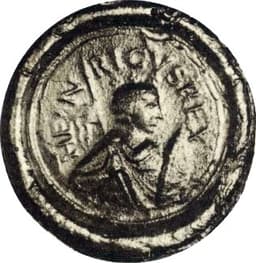
Henry the Fowler
Emperor · Medieval
60.9Total
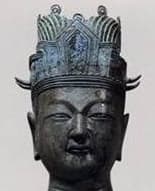
King Taejo of Goryeo
Emperor · Medieval
70.1Total
Basic Information
Born
876
877
Died
936
943
Era
Medieval
Medieval
Nationality
East Francia
Korea
Occupation
Emperor
Emperor
Civilization
Western
Eastern
Score Comparison
Military (10%)
70.0
78.0
Political (20%)
59.3
72.0
Influence (20%)
55.0
65.0
Legacy (20%)
52.0
65.0
Leadership (15%)
85.0
82.0
Strategy (15%)
55.0
67.2
TOTAL
60.9
70.1
Henry the Fowler — Complete Timeline
919 AD
Election as King of East FranciaPolitical Action
Henry the Fowler was elected King of East Francia by the Saxon and Frankish nobles at Fritzlar on May 6, 919. He was the first Saxon king, marking the transition from Carolingian to Ottonian rule. His election was contested by other dukes but he prevailed.
ElectionAccessionOttonian Dynasty
Impact: regionalconstructive
921 AD
Treaty of Bonn (921)Political Action◆ Major
Henry the Fowler signed the Treaty of Bonn with Charles the Simple of West Francia, recognizing each other's royal titles and establishing peaceful relations. This treaty ended Carolingian claims over East Francia and solidified Henry's legitimacy as an independent king.
TreatyRecognitionDiplomacy
Impact: regionalconstructive
924 AD
Nine-Year Truce with the MagyarsPolitical Action◆ Major
Henry the Fowler negotiated a nine-year truce with the Magyars, agreeing to pay tribute in exchange for a halt to their raids. He used this period to fortify towns, reorganize the army, and train cavalry. This strategic pause was crucial for his later military reforms.
TruceMagyarsMilitary Reform
Impact: regionalconstructive
929 AD
Battle of Lenzen (929)War◆ Major
Henry the Fowler's forces defeated a Slavic army at the Battle of Lenzen, securing the eastern frontier of East Francia. This victory allowed Henry to consolidate control over the Elbe region and establish the March of Brandenburg, a key step in German eastward expansion.
BattleSlavic WarsEastern Expansion
Impact: regionalconstructive
933 AD
Battle of Riade (933)War
After the truce with the Magyars expired, Henry the Fowler led a German army to victory at the Battle of Riade (near Merseburg). The defeat of the Magyar cavalry ended their raids into East Francia for a generation and established Henry's reputation as a defender of Christendom.
BattleMagyarsVictory
Impact: regionalconstructive
936 AD
Death of Henry the FowlerOther◆ Major
Henry the Fowler died on July 2, 936, at Memleben. He was succeeded by his son, Otto I, who would become Holy Roman Emperor. Henry's reign laid the foundations for the Ottonian dynasty and the medieval German kingdom.
DeathSuccessionOttonian
Impact: regional
King Taejo of Goryeo — Complete Timeline
918 AD
Founded the Goryeo DynastyPolitical Action
Wang Geon (Taejo) overthrew the Later Goguryeo state and established the Goryeo dynasty, with its capital at Songak (Kaesong). This marked the beginning of a new era in Korean history.
Dynasty FoundingGoryeoKorea
Impact: regionalconstructive
920 AD
Adopted a Policy of Marrying Local ElitesPolitical Action◆ Major
Taejo married women from powerful local clans to secure their loyalty and integrate regional powers into the Goryeo state. This policy helped stabilize the new dynasty.
Marriage PolicyGoryeoUnification
Impact: regionalconstructive
936 AD
Unified the Later Three KingdomsWar
Taejo completed the unification of the Later Three Kingdoms (Later Goguryeo, Later Baekje, and Silla) under Goryeo rule. This ended the period of division and established a unified Korean state.
UnificationLater Three KingdomsGoryeo
Impact: regionalconstructive
943 AD
Implemented Ten InjunctionsPolitical Action◆ Major
Taejo issued the Ten Injunctions, a set of political guidelines for his successors. These stressed the importance of Buddhism, diplomacy with China, and avoiding internal conflict.
GovernanceGoryeoPolicy
Impact: regionalconstructive
Expert Analysis
Henry the Fowler vs King Taejo of Goryeo: Historical Comparison
Henry the Fowler (r. 919–936) founded the Ottonian dynasty in East Francia, while King Taejo (r. 918–943) unified the Later Three Kingdoms to establish the Goryeo dynasty. Both were medieval empire-builders who balanced military conquest with political consolidation.
Dimension Analysis
**Military: Henry the Fowler 89 / King Taejo of Goryeo 89**
Henry secured East Francia against Magyar raids and expanded into Slavic territories; Taejo conquered rival kingdoms (Later Baekje, Silla) and repelled Khitan invasions, achieving parallel tactical success.
**Political: Henry the Fowler 76 / King Taejo of Goryeo 68**
Henry skillfully negotiated with powerful dukes, avoiding civil war, while Taejo faced persistent aristocratic rebellions and struggled to centralize authority, leaving a more fragmented political structure.
**Influence: Henry the Fowler 71 / King Taejo of Goryeo 84**
Henry’s influence was largely regional, shaping German medieval identity; Taejo’s Goryeo model influenced Korean governance for centuries, with his “Taejo’s Ten Injunctions” becoming a foundational political text.
**Legacy: Henry the Fowler 84 / King Taejo of Goryeo 88**
Henry’s legacy as the first Saxon king paved the way for Otto I’s imperial coronation; Taejo’s dynasty lasted nearly 500 years, and his unification is celebrated as a pivotal moment in Korean history.
**Leadership: Henry the Fowler 85 / King Taejo of Goryeo 80**
Henry’s pragmatic leadership stabilized a fractured kingdom through diplomacy and marriage alliances; Taejo’s charisma inspired loyalty but his reliance on clan networks weakened long-term institutional control.
Verdict
Henry the Fowler leads in political and leadership dimensions, but King Taejo of Goryeo narrowly wins overall due to superior influence and legacy, reflecting his dynasty’s enduring impact on Korean civilization.
FAQ
Q: Who ranks higher? A: King Taejo of Goryeo edges ahead with an 82 vs. Henry’s 81, driven by his deeper long-term influence and legacy, despite Henry’s stronger political acumen.
Rankings
🥇
King Taejo of GoryeoLeader
Mil: 78.0Pol: 72.0Inf: 65.0
70.1
🥈
Henry the Fowler
Mil: 70.0Pol: 59.3Inf: 55.0
60.9
+9.2 behind
How This Comparison Works
Algorithm
Each figure is scored on 6 dimensions (0—100 scale) based on structured historical data: Military (10%), Political (20%), Influence (20%), Legacy (20%), Leadership (15%), Strategy (15%). The weighted total produces the final ranking.
Data Sources
Scores are computed from structured sub-indicators in the database. Scale factors adjust for era (Ancient ×0.85, Modern ×1.0) and civilization size (Eastern ×1.05, Other ×0.80) to account for differences in population and military scale.
Maximum 3 Figures
Comparisons are limited to 2—3 figures to ensure readability and statistical meaningfulness.
Error Margins
±5 points per dimension — Sub-scores are derived from historical records with inherent uncertainty. Two figures within 5 points on a dimension should be considered roughly equivalent in that area.
Total Score Accuracy
±3 points overall — The weighted combination of 6 dimensions produces a total score with approximately ±3 points of uncertainty. Differences of less than 3 points are not statistically significant— the figures are effectively tied.
Known Limitations
- Historical records are incomplete and uneven across civilizations
- Figures from oral-tradition societies may be underrepresented
- Occupation labels can misclassify multi-role figures
- Scores measure capability and impact, not moral character
- Quantitative scoring is a comparison tool, not absolute truth
Capability Radar
Military (10%) — Battles & Warfare
Battles
55
75
Win Rate
60
80
Expansion
60
80
Political (20%) — Governance & Reform
Reform
75
80
Diplomacy
70
75
Economy
65
70
Influence (20%) — Cultural & Global Reach
Cultural
55
70
Global
40
60
Legacy (20%) — Historical Impact
Historical
65
80
Longevity
60
75
Leadership (15%) — Power & Stability
Tenure
70
85
Stability
70
75
Strategy (15%) — Tactics & Innovation
Strategy
65
85
Tactics
50
70
Reform
70
65
Similar Comparisons
Comments & Discussion
Historian2546/16/2026
这个比较让我联想到中国五代十国时期的局面。Henry相当于统一了德意志地区,类似后唐庄宗李存勖,靠军事和外交整合了碎片化的势力。但Taejo更像赵匡胤——他不仅统一了后三国,还通过“十训”奠定了高丽五百年的基业。不过西方史学常忽略一点:Taejo的集权程度其实比Henry弱,他依赖豪族联盟,类似周代的分封制。但评分里政治维度Taejo竟然比Henry低,这不太合理——Taejo好歹建立了跨区域王朝,而Henry的王国后来还得由儿子发扬光大。若论对后世影响,Taejo的法治和科举思想推动了朝鲜文明,这点Henry比不上。难怪总分Taejo领先,只是差距应该更大。
ColdScribe116/16/2026
看了一下评分,有点意思。Taejo总分75.2,比Henry的68.2高7分,但仔细分析维度,Henry在军事上89对89平手,政治上76对68领先8分,领导力85对80领先5分。可是影响力和遗产上Taejo分别领先13分和4分。我觉得这评分有个问题:Henry的政治得分76偏高。他统治期间虽然避免了内战,但依赖公爵们的效忠,实际上中央集权很弱,继承者Otto I上台时还得镇压叛乱。对比中国历史,类似王莽时期,地方势力割据,能稳住局面就算不错,但若论制度创新,Henry远不如Taejo的“十训”有长远影响。所以,我倾向于Taejo总分应该更高,至少80以上。