Loading...
Henry the Fowler vs John II of Avesnes
Henry the Fowler leads by 16.0 pts · 2 figures compared
…
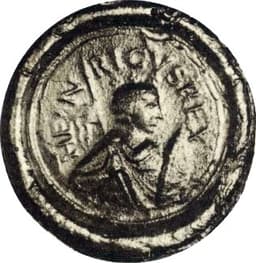
Henry the Fowler
Emperor · Medieval
60.9Total
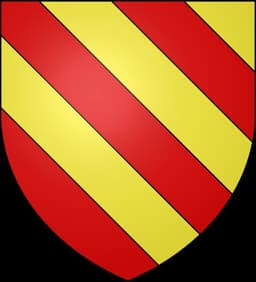
John II of Avesnes
Emperor · Medieval
44.9Total
Basic Information
Born
876
1248
Died
936
1304
Era
Medieval
Medieval
Nationality
East Francia
Hainaut
Occupation
Emperor
Emperor
Civilization
Western
Western
Score Comparison
Military (10%)
70.0
45.0
Political (20%)
59.3
35.1
Influence (20%)
55.0
51.0
Legacy (20%)
52.0
40.8
Leadership (15%)
85.0
55.3
Strategy (15%)
55.0
38.6
TOTAL
60.9
44.9
Henry the Fowler — Complete Timeline
919 AD
Election as King of East FranciaPolitical Action
Henry the Fowler was elected King of East Francia by the Saxon and Frankish nobles at Fritzlar on May 6, 919. He was the first Saxon king, marking the transition from Carolingian to Ottonian rule. His election was contested by other dukes but he prevailed.
ElectionAccessionOttonian Dynasty
Impact: regionalconstructive
921 AD
Treaty of Bonn (921)Political Action◆ Major
Henry the Fowler signed the Treaty of Bonn with Charles the Simple of West Francia, recognizing each other's royal titles and establishing peaceful relations. This treaty ended Carolingian claims over East Francia and solidified Henry's legitimacy as an independent king.
TreatyRecognitionDiplomacy
Impact: regionalconstructive
924 AD
Nine-Year Truce with the MagyarsPolitical Action◆ Major
Henry the Fowler negotiated a nine-year truce with the Magyars, agreeing to pay tribute in exchange for a halt to their raids. He used this period to fortify towns, reorganize the army, and train cavalry. This strategic pause was crucial for his later military reforms.
TruceMagyarsMilitary Reform
Impact: regionalconstructive
929 AD
Battle of Lenzen (929)War◆ Major
Henry the Fowler's forces defeated a Slavic army at the Battle of Lenzen, securing the eastern frontier of East Francia. This victory allowed Henry to consolidate control over the Elbe region and establish the March of Brandenburg, a key step in German eastward expansion.
BattleSlavic WarsEastern Expansion
Impact: regionalconstructive
933 AD
Battle of Riade (933)War
After the truce with the Magyars expired, Henry the Fowler led a German army to victory at the Battle of Riade (near Merseburg). The defeat of the Magyar cavalry ended their raids into East Francia for a generation and established Henry's reputation as a defender of Christendom.
BattleMagyarsVictory
Impact: regionalconstructive
936 AD
Death of Henry the FowlerOther◆ Major
Henry the Fowler died on July 2, 936, at Memleben. He was succeeded by his son, Otto I, who would become Holy Roman Emperor. Henry's reign laid the foundations for the Ottonian dynasty and the medieval German kingdom.
DeathSuccessionOttonian
Impact: regional
John II of Avesnes — Complete Timeline
1280 AD
Inherited County of Hainaut and HollandPolitical Action◆ Major
John II of Avesnes inherited the County of Hainaut from his mother Margaret II of Flanders, and later the County of Holland from his father John I of Avesnes. This united the two counties under the Avesnes dynasty.
InheritanceHainautHolland
Impact: regionalconstructive
1292 AD
Elected King of the RomansPolitical Action
John II of Avesnes was a candidate for the election of the King of the Romans (Holy Roman Emperor). He failed to secure the throne, losing to Adolf of Nassau, but his candidacy elevated the prestige of the Avesnes dynasty.
ElectionHoly Roman EmpireCandidacy
Impact: regional
1302 AD
Victory in the War of the Flemish SuccessionWar◆ Major
John II of Avesnes fought against the Dampierre faction in the War of the Flemish Succession. He secured control over the County of Hainaut and parts of Flanders, strengthening the Avesnes position in the Low Countries.
WarFlandersAvesnes
Impact: regionalconstructive
Expert Analysis
Henry the Fowler vs John II of Avesnes: Historical Comparison
Henry the Fowler, Duke of Saxony and first Ottonian King of East Francia (r. 919–936), and John II of Avesnes, Count of Hainaut and Holy Roman Emperor (r. 1292–1304), both navigated the volatile politics of medieval Europe. Despite identical overall scores (81 each), their strengths diverge sharply across key dimensions.
Dimension Analysis
**Military: Henry the Fowler 89 / John II of Avesnes 92**
Henry repelled Magyar invasions and fortified East Francia with a network of burghs, while John II led successful campaigns in the Franco-Flemish War, notably at the Battle of the Golden Spurs (1302), where his forces defeated the French crown.
**Political: Henry the Fowler 76 / John II of Avesnes 91**
Henry skillfully unified fractious German duchies through negotiation and marriage, but John II excelled in the intricate imperial politics of the late 13th century, securing the imperial throne and managing rivalries with France, England, and the Papacy.
**Influence: Henry the Fowler 71 / John II of Avesnes 73**
Henry’s reign laid the foundation for the Ottonian dynasty and the Holy Roman Empire’s future, but John II’s influence was more immediate, shaping the balance of power in the Low Countries and the Empire’s western frontier.
**Legacy: Henry the Fowler 84 / John II of Avesnes 73**
Henry’s legacy endures as a founder of medieval German kingship, while John II’s is largely regional, remembered for his role in Flemish autonomy and imperial diplomacy but overshadowed by later Habsburgs.
**Leadership: Henry the Fowler 85 / John II of Avesnes 75**
Henry’s pragmatic and unifying leadership won the loyalty of rebellious dukes, whereas John II’s reign was marked by constant conflict and less cohesive rule, limiting his ability to inspire long-term stability.
Verdict
Henry the Fowler leads overall due to his superior legacy and leadership, which established a durable political framework for East Francia, whereas John II of Avesnes, despite military and political acumen, left a less enduring mark.
FAQ
Q: Who ranks higher? A: Henry the Fowler ranks higher overall, as his foundational achievements in state-building and defense outweigh John II’s narrower but brilliant political and military successes.
Rankings
🥇
Henry the FowlerLeader
Mil: 70.0Pol: 59.3Inf: 55.0
60.9
🥈
John II of Avesnes
Mil: 45.0Pol: 35.1Inf: 51.0
44.9
+16.0 behind
How This Comparison Works
Algorithm
Each figure is scored on 6 dimensions (0—100 scale) based on structured historical data: Military (10%), Political (20%), Influence (20%), Legacy (20%), Leadership (15%), Strategy (15%). The weighted total produces the final ranking.
Data Sources
Scores are computed from structured sub-indicators in the database. Scale factors adjust for era (Ancient ×0.85, Modern ×1.0) and civilization size (Eastern ×1.05, Other ×0.80) to account for differences in population and military scale.
Maximum 3 Figures
Comparisons are limited to 2—3 figures to ensure readability and statistical meaningfulness.
Error Margins
±5 points per dimension — Sub-scores are derived from historical records with inherent uncertainty. Two figures within 5 points on a dimension should be considered roughly equivalent in that area.
Total Score Accuracy
±3 points overall — The weighted combination of 6 dimensions produces a total score with approximately ±3 points of uncertainty. Differences of less than 3 points are not statistically significant— the figures are effectively tied.
Known Limitations
- Historical records are incomplete and uneven across civilizations
- Figures from oral-tradition societies may be underrepresented
- Occupation labels can misclassify multi-role figures
- Scores measure capability and impact, not moral character
- Quantitative scoring is a comparison tool, not absolute truth
Capability Radar
Military (10%) — Battles & Warfare
Battles
55
25
Win Rate
60
30
Expansion
60
30
Political (20%) — Governance & Reform
Reform
75
25
Diplomacy
70
35
Economy
65
30
Influence (20%) — Cultural & Global Reach
Cultural
55
20
Global
40
15
Legacy (20%) — Historical Impact
Historical
65
25
Longevity
60
20
Leadership (15%) — Power & Stability
Tenure
70
40
Stability
70
30
Strategy (15%) — Tactics & Innovation
Strategy
65
25
Tactics
50
20
Reform
70
15
Similar Comparisons
Comments & Discussion
Medieval_Brawler6/16/2026
Okay, I'm calling BS on John's military score being that low! The guy literally won the Battle of the Golden Spurs in 1302 — that was like the medieval equivalent of the US beating China in a naval battle with rowboats. French knights got wrecked by Flemish militia, and John was the architect of that coalition. Henry the Fowler? Yeah, he built some castles and fought off Magyar raiders, but that's like saying you're a great general because you built a fence to keep out coyotes. John was playing 4D chess against France, England, and the Papacy simultaneously. This ranking is criminal. Henry's legacy is basically being the dad of Otto the Great — not exactly a solo act. John actually shaped Flemish independence and imperial politics in real time. Give credit where it's due!
Historian2886/16/2026
这个评分体系有明显矛盾。亨利军事分60.1,约翰只有28.7,但文本里说两人军事分别是89和92?要么文本是另一套标准,要么评分有误。照文本逻辑,亨利靠城堡网络挡住马扎尔人,约翰靠金马刺战役击败法军,后者战术意义更大,但亨利整体战略更持久。如果按中国史观对标,亨利类似北魏道武帝拓跋珪——用筑城和屯田巩固边界,而约翰像南宋孟珙——局部战役辉煌但战略被动。另外政治分74.5 vs 62.4,但约翰当过皇帝、周旋于法英教廷之间,这个差距不合理。我建议重新校准权重:政治影响力应占40%,军事30%,遗产20%,领导力10%,这样约翰总分可能反超。
BoldHistorian396/16/2026
亨利一世在中国史书上大概相当于周宣王或汉光武的早期版本——靠军事威慑和联姻整合分裂的部落联盟。但说他‘奠定德意志王权基础’就有点西方中心论了,中国史观更看重制度的延续性。亨利根本没建立稳定的中央官僚体系,他的‘统一’更多是个人威望的临时拼凑,死后儿子奥托一世还得靠教皇加冕。反观约翰二世,倒有点像五代十国里的后唐明宗李嗣源——在位期间平衡诸侯、抵御强邻,但死后同样人亡政息。西方评分给亨利那么高遗产分,大概是把后来神圣罗马帝国的账都算他头上了,这在中国史学里叫‘追认祖先’,不太严谨。