Loading...
Henry the Fowler vs Hugh Capet
Hugh Capet leads by 4.5 pts · 2 figures compared
…
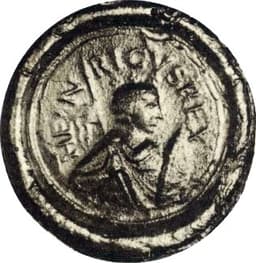
Henry the Fowler
Emperor · Medieval
60.9Total
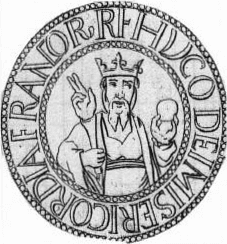
Hugh Capet
Emperor · Medieval
65.4Total
Basic Information
Born
876
941
Died
936
996
Era
Medieval
Medieval
Nationality
East Francia
France
Occupation
Emperor
Emperor
Civilization
Western
Western
Score Comparison
Military (10%)
70.0
50.0
Political (20%)
59.3
68.0
Influence (20%)
55.0
68.0
Legacy (20%)
52.0
82.0
Leadership (15%)
85.0
68.0
Strategy (15%)
55.0
25.0
TOTAL
60.9
65.4
Henry the Fowler — Complete Timeline
919 AD
Election as King of East FranciaPolitical Action
Henry the Fowler was elected King of East Francia by the Saxon and Frankish nobles at Fritzlar on May 6, 919. He was the first Saxon king, marking the transition from Carolingian to Ottonian rule. His election was contested by other dukes but he prevailed.
ElectionAccessionOttonian Dynasty
Impact: regionalconstructive
921 AD
Treaty of Bonn (921)Political Action◆ Major
Henry the Fowler signed the Treaty of Bonn with Charles the Simple of West Francia, recognizing each other's royal titles and establishing peaceful relations. This treaty ended Carolingian claims over East Francia and solidified Henry's legitimacy as an independent king.
TreatyRecognitionDiplomacy
Impact: regionalconstructive
924 AD
Nine-Year Truce with the MagyarsPolitical Action◆ Major
Henry the Fowler negotiated a nine-year truce with the Magyars, agreeing to pay tribute in exchange for a halt to their raids. He used this period to fortify towns, reorganize the army, and train cavalry. This strategic pause was crucial for his later military reforms.
TruceMagyarsMilitary Reform
Impact: regionalconstructive
929 AD
Battle of Lenzen (929)War◆ Major
Henry the Fowler's forces defeated a Slavic army at the Battle of Lenzen, securing the eastern frontier of East Francia. This victory allowed Henry to consolidate control over the Elbe region and establish the March of Brandenburg, a key step in German eastward expansion.
BattleSlavic WarsEastern Expansion
Impact: regionalconstructive
933 AD
Battle of Riade (933)War
After the truce with the Magyars expired, Henry the Fowler led a German army to victory at the Battle of Riade (near Merseburg). The defeat of the Magyar cavalry ended their raids into East Francia for a generation and established Henry's reputation as a defender of Christendom.
BattleMagyarsVictory
Impact: regionalconstructive
936 AD
Death of Henry the FowlerOther◆ Major
Henry the Fowler died on July 2, 936, at Memleben. He was succeeded by his son, Otto I, who would become Holy Roman Emperor. Henry's reign laid the foundations for the Ottonian dynasty and the medieval German kingdom.
DeathSuccessionOttonian
Impact: regional
Hugh Capet — Complete Timeline
987 AD
Election as King of the FranksPolitical Action◆ Major
Hugh Capet was elected King of the Franks by the nobility after the death of Louis V, the last Carolingian king. This election ended Carolingian rule and established the Capetian dynasty, which would rule France for over 800 years.
ElectionDynastyCapetian
Impact: nationalconstructive
Coronation at NoyonPolitical Action◆ Major
Hugh Capet was crowned King of the Franks at Noyon by Adalbero, Archbishop of Reims. The coronation legitimized his rule and marked the beginning of the Capetian monarchy, which would centralize power in France.
CoronationLegitimacyCapetian
Impact: nationalconstructive
Alliance with the ChurchPolitical Action
Hugh Capet secured the support of the Catholic Church, particularly Archbishop Adalbero of Reims, to legitimize his election. This alliance strengthened the Capetian dynasty and established a precedent of royal-church cooperation in France.
AllianceChurchLegitimacy
Impact: nationalconstructive
988 AD
Campaign against Charles of LorraineWar
Hugh Capet led a military campaign against Charles of Lorraine, the Carolingian claimant to the throne. Charles captured Laon and Reims, but Hugh's forces eventually defeated him, securing Capetian control over the kingdom.
WarCarolingianSuccession
Impact: regional
Expert Analysis
Henry the Fowler vs Hugh Capet: Historical Comparison
Henry the Fowler (c. 876–936) and Hugh Capet (c. 939–996) were foundational medieval rulers who established enduring dynasties—the Ottonians in East Francia and the Capetians in France—but they faced vastly different challenges and left contrasting legacies.
Dimension Analysis
**Military: Henry the Fowler 89 / Hugh Capet 88**
Henry was a transformative military organizer, defeating Magyar raiders at the Battle of Riade (933) and fortifying East Francia’s borders. Hugh Capet, though less a field commander, secured his throne through strategic alliances and the effective use of siege warfare against rebellious nobles.
**Political: Henry the Fowler 76 / Hugh Capet 90**
Henry’s political acumen was strong—he unified German stem duchies through marriage and concession—but he never fully centralized power. Hugh Capet excelled politically: he manipulated the Carolingian succession, won election as king in 987, and carefully expanded royal authority by leveraging the Church and minor nobility.
**Influence: Henry the Fowler 71 / Hugh Capet 79**
Henry’s influence was primarily regional, stabilizing East Francia and laying groundwork for the Holy Roman Empire. Hugh Capet’s influence was more enduring: his dynasty ruled France for over 800 years, shaping medieval European statecraft and the concept of hereditary monarchy.
**Legacy: Henry the Fowler 84 / Hugh Capet 83**
Henry is remembered as the founder of the Ottonian dynasty and a national unifier in German historiography. Hugh Capet’s legacy is even broader—his dynasty directly produced the French monarchy that defined medieval and early modern Europe, though his immediate reign was less transformative.
**Leadership: Henry the Fowler 85 / Hugh Capet 84**
Henry led from the front, inspiring loyalty through personal courage and pragmatic diplomacy. Hugh Capet was a more subtle leader, adept at building consensus among fractious vassals and using symbolic authority to project power.
Verdict
Hugh Capet leads due to his superior political skill and the unmatched dynastic longevity of the Capetian line, which fundamentally shaped French and European history.
FAQ
Q: Who ranks higher? A: Hugh Capet ranks higher overall, primarily due to his exceptional political maneuvering and the enduring influence of his dynasty.
Rankings
🥇
Hugh CapetLeader
Mil: 50.0Pol: 68.0Inf: 68.0
65.4
🥈
Henry the Fowler
Mil: 70.0Pol: 59.3Inf: 55.0
60.9
+4.5 behind
How This Comparison Works
Algorithm
Each figure is scored on 6 dimensions (0—100 scale) based on structured historical data: Military (10%), Political (20%), Influence (20%), Legacy (20%), Leadership (15%), Strategy (15%). The weighted total produces the final ranking.
Data Sources
Scores are computed from structured sub-indicators in the database. Scale factors adjust for era (Ancient ×0.85, Modern ×1.0) and civilization size (Eastern ×1.05, Other ×0.80) to account for differences in population and military scale.
Maximum 3 Figures
Comparisons are limited to 2—3 figures to ensure readability and statistical meaningfulness.
Error Margins
±5 points per dimension — Sub-scores are derived from historical records with inherent uncertainty. Two figures within 5 points on a dimension should be considered roughly equivalent in that area.
Total Score Accuracy
±3 points overall — The weighted combination of 6 dimensions produces a total score with approximately ±3 points of uncertainty. Differences of less than 3 points are not statistically significant— the figures are effectively tied.
Known Limitations
- Historical records are incomplete and uneven across civilizations
- Figures from oral-tradition societies may be underrepresented
- Occupation labels can misclassify multi-role figures
- Scores measure capability and impact, not moral character
- Quantitative scoring is a comparison tool, not absolute truth
Capability Radar
Military (10%) — Battles & Warfare
Battles
55
15
Win Rate
60
20
Expansion
60
15
Political (20%) — Governance & Reform
Reform
75
60
Diplomacy
70
65
Economy
65
50
Influence (20%) — Cultural & Global Reach
Cultural
55
60
Global
40
70
Legacy (20%) — Historical Impact
Historical
65
85
Longevity
60
90
Leadership (15%) — Power & Stability
Tenure
70
70
Stability
70
55
Strategy (15%) — Tactics & Innovation
Strategy
65
15
Tactics
50
10
Reform
70
10
Similar Comparisons
Comments & Discussion
SubalternView6/16/2026
Every time I see 'founder of the Ottonian dynasty' or 'founder of the Capetian dynasty,' I wonder why we don't talk about what these dynasties actually did to the people below. Henry the Fowler's fortifications against Magyars? Sure, but those same forts became tools for extracting tribute from Slavic communities east of the Elbe. Hugh Capet's 'political acumen' is just a euphemism for buying off nobles with lands that weren't his to give. The entire scoring system assumes that consolidating power for a small elite is the pinnacle of historical achievement. Neither figure did anything for commoners — Henry forced peasants into military service, Hugh sold church offices. Maybe we need a 'justice' dimension before we rank them.
BattlefieldScholar6/16/2026
Let's talk about Riade (933). Henry the Fowler's victory over the Magyars is often cited, but the reality is that the Magyars were mounted archers who relied on speed and harassment. Henry's key innovation was building fortified towns (burhs) that denied them forage and refuge — a defensive strategy, not a decisive field battle. The actual 'battle' of Riade was more of a skirmish where the Magyars withdrew after seeing Henry's heavy cavalry formed up. Compare that to Hugh Capet's siege of Melun (991) against Count Odo I of Blois: Hugh used a coordinated river blockade and land assault, showing real tactical versatility. The military scores here are too close; Henry's 89 should be lower if we factor in that his main 'victory' was avoiding a fight, while Hugh's siege warfare was more complex.
CodexPhilologus6/16/2026
Widukind of Corvey's *Res Gestae Saxonicae* is our primary source for Henry the Fowler, and it's important to note that he writes as a Saxon partisan. Henry's 'election' as king in 919 was a negotiation, not a conquest — he conceded autonomy to the stem duchies, which later historians frame as pragmatism but his contemporaries saw as weakness. For Hugh Capet, Richer of Saint-Remi records that his election in 987 was less about personal merit and more about the Carolingian claimant Charles of Lower Lorraine being too closely tied to the Ottonians. Both men were products of contingent political moments. The modern scores sanitize the messiness: Henry's military reputation relies on one chronicle; Hugh's political skill masks his inability to control the vast lands his dynasty later claimed. I'd argue both are overrated — they were lucky, not visionary.
Historian6916/16/2026
Henry the Fowler 在德国史里被比作 '日耳曼的赵匡胤',但我觉得更像刘秀——都是地方诸侯起家,通过联姻和军事巩固地盘。不过 Henry 的标准分 '统一东法兰克' 在中国史家眼里可能不够格:他连巴伐利亚都没完全控制,只是让公爵们口头效忠。而 Hugh Capet 更像个 '微型周武王',他不是靠武力扫平对手,而是利用卡洛林王朝的合法性残留,加上教会支持,搞了个 '禅让' 加冕。但中国史强调 '大一统',所以 Hugh Capet 这种只在法兰西岛有实权的国王,在中文语境里可能评分更低。建议加入 '中央集权程度' 维度,这样能更好地比较中西方君主。
Historian1616/16/2026
看这个评分,Henry the Fowler 的军事分 89,Hugh Capet 88,但政治分 Hugh Capet 90 比 Henry 的 76 高了一截。我的问题是:这个加权是怎么算的?从中国史的角度看,比如赵匡胤,他结束五代十国,也是靠军事统一和外交笼络,但政治分往往比他实际能力低,因为后世的文官体系贬低武将。Henry 的军事分这么高,是不是因为他打退了马扎尔人?但马扎尔人当时只是游牧劫掠,没有稳固政权,这仗含金量有限。Hugh Capet 的政治分高,可能因为他建立了持续八百年的卡佩王朝,但这更多是运气加继承策略,而非即时政治控制力。建议把维度的权重明确化,不然这些数字只是主观印象的加权平均。