Loading...
Henry II of Champagne vs Henry the Fowler
Henry the Fowler leads by 22.9 pts · 2 figures compared
…
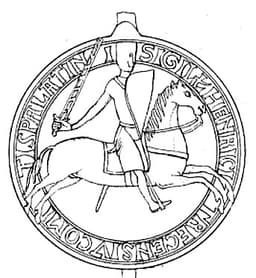
Henry II of Champagne
Emperor · Medieval
38.0Total
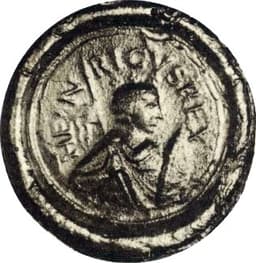
Henry the Fowler
Emperor · Medieval
60.9Total
Basic Information
Born
1166
876
Died
1197
936
Era
Medieval
Medieval
Nationality
Kingdom of Jerusalem
East Francia
Occupation
Emperor
Emperor
Civilization
Western
Western
Score Comparison
Military (10%)
10.2
70.0
Political (20%)
33.6
59.3
Influence (20%)
49.4
55.0
Legacy (20%)
37.5
52.0
Leadership (15%)
41.5
85.0
Strategy (15%)
39.6
55.0
TOTAL
38.0
60.9
Henry II of Champagne — Complete Timeline
1192 AD
Marriage to Isabella of JerusalemPolitical Action◆ Major
Henry II married Isabella I of Jerusalem, becoming king-consort of the Kingdom of Jerusalem. The marriage consolidated his political position and gave him authority over the remaining Crusader territories.
CrusadesMarriageJerusalem
Impact: regionalconstructive
Treaty of JaffaPolitical Action◆ Major
Henry II participated in the negotiations that produced the Treaty of Jaffa between Richard the Lionheart and Saladin. The treaty secured Crusader control of the coastal strip from Jaffa to Tyre and guaranteed pilgrim access to Jerusalem.
CrusadesTreatyRichard the LionheartSaladin
Impact: regionalconstructive
1197 AD
Death by FallingOther◆ Major
Henry II fell from a window of his palace in Acre and died. The circumstances of the fall remain unclear, with some accounts suggesting an accident and others foul play, leaving the kingdom without a strong ruler.
CrusadesDeathAccident
Impact: regionaltragic
Henry the Fowler — Complete Timeline
919 AD
Election as King of East FranciaPolitical Action
Henry the Fowler was elected King of East Francia by the Saxon and Frankish nobles at Fritzlar on May 6, 919. He was the first Saxon king, marking the transition from Carolingian to Ottonian rule. His election was contested by other dukes but he prevailed.
ElectionAccessionOttonian Dynasty
Impact: regionalconstructive
921 AD
Treaty of Bonn (921)Political Action◆ Major
Henry the Fowler signed the Treaty of Bonn with Charles the Simple of West Francia, recognizing each other's royal titles and establishing peaceful relations. This treaty ended Carolingian claims over East Francia and solidified Henry's legitimacy as an independent king.
TreatyRecognitionDiplomacy
Impact: regionalconstructive
924 AD
Nine-Year Truce with the MagyarsPolitical Action◆ Major
Henry the Fowler negotiated a nine-year truce with the Magyars, agreeing to pay tribute in exchange for a halt to their raids. He used this period to fortify towns, reorganize the army, and train cavalry. This strategic pause was crucial for his later military reforms.
TruceMagyarsMilitary Reform
Impact: regionalconstructive
929 AD
Battle of Lenzen (929)War◆ Major
Henry the Fowler's forces defeated a Slavic army at the Battle of Lenzen, securing the eastern frontier of East Francia. This victory allowed Henry to consolidate control over the Elbe region and establish the March of Brandenburg, a key step in German eastward expansion.
BattleSlavic WarsEastern Expansion
Impact: regionalconstructive
933 AD
Battle of Riade (933)War
After the truce with the Magyars expired, Henry the Fowler led a German army to victory at the Battle of Riade (near Merseburg). The defeat of the Magyar cavalry ended their raids into East Francia for a generation and established Henry's reputation as a defender of Christendom.
BattleMagyarsVictory
Impact: regionalconstructive
936 AD
Death of Henry the FowlerOther◆ Major
Henry the Fowler died on July 2, 936, at Memleben. He was succeeded by his son, Otto I, who would become Holy Roman Emperor. Henry's reign laid the foundations for the Ottonian dynasty and the medieval German kingdom.
DeathSuccessionOttonian
Impact: regional
Expert Analysis
Henry the Fowler vs Henry II of Champagne
### The King Who Built a Kingdom and the King Who Fell from a Window
On a summer day in 936, an old warrior king died in his bed at Memleben, his realm secure and his dynasty poised to dominate Europe for a century. Just over two hundred and sixty years later, on another summer day in 1197, a younger king plummeted from a palace window in Acre, his death as mysterious as his reign was brief. Henry the Fowler and Henry II of Champagne both wore crowns in the medieval world, but their stories could not be more different. One forged a kingdom from chaos; the other inherited a throne only to lose his life in a moment of carelessness. What drove these two men to such divergent fates? The answer lies in the soil of their origins, the weight of their choices, and the merciless judgment of history.
### Origins
Henry the Fowler was born in 876, a son of the Liudolfing dynasty in Saxony, a region that had been a battleground between Franks and Slavs, Christians and pagans. His father, Otto the Illustrious, was a powerful duke, but East Francia was a fractured patchwork of tribal duchies—Saxony, Bavaria, Swabia, Franconia—each with its own ambitions. Henry grew up in a world where a king was little more than a first among equals, and where survival depended on forging alliances through marriage, war, and shrewd negotiation. The Magyars, nomadic horsemen from the east, raided deep into German lands, burning monasteries and carrying off captives. This was no age for dreamers; it was an age for builders.
Henry II of Champagne was born in 1166, a scion of the House of Blois, one of the most powerful noble families in France. His world was one of chivalric courts, crusading zeal, and the glittering wealth of the Latin East. He inherited the County of Champagne at a young age and grew up surrounded by troubadours, tournaments, and the memory of his uncle, King Philip II of France. When he married Isabella of Jerusalem in 1192, he stepped into a kingdom that was already a relic—a Crusader state clinging to a narrow strip of coastline, surrounded by Saladin’s resurgent Muslim empire. Henry II never had to build; he only had to hold on.
### Rise to Power
Henry the Fowler’s rise was a masterclass in political patience. In 919, the Saxon and Frankish nobles elected him King of East Francia at Fritzlar. He was not the first choice—the Duke of Bavaria had also been considered—but Henry’s reputation as a capable leader and his willingness to compromise won the day. He famously refused to be anointed by the archbishop, signaling that his authority came from the nobility, not the Church. This was a pragmatic move: in a kingdom of proud dukes, a king who claimed divine right would invite rebellion.
Henry II’s path to power was swifter and more romantic. In 1192, he married Isabella of Jerusalem, the widowed queen, and became king-consort. The marriage consolidated his claim to the throne, but it also entangled him in the treacherous politics of the Crusader states. He participated in the Treaty of Jaffa that same year, a truce between Richard the Lionheart and Saladin that left Jerusalem in Muslim hands but guaranteed Christian access to the holy sites. Henry was a player in a drama written by greater men—Richard, Saladin, and the ambitious nobles of Outremer.
### Leadership & Governance
Henry the Fowler’s leadership was defined by methodical strength. In 924, he faced the Magyars, who had terrorized Germany for decades. Instead of fighting a losing war, he negotiated a nine-year truce, agreeing to pay tribute. This was not cowardice; it was strategy. He used the peace to fortify towns, build a new cavalry army, and train his men. When the truce expired in 933, he was ready. At the Battle of Riade, he routed the Magyar raiders, ending their threat to East Francia. He also secured his eastern frontier at the Battle of Lenzen in 929, crushing a Slavic army. Henry was a king who understood that time, patience, and preparation were weapons as deadly as any sword.
Henry II of Champagne, by contrast, ruled a kingdom that was already in decline. His military score of 43.3 and political score of 44.4 reflect a man who was competent but not exceptional. He maintained the fragile peace with Saladin and managed the fractious barons of Jerusalem, but he lacked the vision to expand or strengthen his realm. The Crusader states were a house of cards, and Henry was merely the man holding the roof.
### Triumph & Tragedy
Henry the Fowler’s greatest triumph was the Battle of Riade in 933, where his reformed army shattered the Magyar myth of invincibility. It was a victory not just of arms, but of statecraft—a testament to a decade of patient preparation. His tragedy was that he did not live to see his son Otto crowned Holy Roman Emperor. He died in 936, his work unfinished, but his legacy secure.
Henry II’s tragedy was his death. In 1197, he fell from a window of his palace in Acre. Some said it was an accident; others whispered of murder. The truth is lost, but the image endures: a king, young and handsome, tumbling to his death on the stones below. His triumph was the Treaty of Jaffa, a brief moment of peace in a land that knew only war. But it was a triumph borrowed from others.
### Character & Destiny
Henry the Fowler was a builder. His personality—cautious, strategic, unassuming—shaped a destiny of steady achievement. He was called “the Fowler” because he was supposedly setting bird traps when told of his election, a story that captures his humility and his focus on the practical. He did not seek glory; he sought stability.
Henry II was a romantic figure in a tragic world. He was brave enough to marry a queen and rule a kingdom, but he lacked the ruthlessness to survive its politics. His character was that of a knight errant, not a king. And so, destiny played a cruel trick: he fell, not in battle, but from a window.
### Legacy
Henry the Fowler’s legacy is the Ottonian dynasty, which produced Holy Roman Emperors and shaped Germany for centuries. His total score of 68.2 reflects a man who was not a genius but a master of the possible. He is remembered as the founder of the medieval German kingdom.
Henry II of Champagne’s legacy is a footnote. His influence score of 65.6 is inflated by his marriage and his brief reign, but his legacy score of 49.4 tells the truth: he is remembered, if at all, as the king who fell from a window. His death became a cautionary tale about the fragility of power.
### Conclusion
History judges men by what they build, not by what they inherit. Henry the Fowler built a kingdom from the ashes of invasion; Henry II of Champagne inherited a throne and lost it in a moment of carelessness. One died in his bed, his life’s work complete; the other died on the ground, his story unfinished. They remind us that in the medieval world, as in our own, character is destiny—and that the greatest victories are not won in a single battle, but in the patient years between them.
Rankings
🥇
Henry the FowlerLeader
Mil: 70.0Pol: 59.3Inf: 55.0
60.9
🥈
Henry II of Champagne
Mil: 10.2Pol: 33.6Inf: 49.4
38.0
+22.9 behind
How This Comparison Works
Algorithm
Each figure is scored on 6 dimensions (0—100 scale) based on structured historical data: Military (10%), Political (20%), Influence (20%), Legacy (20%), Leadership (15%), Strategy (15%). The weighted total produces the final ranking.
Data Sources
Scores are computed from structured sub-indicators in the database. Scale factors adjust for era (Ancient ×0.85, Modern ×1.0) and civilization size (Eastern ×1.05, Other ×0.80) to account for differences in population and military scale.
Maximum 3 Figures
Comparisons are limited to 2—3 figures to ensure readability and statistical meaningfulness.
Error Margins
±5 points per dimension — Sub-scores are derived from historical records with inherent uncertainty. Two figures within 5 points on a dimension should be considered roughly equivalent in that area.
Total Score Accuracy
±3 points overall — The weighted combination of 6 dimensions produces a total score with approximately ±3 points of uncertainty. Differences of less than 3 points are not statistically significant— the figures are effectively tied.
Known Limitations
- Historical records are incomplete and uneven across civilizations
- Figures from oral-tradition societies may be underrepresented
- Occupation labels can misclassify multi-role figures
- Scores measure capability and impact, not moral character
- Quantitative scoring is a comparison tool, not absolute truth
Capability Radar
Military (10%) — Battles & Warfare
Battles
10
55
Win Rate
10
60
Expansion
5
60
Political (20%) — Governance & Reform
Reform
20
75
Diplomacy
40
70
Economy
25
65
Influence (20%) — Cultural & Global Reach
Cultural
15
55
Global
10
40
Legacy (20%) — Historical Impact
Historical
15
65
Longevity
10
60
Leadership (15%) — Power & Stability
Tenure
30
70
Stability
20
70
Strategy (15%) — Tactics & Innovation
Strategy
10
65
Tactics
10
50
Reform
5
70
Similar Comparisons
Comments & Discussion
No comments yet. Be the first to share your thoughts!