Loading...
Henry Bolingbroke vs Wamba
Henry Bolingbroke leads by 8.2 pts · 2 figures compared
…
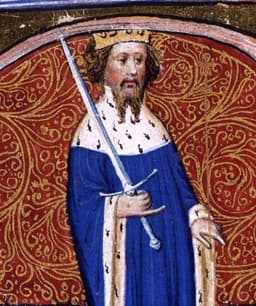
Henry Bolingbroke
Emperor · Medieval
52.6Total

Wamba
Emperor · Medieval
44.4Total
Basic Information
Born
1367
630
Died
1413
688
Era
Medieval
Medieval
Nationality
England
Visigothic Kingdom
Occupation
Emperor
Emperor
Civilization
Western
Western
Score Comparison
Military (10%)
25.0
55.0
Political (20%)
48.0
30.8
Influence (20%)
58.0
48.6
Legacy (20%)
50.0
40.0
Leadership (15%)
65.7
51.9
Strategy (15%)
60.0
43.3
TOTAL
52.6
44.4
Henry Bolingbroke — Complete Timeline
1398 AD
Exiled by Richard IIPolitical Action◆ Major
Henry Bolingbroke was exiled from England by King Richard II following a dispute with Thomas de Mowbray. The exile was initially for ten years, later commuted to life, stripping Henry of his inheritance and prompting his return to claim the throne.
ExilePower StruggleLancaster
Impact: nationaldestructive
1399 AD
Returned from Exile and Deposed Richard IIPolitical Action
Henry landed at Ravenspur in Yorkshire with a small force while Richard II was in Ireland. He gathered support from nobles, captured Richard, and forced his abdication. Parliament then accepted Henry as King Henry IV, establishing the Lancastrian dynasty.
CoupDepositionLancastrian Dynasty
Impact: national
1403 AD
Battle of ShrewsburyWar◆ Major
Henry IV's forces defeated a rebellion led by Henry Percy (Hotspur) and the Earl of Worcester. The battle was the first major engagement between English armies using longbows. Hotspur was killed, ending the Percy rebellion and securing Henry's throne.
RebellionBattlePercy
Impact: nationaldestructive
1409 AD
Suppressed the Welsh RebellionWar◆ Major
Henry IV's forces captured Harlech Castle, the headquarters of Owain Glynd
Welsh RebellionMilitary Campaign
Impact: regionaldestructive
1412 AD
Suffered from Illness and Political InstabilityOther
Henry IV suffered from a debilitating illness, possibly leprosy or epilepsy, which weakened his ability to govern. Factional struggles between his son Prince Henry and Archbishop Arundel intensified. The king's health declined further, leading to his death in 1413.
IllnessSuccession Crisis
Impact: nationaltragic
Wamba — Complete Timeline
672 AD
Accession as Visigothic KingPolitical Action◆ Major
Wamba was elected king of the Visigoths after the death of Recceswinth. He was reportedly reluctant to accept the crown, but was persuaded by the nobility and clergy. His reign was marked by military campaigns and efforts to maintain royal authority.
Visigothic KingdomSuccessionElection
Impact: regional
673 AD
Suppression of the Rebellion of PaulusWar◆ Major
Wamba faced a major rebellion led by Paulus, a Visigothic noble who proclaimed himself king in Septimania (southern Gaul). Wamba led a military campaign, defeated Paulus, and captured him. Paulus was publicly humiliated and executed, demonstrating Wamba's resolve to maintain unity.
Visigothic KingdomRevoltCivil War
Impact: regional
674 AD
Military Campaigns against the BasquesWar
Wamba conducted military campaigns against the Basques in the Pyrenees, who had been raiding Visigothic territory. He subdued the region and fortified key positions, securing the northern borders of the Visigothic Kingdom. These campaigns demonstrated his military capability.
Visigothic KingdomMilitary CampaignBasque Wars
Impact: regional
680 AD
Deposed by ErwigPolitical Action◆ Major
Wamba was deposed in a palace coup led by Erwig, a Visigothic noble. According to accounts, Wamba was drugged and tonsured, making him ineligible to rule under Visigothic law. He was forced to retire to a monastery, where he died. This event highlighted the instability of Visigothic succession.
Visigothic KingdomCoupDeposition
Impact: regionaldestructive
Expert Analysis
Origins
Henry Bolingbroke was born in 1367 at Bolingbroke Castle in Lincolnshire, the son of John of Gaunt, Duke of Lancaster, and Blanche of Lancaster. He was educated in chivalry and governance, and became a prominent nobleman in Richard II's court. His father's wealth and position gave him a strong base, but his exile in 1398 by Richard II set the stage for his later usurpation.
Wamba, born around 630, was a Visigothic nobleman elected king in 672 after the death of Recceswinth. Little is known of his early life, but he was reportedly reluctant to accept the crown, only agreeing after pressure from the nobility. His reign was marked by military campaigns to secure his kingdom.
Rise to Power
Henry Bolingbroke rose to power through a combination of inheritance and rebellion. In 1399, while Richard II was in Ireland, Henry landed at Ravenspur with a small force, claiming only his Lancastrian inheritance. He quickly gathered support from nobles disaffected by Richard's rule, including the powerful Percy family. By August 1399, he had captured Richard and forced his abdication. On September 30, 1399, Henry was crowned Henry IV, becoming the first Lancastrian king.
Wamba's rise was more passive. After Recceswinth's death in 672, the Visigothic nobility elected Wamba as king. He initially refused, claiming unwillingness, but was eventually persuaded by the nobles and the clergy. He was crowned in Toledo in September 672. His reluctance may have been genuine or a political maneuver, but it set a tone for his reign.
Leadership & Governance
Henry IV faced constant rebellion and political instability. His leadership style was reactive, focusing on suppressing uprisings. He scored 65.7 in leadership and 48.0 in political acumen. He relied on alliances with powerful nobles, but these were often fragile. He called Parliament frequently to secure funds, which strengthened the Commons' role. His governance was marked by the need to legitimize his usurpation, leading to a reliance on legal and constitutional forms.
Wamba scored 51.9 in leadership and 30.8 in political skills. He was a capable military leader but less adept at court politics. He enacted legal reforms, including military laws that required all nobles to serve in defense of the realm. His governance was autocratic, but he faced challenges from rebellious nobles. His deposition by Erwig in 680, through a coup that involved drugging and tonsuring him, highlights his political vulnerability.
Triumph & Tragedy
Henry IV's greatest triumph was securing the throne and founding the Lancastrian dynasty. His victory at the Battle of Shrewsbury in 1403, where he defeated the Percy rebellion, was a key military success. He also suppressed the Welsh rebellion of Owain Glyndŵr by 1409, capturing Harlech Castle. However, his reign was plagued by illness (possibly leprosy or epilepsy) and constant plots. He died in 1413, weakened and politically exhausted, with his son Henry V poised to take over.
Wamba's triumph was his suppression of the rebellion of Paulus in 672-673, who had proclaimed himself king in Septimania. Wamba led a successful campaign, defeating Paulus and restoring order. He also campaigned against the Basques, fortifying the Pyrenees. His tragedy was his deposition: he was drugged, tonsured, and forced into a monastery, making him ineligible to rule. He died in 688, a forgotten figure.
Character & Destiny
Henry Bolingbroke was pragmatic and politically astute, but his usurpation created a cycle of rebellion. His character was shaped by his sense of entitlement and his need to legitimize his rule. He was a capable administrator but lacked the charisma of his son. His health decline mirrored the decline of his reign.
Wamba was characterized by reluctance and a sense of duty. He was a competent military leader but naive in court politics. His destiny was sealed by his inability to secure his position against internal enemies. His deposition was a result of his trust in those around him.
Legacy
Henry IV's legacy is the consolidation of Lancastrian power and the strengthening of Parliament. His reign set precedents for constitutional monarchy. He scored 50.0 in legacy and 58.0 in influence. His son Henry V's victories built on his foundation, but the Wars of the Roses later stemmed from the instability he created.
Wamba's legacy is more limited. His military reforms influenced Visigothic law, but his reign is often overshadowed by later Muslim conquest. He scored 40.0 in legacy and 48.6 in influence. He is remembered as a reluctant king who tried to do his duty.
Conclusion
Henry Bolingbroke had a greater impact than Wamba. His total score of 52.6 versus Wamba's 44.4 reflects his broader influence on English history. While Wamba was a capable military leader, his political score of 30.8 was far lower than Henry's 48.0. Henry's actions shaped the English monarchy and Parliament, whereas Wamba's reign was a footnote in Visigothic decline. Henry's legacy endured through the Lancastrian line and the constitutional developments of his reign. Therefore, Henry Bolingbroke emerges as the more significant historical figure.
Rankings
🥇
Henry BolingbrokeLeader
Mil: 25.0Pol: 48.0Inf: 58.0
52.6
🥈
Wamba
Mil: 55.0Pol: 30.8Inf: 48.6
44.4
+8.2 behind
How This Comparison Works
Algorithm
Each figure is scored on 6 dimensions (0—100 scale) based on structured historical data: Military (10%), Political (20%), Influence (20%), Legacy (20%), Leadership (15%), Strategy (15%). The weighted total produces the final ranking.
Data Sources
Scores are computed from structured sub-indicators in the database. Scale factors adjust for era (Ancient ×0.85, Modern ×1.0) and civilization size (Eastern ×1.05, Other ×0.80) to account for differences in population and military scale.
Maximum 3 Figures
Comparisons are limited to 2—3 figures to ensure readability and statistical meaningfulness.
Error Margins
±5 points per dimension — Sub-scores are derived from historical records with inherent uncertainty. Two figures within 5 points on a dimension should be considered roughly equivalent in that area.
Total Score Accuracy
±3 points overall — The weighted combination of 6 dimensions produces a total score with approximately ±3 points of uncertainty. Differences of less than 3 points are not statistically significant— the figures are effectively tied.
Known Limitations
- Historical records are incomplete and uneven across civilizations
- Figures from oral-tradition societies may be underrepresented
- Occupation labels can misclassify multi-role figures
- Scores measure capability and impact, not moral character
- Quantitative scoring is a comparison tool, not absolute truth
Capability Radar
Military (10%) — Battles & Warfare
Battles
45
35
Win Rate
50
40
Expansion
20
15
Political (20%) — Governance & Reform
Reform
40
25
Diplomacy
50
30
Economy
45
20
Influence (20%) — Cultural & Global Reach
Cultural
40
20
Global
40
10
Legacy (20%) — Historical Impact
Historical
55
25
Longevity
50
15
Leadership (15%) — Power & Stability
Tenure
55
40
Stability
30
25
Strategy (15%) — Tactics & Innovation
Strategy
45
30
Tactics
40
30
Reform
30
20
Similar Comparisons
Comments & Discussion
No comments yet. Be the first to share your thoughts!