Loading...
Henry Bolingbroke vs Julius Caesar
Julius Caesar leads by 30.2 pts · 2 figures compared
…
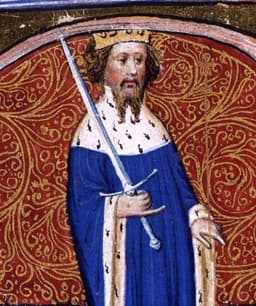
Henry Bolingbroke
Emperor · Medieval
52.6Total

Julius Caesar
General · Ancient
82.8Total
Basic Information
Born
1367
-100
Died
1413
-44
Era
Medieval
Ancient
Nationality
England
Roman Republic
Occupation
Emperor
General
Civilization
Western
Western
Score Comparison
Military (10%)
25.0
88.0
Political (20%)
48.0
78.0
Influence (20%)
58.0
85.0
Legacy (20%)
50.0
82.0
Leadership (15%)
65.7
80.0
Strategy (15%)
60.0
85.0
TOTAL
52.6
82.8
Henry Bolingbroke — Complete Timeline
1398 AD
Exiled by Richard IIPolitical Action◆ Major
Henry Bolingbroke was exiled from England by King Richard II following a dispute with Thomas de Mowbray. The exile was initially for ten years, later commuted to life, stripping Henry of his inheritance and prompting his return to claim the throne.
ExilePower StruggleLancaster
Impact: nationaldestructive
1399 AD
Returned from Exile and Deposed Richard IIPolitical Action
Henry landed at Ravenspur in Yorkshire with a small force while Richard II was in Ireland. He gathered support from nobles, captured Richard, and forced his abdication. Parliament then accepted Henry as King Henry IV, establishing the Lancastrian dynasty.
CoupDepositionLancastrian Dynasty
Impact: national
1403 AD
Battle of ShrewsburyWar◆ Major
Henry IV's forces defeated a rebellion led by Henry Percy (Hotspur) and the Earl of Worcester. The battle was the first major engagement between English armies using longbows. Hotspur was killed, ending the Percy rebellion and securing Henry's throne.
RebellionBattlePercy
Impact: nationaldestructive
1409 AD
Suppressed the Welsh RebellionWar◆ Major
Henry IV's forces captured Harlech Castle, the headquarters of Owain Glynd
Welsh RebellionMilitary Campaign
Impact: regionaldestructive
1412 AD
Suffered from Illness and Political InstabilityOther
Henry IV suffered from a debilitating illness, possibly leprosy or epilepsy, which weakened his ability to govern. Factional struggles between his son Prince Henry and Archbishop Arundel intensified. The king's health declined further, leading to his death in 1413.
IllnessSuccession Crisis
Impact: nationaltragic
Julius Caesar — Complete Timeline
58 BC
Gallic WarsWar◆ Major
Caesar, as proconsul of Gaul, launched a series of campaigns that conquered all of Gaul (modern France, Belgium, and parts of Switzerland). He fought numerous battles, including against the Helvetii, the Belgae, and the Gallic chieftain Vercingetorix. The wars brought immense wealth and a loyal army to Caesar.
Gallic WarsConquestRoman Expansion
Impact: regional
49 BC
Crossing the RubiconPolitical Action◆ Major
Caesar led Legio XIII across the Rubicon River into Italy, defying the Roman Senate's order to disband his army. This act triggered a civil war against Pompey and the Optimates, ultimately leading to Caesar's dictatorship and the end of the Roman Republic.
Roman Civil WarEnd of RepublicPower Struggle
Impact: global
48 BC
Battle of PharsalusWar◆ Major
Caesar's outnumbered army defeated the larger forces of Pompey the Great at Pharsalus in Greece. Caesar's tactical use of a reserve line to counter Pompey's cavalry charge proved decisive. Pompey fled to Egypt, where he was assassinated, leaving Caesar as the undisputed master of the Roman world.
Roman Civil WarBattleDecisive Victory
Impact: regional
44 BC
Appointment as Dictator for LifePolitical Action◆ Major
The Roman Senate appointed Caesar dictator perpetuo (dictator for life), granting him unprecedented personal power. This move concentrated military, legislative, and judicial authority in one person, effectively ending the Roman Republic's traditional system of checks and balances and alarming many senators.
DictatorshipEnd of RepublicPower Consolidation
Impact: regionaldestructive
Assassination on the Ides of MarchPolitical Action◆ Major
A group of Roman senators, led by Marcus Junius Brutus and Gaius Cassius Longinus, stabbed Caesar to death at a meeting of the Senate in the Theatre of Pompey. The assassination was intended to restore the Republic, but instead triggered another civil war that led to the rise of the Roman Empire.
AssassinationRoman PoliticsEnd of Republic
Impact: globaldestructive
Expert Analysis
henry-bolingbroke-vs-julius-caesar
# The Usurper and the Reformer: Two Paths to Power in a Broken Age
On a January morning in 49 BCE, Julius Caesar stood at the banks of the Rubicon, a small river that marked the boundary of his lawful command. He knew that crossing meant civil war, the destruction of the Republic he had served, and the risk of being branded an enemy of Rome. He crossed anyway. Two hundred and fifty years later, in the summer of 1399, Henry Bolingbroke landed at Ravenspur on the Yorkshire coast, a man exiled from his homeland, stripped of his inheritance, and facing a king who had already declared him a traitor. Both men were about to seize power by force. But their journeys, their characters, and their legacies could not have been more different.
Origins
Julius Caesar was born into the patrician Julian clan, one of Rome’s oldest families, but his branch had fallen into relative obscurity. His father died when Caesar was sixteen, leaving him to navigate the treacherous waters of Roman politics with little money but immense ambition. The late Republic was a world of ruthless competition, where generals commanded loyal armies, senators traded votes for provinces, and the old constitutional order was cracking under the weight of empire. Caesar absorbed this world’s brutal pragmatism from his youth, learning that in Rome, power was the only currency that mattered.
Henry Bolingbroke, by contrast, was born into the pinnacle of medieval English nobility. His father was John of Gaunt, the wealthiest and most powerful magnate in the realm, and his mother was a descendant of the Plantagenet kings. He grew up in a world of chivalric codes, feudal loyalties, and a monarchy that, however unstable, was still considered sacred. Where Caesar learned to manipulate the mob and bribe senators, Bolingbroke learned to manage great estates, command knights, and navigate the intricate web of aristocratic alliances that defined English governance.
Rise to Power
Caesar’s ascent was a masterpiece of calculated risk. He borrowed fortunes to stage lavish games, won command in Spain through political maneuvering, and formed the First Triumvirate with Pompey and Crassus to dominate Rome. His conquest of Gaul between 58 and 50 BCE was not just a military campaign but a political machine: the wealth, the loyal legions, and the fame he accumulated gave him a power base that the Senate could not control. When his enemies demanded he disband his army and return to Rome as a private citizen, he knew they intended to destroy him. The Rubicon was crossed not out of desperation, but from a cold calculation that there was no other way.
Bolingbroke’s rise was more reluctant, more reactive. In 1398, King Richard II, paranoid and vengeful, exiled him following a trivial dispute with Thomas de Mowbray. When John of Gaunt died the next year, Richard seized the Lancastrian inheritance, leaving Bolingbroke landless and abroad. He returned to England not to claim a crown, but to reclaim what was his by right. Yet the moment he landed, the political vacuum swallowed him. Richard was unpopular, the nobles were alienated, and Bolingbroke found himself carried forward by events he had not fully intended. Within months, Richard was deposed, and Henry was crowned king. He did not plan a revolution; he stumbled into one.
Leadership & Governance
As a leader, Caesar was a revolutionary reformer. He centralized power in his own hands, reformed the calendar, extended citizenship to provincials, launched massive public works, and began restructuring the corrupt Roman administration. His military genius was undeniable: at Alesia, he besieged the Gallic chieftain Vercingetorix while simultaneously defeating a massive relief army, a feat of logistics and tactics that still astounds modern strategists. His political wisdom, however, was flawed. He pardoned his enemies, refused to purge the Senate, and believed that his personal authority alone could hold the Republic together. He was wrong.
Bolingbroke, as Henry IV, faced a far more constrained situation. He was a usurper on a throne that many still considered Richard II’s by divine right. His reign was consumed by rebellions: the Percy uprising crushed at the Battle of Shrewsbury in 1403, the Welsh rebellion of Owain Glyndŵr suppressed only in 1409, and constant plotting from the nobility. His military score of 30.5 reflects not incompetence but the reality that his wars were defensive, small-scale, and exhausting. His political score of 55.6 captures a king who spent his reign fighting fires rather than building institutions. He could not reform England because he could not secure it.
Triumph & Tragedy
Caesar’s greatest triumph was the conquest of Gaul, which added a vast, wealthy province to Rome and gave him the army that would make him master of the world. His greatest tragedy was the Ides of March in 44 BCE, when sixty senators, many of them men he had pardoned and promoted, stabbed him to death in the Theatre of Pompey. He died believing he could reconcile autocracy with republican tradition. The tragedy was not his death—it was that his assassins had no plan for what came next, plunging Rome into another generation of civil war.
Bolingbroke’s triumph was simply surviving. He held the crown for fourteen years against relentless opposition, founded the Lancastrian dynasty, and passed the throne to his son, Henry V, who would become one of England’s greatest warrior kings. His tragedy was personal: a debilitating illness—perhaps leprosy or epilepsy—that crippled him in his final years, leaving him unable to govern effectively while factions fought for control. He died in 1413, worn out at forty-five, a king who had seized power but never truly enjoyed it.
Character & Destiny
Caesar was audacity incarnate. He took risks that would have destroyed lesser men because he believed, with almost mystical certainty, that fortune favored him. His clemency was genuine, but it was also a political tool that failed because he underestimated the depth of republican resentment. He was a man who could forgive his enemies but could not imagine that they would not forgive him. That blind spot cost him his life.
Bolingbroke was cautious, legalistic, and haunted by guilt. He deposed a king anointed by God, and the medieval mind could not easily shed that sin. He governed through Parliament, seeking legitimacy, but the shadow of usurpation never lifted. Where Caesar acted, Bolingbroke reacted. Where Caesar created a new world, Bolingbroke tried to preserve an old one that was already crumbling.
Legacy
Caesar’s legacy reshaped Western civilization. His name became synonymous with imperial power—the word “Kaiser” and “Tsar” derive from it. His reforms laid the foundation for the Roman Empire, which would endure for another five centuries in the West. The Julian calendar, with minor adjustments, remained the standard for over 1,600 years. He is remembered as a military genius, a political visionary, and a cautionary tale about the price of unchecked ambition.
Bolingbroke’s legacy is narrower but still significant. He established the Lancastrian dynasty, but it would collapse within sixty years, consumed by the Wars of the Roses. His reign demonstrated the fragility of a monarchy built on usurpation, a lesson that would haunt English kings for generations. He is remembered, if at all, as the man who seized a crown he never wanted and held it at a cost he could not bear.
Conclusion
One man crossed a river and changed the world. The other landed on a beach and changed a kingdom. Caesar’s ambition was cosmic, Bolingbroke’s was domestic. Caesar died at the height of his power, Bolingbroke withered away in its twilight. Both seized power by force, but only one understood that to hold power, you must be willing to destroy the very system that gave it to you. The other learned, too late, that a crown taken in guilt can never rest easy on the head. In the end, the difference between them is not just one of scale, but of soul: Caesar wanted to remake the world in his image; Bolingbroke only wanted to reclaim what was his. Both succeeded, and both failed—but the echoes of their choices still reverberate through the centuries.
Rankings
🥇
Julius CaesarLeader
Mil: 88.0Pol: 78.0Inf: 85.0
82.8
🥈
Henry Bolingbroke
Mil: 25.0Pol: 48.0Inf: 58.0
52.6
+30.2 behind
How This Comparison Works
Algorithm
Each figure is scored on 6 dimensions (0—100 scale) based on structured historical data: Military (10%), Political (20%), Influence (20%), Legacy (20%), Leadership (15%), Strategy (15%). The weighted total produces the final ranking.
Data Sources
Scores are computed from structured sub-indicators in the database. Scale factors adjust for era (Ancient ×0.85, Modern ×1.0) and civilization size (Eastern ×1.05, Other ×0.80) to account for differences in population and military scale.
Maximum 3 Figures
Comparisons are limited to 2—3 figures to ensure readability and statistical meaningfulness.
Error Margins
±5 points per dimension — Sub-scores are derived from historical records with inherent uncertainty. Two figures within 5 points on a dimension should be considered roughly equivalent in that area.
Total Score Accuracy
±3 points overall — The weighted combination of 6 dimensions produces a total score with approximately ±3 points of uncertainty. Differences of less than 3 points are not statistically significant— the figures are effectively tied.
Known Limitations
- Historical records are incomplete and uneven across civilizations
- Figures from oral-tradition societies may be underrepresented
- Occupation labels can misclassify multi-role figures
- Scores measure capability and impact, not moral character
- Quantitative scoring is a comparison tool, not absolute truth
Capability Radar
Military (10%) — Battles & Warfare
Battles
45
95
Win Rate
50
92
Expansion
20
97
Political (20%) — Governance & Reform
Reform
40
90
Diplomacy
50
85
Economy
45
82
Influence (20%) — Cultural & Global Reach
Cultural
40
88
Global
40
94
Legacy (20%) — Historical Impact
Historical
55
95
Longevity
50
96
Leadership (15%) — Power & Stability
Tenure
55
75
Stability
30
60
Strategy (15%) — Tactics & Innovation
Strategy
45
94
Tactics
40
96
Reform
30
88
Similar Comparisons
Comments & Discussion
HenryTheHunter6/17/2026
Caesar understood timing perfectly—crossing the Rubicon wasn't reckless, it was calculated to exploit a paralyzed Senate. Bolingbroke just stumbled onto a throne when Richard II overplayed his hand. Caesar built a legend across Gaul first, earning loyalty. Henry whined about his inheritance and lucked into a crown he couldn't hold steady. Show me one battlefield innovation from Bolingbroke. I'll wait.
数据孤勇者6/17/2026
别拿兵变当改革,数据不会骗人。凯撒的高卢战争打出了八百万塞斯退斯的战利品,直接买通了罗马平民和军团。博林布洛克的经济账呢?他还流亡时借了法国六千金马克,回国后两年就财政崩溃了。一个靠抢劫致富,一个靠借钱续命——哪来的可比性?
AleaIactaEst6/17/2026
Caesar carried a divine aura of destiny—he literally claimed descent from Venus and invoked Fortuna at every turn. Bolingbroke was a pragmatic noble who justified his coup with tax grievances and hereditary rights. Caesar’s killers became martyrs for liberty; Henry’s opponents were quietly executed in dungeons. One changed the course of Western history, the other just swapped one Plantagenet for another.
楚中墨客6/17/2026
讨论别只盯着结果,要看方法论。凯撒敢解散护民官的卫队、公开撕毁元老院法令,这是对旧秩序的彻底蔑视。博林布洛克呢?他还专门搞了个议会来"合法"废黜理查二世,假惺惺地走程序。一个明火执仗的枭雄,一个披着法律外衣的篡位者——我敬重前者至少坦荡。
LegionOrLancaster6/17/2026
The biggest difference? Caesar died for his ambition—his murder gave birth to the Empire. Bolingbroke died in bed, and his usurpation spawned a century of civil war: the Wars of the Roses. Caesar's gamble permanently destroyed the Republic; Henry's greed permanently destabilized England. Both were power-hungry, but only one's legacy demanded assassination as the final act. History books remember tragedy better than squabbling.