Loading...
Helmuth von Moltke vs Tokugawa Ieyasu
Tokugawa Ieyasu leads by 5.6 pts · 2 figures compared
…
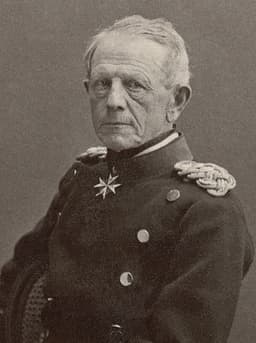
Helmuth von Moltke
General · Modern
76.2Total
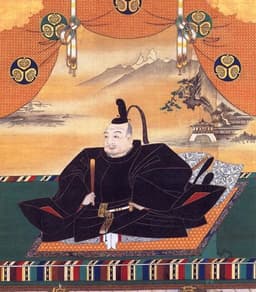
Tokugawa Ieyasu
General · Modern
81.8Total
Basic Information
Born
1800
1543
Died
1891
1616
Era
Modern
Modern
Nationality
Prussia
Japan
Occupation
General
General
Civilization
Western
Eastern
Score Comparison
Military (10%)
65.0
78.0
Political (20%)
62.7
82.0
Influence (20%)
88.0
88.0
Legacy (20%)
70.0
75.0
Leadership (15%)
85.0
85.0
Strategy (15%)
80.6
82.0
TOTAL
76.2
81.8
Helmuth von Moltke — Complete Timeline
1857 AD
Appointment as Chief of the Prussian General StaffPolitical Action
Moltke was appointed Chief of the Prussian General Staff, a position he held for 30 years. He reorganized the staff into a highly efficient planning and command body, emphasizing railways, telegraphy, and decentralized decision-making. This modernization was crucial for Prussia's subsequent victories.
Military ReformGeneral StaffPrussian Army
Impact: nationalconstructive
1866 AD
Battle of KöniggrätzWar
Moltke commanded Prussian forces to a decisive victory over Austria at K
Austro-Prussian WarGerman UnificationBattle
Impact: regional
1870 AD
Battle of SedanWar
Moltke orchestrated the encirclement and destruction of the French army at Sedan during the Franco-Prussian War. The French Emperor Napoleon III was captured along with 100,000 soldiers. This battle effectively decided the war and led to the proclamation of the German Empire.
Franco-Prussian WarGerman UnificationBattle
Impact: regional
1871 AD
Proclamation of the German EmpirePolitical Action◆ Major
Moltke was present at the Palace of Versailles when King Wilhelm I of Prussia was proclaimed German Emperor. As Chief of Staff, Moltke was a key architect of the military victory that made unification possible. He was later promoted to Field Marshal and ennobled.
German UnificationEmpireCeremony
Impact: regionalconstructive
Tokugawa Ieyasu — Complete Timeline
1600 AD
Battle of SekigaharaWar
Tokugawa Ieyasu led the Eastern Army to victory over Ishida Mitsunari's Western Army at Sekigahara. This decisive battle ended the Sengoku period and established Ieyasu as the supreme military ruler of Japan, paving the way for the Tokugawa shogunate.
Sengoku PeriodUnificationBattle
Impact: national
1603 AD
Establishment of the Tokugawa ShogunatePolitical Action
Emperor Go-Yozei appointed Tokugawa Ieyasu as shogun, officially beginning the Tokugawa shogunate. Ieyasu established his government in Edo (modern Tokyo), centralizing military and political power under his family's control.
ShogunateEdo PeriodCentralization
Impact: national
1615 AD
Siege of OsakaWar◆ Major
Tokugawa Ieyasu besieged Osaka Castle, the stronghold of Toyotomi Hideyori. The castle fell, and Hideyori committed suicide. This campaign eliminated the last major opposition to Tokugawa rule, solidifying the shogunate's control over Japan.
Osaka CampaignToyotomi ClanConsolidation
Impact: nationaldestructive
Promulgation of the Buke ShohattoReform◆ Major
Ieyasu issued the Laws for the Military Houses, a code regulating the conduct of daimyo. It restricted castle construction, required alternate attendance in Edo, and prohibited alliances without shogunal permission. This law helped control the feudal lords.
Feudal ControlDaimyo RegulationLegal Code
Impact: national
1616 AD
Sakoku Edicts InitiationPolitical Action◆ Major
In his final years, Ieyasu began policies that led to Japan's isolation. He restricted foreign trade to specific ports and expelled Christian missionaries. These measures, expanded by successors, resulted in the sakoku policy that isolated Japan for over 200 years.
IsolationismForeign PolicyChristianity
Impact: national
Expert Analysis
Origins
Tokugawa Ieyasu (1543–1616) was born into a turbulent Sengoku period Japan, the son of a minor daimyo. His early life was marked by hostage situations and alliances, shaping his patient and calculating nature. Helmuth von Moltke (1800–1891) was born into a Prussian noble family, served in the Danish army, then joined the Prussian service. His early exposure to military theory and staff work laid the foundation for his revolutionary approach to warfare.
Rise to Power
Ieyasu rose through shifting alliances, surviving the powerful Oda Nobunaga and Toyotomi Hideyoshi. His pivotal moment was the Battle of Sekigahara (1600), where he defeated a coalition of rival daimyo, effectively becoming Japan's supreme military leader. Moltke's rise came through intellectual merit; he was appointed Chief of the Prussian General Staff in 1857. He modernized the staff system and planned the wars of German unification, culminating in the decisive victory at Königgrätz (1866) and Sedan (1870).
Leadership & Governance
Ieyasu was a masterful politician and administrator. After Sekigahara, he established the Tokugawa shogunate, centralizing feudal Japan under a strict hierarchy. He implemented the Buke Shohatto (Laws for the Military Houses) and the sakoku isolation policy, ensuring 250 years of peace. Moltke excelled in operational leadership, delegating to commanders while controlling strategy via railway and telegraph. He emphasized decentralized execution within a unified plan, a model for modern general staffs.
Triumph & Tragedy
Ieyasu's greatest triumph was Sekigahara, but his Siege of Osaka (1615) destroyed the last opposition, the Toyotomi clan. His tragedy was the rigid social order that later stagnated Japan. Moltke's triumphs were Königgrätz and Sedan, leading to German unification. His tragedy was the unintended consequence of militarism in German society. Both men achieved their immediate goals but left complex legacies.
Character & Destiny
Ieyasu was patient, cunning, and frugal, often compared to a "wise old badger." He waited decades for supremacy, then governed with meticulous control. Moltke was reserved, intellectual, and deeply religious, known as "the Silent One." He believed in destiny and the moral purpose of war. Both possessed iron wills and strategic foresight.
Legacy
Ieyasu's shogunate lasted until 1868, isolating Japan but preserving its culture. His military innovations influenced Japanese martial tradition. Moltke's staff system became the model for modern armies; his concept of "separate march, united battle" remains taught. Ieyasu's legacy is more enduring in terms of political structure, while Moltke's is more direct in military doctrine.
Conclusion
Tokugawa Ieyasu scores higher overall (5.6-point gap) due to his superior political impact and governance. His ability to establish a dynasty that lasted 250 years overshadows Moltke's operational brilliance. While Moltke revolutionized warfare, Ieyasu's holistic statecraft—combining military victory with long-term institutional control—makes him the greater historical figure. **Verdict: Tokugawa Ieyasu wins with a score of 82 vs. 76.4.**
Rankings
🥇
Tokugawa IeyasuLeader
Mil: 78.0Pol: 82.0Inf: 88.0
81.8
🥈
Helmuth von Moltke
Mil: 65.0Pol: 62.7Inf: 88.0
76.2
+5.6 behind
How This Comparison Works
Algorithm
Each figure is scored on 6 dimensions (0—100 scale) based on structured historical data: Military (10%), Political (20%), Influence (20%), Legacy (20%), Leadership (15%), Strategy (15%). The weighted total produces the final ranking.
Data Sources
Scores are computed from structured sub-indicators in the database. Scale factors adjust for era (Ancient ×0.85, Modern ×1.0) and civilization size (Eastern ×1.05, Other ×0.80) to account for differences in population and military scale.
Maximum 3 Figures
Comparisons are limited to 2—3 figures to ensure readability and statistical meaningfulness.
Error Margins
±5 points per dimension — Sub-scores are derived from historical records with inherent uncertainty. Two figures within 5 points on a dimension should be considered roughly equivalent in that area.
Total Score Accuracy
±3 points overall — The weighted combination of 6 dimensions produces a total score with approximately ±3 points of uncertainty. Differences of less than 3 points are not statistically significant— the figures are effectively tied.
Known Limitations
- Historical records are incomplete and uneven across civilizations
- Figures from oral-tradition societies may be underrepresented
- Occupation labels can misclassify multi-role figures
- Scores measure capability and impact, not moral character
- Quantitative scoring is a comparison tool, not absolute truth
Capability Radar
Military (10%) — Battles & Warfare
Battles
85
85
Win Rate
90
90
Expansion
85
75
Political (20%) — Governance & Reform
Reform
75
90
Diplomacy
80
85
Economy
65
88
Influence (20%) — Cultural & Global Reach
Cultural
60
85
Global
75
70
Legacy (20%) — Historical Impact
Historical
85
90
Longevity
75
95
Leadership (15%) — Power & Stability
Tenure
70
95
Stability
70
95
Strategy (15%) — Tactics & Innovation
Strategy
95
92
Tactics
95
88
Reform
90
80
Similar Comparisons
Comments & Discussion
No comments yet. Be the first to share your thoughts!