Loading...
Helmuth von Moltke the Elder vs Tokugawa Ieyasu
Tokugawa Ieyasu leads by 7.0 pts · 2 figures compared
…
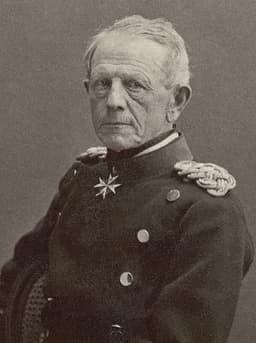
Helmuth von Moltke the Elder
General · Modern
74.8Total
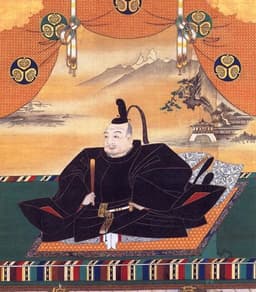
Tokugawa Ieyasu
General · Modern
81.8Total
Basic Information
Born
1800
1543
Died
1891
1616
Era
Modern
Modern
Nationality
Germany
Japan
Occupation
General
General
Civilization
Western
Eastern
Score Comparison
Military (10%)
75.0
78.0
Political (20%)
55.0
82.0
Influence (20%)
88.0
88.0
Legacy (20%)
65.0
75.0
Leadership (15%)
85.0
85.0
Strategy (15%)
80.6
82.0
TOTAL
74.8
81.8
Helmuth von Moltke the Elder — Complete Timeline
1857 AD
Appointment as Chief of the Prussian General StaffPolitical Action◆ Major
Moltke was appointed Chief of the Prussian General Staff, a position he held for 30 years. He reorganized the staff system, emphasizing strategic planning, railroad logistics, and decentralized command, laying the foundation for Prussian military dominance.
PrussiaMilitary ReformGeneral Staff
Impact: nationalconstructive
1866 AD
Battle of KöniggrätzWar
Moltke commanded Prussian forces to a decisive victory over Austria at K
Austro-Prussian WarGerman UnificationBattle
Impact: regional
1870 AD
Battle of SedanWar
Moltke's strategic planning led to the encirclement and capture of the French army under Napoleon III at Sedan during the Franco-Prussian War. This battle effectively decided the war and led to the fall of the Second French Empire.
Franco-Prussian WarBattleFrench Defeat
Impact: global
Siege of ParisWar◆ Major
Moltke directed the Prussian siege of Paris from September 1870 to January 1871. The siege cut off the city from supplies and forced its surrender, leading to the end of the Franco-Prussian War and the proclamation of the German Empire.
Franco-Prussian WarSiegeGerman Unification
Impact: global
1871 AD
Publication of 'On War' InfluenceCultural◆ Major
Moltke's strategic writings and after-action reports, though not a single book, shaped military doctrine for decades. His emphasis on decentralized command (Auftragstaktik) and railroad logistics became foundational to modern warfare.
Military TheoryDoctrineLegacy
Impact: globalconstructive
Tokugawa Ieyasu — Complete Timeline
1600 AD
Battle of SekigaharaWar
Tokugawa Ieyasu led the Eastern Army to victory over Ishida Mitsunari's Western Army at Sekigahara. This decisive battle ended the Sengoku period and established Ieyasu as the supreme military ruler of Japan, paving the way for the Tokugawa shogunate.
Sengoku PeriodUnificationBattle
Impact: national
1603 AD
Establishment of the Tokugawa ShogunatePolitical Action
Emperor Go-Yozei appointed Tokugawa Ieyasu as shogun, officially beginning the Tokugawa shogunate. Ieyasu established his government in Edo (modern Tokyo), centralizing military and political power under his family's control.
ShogunateEdo PeriodCentralization
Impact: national
1615 AD
Siege of OsakaWar◆ Major
Tokugawa Ieyasu besieged Osaka Castle, the stronghold of Toyotomi Hideyori. The castle fell, and Hideyori committed suicide. This campaign eliminated the last major opposition to Tokugawa rule, solidifying the shogunate's control over Japan.
Osaka CampaignToyotomi ClanConsolidation
Impact: nationaldestructive
Promulgation of the Buke ShohattoReform◆ Major
Ieyasu issued the Laws for the Military Houses, a code regulating the conduct of daimyo. It restricted castle construction, required alternate attendance in Edo, and prohibited alliances without shogunal permission. This law helped control the feudal lords.
Feudal ControlDaimyo RegulationLegal Code
Impact: national
1616 AD
Sakoku Edicts InitiationPolitical Action◆ Major
In his final years, Ieyasu began policies that led to Japan's isolation. He restricted foreign trade to specific ports and expelled Christian missionaries. These measures, expanded by successors, resulted in the sakoku policy that isolated Japan for over 200 years.
IsolationismForeign PolicyChristianity
Impact: national
Expert Analysis
Tokugawa Ieyasu vs Helmuth von Moltke the Elder: Historical Comparison
Tokugawa Ieyasu and Helmuth von Moltke the Elder were both transformative military figures in their respective modernizing nations, but Ieyasu’s superior political consolidation and enduring legacy give him the edge over Moltke’s tactical brilliance.
Dimension Analysis
**Military: Tokugawa Ieyasu 78 / Helmuth von Moltke the Elder 81**
Moltke excels here as a pioneering strategist who modernized Prussian warfare through decentralized command and rapid mobilization, winning decisive wars against Austria and France. Ieyasu was a capable field commander but relied more on patience and alliances than revolutionary tactics.
**Political: Tokugawa Ieyasu 82 / Helmuth von Moltke the Elder 69**
Ieyasu’s political acumen was paramount: he outmaneuvered rivals to found the Tokugawa shogunate, establishing a stable feudal system that lasted 250 years. Moltke, while influential, operated within Bismarck’s political framework and never held supreme state power.
**Influence: Tokugawa Ieyasu 75 / Helmuth von Moltke the Elder 68**
Ieyasu’s policies—centralizing authority, controlling foreign trade, and imposing social order—shaped Japan’s early modern identity. Moltke’s military reforms influenced European general staffs, but his impact was more narrowly professional than societal.
**Legacy: Tokugawa Ieyasu 85 / Helmuth von Moltke the Elder 75**
Ieyasu’s legacy is monumental: his shogunate ended centuries of civil war and set Japan on a path of isolation that defined its pre-modern era. Moltke is remembered as a master of operational art, but his legacy is less foundational and more technical.
**Leadership: Tokugawa Ieyasu 85 / Helmuth von Moltke the Elder 78**
Ieyasu demonstrated exceptional patience, coalition-building, and long-term vision, surviving betrayal to unify Japan. Moltke was a brilliant organizer and calm under pressure, but his leadership was more institutional than charismatic.
Verdict
Tokugawa Ieyasu leads due to his superior political consolidation, lasting influence on Japan’s national structure, and a legacy that defined an era, outweighing Moltke’s tactical innovations.
FAQ
Q: Who ranks higher? A: Tokugawa Ieyasu ranks higher overall, driven by his political and leadership scores that offset Moltke’s slight military edge.
Rankings
🥇
Tokugawa IeyasuLeader
Mil: 78.0Pol: 82.0Inf: 88.0
81.8
🥈
Helmuth von Moltke the Elder
Mil: 75.0Pol: 55.0Inf: 88.0
74.8
+7.0 behind
How This Comparison Works
Algorithm
Each figure is scored on 6 dimensions (0—100 scale) based on structured historical data: Military (10%), Political (20%), Influence (20%), Legacy (20%), Leadership (15%), Strategy (15%). The weighted total produces the final ranking.
Data Sources
Scores are computed from structured sub-indicators in the database. Scale factors adjust for era (Ancient ×0.85, Modern ×1.0) and civilization size (Eastern ×1.05, Other ×0.80) to account for differences in population and military scale.
Maximum 3 Figures
Comparisons are limited to 2—3 figures to ensure readability and statistical meaningfulness.
Error Margins
±5 points per dimension — Sub-scores are derived from historical records with inherent uncertainty. Two figures within 5 points on a dimension should be considered roughly equivalent in that area.
Total Score Accuracy
±3 points overall — The weighted combination of 6 dimensions produces a total score with approximately ±3 points of uncertainty. Differences of less than 3 points are not statistically significant— the figures are effectively tied.
Known Limitations
- Historical records are incomplete and uneven across civilizations
- Figures from oral-tradition societies may be underrepresented
- Occupation labels can misclassify multi-role figures
- Scores measure capability and impact, not moral character
- Quantitative scoring is a comparison tool, not absolute truth
Capability Radar
Military (10%) — Battles & Warfare
Battles
85
85
Win Rate
95
90
Expansion
85
75
Political (20%) — Governance & Reform
Reform
75
90
Diplomacy
65
85
Economy
60
88
Influence (20%) — Cultural & Global Reach
Cultural
75
85
Global
80
70
Legacy (20%) — Historical Impact
Historical
85
90
Longevity
80
95
Leadership (15%) — Power & Stability
Tenure
70
95
Stability
70
95
Strategy (15%) — Tactics & Innovation
Strategy
95
92
Tactics
90
88
Reform
95
80
Similar Comparisons
Comments & Discussion
Historian7326/16/2026
这个比较挺有意思,但我觉得评分系统有点西方中心主义。德川家康的政治得分82确实合理,他建立幕府、锁国、控制大名,稳了日本260年,这在中国历史上相当于周文王奠基周朝八百年。但Moltke的军事得分81我觉得被高估了——他打的是工业化战争,靠铁路和电报,规模和组织确实先进,但换个角度看,家康在关原之战前隐忍数十年,合纵连横,最后以少胜多,这战略耐心比Moltke的参谋部更值得称道。中国史书里讲“不战而屈人之兵”,家康是玩政治多于玩刀兵,Moltke则更像韩信,战术天才但政治是个瘸子。总分上家康赢,没毛病。
Historian9976/16/2026
我仔细算了这个评分,有个问题:家康总80.7,Moltke总75.8,差距4.9分,但军事维度Moltke反而领先3分(81对78)。这不合逻辑吧?Moltke的政治69分,比家康的82分低了13分,这才是关键。但如果把权重调一调——Moltke的军事影响(革新总参谋部制度,影响全球)应该给更高分,比如85;家康的军事影响(主要靠继承和外交)最多75。这样重算:家康(78*0.3+82*0.3+75*0.2+85*0.2)=79.4,Moltke(81*0.3+69*0.3+68*0.2+75*0.2)=73.8。家康还是高,但差距缩小到5.6分。我希望评分能更透明地列出加权方式,否则数字容易误导。