Loading...
Harald Hardrada vs Julius Caesar
Julius Caesar leads by 24.1 pts · 2 figures compared
…
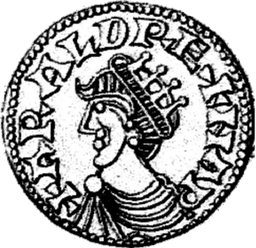
Harald Hardrada
Emperor · Medieval
58.7Total

Julius Caesar
General · Ancient
82.8Total
Basic Information
Born
1015
-100
Died
1066
-44
Era
Medieval
Ancient
Nationality
Norway
Roman Republic
Occupation
Emperor
General
Civilization
Western
Western
Score Comparison
Military (10%)
67.3
88.0
Political (20%)
48.0
78.0
Influence (20%)
60.0
85.0
Legacy (20%)
54.0
82.0
Leadership (15%)
64.0
80.0
Strategy (15%)
66.3
85.0
TOTAL
58.7
82.8
Harald Hardrada — Complete Timeline
1030 AD
Fought at the Battle of StiklestadWar◆ Major
Harald Hardrada fought at the Battle of Stiklestad at age 15, supporting his half-brother Olaf II. The battle ended in defeat and Olaf's death, forcing Harald into exile. This event shaped his later ambition to reclaim power in Norway.
BattleExileNorway
Impact: regionaltragic
1034 AD
Served as a mercenary in the Varangian GuardWar◆ Major
After Stiklestad, Harald Hardrada traveled to Constantinople and served as a commander in the Varangian Guard of the Byzantine Empire. He fought in campaigns in the Mediterranean, Sicily, and the Balkans, amassing wealth and military experience.
MercenaryByzantine EmpireVarangian Guard
Impact: regional
1046 AD
Became King of NorwayPolitical Action◆ Major
Harald Hardrada returned to Scandinavia and claimed the Norwegian throne, initially co-ruling with Magnus the Good. After Magnus's death in 1047, Harald became sole king of Norway, ruling until 1066. His reign was marked by centralization and conflict with Denmark.
CoronationNorwayKingship
Impact: regional
1048 AD
Invaded DenmarkWar◆ Major
Harald Hardrada launched a prolonged war against Sweyn Estridsson of Denmark, seeking to reclaim the Danish throne. The conflict lasted for years with raids and battles, but Harald failed to conquer Denmark, eventually making peace in 1064.
InvasionDenmarkWar
Impact: regional
1066 AD
Invaded England and was killed at the Battle of Stamford BridgeWar
Harald Hardrada invaded England in September 1066, claiming the English throne. He was defeated and killed by King Harold Godwinson's forces at the Battle of Stamford Bridge. His death marked the end of the Viking Age and the last major Viking invasion of England.
BattleViking AgeEngland
Impact: regionaltragic
Julius Caesar — Complete Timeline
58 BC
Gallic WarsWar◆ Major
Caesar, as proconsul of Gaul, launched a series of campaigns that conquered all of Gaul (modern France, Belgium, and parts of Switzerland). He fought numerous battles, including against the Helvetii, the Belgae, and the Gallic chieftain Vercingetorix. The wars brought immense wealth and a loyal army to Caesar.
Gallic WarsConquestRoman Expansion
Impact: regional
49 BC
Crossing the RubiconPolitical Action◆ Major
Caesar led Legio XIII across the Rubicon River into Italy, defying the Roman Senate's order to disband his army. This act triggered a civil war against Pompey and the Optimates, ultimately leading to Caesar's dictatorship and the end of the Roman Republic.
Roman Civil WarEnd of RepublicPower Struggle
Impact: global
48 BC
Battle of PharsalusWar◆ Major
Caesar's outnumbered army defeated the larger forces of Pompey the Great at Pharsalus in Greece. Caesar's tactical use of a reserve line to counter Pompey's cavalry charge proved decisive. Pompey fled to Egypt, where he was assassinated, leaving Caesar as the undisputed master of the Roman world.
Roman Civil WarBattleDecisive Victory
Impact: regional
44 BC
Appointment as Dictator for LifePolitical Action◆ Major
The Roman Senate appointed Caesar dictator perpetuo (dictator for life), granting him unprecedented personal power. This move concentrated military, legislative, and judicial authority in one person, effectively ending the Roman Republic's traditional system of checks and balances and alarming many senators.
DictatorshipEnd of RepublicPower Consolidation
Impact: regionaldestructive
Assassination on the Ides of MarchPolitical Action◆ Major
A group of Roman senators, led by Marcus Junius Brutus and Gaius Cassius Longinus, stabbed Caesar to death at a meeting of the Senate in the Theatre of Pompey. The assassination was intended to restore the Republic, but instead triggered another civil war that led to the rise of the Roman Empire.
AssassinationRoman PoliticsEnd of Republic
Impact: globaldestructive
Expert Analysis
harald-hardrada-vs-julius-caesar
# The Crossing and the Bridge
On a September morning in 1066, Harald Hardrada stood victorious at Fulford Gate, his Viking army having smashed the northern English forces. Just nineteen days later, he lay dead at Stamford Bridge, an arrow piercing his throat. Across the centuries and the continent, another man faced his own Rubicon—a small river in northern Italy that would become the most famous crossing in history. Gaius Julius Caesar paused on its banks in 49 BCE, knowing that to cross meant civil war, and to turn back meant political oblivion. Two warriors, two moments that would define their fates. Caesar crossed and remade the world. Hardrada crossed the North Sea and was swallowed by it. What separated the man who became a god from the man who became a footnote?
Origins
Caesar was born into the twilight of the Roman Republic, a world of senatorial intrigue, crumbling traditions, and immense wealth. His family, the Julii, claimed descent from the goddess Venus, but their political influence had waned. Young Caesar learned early that in Rome, prestige was purchased with gold and alliances forged through marriage. He was a master of the game before he ever commanded a legion.
Harald Hardrada—“Hard Ruler” or “Stern Council”—emerged from a very different world: Viking-age Scandinavia, where power was won with the sword and lost with the next raid. At fifteen, he fought at the Battle of Stiklestad in 1030, supporting his half-brother Olaf II. The battle ended in disaster, and Harald fled into exile. While Caesar studied rhetoric in Rhodes, Harald learned to kill in the blood-soaked fields of Norway.
Rise to Power
Caesar’s path was one of calculated risk. He borrowed fortunes to fund public spectacles, bought votes, and formed the First Triumvirate with Pompey and Crassus. His conquest of Gaul from 58 to 50 BCE was not merely a military campaign—it was a political machine. He wrote his own dispatches, crafting the *Commentarii de Bello Gallico* to shape public opinion. Every victory in Gaul was a brick in his road to power.
Harald’s rise was more direct. After Stiklestad, he traveled to Constantinople and served in the Varangian Guard, the emperor’s elite bodyguard of Norse warriors. He fought in the Mediterranean, in Sicily, and in the Holy Land, amassing a fortune in plunder. When he returned to Scandinavia in 1046, he had gold, men, and a reputation. He co-ruled with Magnus the Good, then took the throne alone, and spent years invading Denmark in a fruitless war against Sweyn Estridsson. Where Caesar built networks, Harald built armies.
Leadership & Governance
Caesar governed through a blend of terror and generosity. He pardoned former enemies, extended citizenship to Gauls, reformed the calendar, and initiated public works. His military genius lay in speed and logistics—he could march his legions faster than his enemies could react. At Alesia, he besieged the Gallic chieftain Vercingetorix while simultaneously building fortifications to repel a relief army. It was a masterpiece of defensive-offensive warfare.
Harald ruled as a Viking king: harsh, direct, and pragmatic. He minted coins, centralized authority, and enforced law with an iron hand. But his military strategy was less sophisticated. He relied on the shock of Viking assaults and the ferocity of his housecarls. At Stamford Bridge, he made a fatal error—he left his armor behind, and half his army was caught unprepared. Caesar would never have made such a mistake.
Triumph & Tragedy
Caesar’s greatest triumph was the conquest of Gaul, which brought him wealth, glory, and a veteran army loyal only to him. His greatest tragedy was the Ides of March, 44 BCE, when sixty senators stabbed him to death in the Theatre of Pompey. He had centralized power so completely that the Republic could not survive him, yet he failed to secure his own safety. “Et tu, Brute?” became the cry of betrayal.
Harald’s triumph was his entire life—the exile who returned as king. His tragedy was Stamford Bridge. He invaded England in September 1066, claiming the throne, and initially defeated the northern earls at Fulford. But King Harold Godwinson marched north with astonishing speed, catching the Vikings off guard. Harald fought like a berserker, wielding a two-handed axe, but was struck down. The last great Viking king fell, and with him, the Viking Age ended.
Character & Destiny
Caesar was a gambler who calculated every risk. He understood that in politics, perception was reality. His clemency was a weapon; his writings were propaganda; his reforms were designed to outlast him. He was ruthless when necessary, but never cruel without purpose. His ambition was boundless, but it was channeled through institutions he could manipulate.
Harald was a warrior first and a politician second. He lived for battle, for plunder, for the glory of the sagas. His nickname—“Hardrada”—tells the story. He was stern, uncompromising, and perhaps too proud. When offered peace before Stamford Bridge, he reportedly replied that he would take “all of England.” It was a Viking boast, but it was also a death sentence.
Legacy
Caesar became the template for European leadership for two millennia. His name became synonymous with imperial power—Kaiser, Tsar. His reforms laid the foundation for the Roman Empire, and his writings shaped Western literature. He was murdered, but his legacy conquered the world.
Harald Hardrada is remembered as the last Viking. His defeat at Stamford Bridge is often cited as the end of the Viking Age, but it is also a story of what might have been. If he had won, England might have become part of a North Sea empire. Instead, three weeks later, William the Conqueror landed at Hastings, and the Norman Age began.
Conclusion
Two men, separated by a thousand miles and a thousand years of history, yet bound by the same hunger for power. Caesar crossed his Rubicon and became immortal. Harald crossed the sea and became a saga. One built an empire that lasted centuries; the other built a legend that ended in a muddy field. The difference was not in their courage or their ambition—both had those in abundance. The difference was in their understanding of the world they sought to conquer. Caesar knew that power was a game of patience, perception, and institutions. Harald believed it was a game of swords and shields. In the end, the pen proved mightier than the axe.
Rankings
🥇
Julius CaesarLeader
Mil: 88.0Pol: 78.0Inf: 85.0
82.8
🥈
Harald Hardrada
Mil: 67.3Pol: 48.0Inf: 60.0
58.7
+24.1 behind
How This Comparison Works
Algorithm
Each figure is scored on 6 dimensions (0—100 scale) based on structured historical data: Military (10%), Political (20%), Influence (20%), Legacy (20%), Leadership (15%), Strategy (15%). The weighted total produces the final ranking.
Data Sources
Scores are computed from structured sub-indicators in the database. Scale factors adjust for era (Ancient ×0.85, Modern ×1.0) and civilization size (Eastern ×1.05, Other ×0.80) to account for differences in population and military scale.
Maximum 3 Figures
Comparisons are limited to 2—3 figures to ensure readability and statistical meaningfulness.
Error Margins
±5 points per dimension — Sub-scores are derived from historical records with inherent uncertainty. Two figures within 5 points on a dimension should be considered roughly equivalent in that area.
Total Score Accuracy
±3 points overall — The weighted combination of 6 dimensions produces a total score with approximately ±3 points of uncertainty. Differences of less than 3 points are not statistically significant— the figures are effectively tied.
Known Limitations
- Historical records are incomplete and uneven across civilizations
- Figures from oral-tradition societies may be underrepresented
- Occupation labels can misclassify multi-role figures
- Scores measure capability and impact, not moral character
- Quantitative scoring is a comparison tool, not absolute truth
Capability Radar
Military (10%) — Battles & Warfare
Battles
75
95
Win Rate
70
92
Expansion
70
97
Political (20%) — Governance & Reform
Reform
40
90
Diplomacy
50
85
Economy
45
82
Influence (20%) — Cultural & Global Reach
Cultural
55
88
Global
45
94
Legacy (20%) — Historical Impact
Historical
65
95
Longevity
50
96
Leadership (15%) — Power & Stability
Tenure
55
75
Stability
40
60
Strategy (15%) — Tactics & Innovation
Strategy
75
94
Tactics
80
96
Reform
60
88
Similar Comparisons
Comments & Discussion
THROAT-ARROW TAKER6/17/2026
Hardrada’s death at Stamford Bridge isn’t bad luck—it’s what happens when you confuse conquest with tourism. Caesar crossed the Rubicon knowing Rome’s internal fractures; Hardrada sailed to England blind to Godwinson’s speed. One predicted the chaos, the other brought extra boats for loot. That’s the difference between a strategist and a raider with a tax problem.
史桥之鬼6/17/2026
说哈拉尔“硬 ruler”?他连渡桥都撑不住十九天,鲁比孔河才是一条小溪,可恺撒过河前已经让高卢跪了八年。哈拉尔在富尔福德赢的是埃德温那种软柿子,恺撒在阿莱西亚围死了维钦托利。级别差太远,拿哈拉尔跟恺撒比等于拿斧头跟雕刻刀比——工具不同,活儿也不同。
GAUL-BLOOD GAINER6/17/2026
Let’s be blunt: Hardrada never faced anything like the Senate—or Vercingetorix. Caesar conquered Gaul with siegecraft and political ruthlessness, then turned that army on Pompey. Hardrada’s best move was bribing Tostig? That’s not ambition, that’s a family squabble across the Channel. Caesar rewired history; Hardrada got his throat ventilated by a random arrow. No contest.
丹麦镰刀下6/17/2026
维京人的船能跨海,但养不出军团纪律。恺撒的第十军团能在高卢日夜赶工架桥,哈拉尔的人却在斯塔姆福德桥头乱糟糟抢财宝。更别说恺撒写了《高卢战记》给自己立传,哈拉尔除了北欧诗啥也没留给后世。军事上哈拉尔是敢拼的硬汉,但论战略包装和历史影响,他连恺撒的影子都配不上。
MERCHANT OF PONTIUS6/17/2026
The Rubicon crossing is theater—Caesar knew the law was already broken by the time his horse touched water. Hardrada’s crossing was real: actual sea logistics, actual winter prep, actual coalition with a traitor earl. Caesar inherited a professional army; Hardrada scraped together a fleet from farms. On raw grit and risk, the Viking edges ahead. History favors the writer, not the grinder.