Loading...
Abdullah ibn Rawahah vs Qin Shi Huang
Qin Shi Huang leads by 39.7 pts · 2 figures compared
…
Abdullah ibn Rawahah
General · Ancient
45.5Total
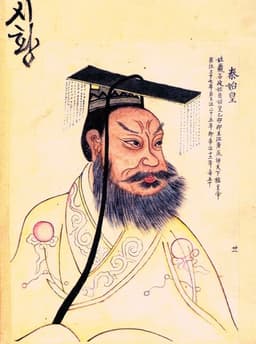
Qin Shi Huang
Emperor · Ancient
85.2Total
Basic Information
Born
-585
-259
Died
—
-210
Era
Ancient
Ancient
Nationality
Rashidun Caliphate
China
Occupation
General
Emperor
Civilization
Middle Eastern
Eastern
Score Comparison
Military (10%)
45.0
80.0
Political (20%)
35.0
90.0
Influence (20%)
47.9
85.0
Legacy (20%)
37.5
90.0
Leadership (15%)
62.6
78.0
Strategy (15%)
50.0
82.0
TOTAL
45.5
85.2
Abdullah ibn Rawahah — Complete Timeline
614 AD
Early conversion to IslamPolitical Action◆ Major
Abdullah ibn Rawahah was an early convert to Islam from the Khazraj tribe of Medina. He was a poet and a close companion of Muhammad, known for his eloquence and dedication to the faith.
Early ConvertPoetCompanion
constructive
622 AD
Participated in the Pledge of AqabaPolitical Action◆ Major
Abdullah ibn Rawahah was one of the 12 representatives from Medina who pledged allegiance to Muhammad at the Second Pledge of Aqaba. This pledge paved the way for the Hijra and the establishment of the Muslim community in Medina.
Pledge of AqabaMedinaFoundation
Impact: regionalconstructive
628 AD
Appointed as a tax collector for KhaybarPolitical Action
After the conquest of Khaybar, Muhammad appointed Abdullah ibn Rawahah as a tax collector to assess and collect tribute from the Jewish inhabitants. He performed this administrative duty with fairness.
Tax CollectionKhaybarAdministration
629 AD
Killed at the Battle of MutahWar◆ Major
Abdullah ibn Rawahah was the third and final commander killed at the Battle of Mutah. After Zayd and Jafar fell, he took command and fought until he was killed, becoming a martyr. His death marked the end of the Muslim leadership in that battle.
Battle of MutahDeathMartyrdom
Impact: regionaltragic
Qin Shi Huang — Complete Timeline
246 BC
Construction of the Mausoleum and Terracotta ArmyOther◆ Major
Qin Shi Huang commissioned a vast mausoleum complex near Xi'an, guarded by thousands of life-sized terracotta soldiers, horses, and chariots. The project employed hundreds of thousands of workers and reflected his obsession with immortality and imperial power.
Impact: global
230 BC
Conquest of the Six Warring StatesWar
From 230 to 221 BCE, Ying Zheng led the Qin state in a series of campaigns that conquered the Han, Zhao, Wei, Chu, Yan, and Qi states. This unified China under a single ruler for the first time, ending the Warring States period.
Impact: global
221 BC
Standardization of Writing, Currency, and MeasurementsReform◆ Major
Qin Shi Huang ordered the standardization of Chinese script, currency, and weights and measures across the unified empire. This facilitated administration, trade, and cultural integration, laying a foundation for future dynasties.
Impact: globalconstructive
Proclamation of the Qin DynastyPolitical Action
After conquering the last independent state, Ying Zheng declared himself Shi Huangdi (First Emperor), founding the Qin Dynasty. He adopted a new title to signify his supreme authority and initiated centralized imperial rule.
Impact: global
214 BC
Initiation of the Great Wall ConstructionOther◆ Major
Qin Shi Huang ordered the connection and extension of existing northern fortifications to create a unified defensive wall against nomadic Xiongnu raids. This project involved massive conscripted labor and became the precursor to the later Great Wall.
Impact: regional
213 BC
Burning of Books and Burying of ScholarsPolitical Action◆ Major
On the advice of Li Si, Qin Shi Huang ordered the burning of historical records and philosophical texts not aligned with Legalist doctrine. He also had 460 Confucian scholars buried alive to suppress dissent and consolidate ideological control.
Impact: nationaldestructive
Expert Analysis
abdullah-ibn-rawahah-vs-qin-shi-huang
# The Emperor and the Poet: Two Visions of Power in the Ancient World
History often pairs figures not by their fame but by the starkness of their contrast. Imagine, if you will, a vast tomb guarded by thousands of life-sized terracotta soldiers, a monument to absolute power. Now imagine a poet, riding into a hopeless battle, reciting verses as his companions fall around him. One built an empire that would echo through millennia; the other died on a dusty battlefield, leaving behind only a name and a few lines of verse. Qin Shi Huang and Abdullah ibn Rawahah never met, never could have met—they lived worlds apart in time and space. Yet their stories, told side by side, reveal something profound about the nature of ambition, faith, and the fragile thread that separates triumph from tragedy.
Origins
Qin Shi Huang was born in 259 BC, a prince of the Qin state during the chaotic Warring States period of ancient China. His father was a king, but his mother was a former concubine, and his early years were shadowed by political intrigue and the threat of assassination. He grew up in a world where seven kingdoms fought for supremacy, where survival depended on ruthlessness and strategy. By the time he ascended the throne at age thirteen, he had already learned that power was not given—it was taken.
Abdullah ibn Rawahah was born around 585 AD in Medina, in the Arabian Peninsula. He belonged to the Khazraj tribe, a people accustomed to tribal feuds and desert hospitality. Unlike the young prince, he was not born into royalty. He was a poet, a man of words and emotion, living in a society where verse was the highest form of art and the sharpest weapon of persuasion. When he first heard the message of Islam in 614 AD, he was drawn not by the promise of conquest but by the beauty of its truth. He became an early convert, a decision that would lead him from the quiet life of a poet to the front lines of a holy war.
Rise to Power
Qin Shi Huang’s path was one of calculated destruction. From 230 to 221 BC, he led the Qin army in a series of relentless campaigns that conquered the six rival states—Han, Zhao, Wei, Chu, Yan, and Qi. Each victory was a masterstroke of military strategy, but also of political cunning. He employed spies, bribed officials, and exploited divisions. When the last independent kingdom fell in 221 BC, he declared himself Shi Huangdi, the First Emperor. He was thirty-eight years old, and he had reshaped the world.
Abdullah ibn Rawahah’s rise was quieter but no less significant. In 622 AD, he was one of twelve representatives from Medina who pledged allegiance to Muhammad at the Second Pledge of Aqaba, a pact that would lead to the migration of Muslims to Medina and the founding of the first Islamic state. He was not a general by training; he was a poet and a companion, trusted for his loyalty and his eloquence. In 628 AD, after the conquest of Khaybar, Muhammad appointed him as a tax collector—a position of responsibility that required both integrity and courage. He served faithfully, but his greatest test was yet to come.
Leadership & Governance
Qin Shi Huang’s leadership was revolutionary and terrifying. He standardized writing, currency, and measurements across his unified empire, creating a common administrative language that would endure for two thousand years. He ordered the connection and extension of northern fortifications into what would become the Great Wall, a project that cost countless lives but transformed China’s defenses. Yet his rule was also brutal. In 213 BC, on the advice of his chancellor Li Si, he ordered the burning of historical records and philosophical texts that did not align with Legalist doctrine, and the burying alive of scholars who resisted. He believed that absolute control required absolute conformity.
Abdullah ibn Rawahah led not through fear but through faith. As a commander, he lacked the strategic brilliance of a seasoned general. His military score of 47.5 and leadership score of 27.9 reflect a man who was brave but not born for war. At the Battle of Mutah in 629 AD, he was the third and final commander to take the banner after Zayd and Jafar fell. He hesitated, then rallied his men with poetry, reciting verses of courage and resignation. He knew the battle was lost, but he fought anyway. That is not the logic of a conqueror; it is the logic of a believer.
Triumph & Tragedy
Qin Shi Huang’s greatest triumph was the unification of China itself. He created a centralized bureaucracy, standardized the axle lengths of carts so roads could be used across the empire, and built a network of roads and canals. His mausoleum, begun in 246 BC, was a cosmic map of his power—a vast underground palace guarded by thousands of terracotta soldiers, each one unique, each one ready to serve him in the afterlife. But his greatest tragedy was the same ambition. He became obsessed with immortality, sending expeditions for the elixir of life, consuming mercury pills that likely hastened his death in 210 BC. He died at forty-nine, his empire already fraying at the edges.
Abdullah ibn Rawahah’s triumph was smaller but no less real. He was a poet who saw his faith spread from a small community in Medina to the edges of the known world. His tragedy was his death at Mutah, where he fell as the third commander, his body left on a battlefield far from home. He had no terracotta army, no grand tomb. But his death became a symbol of selfless devotion, a story told and retold for centuries.
Character & Destiny
Qin Shi Huang’s character was forged in paranoia and ambition. He trusted no one, not even his own family. He executed his own ministers, exiled his mother’s lovers, and lived in constant fear of assassination. His decisions were driven by a relentless desire to control everything—time, history, even death. That need for control built an empire, but it also ensured its collapse. The Qin Dynasty fell within four years of his death, a victim of its own harshness.
Abdullah ibn Rawahah’s character was defined by humility and courage. He was a poet who understood that words could inspire, but also that actions mattered more. He did not seek power; he accepted duty. When he took the banner at Mutah, he knew he would likely die. He went anyway. That is the difference between a man who builds a wall and a man who walks through a gate.
Legacy
Qin Shi Huang’s legacy is monumental. He gave China its name, its written script, its first unified government. The Great Wall, though rebuilt many times, still bears his imprint. The terracotta army, discovered in 1974, has become one of the world’s greatest archaeological wonders. His total score of 83.5 reflects a figure of immense historical weight, for better and for worse.
Abdullah ibn Rawahah’s legacy is quieter but enduring. He is remembered as one of the companions of the Prophet, a poet of faith, a man who gave his life for his beliefs. His total score of 47.0 does not capture the depth of his influence on Islamic tradition, where his name is spoken with reverence. He did not change the world the way Qin Shi Huang did. But he changed the hearts of those who heard his story.
Conclusion
We remember the emperor who built an empire and the poet who died in a battle that history almost forgot. Qin Shi Huang’s story is one of power—how it is seized, how it is wielded, and how it corrupts. Abdullah ibn Rawahah’s story is one of faith—how it sustains, how it demands sacrifice, and how it transcends. Both men lived in ancient worlds, both shaped by forces beyond their control. But the difference between them is not in their achievements. It is in what they loved. The emperor loved control. The poet loved the truth. And in the end, it is not the size of the monument that matters, but the depth of the devotion.
Rankings
🥇
Qin Shi HuangLeader
Mil: 80.0Pol: 90.0Inf: 85.0
85.2
🥈
Abdullah ibn Rawahah
Mil: 45.0Pol: 35.0Inf: 47.9
45.5
+39.7 behind
How This Comparison Works
Algorithm
Each figure is scored on 6 dimensions (0—100 scale) based on structured historical data: Military (10%), Political (20%), Influence (20%), Legacy (20%), Leadership (15%), Strategy (15%). The weighted total produces the final ranking.
Data Sources
Scores are computed from structured sub-indicators in the database. Scale factors adjust for era (Ancient ×0.85, Modern ×1.0) and civilization size (Eastern ×1.05, Other ×0.80) to account for differences in population and military scale.
Maximum 3 Figures
Comparisons are limited to 2—3 figures to ensure readability and statistical meaningfulness.
Error Margins
±5 points per dimension — Sub-scores are derived from historical records with inherent uncertainty. Two figures within 5 points on a dimension should be considered roughly equivalent in that area.
Total Score Accuracy
±3 points overall — The weighted combination of 6 dimensions produces a total score with approximately ±3 points of uncertainty. Differences of less than 3 points are not statistically significant— the figures are effectively tied.
Known Limitations
- Historical records are incomplete and uneven across civilizations
- Figures from oral-tradition societies may be underrepresented
- Occupation labels can misclassify multi-role figures
- Scores measure capability and impact, not moral character
- Quantitative scoring is a comparison tool, not absolute truth
Capability Radar
Military (10%) — Battles & Warfare
Battles
15
85
Win Rate
10
90
Expansion
10
90
Political (20%) — Governance & Reform
Reform
5
95
Diplomacy
15
75
Economy
5
90
Influence (20%) — Cultural & Global Reach
Cultural
25
95
Global
10
85
Legacy (20%) — Historical Impact
Historical
20
95
Longevity
15
95
Leadership (15%) — Power & Stability
Tenure
10
70
Stability
10
65
Strategy (15%) — Tactics & Innovation
Strategy
15
85
Tactics
20
80
Reform
5
95
Similar Comparisons
Comments & Discussion
Emperor's Shadow6/17/2026
Qin Shi Huang built an empire of stone and bone, while Abdullah ibn Rawahah built one of spirit. The terracotta warriors number over 8,000—each unique, each frozen in service to one man's ego. But Rawahah's legacy? A single line from the Quran's Surah Al-Imran, revealed after his martyrdom at Mu'tah: "Allah loves those who fight in His cause in ranks as if they were a solid structure." One emperor feared death so much he sought immortality; one poet faced it singing. You tell me which legacy end
沙场诗人6/17/2026
拿秦始皇的兵马俑和伊本·拉瓦哈的诗歌比?八千人俑确实壮观,但不过是皇权的陵墓装饰。拉瓦哈阵亡前吟诵的那些诗句,"天园就在剑影之下",才是真正的不朽。一个靠暴政统一六国,一个靠信仰凝聚人心。兵马俑再逼真,也不会在历史上留下温度。诗人的血,比皇帝的玉玺更有分量。
Data Decoder6/17/2026
Look, let's talk numbers. Qin Shi Huang's tomb complex covers 56 square kilometers. His armies conquered six kingdoms in roughly 9 years. Abdullah ibn Rawahah commanded maybe 3,000 men at Mu'tah against a Byzantine force of 100,000+. One man centralized a continent through logistics and legal codification (despite what you think of his methods). The other was a competent but mortal battlefield commander. Scale matters. Rawahah is a footnote in military history; Qin Shi Huang is a textbook chapte
尘封编年史6/17/2026
数据控别急着下结论。穆塔赫战役中,伊本·拉瓦哈是在三位指挥官接连阵亡后接过帅旗的,他明明可以选择撤退,却坚持战斗至死。这叫什么?这叫殉道者的觉悟。秦始皇呢?焚书坑儒、追求长生不老,活得畏首畏尾。史书记载他最怕刺客,住在咸阳宫里连厕所都有暗门。勇气不该以征服的土地面积来衡量,有时候,将军的战袍比龙袍更像铠甲。
Revisionist Glare6/17/2026
You're romanticizing a warlord and a warrior-poet who both served authoritarian systems. Qin Shi Huang standardized weights, measures, and script—yes. But he also buried 460 scholars alive for disagreeing with him. Ibn Rawahah wrote poetry about fighting "polytheists" and died in a war of expansion under Muhammad's banner. These aren't noble opposites; they're two sides of the same ancient coin: power sanctified by either the state or the divine. Neither built a paradise. Both left bloody footpr
南北风雅6/17/2026
别吵了。一个东方帝王,一个阿拉伯诗人,本是两条永不相交的河流。秦始皇求仙问道时