Loading...
Han Xin vs Napoleon Bonaparte
Napoleon Bonaparte leads by 10.5 pts · 2 figures compared
…
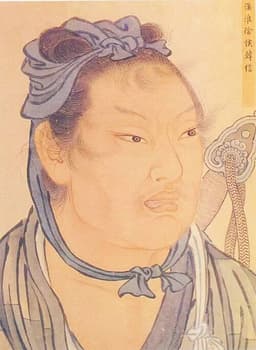
Han Xin
General · Ancient
60.4Total

Napoleon Bonaparte
General · Modern
70.9Total
Basic Information
Born
-230
1769
Died
-196
1821
Era
Ancient
Modern
Nationality
China
France
Occupation
General
General
Civilization
Eastern
Western
Score Comparison
Military (10%)
88.0
94.0
Political (20%)
25.0
72.0
Influence (20%)
65.0
40.0
Legacy (20%)
70.8
80.0
Leadership (15%)
33.5
78.0
Strategy (15%)
88.6
90.0
TOTAL
60.4
70.9
Han Xin — Complete Timeline
205 BC
Battle of JingxingWar◆ Major
Han Xin led a Han army through the narrow Jingxing Pass, facing a larger Zhao force. He used a stratagem of placing his troops with their backs to a river, forcing them to fight without retreat. The Han won decisively, capturing the Zhao king.
Military StrategyZhao CampaignDecisive Victory
Impact: regional
204 BC
Battle of Wei RiverWar◆ Major
Han Xin defeated the Qi army at the Wei River. He used a feigned retreat to lure the Qi forces across the river, then attacked them while they were crossing. This victory secured the Qi state for Han and eliminated a major rival.
Qi CampaignMilitary TacticsRiver Battle
Impact: regional
203 BC
Appointment as King of QiPolitical Action
After his victories, Liu Bang appointed Han Xin as King of Qi, granting him control over the conquered territory. This elevated Han Xin from general to a regional ruler, but also created tensions with Liu Bang, who feared his growing power.
AppointmentFeudal TitlePower Dynamics
Impact: regional
201 BC
Demotion and ArrestPolitical Action◆ Major
Emperor Gaozu, suspecting Han Xin of rebellion, tricked him into attending a meeting and arrested him. Han Xin was demoted from king to marquis and placed under house arrest in Chang'an. This reflected the emperor's fear of powerful generals.
Political PurgeHouse ArrestImperial Suspicion
Impact: nationaltragic
196 BC
Execution of Han XinPolitical Action◆ Major
Han Xin was executed on charges of plotting rebellion with Chen Xi. He was killed in the palace by Empress L
ExecutionPolitical ViolenceLü Zhi
Impact: nationaltragic
Napoleon Bonaparte — Complete Timeline
1799 AD
Coup of 18 BrumaireOther◆ Major
Napoleon Bonaparte, with support from his brother Lucien and key political figures, overthrew the Directory in a bloodless coup. He established the Consulate with himself as First Consul, effectively becoming the ruler of France. This event ended the French Revolution's most unstable period.
French RevolutionCoupRise to Power
Impact: regional
1804 AD
Promulgation of the Napoleonic CodeOther◆ Major
Napoleon enacted the Civil Code of the French, known as the Napoleonic Code, a comprehensive set of laws that replaced the fragmented feudal legal systems. The code established legal equality, protected property rights, and secularized law. It became the basis for legal systems in many European and world countries.
Legal ReformNapoleonic CodeCivil Law
Impact: globalconstructive
1805 AD
Battle of AusterlitzWar◆ Major
Napoleon's Grande Arm
Napoleonic WarsBattleDecisive Victory
Impact: global
1812 AD
Invasion of RussiaWar◆ Major
Napoleon led the Grande Arm
Napoleonic WarsInvasionDisaster
Impact: globaldestructive
1815 AD
Battle of WaterlooWar◆ Major
Napoleon's French army was defeated by the combined forces of the Duke of Wellington's Anglo-Allied army and Gebhard Leberecht von Bl
Napoleonic WarsBattleFinal Defeat
Impact: globaldestructive
Expert Analysis
han-xin-vs-napoleon-bonaparte
# The General Who Conquered Everything but Himself
On a cold December morning in 1805, Napoleon Bonaparte stood on the field of Austerlitz, watching the sun rise over the frozen marshes where his enemies had trapped themselves. He had lured them there deliberately, and now he would destroy them. Twenty-two years earlier and half a world away, another general named Han Xin had done something remarkably similar at the Wei River, feigning retreat to draw the Qi army across the water before turning and annihilating them. Both men understood the geometry of deception. Both changed the course of history. But one died an emperor, his name carved into the Arc de Triomphe; the other died in a palace, betrayed by the woman whose husband he had helped make king. Why did two such brilliant strategists meet such different fates?
Origins
Napoleon was born in 1769 on Corsica, an island that had only recently become French. His family was minor nobility, but they were not rich. He grew up speaking Italian-accented French, an outsider among the aristocrats who would later serve him. The French Revolution, which erupted when he was twenty, shattered the old order and created a world where talent—not birth—could propel a man to the top. Napoleon seized that world with both hands.
Han Xin was born around 230 BCE, in the final years of the Qin dynasty, a time of chaos and war. His family was poor, so poor that legend says a woman washing clothes fed him out of pity when he was too hungry to fish. He endured the ultimate humiliation of a street gangster forcing him to crawl between his legs—a story every Chinese schoolchild knows. Where Napoleon saw revolution as his ladder, Han Xin saw only war. The Qin had fallen, and China was a patchwork of kingdoms fighting for supremacy. In that carnage, a man with nothing could become everything.
Rise to Power
Napoleon’s rise was meteoric. At twenty-four, he drove the British out of Toulon and was promoted to brigadier general. At twenty-six, he crushed a royalist uprising in Paris with a "whiff of grapeshot." By thirty, he had conquered Italy and Egypt. His path was one of pure, aggressive ambition—he did not wait for opportunity; he created it.
Han Xin’s rise was slower and more precarious. He first served under Xiang Yu, the most powerful warlord of the age, but Xiang Yu ignored his advice. So Han Xin fled to Liu Bang, a minor rebel leader. Liu Bang also dismissed him at first—until a senior officer, Xiao He, chased Han Xin down in the night and begged him to return. This famous "chase under the moon" gave Han Xin his command. He did not storm into power; he was dragged into it by someone who recognized his genius.
Leadership & Governance
Napoleon ruled like a storm. As First Consul and later Emperor, he reorganized France entirely: the Napoleonic Code, the bank, the education system, the centralized bureaucracy. He was a political genius who understood that law and order were the foundations of power. His military campaigns were masterpieces of speed and concentration—he struck at the seams of enemy armies, split them, and destroyed them piece by piece. At Austerlitz in 1805, with a score of 94 in military genius, he achieved the perfect battle.
Han Xin never ruled anything except an army. His political score of 39 reveals a man who was brilliant on the battlefield but naive in the court. His tactics were legendary: at the Battle of Jingxing in 205 BCE, he placed his back to a river, forcing his soldiers to fight or drown, then used a feigned retreat to shatter the Zhao army. At the Wei River in 204 BCE, he repeated the deception, luring the Qi across before cutting them down. Yet he never built institutions, wrote no laws, established no code. He won wars for other men.
Triumph & Tragedy
Napoleon’s greatest moment was Austerlitz, where he destroyed the combined armies of Austria and Russia. His greatest failure was the invasion of Russia in 1812, where over 400,000 men died in the snow. He was exiled to Elba, returned, and was finally defeated at Waterloo in 1815. His tragedy was hubris—he could not stop.
Han Xin’s greatest moment was the conquest of Qi, the last major kingdom opposing Liu Bang. His greatest failure was trusting Liu Bang afterward. Appointed King of Qi in 203 BCE, he was demoted and arrested in 201 BCE on suspicion of rebellion. In 196 BCE, Empress Lü Zhi lured him into the palace and had him executed. His tragedy was innocence—he could not see.
Character & Destiny
Napoleon was a man of relentless will. "Impossible is a word to be found only in the dictionary of fools," he said. He believed he could shape the world by force of personality alone. And for a time, he did. But his arrogance blinded him to the limits of power. He invaded Russia because he could not imagine failing.
Han Xin was a man of quiet cunning on the battlefield but fatal trust off it. He once said, "If a man can endure humiliation, he can become the leader of a million soldiers." He endured the crawl between the legs, but he could not endure the suspicion of his emperor. He believed that loyalty would be rewarded. It was not.
Legacy
Napoleon left a continent transformed. The Napoleonic Code still shapes European law. He destroyed the Holy Roman Empire and planted the seeds of German and Italian nationalism. His name is a synonym for ambition. With a legacy score of 78 and influence of 82, he remains a figure of awe and warning.
Han Xin left a legend. In China, his name is synonymous with military genius—the "Soldier's Saint." His tactics are studied in every military academy. But his political failure is also a lesson: the man who wins the war may not survive the peace. His legacy score of 83 is higher than Napoleon's, but his total score of 67 is lower—because he could not govern what he conquered.
Conclusion
The difference between Napoleon and Han Xin is not talent. Both were among the greatest strategists in history. The difference is that Napoleon built a world around his victories, while Han Xin only won battles for someone else. Napoleon created the empire; Han Xin served the emperor. One died in exile on a remote island, the other in a palace trap. Both ended alone. But Napoleon’s name still echoes across Europe, while Han Xin’s lives in the quiet wisdom of Chinese proverbs: "To endure what others cannot endure, to bear what others cannot bear." The general who conquered everything but himself—that was Han Xin. And perhaps, in the end, it was Napoleon as well.
Rankings
🥇
Napoleon BonaparteLeader
Mil: 94.0Pol: 72.0Inf: 40.0
70.9
🥈
Han Xin
Mil: 88.0Pol: 25.0Inf: 65.0
60.4
+10.5 behind
How This Comparison Works
Algorithm
Each figure is scored on 6 dimensions (0—100 scale) based on structured historical data: Military (10%), Political (20%), Influence (20%), Legacy (20%), Leadership (15%), Strategy (15%). The weighted total produces the final ranking.
Data Sources
Scores are computed from structured sub-indicators in the database. Scale factors adjust for era (Ancient ×0.85, Modern ×1.0) and civilization size (Eastern ×1.05, Other ×0.80) to account for differences in population and military scale.
Maximum 3 Figures
Comparisons are limited to 2—3 figures to ensure readability and statistical meaningfulness.
Error Margins
±5 points per dimension — Sub-scores are derived from historical records with inherent uncertainty. Two figures within 5 points on a dimension should be considered roughly equivalent in that area.
Total Score Accuracy
±3 points overall — The weighted combination of 6 dimensions produces a total score with approximately ±3 points of uncertainty. Differences of less than 3 points are not statistically significant— the figures are effectively tied.
Known Limitations
- Historical records are incomplete and uneven across civilizations
- Figures from oral-tradition societies may be underrepresented
- Occupation labels can misclassify multi-role figures
- Scores measure capability and impact, not moral character
- Quantitative scoring is a comparison tool, not absolute truth
Capability Radar
Military (10%) — Battles & Warfare
Battles
95
95
Win Rate
95
90
Expansion
90
95
Political (20%) — Governance & Reform
Reform
30
95
Diplomacy
50
80
Economy
20
85
Influence (20%) — Cultural & Global Reach
Cultural
85
85
Global
80
90
Legacy (20%) — Historical Impact
Historical
90
95
Longevity
88
90
Leadership (15%) — Power & Stability
Tenure
40
85
Stability
25
70
Strategy (15%) — Tactics & Innovation
Strategy
97
95
Tactics
98
98
Reform
85
92
Similar Comparisons
Comments & Discussion
No comments yet. Be the first to share your thoughts!