Loading...
Han Xin vs Qin Shi Huang
Qin Shi Huang leads by 24.8 pts · 2 figures compared
…
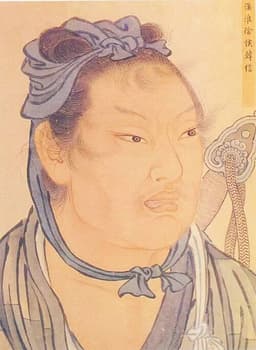
Han Xin
General · Ancient
60.4Total
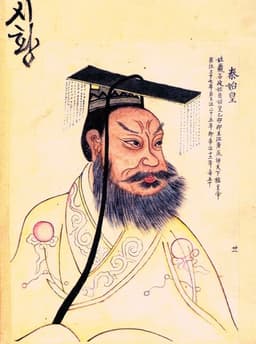
Qin Shi Huang
Emperor · Ancient
85.2Total
Basic Information
Born
-230
-259
Died
-196
-210
Era
Ancient
Ancient
Nationality
China
China
Occupation
General
Emperor
Civilization
Eastern
Eastern
Score Comparison
Military (10%)
88.0
80.0
Political (20%)
25.0
90.0
Influence (20%)
65.0
85.0
Legacy (20%)
70.8
90.0
Leadership (15%)
33.5
78.0
Strategy (15%)
88.6
82.0
TOTAL
60.4
85.2
Han Xin — Complete Timeline
205 BC
Battle of JingxingWar◆ Major
Han Xin led a Han army through the narrow Jingxing Pass, facing a larger Zhao force. He used a stratagem of placing his troops with their backs to a river, forcing them to fight without retreat. The Han won decisively, capturing the Zhao king.
Military StrategyZhao CampaignDecisive Victory
Impact: regional
204 BC
Battle of Wei RiverWar◆ Major
Han Xin defeated the Qi army at the Wei River. He used a feigned retreat to lure the Qi forces across the river, then attacked them while they were crossing. This victory secured the Qi state for Han and eliminated a major rival.
Qi CampaignMilitary TacticsRiver Battle
Impact: regional
203 BC
Appointment as King of QiPolitical Action
After his victories, Liu Bang appointed Han Xin as King of Qi, granting him control over the conquered territory. This elevated Han Xin from general to a regional ruler, but also created tensions with Liu Bang, who feared his growing power.
AppointmentFeudal TitlePower Dynamics
Impact: regional
201 BC
Demotion and ArrestPolitical Action◆ Major
Emperor Gaozu, suspecting Han Xin of rebellion, tricked him into attending a meeting and arrested him. Han Xin was demoted from king to marquis and placed under house arrest in Chang'an. This reflected the emperor's fear of powerful generals.
Political PurgeHouse ArrestImperial Suspicion
Impact: nationaltragic
196 BC
Execution of Han XinPolitical Action◆ Major
Han Xin was executed on charges of plotting rebellion with Chen Xi. He was killed in the palace by Empress L
ExecutionPolitical ViolenceLü Zhi
Impact: nationaltragic
Qin Shi Huang — Complete Timeline
246 BC
Construction of the Mausoleum and Terracotta ArmyOther◆ Major
Qin Shi Huang commissioned a vast mausoleum complex near Xi'an, guarded by thousands of life-sized terracotta soldiers, horses, and chariots. The project employed hundreds of thousands of workers and reflected his obsession with immortality and imperial power.
Impact: global
230 BC
Conquest of the Six Warring StatesWar
From 230 to 221 BCE, Ying Zheng led the Qin state in a series of campaigns that conquered the Han, Zhao, Wei, Chu, Yan, and Qi states. This unified China under a single ruler for the first time, ending the Warring States period.
Impact: global
221 BC
Standardization of Writing, Currency, and MeasurementsReform◆ Major
Qin Shi Huang ordered the standardization of Chinese script, currency, and weights and measures across the unified empire. This facilitated administration, trade, and cultural integration, laying a foundation for future dynasties.
Impact: globalconstructive
Proclamation of the Qin DynastyPolitical Action
After conquering the last independent state, Ying Zheng declared himself Shi Huangdi (First Emperor), founding the Qin Dynasty. He adopted a new title to signify his supreme authority and initiated centralized imperial rule.
Impact: global
214 BC
Initiation of the Great Wall ConstructionOther◆ Major
Qin Shi Huang ordered the connection and extension of existing northern fortifications to create a unified defensive wall against nomadic Xiongnu raids. This project involved massive conscripted labor and became the precursor to the later Great Wall.
Impact: regional
213 BC
Burning of Books and Burying of ScholarsPolitical Action◆ Major
On the advice of Li Si, Qin Shi Huang ordered the burning of historical records and philosophical texts not aligned with Legalist doctrine. He also had 460 Confucian scholars buried alive to suppress dissent and consolidate ideological control.
Impact: nationaldestructive
Expert Analysis
han-xin-vs-qin-shi-huang
# The Emperor and the General: Two Paths to Immortality
On a winter morning in 196 BCE, a man knelt in the courtyard of Chang’an Palace, his hands bound, his reputation in ruins. Han Xin, the greatest military mind of his age, looked up at the empress who had lured him to his death. Just a few miles away, in a tomb that had already taken decades to build, the First Emperor of Qin lay surrounded by his silent army of terracotta warriors, his dream of eternal rule already crumbling into rebellion. These two men—one who unified China through iron will, the other who won an empire through genius—never met in life, yet their stories are bound together by a single question: why does one conqueror die in bed while another dies on the floor of a palace he helped build?
Origins
Qin Shi Huang entered the world in 259 BCE as Ying Zheng, a prince of the northwestern state of Qin, born into a kingdom that had spent generations perfecting the art of war. His father was a king, his mother a former concubine, and his childhood was a crucible of palace intrigue. By thirteen, he sat on the throne, a boy ruler surrounded by advisors who taught him that power was a weapon to be wielded without mercy.
Han Xin, born around 230 BCE, came from nothing. He was a commoner in the state of Chu, a man so poor that he endured the humiliation of crawling between a bully’s legs rather than fighting—a story he would later turn into legend. While the future emperor learned statecraft, Han Xin learned hunger and the art of waiting. He carried a sword he could barely afford, and when offered a position under the rebel Xiang Yu, he was dismissed as beneath notice. Rejection became his fuel.
Rise to Power
Ying Zheng’s ascent was systematic and brutal. From 230 to 221 BCE, he unleashed the Qin war machine against the six warring states, conquering them one by one with a combination of overwhelming force and diplomatic treachery. When the last kingdom fell, he did not simply declare victory—he invented a new title: Shi Huangdi, the First Emperor. He was not continuing a dynasty; he was beginning time itself.
Han Xin’s rise was a gamble. He abandoned Xiang Yu for the rebel Liu Bang, a man of humble origins who recognized talent when he saw it. Liu Bang made him a general, and Han Xin repaid that trust with a series of campaigns that rewrote the rules of war. At the Battle of Jingxing in 205 BCE, he marched his army through a narrow pass, then placed his back to a river—a position that should have meant certain death. Instead, he told his men, “Fight or die,” and they annihilated a larger Zhao force. The river became his ally.
Leadership & Governance
Here the two men diverged like rivers flowing into different seas. Qin Shi Huang governed through standardization and fear. He unified writing, currency, and measurements across his empire—achievements that would outlast his dynasty by two millennia. He ordered the construction of the Great Wall, connecting northern fortifications into a single barrier. But he also burned books that contradicted his philosophy and buried scholars alive who criticized his rule. His vision was total control, enforced by law and terror.
Han Xin governed through strategy and trust—at least at first. As King of Qi after 203 BCE, he controlled vast territories and commanded armies that had never lost. His military brilliance was unmatched: at the Wei River in 204 BCE, he feigned retreat, lured the enemy across the river, then destroyed them as they tried to withdraw. But political wisdom eluded him. He believed that loyalty would be rewarded, that his victories would speak for themselves. He failed to understand that in imperial politics, silence is often a confession.
Triumph & Tragedy
Qin Shi Huang’s greatest triumph was the unification itself—a feat that had eluded every ruler before him. His tragedy was the fragility of his achievement. He died in 210 BCE while traveling, and within three years, his dynasty had collapsed into civil war. His mausoleum, guarded by the Terracotta Army, became a monument not to eternal rule but to the limits of absolute power.
Han Xin’s triumph was the Han dynasty itself. Without his victories, Liu Bang would have remained a minor rebel. He destroyed the Chu state and secured the empire that would define China for four centuries. His tragedy came in 196 BCE, when Empress Lü Zhi, fearing his ambition, lured him into a trap and executed him. His last words, according to tradition, were a lament: “I regret not heeding the advice of Kuai Tong.” He had been warned that kings who win empires are rarely allowed to keep their heads.
Character & Destiny
Qin Shi Huang was driven by a fear of mortality that became an obsession. He sent expeditions for the elixir of life, built a tomb complex that mimicked his empire, and believed that his will alone could shape the future. His character was iron, but iron can shatter.
Han Xin was driven by a hunger for recognition that blinded him to danger. He had survived humiliation, poverty, and war, but he could not survive the politics of peace. He trusted that merit would protect him, even as the emperor who owed him everything began to see him as a threat.
Legacy
Qin Shi Huang’s legacy is the idea of China itself. The writing system he standardized is still used today; the administrative model he created lasted for two thousand years. He is remembered as both a tyrant and a unifier, a man whose cruelty was inseparable from his vision.
Han Xin’s legacy is the archetype of the brilliant general destroyed by politics. His strategies are still studied in military academies; his name is synonymous with tactical genius. But he is also a warning: that the skills that win wars are not the skills that survive peace.
Conclusion
Standing at the crossroads of these two lives, we see the same truth reflected from different angles. Qin Shi Huang built an empire through absolute control and watched it dissolve within years of his death. Han Xin built an empire through genius and was killed for his success. One died a god, the other a traitor. But both were consumed by the forces they helped unleash. The First Emperor’s tomb remains unopened, a mystery of power. Han Xin’s grave is lost to history. What endures is not their bodies but the shape they gave to the world—a reminder that in the game of empire, there are no winners, only players who move the pieces before the board is swept clean.
Rankings
🥇
Qin Shi HuangLeader
Mil: 80.0Pol: 90.0Inf: 85.0
85.2
🥈
Han Xin
Mil: 88.0Pol: 25.0Inf: 65.0
60.4
+24.8 behind
How This Comparison Works
Algorithm
Each figure is scored on 6 dimensions (0—100 scale) based on structured historical data: Military (10%), Political (20%), Influence (20%), Legacy (20%), Leadership (15%), Strategy (15%). The weighted total produces the final ranking.
Data Sources
Scores are computed from structured sub-indicators in the database. Scale factors adjust for era (Ancient ×0.85, Modern ×1.0) and civilization size (Eastern ×1.05, Other ×0.80) to account for differences in population and military scale.
Maximum 3 Figures
Comparisons are limited to 2—3 figures to ensure readability and statistical meaningfulness.
Error Margins
±5 points per dimension — Sub-scores are derived from historical records with inherent uncertainty. Two figures within 5 points on a dimension should be considered roughly equivalent in that area.
Total Score Accuracy
±3 points overall — The weighted combination of 6 dimensions produces a total score with approximately ±3 points of uncertainty. Differences of less than 3 points are not statistically significant— the figures are effectively tied.
Known Limitations
- Historical records are incomplete and uneven across civilizations
- Figures from oral-tradition societies may be underrepresented
- Occupation labels can misclassify multi-role figures
- Scores measure capability and impact, not moral character
- Quantitative scoring is a comparison tool, not absolute truth
Capability Radar
Military (10%) — Battles & Warfare
Battles
95
85
Win Rate
95
90
Expansion
90
90
Political (20%) — Governance & Reform
Reform
30
95
Diplomacy
50
75
Economy
20
90
Influence (20%) — Cultural & Global Reach
Cultural
85
95
Global
80
85
Legacy (20%) — Historical Impact
Historical
90
95
Longevity
88
95
Leadership (15%) — Power & Stability
Tenure
40
70
Stability
25
65
Strategy (15%) — Tactics & Innovation
Strategy
97
85
Tactics
98
80
Reform
85
95
Similar Comparisons
Comments & Discussion
TerracottaSkeptic6/17/2026
The comparison overstates Han Xin's "genius" while soft-pedaling Qin Shi Huang's historical reality. Han Xin won battles, sure, but he was essentially a brilliant tactician working within an established system. Qin Shi Huang *created* the system. The First Emperor standardized writing, currency, and measurements—things that actually lasted beyond his death. Han Xin's victories were ephemeral; the terracotta army is still standing. Don't confuse survivorship bias with actual historical impact.
秦俑守望者6/17/2026
这个对比太浪漫化了。韩信再厉害,也不过是个在别人棋盘上落子的将军——他的“功高无主”恰恰说明他始终是打工的。而秦始皇是下棋的人,连棋子都是他自己设计的。说韩信“赢得帝国”是文学夸张:汉朝是他死后才真正稳固的。真要论“不朽”,秦制影响了中国两千年,韩信的战术等张良、诸葛亮写完兵书就没人照搬了。
DaggerAxeDialectic6/17/2026
Missing the core paradox: both men were undone by the same fundamental tension—the relationship between military genius and political legitimacy. Qin Shi Huang crushed opposition by consolidating power; Han Xin tried to avoid suspicion by performing loyalty. Neither worked. The difference? Qin Shi Huang died of natural causes (probably mercury poisoning from his immortality elixirs, which is its own irony). Han Xin was executed. The analysis wraps this in poetic language but never asks: did Han
兵书痴汉6/17/2026
我完全不同意“从未相遇”的论断。他们在历史逻辑里激烈碰撞:秦始皇开创的中央集权制度是棋盘,韩信是这棋盘上最锋利的刀。没有秦的统一框架,韩信的“明修栈道暗度陈仓”根本不可能实施——因为诸侯国的地形和资源壁垒都已被秦打破。韩信的成功,恰恰建立在秦始皇失败的事业之上。这两人是彼此的因果,比任何面对面相遇都深刻。
ZeroSumStrategist6/17/2026
The analysis frames this as a tragedy of different fates, but it's really a story about differing relationships to institutional power. Qin Shi Huang was the institution—his death triggered succession crisis because the system was him. Han Xin was a contractor whose services the nascent Han dynasty needed but feared. The emperor dies in bed because he's the roof; the general dies on the floor because he's the pillar that can be replaced. Historical "immortality" is just which piece of the buildi