Loading...
Han Xin vs Khalid bin Walid
Han Xin leads by 1.0 pts · 2 figures compared
…
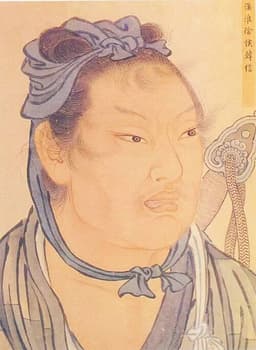
Han Xin
General · Ancient
60.4Total

Khalid bin Walid
General · Ancient
59.4Total
Basic Information
Born
-230
-592
Died
-196
—
Era
Ancient
Ancient
Nationality
China
Rashidun Caliphate
Occupation
General
General
Civilization
Eastern
Middle Eastern
Score Comparison
Military (10%)
88.0
94.0
Political (20%)
25.0
35.0
Influence (20%)
65.0
82.0
Legacy (20%)
70.8
40.0
Leadership (15%)
33.5
40.9
Strategy (15%)
88.6
81.1
TOTAL
60.4
59.4
Han Xin — Complete Timeline
205 BC
Battle of JingxingWar◆ Major
Han Xin led a Han army through the narrow Jingxing Pass, facing a larger Zhao force. He used a stratagem of placing his troops with their backs to a river, forcing them to fight without retreat. The Han won decisively, capturing the Zhao king.
Military StrategyZhao CampaignDecisive Victory
Impact: regional
204 BC
Battle of Wei RiverWar◆ Major
Han Xin defeated the Qi army at the Wei River. He used a feigned retreat to lure the Qi forces across the river, then attacked them while they were crossing. This victory secured the Qi state for Han and eliminated a major rival.
Qi CampaignMilitary TacticsRiver Battle
Impact: regional
203 BC
Appointment as King of QiPolitical Action
After his victories, Liu Bang appointed Han Xin as King of Qi, granting him control over the conquered territory. This elevated Han Xin from general to a regional ruler, but also created tensions with Liu Bang, who feared his growing power.
AppointmentFeudal TitlePower Dynamics
Impact: regional
201 BC
Demotion and ArrestPolitical Action◆ Major
Emperor Gaozu, suspecting Han Xin of rebellion, tricked him into attending a meeting and arrested him. Han Xin was demoted from king to marquis and placed under house arrest in Chang'an. This reflected the emperor's fear of powerful generals.
Political PurgeHouse ArrestImperial Suspicion
Impact: nationaltragic
196 BC
Execution of Han XinPolitical Action◆ Major
Han Xin was executed on charges of plotting rebellion with Chen Xi. He was killed in the palace by Empress L
ExecutionPolitical ViolenceLü Zhi
Impact: nationaltragic
Khalid bin Walid — Complete Timeline
629 AD
Battle of Mu'tahWar◆ Major
Khalid bin Walid took command of the Muslim army after three previous commanders were killed. He executed a tactical withdrawal, saving the Muslim force from annihilation by a much larger Byzantine and Arab Christian army. This action earned him the title 'Sword of Allah' from Muhammad.
Early Muslim ConquestsByzantine WarMilitary Leadership
Impact: regional
632 AD
Battle of YamamaWar◆ Major
Khalid bin Walid led the Muslim army against the forces of Musaylima, a false prophet, during the Ridda Wars. The battle was fierce and resulted in a decisive Muslim victory, crushing the rebellion in central Arabia and solidifying the nascent caliphate's control.
Ridda WarsArabian PeninsulaRebellion
Impact: regional
633 AD
Battle of WalajaWar◆ Major
Khalid bin Walid defeated a larger Sassanid Persian army in Mesopotamia using a double envelopment tactic. This victory opened the way for the Muslim conquest of Iraq and demonstrated Khalid's strategic ingenuity against a major empire.
Muslim Conquest of PersiaMesopotamiaMilitary Tactic
Impact: regional
636 AD
Battle of YarmoukWar
Khalid bin Walid, as supreme commander, led the Muslim army to a decisive victory over a large Byzantine force in Syria. The battle lasted six days and resulted in the permanent Muslim conquest of Syria and Palestine, ending Byzantine rule in the Levant.
Byzantine-Arab WarsConquest of SyriaDecisive Battle
Impact: global
638 AD
Dismissal from military commandPolitical Action◆ Major
Caliph Umar dismissed Khalid bin Walid from his command of the Muslim armies in Syria. Umar cited concerns over Khalid's growing fame and potential for fitna (civil strife), though he did not punish him. Khalid retired to Homs and died a few years later.
Caliphate PoliticsUmarMilitary Dismissal
Impact: regional
Expert Analysis
Origins
Han Xin (c. 230–196 BCE) was born into poverty in the state of Chu during the late Warring States period. Little is known of his early life, but he endured hardship, including a famous incident where he was forced to crawl between a bully's legs to avoid a fight. He later joined the rebel forces of Xiang Liang and then Xiang Yu, but his strategic advice was ignored. Disillusioned, he defected to Liu Bang's Han camp, where he was initially overlooked but eventually promoted through the advocacy of Xiao He.
Khalid bin Walid (c. 592–642 CE) was born into the powerful Quraysh tribe in Mecca. He was a skilled warrior and initially opposed the Prophet Muhammad, leading the Meccan cavalry at the Battle of Uhud (625 CE). He converted to Islam in 629 CE, after the Treaty of Hudaybiyyah, and immediately became one of the most effective commanders for the nascent Muslim state. His military acumen was recognized by the Prophet, who gave him the title "Saifullah" (Sword of Allah).
Rise to Power
Han Xin's rise came after Liu Bang, following Xiao He's advice, appointed him as supreme commander of the Han armies. His first major campaign was against the kingdoms of Wei and Zhao. In 205 BCE, he defeated Wei at the Battle of Anyi, then marched on Zhao. At the Battle of Jingxing (204 BCE), Han Xin led an army through the narrow Jingxing Pass and deployed his troops with their backs to a river, a tactic that eliminated the possibility of retreat and spurred his soldiers to fight desperately. The result was a decisive victory, capturing the Zhao king. This battle established Han Xin as a brilliant strategist.
Khalid bin Walid's rise to prominence began with his conversion to Islam. He participated in the expedition to Mu'tah (629 CE), where after the deaths of three Muslim commanders, he took command and executed a tactical withdrawal that saved the army. His leadership during the Ridda Wars (632–633 CE) against apostate tribes, especially the Battle of Yamama, solidified his reputation. In 633 CE, Caliph Abu Bakr dispatched him to invade Sassanid Persia, where he won a series of battles, including the Battle of Walaja, where he used a double envelopment tactic to defeat a larger Persian force.
Leadership & Governance
Han Xin's leadership style was characterized by meticulous planning and psychological warfare. He often used stratagems to demoralize or deceive his enemies. At the Battle of Wei River (203 BCE), he feigned a retreat, luring the Qi army across the river, then attacked mid-crossing, annihilating them. However, his political acumen was low, scoring only 25.0, compared to his military score of 88.0. He failed to secure alliances and was often suspicious of his subordinates. After his victories, Liu Bang appointed him King of Qi, but Han Xin's political naivete led him to make enemies at court.
Khalid bin Walid was a bold and aggressive commander, known for rapid maneuvers and decisive engagements. He led from the front, inspiring his troops. At the Battle of Yarmouk (636 CE), he coordinated a multi-day battle against a massive Byzantine army, using the terrain and cavalry charges to achieve victory. His political score of 35.0 reflects his difficulties with Caliph Umar, who dismissed him from command in 638 CE, fearing his popularity might lead to a power struggle. Khalid accepted his dismissal without rebellion, demonstrating loyalty to the Caliphate.
Triumph & Tragedy
Han Xin's greatest triumph was the conquest of Qi, which gave Liu Bang control over eastern China. His victories were instrumental in the Han victory over Xiang Yu at the Battle of Gaixia (202 BCE). However, his greatest tragedy was his downfall. Accused of plotting rebellion, he was demoted to marquis and later executed by Empress Lü Zhi in 196 BCE. His death was a result of his political blindness and the paranoia of the Han court.
Khalid bin Walid's greatest triumph was the Battle of Yarmouk, which secured Syria for the Caliphate. He also conquered much of Iraq and Persia. His tragedy was his dismissal by Caliph Umar, who replaced him with Abu Ubayda. Despite his undefeated record, he spent his final years in obscurity, dying in 642 CE. He is remembered as a military genius but not as a political leader.
Character & Destiny
Han Xin's character was marked by ambition and strategic brilliance but also by political naivete. He often failed to understand the nuances of court politics, leading to his downfall. His famous quote, "If you want to catch a thief, you must first know his ways," reflects his pragmatic approach to warfare. However, his inability to navigate the treacherous politics of the Han court sealed his fate.
Khalid bin Walid was characterized by his unwavering loyalty to the Caliphate and his aggressive military style. He was known for his piety and humility, often sharing credit with his soldiers. His dismissal by Umar was a result of his fame, but he accepted it without protest, showing his devotion to the cause over personal glory.
Legacy
Han Xin's legacy is as one of China's greatest military strategists. His tactics, such as the "back against the river" and feigned retreat, are studied in military academies. His scores: Military 88.0, Strategy 88.6, Legacy 70.8. He is often compared to Sun Tzu, though his political failures limit his overall impact.
Khalid bin Walid's legacy is as the "Sword of Allah," an undefeated general who expanded the Caliphate. His military score of 94.0 is higher than Han Xin's, but his legacy score of 40.0 is lower, partly because his achievements were later overshadowed by later Muslim conquests. He is revered in Islamic history as a model of military leadership.
Conclusion
While both were exceptional commanders, Khalid bin Walid's undefeated record and strategic innovations, such as the double envelopment at Walaja, give him a slight edge in military prowess. However, Han Xin's role in founding the Han dynasty, which lasted over 400 years, gives him a greater long-term impact. In terms of overall scores, Han Xin totals 60.4 vs Khalid's 59.4, a narrow margin. But considering the enduring influence of the Han dynasty on Chinese civilization, Han Xin's legacy is more profound. Therefore, Han Xin had a greater impact on world history.
Rankings
🥇
Han XinLeader
Mil: 88.0Pol: 25.0Inf: 65.0
60.4
🥈
Khalid bin Walid
Mil: 94.0Pol: 35.0Inf: 82.0
59.4
+1.0 behind
How This Comparison Works
Algorithm
Each figure is scored on 6 dimensions (0—100 scale) based on structured historical data: Military (10%), Political (20%), Influence (20%), Legacy (20%), Leadership (15%), Strategy (15%). The weighted total produces the final ranking.
Data Sources
Scores are computed from structured sub-indicators in the database. Scale factors adjust for era (Ancient ×0.85, Modern ×1.0) and civilization size (Eastern ×1.05, Other ×0.80) to account for differences in population and military scale.
Maximum 3 Figures
Comparisons are limited to 2—3 figures to ensure readability and statistical meaningfulness.
Error Margins
±5 points per dimension — Sub-scores are derived from historical records with inherent uncertainty. Two figures within 5 points on a dimension should be considered roughly equivalent in that area.
Total Score Accuracy
±3 points overall — The weighted combination of 6 dimensions produces a total score with approximately ±3 points of uncertainty. Differences of less than 3 points are not statistically significant— the figures are effectively tied.
Known Limitations
- Historical records are incomplete and uneven across civilizations
- Figures from oral-tradition societies may be underrepresented
- Occupation labels can misclassify multi-role figures
- Scores measure capability and impact, not moral character
- Quantitative scoring is a comparison tool, not absolute truth
Capability Radar
Military (10%) — Battles & Warfare
Battles
95
95
Win Rate
95
100
Expansion
90
95
Political (20%) — Governance & Reform
Reform
30
10
Diplomacy
50
40
Economy
20
10
Influence (20%) — Cultural & Global Reach
Cultural
85
75
Global
80
75
Legacy (20%) — Historical Impact
Historical
90
85
Longevity
88
80
Leadership (15%) — Power & Stability
Tenure
40
30
Stability
25
20
Strategy (15%) — Tactics & Innovation
Strategy
97
90
Tactics
98
98
Reform
85
70
Similar Comparisons
Comments & Discussion
No comments yet. Be the first to share your thoughts!