Loading...
Hammer DeRoburt vs Napoleon Bonaparte
Napoleon Bonaparte leads by 19.6 pts · 2 figures compared
…
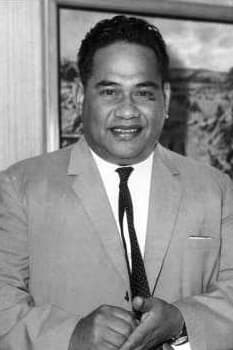
Hammer DeRoburt
Politician · Modern
51.3Total

Napoleon Bonaparte
General · Modern
70.9Total
Basic Information
Born
1922
1769
Died
—
1821
Era
Modern
Modern
Nationality
Nauru
France
Occupation
Politician
General
Civilization
Other
Western
Score Comparison
Military (10%)
17.2
94.0
Political (20%)
68.0
72.0
Influence (20%)
51.8
40.0
Legacy (20%)
45.0
80.0
Leadership (15%)
74.0
78.0
Strategy (15%)
41.0
90.0
TOTAL
51.3
70.9
Hammer DeRoburt — Complete Timeline
1967 AD
Negotiated phosphate royalty agreement with AustraliaPolitical Action◆ Major
Hammer DeRoburt led negotiations with the Australian government, the British Phosphate Commissioners, and New Zealand for control of Nauru's phosphate industry. The resulting agreement granted Nauru ownership of the phosphate operations and a significant increase in royalties, providing the nation with substantial revenue.
PhosphateNegotiationEconomic Independence
Impact: nationalconstructive
1968 AD
Established the Nauru Phosphate Royalties TrustReform◆ Major
President DeRoburt established the Nauru Phosphate Royalties Trust to manage the country's phosphate income for long-term investment and future sustainability. The trust invested in overseas real estate and other assets, aiming to secure Nauru's economy after phosphate depletion.
Economic PolicyTrust FundSustainability
Impact: nationalconstructive
Became first President of NauruPolitical Action◆ Major
Hammer DeRoburt became the first President of Nauru upon its independence from Australia. He led the country through its early years as a sovereign nation, overseeing the management of its phosphate wealth, which was the island's primary economic resource.
IndependenceNauruFirst President
Impact: nationalconstructive
1976 AD
Re-elected President multiple timesPolitical Action
Hammer DeRoburt was re-elected President of Nauru several times, dominating the country's politics for much of its early independence. His long tenure was marked by both stability and criticism over his centralized control of the phosphate wealth and political opposition.
Nauru PoliticsRe-electionLong Tenure
Impact: national
1989 AD
Ousted as President in vote of no confidencePolitical Action◆ Major
Hammer DeRoburt was removed from the presidency by a vote of no confidence in the Parliament of Nauru. This followed years of economic mismanagement and declining phosphate revenues, leading to political instability and the rise of new leaders like Bernard Dowiyogo.
Nauru PoliticsVote of No ConfidencePolitical Change
Impact: national
Napoleon Bonaparte — Complete Timeline
1799 AD
Coup of 18 BrumaireOther◆ Major
Napoleon Bonaparte, with support from his brother Lucien and key political figures, overthrew the Directory in a bloodless coup. He established the Consulate with himself as First Consul, effectively becoming the ruler of France. This event ended the French Revolution's most unstable period.
French RevolutionCoupRise to Power
Impact: regional
1804 AD
Promulgation of the Napoleonic CodeOther◆ Major
Napoleon enacted the Civil Code of the French, known as the Napoleonic Code, a comprehensive set of laws that replaced the fragmented feudal legal systems. The code established legal equality, protected property rights, and secularized law. It became the basis for legal systems in many European and world countries.
Legal ReformNapoleonic CodeCivil Law
Impact: globalconstructive
1805 AD
Battle of AusterlitzWar◆ Major
Napoleon's Grande Arm
Napoleonic WarsBattleDecisive Victory
Impact: global
1812 AD
Invasion of RussiaWar◆ Major
Napoleon led the Grande Arm
Napoleonic WarsInvasionDisaster
Impact: globaldestructive
1815 AD
Battle of WaterlooWar◆ Major
Napoleon's French army was defeated by the combined forces of the Duke of Wellington's Anglo-Allied army and Gebhard Leberecht von Bl
Napoleonic WarsBattleFinal Defeat
Impact: globaldestructive
Expert Analysis
hammer-deroburt-vs-napoleon-bonaparte
# The Emperor and the Islander
In the winter of 1814, Napoleon Bonaparte stood on the balcony of the Palace of Fontainebleau, bidding farewell to his Old Guard as they wept and kissed his hands. In the summer of 1968, a former schoolteacher named Hammer DeRoburt stood on a tiny Pacific island, watching a flag rise for the first time. Both men were about to rule newborn nations. One would conquer a continent, then lose it all. The other would govern a speck of coral smaller than Manhattan, and leave his people richer—then ruined. What separates a titan from a footnote? Sometimes, nothing but the size of the stage.
Origins
Napoleon was born in 1769 on Corsica, an island recently sold to France by Genoa. His family was minor nobility, poor enough to resent the French but ambitious enough to use them. He spoke Italian before French, and carried a chip on his shoulder the size of the Mediterranean. At nine, he entered a military academy in mainland France, where classmates mocked his accent. That humiliation forged something: a need to prove himself, always.
Hammer DeRoburt was born in 1922 on Nauru, an island of twenty-one square kilometers in the central Pacific. His people, the Nauruans, had survived colonization by Germany, occupation by Japan, and exploitation by the British Phosphate Commissioners. By the time DeRoburt became a teacher, his homeland had been strip-mined for a hundred years. The interior was a moonscape of coral pinnacles. The phosphate—bird droppings, compressed over millennia—had paid for warships and fertilized Australian farms. Nauru had nothing left but a hole in the ground and a burning desire to own it.
The difference in scale is staggering. Napoleon inherited a continent in ferment; DeRoburt inherited a quarry. Yet both men understood one thing: power comes to those who seize the moment.
Rise to Power
Napoleon’s rise was a rocket. At twenty-four, he drove the British out of Toulon and became a brigadier general. At twenty-six, he saved the French Directory from a royalist mob with a "whiff of grapeshot"—cannon fire into a crowd. At thirty, he was First Consul of France, having overthrown the government in a coup. He was short, intense, and tireless. He slept four hours a night and read everything. He knew the terrain of every battlefield in Europe before he ever marched there.
DeRoburt’s rise was a marathon. He became head of the Nauru Local Government Council in the 1950s, then led negotiations for independence. In 1967, he secured a deal with Australia, Britain, and New Zealand: Nauru would get sovereignty, plus the phosphate industry, plus a trust fund to manage the wealth. It was a masterstroke of small-state diplomacy. He didn't have an army. He had patience, a legal mind, and the leverage of a people who had been cheated for generations.
Napoleon took power by force. DeRoburt took it by contract. Both understood that the first move defines everything.
Leadership & Governance
Napoleon ruled France like a battlefield. He centralized administration, standardized laws with the Napoleonic Code, and created a meritocratic civil service. He also crowned himself emperor, appointed his brothers as puppet kings, and suppressed dissent with secret police. His military genius is beyond dispute: at Austerlitz in 1805, he destroyed a Russo-Austrian army with a feigned retreat that remains a textbook maneuver. His political wisdom was real but brittle. He could conquer, but he could not reconcile.
DeRoburt ruled Nauru like a corporation. He established the Nauru Phosphate Royalties Trust in 1968 to invest the mining income for future generations. He built hospitals, schools, and an airline. He gave his people free electricity, free housing, and free flights to Australia for medical treatment. But he also concentrated power. He was re-elected repeatedly, and opposition was stifled. Critics called him a dictator in a tropical suit. Supporters called him the father of his nation.
The difference is not in ambition—both wanted to build something lasting. It is in resources. Napoleon had millions of men and the richest continent. DeRoburt had ten thousand people and a finite pile of guano. Napoleon’s empire stretched from Madrid to Moscow. DeRoburt’s empire was a single island with a flag.
Triumph & Tragedy
Napoleon’s greatest moment was Austerlitz, where he outgeneraled two emperors in a single day. His greatest tragedy was the invasion of Russia in 1812, where he lost half a million men to winter, hunger, and Cossacks. He never recovered. Exiled to Elba, he escaped, raised another army, and was crushed at Waterloo in 1815. He spent his last six years on Saint Helena, a British prison island, dictating memoirs and blaming everyone but himself.
DeRoburt’s greatest moment was independence day, 1968, when Nauru became the world's smallest republic. His tragedy was slower. The phosphate ran out. By the 1980s, the trust fund had been mismanaged, looted, and wasted on bad investments. DeRoburt was ousted by a vote of no confidence in 1989. Nauru became a tax haven, then a detention center for Australian refugees. The coral pinnacles still stand, like tombstones.
Napoleon’s fall was dramatic, a single crash. DeRoburt’s fall was a long decay. Both ended in exile—Napoleon on an island, DeRoburt in the political wilderness.
Character & Destiny
Napoleon was restless, brilliant, and incapable of stopping. "I love power," he said. "But it is as an artist that I love it." He saw himself as a sculptor of history, and he was. But his hunger outran his judgment. He invaded Spain, Russia, and Egypt, each time overreaching. He could not delegate, could not compromise, could not admit defeat.
DeRoburt was cautious, shrewd, and possessive. He micromanaged Nauru’s finances, but he also trusted bad advisors. He built a system that depended on him, and when he fell, the system collapsed. He was not an artist of power. He was a caretaker of a fragile inheritance.
Both men were shaped by their origins. Napoleon, the outsider who became emperor, never stopped feeling small. DeRoburt, the islander who became president, never stopped fearing that his island would be swallowed again.
Legacy
Napoleon’s legacy is immense. The Napoleonic Code shapes civil law in Europe and beyond. His military tactics are studied in every war college. His name is synonymous with ambition, genius, and hubris. He changed the world.
DeRoburt’s legacy is ambiguous. He gave Nauru independence and wealth, but he also gave it a future of bankruptcy and environmental ruin. The Nauru Phosphate Royalties Trust became a cautionary tale for resource-rich nations. His name is known mainly to students of Pacific history.
Yet both men faced the same question: what do you do when your time runs out? Napoleon tried to fight fate and lost. DeRoburt tried to manage fate and lost. The difference is not in character. It is in the size of the stage, the weight of history, and the luck of the draw.
Conclusion
Standing on the deck of the ship that took him to Saint Helena, Napoleon told a companion, "I am not a man. I am a historical moment." DeRoburt, if he ever said something similar, did not say it loudly enough for history to record. But he was a historical moment too—the moment when a tiny island, stripped of its riches, tried to build a nation on trust alone.
One man conquered Europe. The other governed a speck of coral. Both ended in disappointment. Perhaps the real lesson is not about greatness, but about the limits of power—and the stubborn, tragic human desire to matter.
Rankings
🥇
Napoleon BonaparteLeader
Mil: 94.0Pol: 72.0Inf: 40.0
70.9
🥈
Hammer DeRoburt
Mil: 17.2Pol: 68.0Inf: 51.8
51.3
+19.6 behind
How This Comparison Works
Algorithm
Each figure is scored on 6 dimensions (0—100 scale) based on structured historical data: Military (10%), Political (20%), Influence (20%), Legacy (20%), Leadership (15%), Strategy (15%). The weighted total produces the final ranking.
Data Sources
Scores are computed from structured sub-indicators in the database. Scale factors adjust for era (Ancient ×0.85, Modern ×1.0) and civilization size (Eastern ×1.05, Other ×0.80) to account for differences in population and military scale.
Maximum 3 Figures
Comparisons are limited to 2—3 figures to ensure readability and statistical meaningfulness.
Error Margins
±5 points per dimension — Sub-scores are derived from historical records with inherent uncertainty. Two figures within 5 points on a dimension should be considered roughly equivalent in that area.
Total Score Accuracy
±3 points overall — The weighted combination of 6 dimensions produces a total score with approximately ±3 points of uncertainty. Differences of less than 3 points are not statistically significant— the figures are effectively tied.
Known Limitations
- Historical records are incomplete and uneven across civilizations
- Figures from oral-tradition societies may be underrepresented
- Occupation labels can misclassify multi-role figures
- Scores measure capability and impact, not moral character
- Quantitative scoring is a comparison tool, not absolute truth
Capability Radar
Military (10%) — Battles & Warfare
Battles
21
95
Win Rate
22
90
Expansion
25
95
Political (20%) — Governance & Reform
Reform
40
95
Diplomacy
45
80
Economy
55
85
Influence (20%) — Cultural & Global Reach
Cultural
20
85
Global
30
90
Legacy (20%) — Historical Impact
Historical
40
95
Longevity
30
90
Leadership (15%) — Power & Stability
Tenure
60
85
Stability
30
70
Strategy (15%) — Tactics & Innovation
Strategy
33
95
Tactics
35
98
Reform
36
92
Similar Comparisons
Comments & Discussion
No comments yet. Be the first to share your thoughts!