Loading...
Haakon VII of Norway vs Julius Caesar
Julius Caesar leads by 26.4 pts · 2 figures compared
…
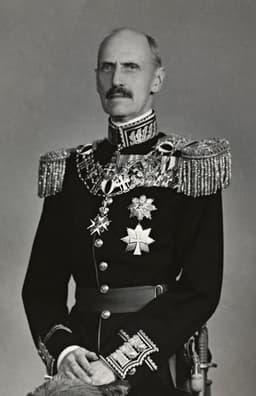
Haakon VII of Norway
Emperor · Modern
56.4Total

Julius Caesar
General · Ancient
82.8Total
Basic Information
Born
1872
-100
Died
1957
-44
Era
Modern
Ancient
Nationality
Norway
Roman Republic
Occupation
Emperor
General
Civilization
Western
Western
Score Comparison
Military (10%)
17.8
88.0
Political (20%)
70.0
78.0
Influence (20%)
58.3
85.0
Legacy (20%)
52.0
82.0
Leadership (15%)
72.0
80.0
Strategy (15%)
57.5
85.0
TOTAL
56.4
82.8
Haakon VII of Norway — Complete Timeline
1905 AD
Election as King of NorwayPolitical Action
Following the dissolution of the union with Sweden, the Norwegian parliament elected Prince Carl of Denmark as King Haakon VII. He accepted the throne after a referendum confirmed the monarchy. This established the modern, independent Kingdom of Norway with a constitutional monarch.
NorwayIndependenceMonarchyReferendum
Impact: nationalconstructive
1940 AD
Refusal to appoint Quisling as Prime MinisterPolitical Action
After the German invasion of Norway, Nazi Germany demanded that Haakon VII appoint Vidkun Quisling as prime minister. Haakon VII refused, stating he would abdicate rather than accept a government led by Quisling. This act of defiance made him a symbol of Norwegian resistance.
NorwayWorld War IIResistanceQuisling
Impact: nationalconstructive
Leadership of the Norwegian government-in-exilePolitical Action◆ Major
Haakon VII fled Norway after the German invasion and established a government-in-exile in London. He became a central figure in the Allied war effort, broadcasting radio messages to occupied Norway and maintaining the legitimacy of the Norwegian state throughout World War II.
NorwayWorld War IIExileGovernment
Impact: globalconstructive
1945 AD
Return to Norway after World War IIPolitical Action◆ Major
Haakon VII returned to Norway on June 7, 1945, exactly five years after he had fled. His return was a moment of national celebration and unity. He was greeted by massive crowds, symbolizing the restoration of Norwegian sovereignty and the end of the Nazi occupation.
NorwayWorld War IILiberationMonarchy
Impact: nationalconstructive
Julius Caesar — Complete Timeline
58 BC
Gallic WarsWar◆ Major
Caesar, as proconsul of Gaul, launched a series of campaigns that conquered all of Gaul (modern France, Belgium, and parts of Switzerland). He fought numerous battles, including against the Helvetii, the Belgae, and the Gallic chieftain Vercingetorix. The wars brought immense wealth and a loyal army to Caesar.
Gallic WarsConquestRoman Expansion
Impact: regional
49 BC
Crossing the RubiconPolitical Action◆ Major
Caesar led Legio XIII across the Rubicon River into Italy, defying the Roman Senate's order to disband his army. This act triggered a civil war against Pompey and the Optimates, ultimately leading to Caesar's dictatorship and the end of the Roman Republic.
Roman Civil WarEnd of RepublicPower Struggle
Impact: global
48 BC
Battle of PharsalusWar◆ Major
Caesar's outnumbered army defeated the larger forces of Pompey the Great at Pharsalus in Greece. Caesar's tactical use of a reserve line to counter Pompey's cavalry charge proved decisive. Pompey fled to Egypt, where he was assassinated, leaving Caesar as the undisputed master of the Roman world.
Roman Civil WarBattleDecisive Victory
Impact: regional
44 BC
Appointment as Dictator for LifePolitical Action◆ Major
The Roman Senate appointed Caesar dictator perpetuo (dictator for life), granting him unprecedented personal power. This move concentrated military, legislative, and judicial authority in one person, effectively ending the Roman Republic's traditional system of checks and balances and alarming many senators.
DictatorshipEnd of RepublicPower Consolidation
Impact: regionaldestructive
Assassination on the Ides of MarchPolitical Action◆ Major
A group of Roman senators, led by Marcus Junius Brutus and Gaius Cassius Longinus, stabbed Caesar to death at a meeting of the Senate in the Theatre of Pompey. The assassination was intended to restore the Republic, but instead triggered another civil war that led to the rise of the Roman Empire.
AssassinationRoman PoliticsEnd of Republic
Impact: globaldestructive
Expert Analysis
haakon-vii-of-norway-vs-julius-caesar
# The General and the King: Two Paths to Power, Two Destinies
On a cold March morning in 44 BCE, Julius Caesar walked into the Senate chamber in Rome, ignoring the warnings of a seer who told him to beware the Ides of March. Within minutes, sixty senators had surrounded him with daggers. Across two millennia, on a spring day in 1940, King Haakon VII of Norway sat in a small wooden cabin in the mountains, a single telephone line his only connection to a world at war. The German ambassador was on the line, demanding he appoint a Nazi puppet as prime minister. Haakon’s answer—a quiet, firm “no”—would save his throne and his nation’s soul. What separates these two men, both leaders of Western civilizations, yet worlds apart in how they rose, ruled, and fell?
Origins
Julius Caesar was born into the chaos of the late Roman Republic, a world of crumbling traditions, civil wars, and ruthless ambition. His family, the Julii, claimed descent from the goddess Venus, but they were politically modest. His father died when Caesar was sixteen, leaving him to navigate a violent world where a man’s worth was measured by his legions and his gold. The Rome of his youth was a republic in name only—senators bribed voters, generals raised private armies, and the poor clamored for bread and circuses. Caesar absorbed this environment like a sponge: he learned that power came not from law, but from force and spectacle.
Haakon VII was born Prince Carl of Denmark in 1872, a prince of a tiny, peaceful kingdom that had not fought a war in decades. His father was King Frederick VIII of Denmark, a constitutional monarch who reigned but did not rule. Young Carl grew up in a world of parliaments, newspapers, and polite diplomacy. He served in the Danish navy, learning discipline and duty rather than conquest. When Norway dissolved its union with Sweden in 1905, the Norwegians needed a king—someone who would not threaten their young democracy. Carl, with his quiet demeanor and democratic instincts, was the perfect choice. He took the name Haakon VII, a deliberate link to Norway’s medieval kings, but he understood that his real power would come from symbolizing unity, not commanding armies.
Rise to Power
Caesar’s path was a ladder of blood and gold. He began as a military tribune, then climbed through the ranks of Roman politics: quaestor, aedile, praetor, consul. Each step required debts, alliances, and victories. He borrowed fortunes to sponsor gladiatorial games, winning the love of the Roman mob. He formed the First Triumvirate with Pompey and Crassus, two men more powerful than himself, and used their support to win command of Gaul. From 58 to 50 BCE, Caesar conquered modern France and Belgium, killing perhaps a million Gauls and enslaving another million. The wealth and veterans he gained made him the most powerful man in the Republic. When the Senate ordered him to disband his army, he crossed the Rubicon River in 49 BCE, famously declaring “the die is cast.” Civil war followed; Caesar won, and in 44 BCE, the Senate named him dictator for life.
Haakon’s rise was a quiet election. In 1905, the Norwegian parliament offered him the throne on one condition: he must accept a constitutional monarchy with limited powers. Haakon agreed, but he insisted on a referendum—the Norwegian people must vote to keep him. They did, overwhelmingly. He arrived in Oslo not as a conqueror, but as a servant of the people. His coronation was a ceremony of humility, not triumph. For thirty-five years, he reigned quietly, signing laws, opening hospitals, and raising his son. He was a figurehead, and he was content to be one—until 1940.
Leadership & Governance
Caesar governed as a revolutionary. He reformed the calendar, giving us the Julian calendar that lasted for 1,600 years. He granted citizenship to Gauls and Spaniards, breaking the monopoly of Roman-born elites. He built public works, redistributed land to his veterans, and centralized tax collection. But his rule was always personal, not institutional. He packed the Senate with his supporters, minted coins with his own face, and accepted divine honors. His military genius was unmatched—his siege of Alesia in 52 BCE, where he surrounded a Gallic army while simultaneously defending against a relief force, remains a masterpiece of strategy. But his political wisdom was flawed: he believed that one man’s will could replace a republic’s laws.
Haakon governed as a symbol. During the German invasion of Norway in April 1940, he refused to flee immediately, instead traveling north with his government as bombs fell around him. On April 10, the German envoy demanded he appoint Vidkun Quisling, a Norwegian fascist, as prime minister. Haakon consulted his cabinet, then announced: “I cannot appoint a government that I know the people oppose.” He would rather abdicate than betray democracy. This decision turned him into the moral center of Norwegian resistance. In London, he broadcast radio speeches to his occupied country, wearing a simple suit, speaking as a father to his people. His strategy was not military but symbolic—and it worked. By 1945, Norway’s democratic institutions were intact, and the king returned to a nation that had never stopped believing in him.
Triumph & Tragedy
Caesar’s greatest triumph was his conquest of Gaul, which doubled Rome’s territory and made him a legend. His greatest tragedy was his assassination on March 15, 44 BCE, at the foot of Pompey’s statue. He had ignored the warnings of his wife, his friends, and the seer. He had centralized power so completely that his enemies saw no choice but murder. His last words, according to tradition, were “Et tu, Brute?”—a cry of betrayal that echoed through history. The Republic he had strangled died with him, replaced by the Empire his adopted son Augustus would build.
Haakon’s greatest triumph was his return to Oslo on June 7, 1945, exactly five years after he had fled. The streets were lined with Norwegians crying and waving flags. He stood in an open car, waving back, a frail old man who had outlasted Hitler. His greatest tragedy was the war itself—the occupation, the deportations of Jews, the destruction of northern Norway. But he never wavered. When his government-in-exile debated strategy, he always sided with the Allies, even when it meant bombing Norwegian towns. He believed that Norway’s freedom was worth any sacrifice.
Character & Destiny
Caesar was driven by ambition so immense that it consumed everything around him. He was generous to his soldiers, ruthless to his enemies, and careless with his own life. He believed in his own destiny—he was descended from Venus, after all. This hubris made him great, but it also made him blind. He could not imagine that anyone would dare strike him down. His personality shaped his decisions: he pardoned his assassins before they killed him, thinking mercy would win loyalty. It did not.
Haakon was driven by duty, not ambition. He had not sought the throne; it had been offered. He was shy, modest, and deeply aware of his limitations. He once said, “A king is not a ruler, but a symbol of unity.” This humility made him invincible. When the Nazis demanded submission, he could say no because he had no personal power to lose. His personality shaped his decisions: he refused to flee Norway until the last possible moment, thinking of the people who would be left behind.
Legacy
Caesar’s legacy is the Roman Empire. His name became a title—Kaiser, Tsar, Caesar—used by emperors for 1,500 years. His writings, especially *The Gallic Wars*, are still read by students of Latin and military strategy. But his legacy is also a warning: that one man’s genius can destroy a republic, and that power, unchecked, leads to ruin.
Haakon’s legacy is modern Norway. He proved that a monarch could be a democrat, that a symbol could fight without weapons. His refusal to appoint Quisling is taught in every Norwegian school as the moment the nation chose freedom. His statue stands in Oslo, not on a horse like Caesar’s, but walking among the people. He is remembered not as a conqueror, but as a father.
Conclusion
Caesar and Haakon both led Western nations in times of crisis, but they lived in different worlds. Caesar’s world was one of iron and blood, where power was seized and held by force. Haakon’s world was one of parliaments and referendums, where power was borrowed from the people. One man tried to become a god and was killed by his friends. The other tried to be a servant and was loved by his nation. In the end, the question is not who was greater—Caesar’s military score of 88 dwarfs Haakon’s 45—but who was wiser. Haakon’s quiet refusal on a telephone line in 1940 may have done more for human freedom than all of Caesar’s legions. The general conquered Gaul; the king conquered nothing, and kept everything.
Rankings
🥇
Julius CaesarLeader
Mil: 88.0Pol: 78.0Inf: 85.0
82.8
🥈
Haakon VII of Norway
Mil: 17.8Pol: 70.0Inf: 58.3
56.4
+26.4 behind
How This Comparison Works
Algorithm
Each figure is scored on 6 dimensions (0—100 scale) based on structured historical data: Military (10%), Political (20%), Influence (20%), Legacy (20%), Leadership (15%), Strategy (15%). The weighted total produces the final ranking.
Data Sources
Scores are computed from structured sub-indicators in the database. Scale factors adjust for era (Ancient ×0.85, Modern ×1.0) and civilization size (Eastern ×1.05, Other ×0.80) to account for differences in population and military scale.
Maximum 3 Figures
Comparisons are limited to 2—3 figures to ensure readability and statistical meaningfulness.
Error Margins
±5 points per dimension — Sub-scores are derived from historical records with inherent uncertainty. Two figures within 5 points on a dimension should be considered roughly equivalent in that area.
Total Score Accuracy
±3 points overall — The weighted combination of 6 dimensions produces a total score with approximately ±3 points of uncertainty. Differences of less than 3 points are not statistically significant— the figures are effectively tied.
Known Limitations
- Historical records are incomplete and uneven across civilizations
- Figures from oral-tradition societies may be underrepresented
- Occupation labels can misclassify multi-role figures
- Scores measure capability and impact, not moral character
- Quantitative scoring is a comparison tool, not absolute truth
Capability Radar
Military (10%) — Battles & Warfare
Battles
38
95
Win Rate
39
92
Expansion
40
97
Political (20%) — Governance & Reform
Reform
65
90
Diplomacy
75
85
Economy
60
82
Influence (20%) — Cultural & Global Reach
Cultural
65
88
Global
55
94
Legacy (20%) — Historical Impact
Historical
70
95
Longevity
60
96
Leadership (15%) — Power & Stability
Tenure
70
75
Stability
80
60
Strategy (15%) — Tactics & Innovation
Strategy
45
94
Tactics
51
96
Reform
49
88
Similar Comparisons
Comments & Discussion
KingInExile6/17/2026
A military historian must note that Caesar’s genius was in conquest, Haakon’s in defiance. Caesar’s legions couldn’t save him from daggers; Haakon’s unarmed principle broke Hitler’s ultimatum. One built an empire on blood, the other a legacy on refusal. The Ides of March taught us that power corrupts—but in 1940, a king with a telephone proved that courage can stand alone.
君主之盾6/17/2026
数据迷们总爱拿数字说事:凯撒征高卢屠百万,哈康七世治下挪威仅三百万人口。但数字会骗人!凯撒的征服靠的是职业化军团,哈康的抵抗靠的是没枪没炮的平民。论统治效率,凯撒十年称霸地中海,哈康五十年守个北欧小国。可别忘了,凯撒被六十个元老捅死,哈康却让德国人恨得牙痒却不敢动他一根汗毛。
GaulKiller6/17/2026
As a classics scholar, I’m tired of this false equivalence. Caesar was a paranoid megalomaniac who crossed the Rubicon out of sheer ego—he could have reformed the Republic, but he chose dictatorship. Haakon, by contrast, was a constitutional monarch who wept when his people suffered. One died because he thought he was a god; the other lived because he remembered he was a man. That’s not comparison—it’s contrast.
长剑与权杖6/17/2026
作为野史爱好者,我觉得哈康更像个神话人物——战时躲在木屋里,靠电话线指挥抵抗,这画面比凯撒在元老院耍威风带劲多了。凯撒再牛,不也被亲信布鲁图斯背刺?哈康呢,退位后还活到85岁,挪威人把他当国宝供着。要论人气,哈康完胜:凯撒死后有内战,哈康死后有国葬。
RevisionistEagle6/17/2026
Enough with the Haakon hagiography. The man was a foreign prince imposed by a referendum—barely a “national” leader. Meanwhile, Caesar conquered Gaul, crossed the Rhine, and invaded Britain. Haakon’s “no” to the Nazis was brave, sure, but he fled to London while his people suffered under occupation. Caesar died in the middle of the battle for Rome’s soul. At least he stayed in the arena.