Loading...
This comparison has not been analyzed yet.
One-time AI generation (~1 minute). Scores and timeline are already available below.
Gylippus vs Marcus Antonius
Marcus Antonius leads by 7.3 pts · 2 figures compared
…

Gylippus
General · Ancient
49.2Total
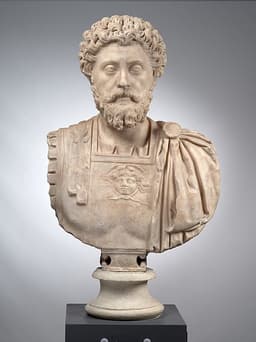
Marcus Antonius
General · Ancient
56.5Total
Basic Information
Born
-450
-83
Died
-400
-30
Era
Ancient
Ancient
Nationality
Sparta
Roman Republic
Occupation
General
General
Civilization
Western
Western
Score Comparison
Military (10%)
70.0
74.0
Political (20%)
35.0
42.3
Influence (20%)
51.8
55.0
Legacy (20%)
45.0
56.0
Leadership (15%)
40.9
61.1
Strategy (15%)
66.3
58.0
TOTAL
49.2
56.5
Gylippus — Complete Timeline
414 BC
Relief of SyracuseWar
Gylippus arrived in Syracuse with a small Spartan force. He organized the Syracusan defenses and took command, countering the Athenian siege. His leadership revitalized the Syracusan resistance and turned the tide of the Sicilian Expedition.
Peloponnesian WarSicilian ExpeditionSparta
Impact: regionalconstructive
413 BC
Destruction of the Athenian FleetWar◆ Major
Gylippus led the Syracusan and Spartan forces in a naval battle in the Great Harbour of Syracuse. The Athenians were decisively defeated, losing most of their fleet. This victory trapped the Athenian army on Sicily.
Peloponnesian WarNaval BattleSparta
Impact: regional
Capture of the Athenian ArmyWar◆ Major
After the naval defeat, Gylippus pursued the retreating Athenian army under Nicias and Demosthenes. He forced their surrender, capturing thousands of Athenian soldiers. The prisoners were imprisoned in the Syracusan quarries, where many died.
Peloponnesian WarSicilian ExpeditionSparta
Impact: regionaltragic
403 BC
Exile of GylippusPolitical Action
Gylippus was sent to Thurii in southern Italy to negotiate. He was accused of embezzling public funds and fled. Condemned to death in absentia by Sparta, he went into exile, ending his career in disgrace.
ExileSpartan PoliticsCorruption
Impact: nationaltragic
Marcus Antonius — Complete Timeline
43 BC
Formation of the Second TriumviratePolitical Action
Antony formed the Second Triumvirate with Octavian and Lepidus, legally dividing the Roman world among themselves. They proscribed their enemies, including Cicero, and consolidated power to defeat Caesar's assassins.
Roman PoliticsTriumvirateProscriptions
Impact: globaldestructive
42 BC
Battle of PhilippiWar◆ Major
Antony and Octavian defeated the forces of Brutus and Cassius at Philippi in Macedonia. Antony commanded the decisive victory, leading to the deaths of both conspirators and ending the Republican resistance.
Roman Civil WarBattleAssassins of Caesar
Impact: global
34 BC
Alliance with Cleopatra and Donations of AlexandriaPolitical Action◆ Major
Antony formalized his alliance with Cleopatra VII of Egypt, marrying her and recognizing their children as rulers of various eastern territories. The Donations of Alexandria granted Roman lands to Ptolemaic heirs, provoking outrage in Rome.
Roman-Egyptian RelationsPolitical AllianceScandal
Impact: regionaldestructive
31 BC
Battle of ActiumWar
Antony's fleet was decisively defeated by Octavian's forces under Agrippa at Actium in Greece. Cleopatra's ships fled, and Antony followed, abandoning his army. This defeat ended his bid for power.
Roman Civil WarNaval BattleDefeat
Impact: globaltragic
30 BC
Suicide in AlexandriaOther◆ Major
After Octavian's forces captured Alexandria, Antony attempted suicide by stabbing himself. He died in Cleopatra's arms. His death ended the civil war and paved the way for Octavian to become Augustus, the first Roman emperor.
DeathRoman Civil WarEnd of Republic
Impact: globaltragic
This comparison has not been analyzed yet.
One-time AI generation (~1 minute). Scores and timeline are already available below.
Rankings
🥇
Marcus AntoniusLeader
Mil: 74.0Pol: 42.3Inf: 55.0
56.5
🥈
Gylippus
Mil: 70.0Pol: 35.0Inf: 51.8
49.2
+7.3 behind
How This Comparison Works
Algorithm
Each figure is scored on 6 dimensions (0—100 scale) based on structured historical data: Military (10%), Political (20%), Influence (20%), Legacy (20%), Leadership (15%), Strategy (15%). The weighted total produces the final ranking.
Data Sources
Scores are computed from structured sub-indicators in the database. Scale factors adjust for era (Ancient ×0.85, Modern ×1.0) and civilization size (Eastern ×1.05, Other ×0.80) to account for differences in population and military scale.
Maximum 3 Figures
Comparisons are limited to 2—3 figures to ensure readability and statistical meaningfulness.
Error Margins
±5 points per dimension — Sub-scores are derived from historical records with inherent uncertainty. Two figures within 5 points on a dimension should be considered roughly equivalent in that area.
Total Score Accuracy
±3 points overall — The weighted combination of 6 dimensions produces a total score with approximately ±3 points of uncertainty. Differences of less than 3 points are not statistically significant— the figures are effectively tied.
Known Limitations
- Historical records are incomplete and uneven across civilizations
- Figures from oral-tradition societies may be underrepresented
- Occupation labels can misclassify multi-role figures
- Scores measure capability and impact, not moral character
- Quantitative scoring is a comparison tool, not absolute truth
Capability Radar
Military (10%) — Battles & Warfare
Battles
55
75
Win Rate
60
60
Expansion
20
70
Political (20%) — Governance & Reform
Reform
10
40
Diplomacy
40
70
Economy
15
50
Influence (20%) — Cultural & Global Reach
Cultural
30
65
Global
30
60
Legacy (20%) — Historical Impact
Historical
45
70
Longevity
35
60
Leadership (15%) — Power & Stability
Tenure
30
65
Stability
20
40
Strategy (15%) — Tactics & Innovation
Strategy
65
65
Tactics
70
70
Reform
10
30
Similar Comparisons
Comments & Discussion
No comments yet. Be the first to share your thoughts!