Loading...
Gyeongjong of Goryeo vs Tamar of Georgia
Tamar of Georgia leads by 24.4 pts · 2 figures compared
…
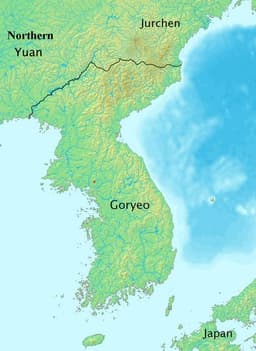
Gyeongjong of Goryeo
Emperor · Medieval
47.1Total
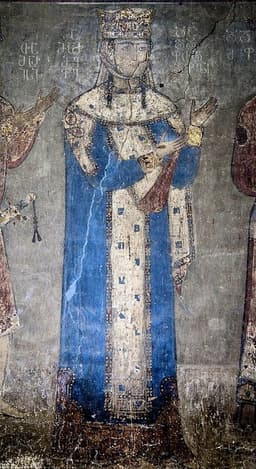
Tamar of Georgia
Emperor · Medieval
71.5Total
Basic Information
Born
955
1160
Died
981
1213
Era
Medieval
Medieval
Nationality
Korea
Georgia
Occupation
Emperor
Emperor
Civilization
Eastern
Western
Score Comparison
Military (10%)
20.0
78.0
Political (20%)
53.8
72.0
Influence (20%)
53.3
82.0
Legacy (20%)
47.5
55.0
Leadership (15%)
48.8
80.0
Strategy (15%)
45.0
66.3
TOTAL
47.1
71.5
Gyeongjong of Goryeo — Complete Timeline
976 AD
Institution of the Jeonsigwa Land SystemReform◆ Major
King Gyeongjong established the jeonsigwa, a land distribution system that allocated state-owned farmland to government officials based on their rank. This reform aimed to secure royal revenue and control over land, while providing a stable income for the bureaucracy.
Impact: nationalconstructive
Tamar of Georgia — Complete Timeline
1184 AD
Coronation as Queen RegnantPolitical Action
Tamar was crowned as the first female ruler of Georgia after her father George III's death. Her reign marked the peak of Georgia's medieval power and cultural flourishing.
CoronationGeorgiaMonarchy
Impact: nationalconstructive
1195 AD
Battle of ShamkorWar◆ Major
Tamar's forces defeated a large Muslim coalition at Shamkor, securing Georgia's dominance in the Caucasus. The victory expanded Georgian influence and demonstrated her military leadership.
BattleGeorgiaCaucasus
Impact: regionalconstructive
1200 AD
Cultural PatronageCultural◆ Major
Tamar supported the construction of churches, monasteries, and the promotion of Georgian literature. Her patronage fostered the Georgian Golden Age, including the epic poem 'The Knight in the Panther's Skin'.
CulturePatronageGeorgia
Impact: nationalconstructive
Expert Analysis
Gyeongjong of Goryeo vs Tamar of Georgia
### The Heir and the Queen
In the year 976, a Korean king in the city of Gaegyeong signed a decree that would reshape his kingdom’s finances. Half a world away and two centuries later, a Georgian queen led her cavalry into battle at Shamkor, shattering a Muslim coalition. One ruler stabilized a state through paper and land grants; the other forged an empire through steel and faith. Gyeongjong of Goryeo and Tamar of Georgia both inherited thrones, but their paths diverged so sharply that they seem to belong to different species of power. Why did one become a footnote and the other a legend?
### Origins
Gyeongjong was born in 955 into a dynasty still consolidating its grip on the Korean peninsula. His father, King Gwangjong, had purged the old aristocracy and freed slaves, leaving a court exhausted by reform. The young prince grew up in the shadow of civil war and rebellion—a world where survival meant navigating the treacherous currents of noble factions. He was educated in Confucian classics, trained to see governance as a system of ranks and rituals. His Korea was a land of bureaucrats and scholars, where power flowed from the capital’s edicts.
Tamar, born in 1160, entered a Georgia that was already rising. Her father, George III, had crushed rebellious nobles and expanded the kingdom’s borders. She was raised not in a palace of scrolls but in a court of warriors and poets. Georgian culture blended Byzantine Christianity with Caucasian chivalry, and Tamar learned to command respect in a world that rarely granted it to women. Her era was one of crusades and Mongol threats, where a ruler’s survival depended on the loyalty of mounted knights and the blessing of the Church.
The difference in their worlds was profound. Gyeongjong’s Korea was a Confucian meritocracy in embryo, where land was the measure of all things. Tamar’s Georgia was a feudal kingdom on the edge of Christendom, where glory was won with the sword.
### Rise to Power
Gyeongjong ascended the throne in 975, at age twenty, after his father’s death. There was no drama, no war of succession—just the quiet transfer of power in a court that had been pacified by earlier purges. His challenge was not to seize power but to wield it without triggering a noble revolt. He had to prove he could manage the system, not transform it.
Tamar’s rise was anything but quiet. Crowned as co-ruler by her father in 1178, she faced immediate opposition from the Georgian nobility, who refused to accept a woman as their sovereign. When George III died in 1184, the nobles forced her to remarry and attempted to limit her authority. Tamar outmaneuvered them: she divorced her first husband, a Russian prince, and married David Soslan, a loyal Ossetian commander who became her military arm. Her coronation as sole queen regnant was a political victory won through patience and ruthlessness.
Gyeongjong’s path was paved by his father’s reforms; Tamar’s was blocked by her gender. One inherited stability, the other had to forge it.
### Leadership & Governance
Gyeongjong’s defining act was the *jeonsigwa* land system of 976. This was a bureaucratic masterpiece: it allocated state-owned farmland to officials based on their rank, not their birth. The goal was to break the power of hereditary landlords and tie the bureaucracy directly to the crown. It stabilized state finances and created a loyal class of scholar-officials. But it was a conservative reform—it did not expand territory or inspire armies. Gyeongjong ruled for only six years, and his reign was a quiet interlude between the storms of his father and the conquests of his successors.
Tamar governed through war and culture. At the Battle of Shamkor in 1195, her forces—led by David Soslan—defeated a coalition of Muslim emirs, securing Georgian dominance in the Caucasus. She did not merely defend her realm; she expanded it, capturing cities and forcing vassals to pay tribute. Yet she was no mere warrior queen. Tamar patronized the construction of churches and monasteries, and her court became a center of Georgian literature, including the epic poem *The Knight in the Panther’s Skin*. She ruled with a blend of iron and art that made her reign the Georgian Golden Age.
Gyeongjong built a system; Tamar built a legend. One governed through administration, the other through inspiration.
### Triumph & Tragedy
Gyeongjong’s triumph was the *jeonsigwa*—a reform that outlasted him by centuries. His tragedy was his brevity. He died in 981, likely in his late twenties, leaving no time to consolidate his gains. His successors would build on his foundation, but his name faded into the annals of administrative history.
Tamar’s triumph was her reign itself. She died in 1213, having ruled for nearly three decades, leaving Georgia at its greatest territorial extent. Her tragedy came after her death: the Mongol invasions of the 1220s shattered her kingdom, and later generations would look back on her era as a lost paradise. She was the peak, and everything after was decline.
### Character & Destiny
Gyeongjong was a caretaker king. His personality was shaped by the need to preserve what his father had built. He took no risks, fought no wars, and left no dramatic mark. His destiny was to be a bridge between eras—necessary but unglamorous.
Tamar was a conqueror and a patron. Her character was forged in resistance: she had to prove herself worthy of a crown that many believed no woman should wear. This made her bold, strategic, and deeply aware of her legacy. She chose to be remembered, and she succeeded.
### Legacy
Gyeongjong is remembered by historians of Korea as a reformer of land tenure. His *jeonsigwa* system influenced Korean governance for centuries, but he is not a household name. His legacy is institutional, not emotional.
Tamar is a national icon. She is canonized as a saint in the Georgian Orthodox Church, her image adorns coins and monuments, and her reign is taught as the golden age of Georgian civilization. She is the symbol of a nation’s pride.
### Conclusion
One king stabilized a system; one queen inspired a people. Gyeongjong of Goryeo and Tamar of Georgia both ruled, but they ruled different worlds. The Korean king’s legacy is a quiet efficiency; the Georgian queen’s is a blazing memory. In the end, history remembers not just what leaders do, but how they make us feel about what they did. Tamar gave her people a story to tell. Gyeongjong gave them a system to use. Both were necessary, but only one became immortal.
Rankings
🥇
Tamar of GeorgiaLeader
Mil: 78.0Pol: 72.0Inf: 82.0
71.5
🥈
Gyeongjong of Goryeo
Mil: 20.0Pol: 53.8Inf: 53.3
47.1
+24.4 behind
How This Comparison Works
Algorithm
Each figure is scored on 6 dimensions (0—100 scale) based on structured historical data: Military (10%), Political (20%), Influence (20%), Legacy (20%), Leadership (15%), Strategy (15%). The weighted total produces the final ranking.
Data Sources
Scores are computed from structured sub-indicators in the database. Scale factors adjust for era (Ancient ×0.85, Modern ×1.0) and civilization size (Eastern ×1.05, Other ×0.80) to account for differences in population and military scale.
Maximum 3 Figures
Comparisons are limited to 2—3 figures to ensure readability and statistical meaningfulness.
Error Margins
±5 points per dimension — Sub-scores are derived from historical records with inherent uncertainty. Two figures within 5 points on a dimension should be considered roughly equivalent in that area.
Total Score Accuracy
±3 points overall — The weighted combination of 6 dimensions produces a total score with approximately ±3 points of uncertainty. Differences of less than 3 points are not statistically significant— the figures are effectively tied.
Known Limitations
- Historical records are incomplete and uneven across civilizations
- Figures from oral-tradition societies may be underrepresented
- Occupation labels can misclassify multi-role figures
- Scores measure capability and impact, not moral character
- Quantitative scoring is a comparison tool, not absolute truth
Capability Radar
Military (10%) — Battles & Warfare
Battles
5
75
Win Rate
5
85
Expansion
5
75
Political (20%) — Governance & Reform
Reform
70
80
Diplomacy
40
75
Economy
65
85
Influence (20%) — Cultural & Global Reach
Cultural
30
80
Global
20
60
Legacy (20%) — Historical Impact
Historical
45
75
Longevity
40
70
Leadership (15%) — Power & Stability
Tenure
55
85
Stability
50
70
Strategy (15%) — Tactics & Innovation
Strategy
5
80
Tactics
5
70
Reform
5
65
Similar Comparisons
Comments & Discussion
Constitutional Visionary6/16/2026
Gyeongjong is criminally underrated by military-focused chroniclers. He wasn't a footnote—he was the architect of Goryeo's resilience. His 976 land grant reforms (Jeonsigwa) stabilized state finances for generations by tying official salaries to productive land, not volatile grain taxes. Without this bureaucratic bedrock, later kings couldn't have funded coastal defenses against Khitan invasions. Tamar conquered; Gyeongjong constructed systems that outlasted swords. Empires built on charisma col
兵法史家6/16/2026
拿塔玛尔和景宗比,好比拿火与纸比——塔玛尔是火,景宗是纸。景宗在位短短六年,主要成就是搞土地改革,看似稳妥,实则毫无魄力。塔玛尔在沙姆科尔战役(1195年)中率骑兵击溃穆斯林联军,俘虏敌将四位,硬是把格鲁吉亚推向外高加索霸主地位。景宗的改革帮了官僚,塔玛尔的铁蹄拓展了疆土。历史记住的是征服者,不是算账的账房先生。
The Mercenary Muse6/16/2026
You want a unique perspective? Here it is: Tamar's gold bought more than steel. During her reign, Georgian silver and silk flooded Anatolian markets; she literally funded the Trebizond Empire through commercial treaties with the Komnenoi. Meanwhile, Gyeongjong’s coinage reforms in 977 actually backfired—overminting caused inflation in key trade ports like Cheonghae. Tamar’s economic statecraft—shrewd tariffs on Silk Road routes—made her richer than any battlefield victory. The real power was in
田野调查者6/16/2026
别被课本骗了。我实地去过格鲁吉亚的瓦尔德齐亚洞穴修道院(Tamari),那里刻着“女王之酒”的陶罐铭文——塔玛尔是个精明的资源管理者,不是单纯的勇士。她推广葡萄种植税,垄断了黑海东岸的葡萄酒贸易,每年入账相当于拜占庭半年的军费。景宗那套地契系统只是抄唐朝均田制的半成品,执行上贵族照样避税。塔玛尔靠酿酒赚钱,比景宗抄作业高明多了。
The Hellenic Skeptic6/16/2026
Let's talk about credibility of sources. Gyeongjong's "key reforms" are documented in the Goryeosa, compiled 400 years later by Joseon scholars with an axe to grind against military dictators. Those land grant numbers? Probably inflated for Confucian propaganda. Meanwhile, Tamar's campaign at Shamkor (1195) is corroborated by three independent chronicles: the Armenian Kirakos, the Georgian Kartlis Tskhovreba,