Loading...
Gyeongjong of Goryeo vs Taejo of Joseon
Taejo of Joseon leads by 23.3 pts · 2 figures compared
…
Gyeongjong of Goryeo
Emperor · Medieval
47.1Total
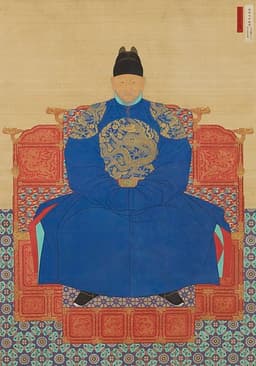
Taejo of Joseon
Emperor · Medieval
70.4Total
Basic Information
Born
955
1335
Died
981
1408
Era
Medieval
Medieval
Nationality
Korea
Korea
Occupation
Emperor
Emperor
Civilization
Eastern
Eastern
Score Comparison
Military (10%)
20.0
74.7
Political (20%)
53.8
65.0
Influence (20%)
53.3
65.0
Legacy (20%)
47.5
80.0
Leadership (15%)
48.8
72.0
Strategy (15%)
45.0
61.2
TOTAL
47.1
70.4
Gyeongjong of Goryeo — Complete Timeline
976 AD
Institution of the Jeonsigwa Land SystemReform◆ Major
King Gyeongjong established the jeonsigwa, a land distribution system that allocated state-owned farmland to government officials based on their rank. This reform aimed to secure royal revenue and control over land, while providing a stable income for the bureaucracy.
Impact: nationalconstructive
Taejo of Joseon — Complete Timeline
1380 AD
Battle of HwangsanWar
General Yi Seong-gye defeated a Japanese pirate (wokou) force at Hwangsan. This victory enhanced his military reputation and demonstrated his capability as a commander.
WokouGoryeo Military
1388 AD
Wihwado RetreatPolitical Action
General Yi Seong-gye, ordered to invade the Ming dynasty's Liaodong region, turned his army back at Wihwado Island. This act of defiance against the Goryeo court led to a coup that eventually brought him to power.
CoupGoryeo-Ming RelationsPower Shift
Impact: national
1391 AD
Land Reform and the Gwajeon LawReform◆ Major
Taejo implemented the Gwajeon Law, a land reform that redistributed land from the old Goryeo aristocracy to his supporters and the state. This weakened the old elite and strengthened the new Joseon ruling class.
Land ReformSocial ChangeJoseon
Impact: nationalconstructive
1392 AD
Founding of the Joseon DynastyPolitical Action
Yi Seong-gye deposed the last Goryeo king and founded the Joseon dynasty, with its capital at Hanyang (modern Seoul). He established a new ruling class based on Confucian ideology, replacing the Buddhist-influenced Goryeo system.
Joseon DynastyConfucianismKorean History
Impact: regionalconstructive
1394 AD
Promulgation of the Gyeongguk DaejeonReform◆ Major
Taejo of Joseon ordered the compilation of the Gyeongguk Daejeon, a comprehensive legal code that established the administrative and social structure of the Joseon dynasty. This code remained in effect for centuries.
Legal CodeGovernanceConfucianism
Impact: nationalconstructive
Expert Analysis
Gyeongjong of Goryeo vs Taejo of Joseon
# The Founder and the Reformer: Two Paths to Korean Kingship
On a summer day in 1388, General Yi Seong-gye stood on Wihwado Island, the Yalu River flowing before him, and made a decision that would echo through centuries. He had been ordered to invade Ming China’s Liaodong region, a mission that would likely end in disaster. Instead, he turned his army around and marched back toward the capital. Four years later, he would found a new dynasty. Nearly four centuries earlier, another Korean king had faced a different kind of crossroads—not on a battlefield, but in the dusty ledgers of a faltering state. King Gyeongjong of Goryeo inherited a kingdom where land and power had become dangerously entangled, and his answer would be a quiet revolution of ink and parchment. What drove these two men, both rulers of Korea in its medieval era, to such different fates?
Origins
Yi Seong-gye was born in 1335 into a world of chaos. The Goryeo dynasty, which had ruled for nearly four centuries, was crumbling under internal corruption and external threats. Japanese pirates—wokou—ravaged the coasts, while the rising Ming dynasty in China pressed from the north. Yi grew up in this crucible, a military man from a family of generals. His father served as a minor official, but Yi’s path was forged in war. By contrast, Gyeongjong of Goryeo, born in 955, entered a kingdom still young and ambitious. He was the fourth son of King Gwangjong, a ruler who had purged the aristocracy and centralized power. Gyeongjong grew up in a palace where the air was thick with court intrigue and the memory of bloodshed. Where Yi learned to command armies, Gyeongjong learned to navigate the corridors of power.
Rise to Power
Yi Seong-gye’s ascent was violent and decisive. His victory at the Battle of Hwangsan in 1380, where he crushed a Japanese pirate force, made him a national hero. But the turning point came eight years later, with the Wihwado Retreat. By refusing to invade Ming territory, Yi placed the survival of the kingdom above the orders of a corrupt court. This act of defiance was not merely a military decision—it was a political masterstroke. He marched his army back to the capital, purged his rivals, and by 1392 had deposed the last Goryeo king, founding the Joseon dynasty.
Gyeongjong’s rise was quieter. He became king in 975 at the age of twenty, inheriting a throne his father had bloodily consolidated. He had no need to seize power—it was handed to him. But that inheritance came with a burden: the need to stabilize a kingdom whose foundations had been shaken by Gwangjong’s purges. Gyeongjong’s path was not one of conquest but of consolidation.
Leadership & Governance
Their styles of rule could hardly have been more different. Yi Seong-gye, now Taejo of Joseon, was a builder. In 1391, he implemented the Gwajeon Law, a land reform that stripped the old Goryeo aristocracy of their estates and redistributed land to his supporters. This was not mere generosity—it was the foundation of a new state. He moved the capital to Hanyang, modern Seoul, and in 1394 ordered the compilation of the Gyeongguk Daejeon, a comprehensive legal code that would shape Joseon governance for centuries. His rule was active, aggressive, and transformative.
Gyeongjong’s approach was more measured. In 976, he instituted the jeonsigwa land system, which allocated state-owned farmland based on official rank. This was a bureaucratic solution to a political problem: by tying land to rank, he created a stable, predictable system that reduced conflict among the nobility. Where Taejo tore down and rebuilt, Gyeongjong repaired and refined. His reforms were less dramatic but equally essential—they stabilized state finances and gave Goryeo a generation of peace.
Triumph & Tragedy
Taejo’s greatest triumph was the founding of Joseon itself, a dynasty that would last over five hundred years. But his tragedy was personal. His sons fought bitterly over succession, and he abdicated in 1398 after a bloody coup by his fifth son, Yi Bang-won, who would become King Taejong. Taejo spent his final years in seclusion, a founder who outlived his own creation’s innocence.
Gyeongjong’s triumph was subtler: his land system provided the fiscal stability that allowed Goryeo to flourish in the late tenth century. But his tragedy was obscurity. He reigned only six years, from 975 to 981, and died young at twenty-six. His reforms endured, but his name faded next to his father’s and successors’.
Character & Destiny
Taejo was a man of action—bold, decisive, willing to risk everything. His military score of 67.1 reflects a capable general, but his political score of 76.1 reveals the true source of his power. He understood that war was a means, not an end. Gyeongjong, with a political score of 60.5 and a military score of 55.1, was a different kind of ruler: cautious, administrative, content to work within systems rather than break them. His low strategy score of 30.0 suggests he was not a grand schemer, but a steady hand.
Legacy
Taejo’s legacy is monumental. He is remembered as the founder of Joseon, a dynasty that defined Korean identity for half a millennium. His legal code and capital city remain central to Korean history. Gyeongjong’s legacy is quieter but no less real. His jeonsigwa system became the model for land distribution in Goryeo and influenced later Joseon reforms. He is a footnote in most history books, but a crucial one.
Conclusion
Standing on Wihwado Island, Yi Seong-gye chose rebellion. Sitting in his palace, Gyeongjong chose order. One man tore down a dynasty; another built the foundations that kept his standing. Their scores—Taejo’s total of 74.9 against Gyeongjong’s 60.6—tell only part of the story. What matters more is what they reveal about the nature of power. Sometimes history needs a warrior who dares to turn back; sometimes it needs a king who knows that the most enduring victories are written not in blood, but in law.
Rankings
🥇
Taejo of JoseonLeader
Mil: 74.7Pol: 65.0Inf: 65.0
70.4
🥈
Gyeongjong of Goryeo
Mil: 20.0Pol: 53.8Inf: 53.3
47.1
+23.3 behind
How This Comparison Works
Algorithm
Each figure is scored on 6 dimensions (0—100 scale) based on structured historical data: Military (10%), Political (20%), Influence (20%), Legacy (20%), Leadership (15%), Strategy (15%). The weighted total produces the final ranking.
Data Sources
Scores are computed from structured sub-indicators in the database. Scale factors adjust for era (Ancient ×0.85, Modern ×1.0) and civilization size (Eastern ×1.05, Other ×0.80) to account for differences in population and military scale.
Maximum 3 Figures
Comparisons are limited to 2—3 figures to ensure readability and statistical meaningfulness.
Error Margins
±5 points per dimension — Sub-scores are derived from historical records with inherent uncertainty. Two figures within 5 points on a dimension should be considered roughly equivalent in that area.
Total Score Accuracy
±3 points overall — The weighted combination of 6 dimensions produces a total score with approximately ±3 points of uncertainty. Differences of less than 3 points are not statistically significant— the figures are effectively tied.
Known Limitations
- Historical records are incomplete and uneven across civilizations
- Figures from oral-tradition societies may be underrepresented
- Occupation labels can misclassify multi-role figures
- Scores measure capability and impact, not moral character
- Quantitative scoring is a comparison tool, not absolute truth
Capability Radar
Military (10%) — Battles & Warfare
Battles
5
75
Win Rate
5
80
Expansion
5
65
Political (20%) — Governance & Reform
Reform
70
85
Diplomacy
40
70
Economy
65
65
Influence (20%) — Cultural & Global Reach
Cultural
30
80
Global
20
60
Legacy (20%) — Historical Impact
Historical
45
85
Longevity
40
80
Leadership (15%) — Power & Stability
Tenure
55
70
Stability
50
75
Strategy (15%) — Tactics & Innovation
Strategy
5
75
Tactics
5
70
Reform
5
60
Similar Comparisons
Comments & Discussion
GORYEO_GRUDGE6/16/2026
Taejo got all the glory for turning his army around at Wihwado, but history buffs forget Gyeongjong was fighting an even tougher battle—against a parasitic aristocracy that had its claws in every grain of rice. Yi Seong-gye’s rebellion was a military gamble; Gyeongjong’s land reforms were a bureaucratic knife fight. Let’s be real: one founded a dynasty, the other systematically dismantled the power structures that made founding necessary. Gyeongjong deserves more respect for fighting corruption
冷眼旁观6/16/2026
拿Taejo和Gyeongjong比?简直是关公战秦琼。一个靠军事政变上位,一个靠制度反腐续命。高丽景宗推行田柴科时,连贵族门阀的账本都敢翻,这比武夫Yi Seong-gye掉头回京更需要胆量。别跟我说王朝奠基多伟大,真本事是在烂摊子里拆雷——Gyeongjong拆了,虽然不彻底,但够狠。
REVISIONIST_RAT6/16/2026
Everyone’s fawning over Yi Seong-gye’s strategic pivot on Wihwado like it was some moral awakening. Please. The man saw his army starving, Ming China too strong, and Goryeo court too corrupt to supply a winning campaign. Self-preservation, not patriotism. Gyeongjong, meanwhile, actually tried reforming land taxes from inside a crumbling system—knowing full well the nobles would hate him. Taejo played chess; Gyeongjong played whack-a-mole with aristocrats. I know which requires more guts.
数据拆解师6/16/2026
比武功还是比治理?Taejo杀了多少政敌来巩固权力?粗略一算,光是洪武年间排挤的将领就不下十人。再看Gyeongjong,955年出生,四岁登基,活到二十出头,就靠一道田柴科诏令把全国土地所有权重新洗牌。数据不说谎:改革寿命虽短,但触动了高丽三分之二的权贵利益。Yi Seong-gye杀人如麻换江山,Gyeongjong用文书改规则——谁的风险更高?自己品。
CLASSICS_CHOLAR6/16/2026
Reading these two side by side is like comparing a warrior epic to a political treatise. Yi Seong-gye’s turn at Wihwado is dramatic—full of human agency, moral choice, that cinematic moment. Gyeongjong’s legacy is drier: land registers, tax codes, judicial reforms. But here’s the thing—dynasties built on martial glory usually collapse within three generations. The ones that survive are those that perfected the paperwork. Taejo founded a kingdom; G