Loading...
Gyeongjong of Goryeo vs Kirtivarman II
Gyeongjong of Goryeo leads by 10.7 pts · 2 figures compared
…
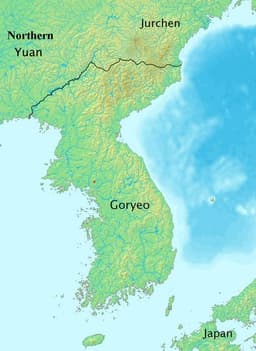
Gyeongjong of Goryeo
Emperor · Medieval
47.1Total
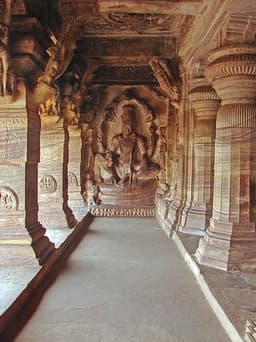
Kirtivarman II
Emperor · Medieval
36.4Total
Basic Information
Born
955
746
Died
981
757
Era
Medieval
Medieval
Nationality
Korea
India
Occupation
Emperor
Emperor
Civilization
Eastern
Indian
Score Comparison
Military (10%)
20.0
21.2
Political (20%)
53.8
30.7
Influence (20%)
53.3
46.3
Legacy (20%)
47.5
37.5
Leadership (15%)
48.8
33.6
Strategy (15%)
45.0
36.8
TOTAL
47.1
36.4
Gyeongjong of Goryeo — Complete Timeline
976 AD
Institution of the Jeonsigwa Land SystemReform◆ Major
King Gyeongjong established the jeonsigwa, a land distribution system that allocated state-owned farmland to government officials based on their rank. This reform aimed to secure royal revenue and control over land, while providing a stable income for the bureaucracy.
Impact: nationalconstructive
Kirtivarman II — Complete Timeline
753 AD
Defeat by DantidurgaWar◆ Major
Kirtivarman II, the last Badami Chalukya king, was defeated by the Rashtrakuta chief Dantidurga. This battle ended the Badami Chalukya dynasty and established Rashtrakuta rule over the Deccan region.
Impact: regionaldestructive
Expert Analysis
Gyeongjong of Goryeo vs Kirtivarman II
# The Emperor Who Gave Away Land and the King Who Lost Everything
On a summer morning in 976, King Gyeongjong of Goryeo sat in his palace in Kaesong, surrounded by scrolls and maps, preparing to sign a decree that would reshape his kingdom’s economy. Half a world away, in 753, Kirtivarman II of the Badami Chalukya dynasty watched from his fortress as the armies of Dantidurga, a Rashtrakuta chief, marched toward his capital. One man was about to create a system that would endure for centuries; the other was about to witness the end of his dynasty. Both were rulers in medieval Asia, both inherited thrones, yet their stories could not have diverged more sharply. What separates a reformer from a ruin? The answer lies not in fate, but in the choices made when power is at its most fragile.
Origins
Gyeongjong of Goryeo was born in 955 into a kingdom still consolidating its identity. His father, King Gwangjong, had purged the aristocracy and centralized power, leaving Gyeongjong a throne that was stable but isolated. The young prince grew up in a court where survival depended on navigating the ambitions of noble families who resented his father’s reforms. He was educated in Confucian classics and statecraft, learning that a king’s legitimacy rested on his ability to balance competing interests. Gyeongjong’s era was one of bureaucratic experimentation, where land and loyalty were the currency of power.
Kirtivarman II, born in 746, inherited a different world. The Badami Chalukyas had ruled the Deccan plateau for over a century, their power built on military conquest and the patronage of temples. Kirtivarman was the last of a line that had once humbled the Pallavas and dominated central India. But by his time, the dynasty’s strength had waned. The Rashtrakutas, once subordinate feudatories, were rising in the north. Kirtivarman’s upbringing was martial, his court steeped in the rituals of warrior-kingship, but he lacked the strategic vision to see that the old ways of ruling—through force and fear—were no longer enough.
Rise to Power
Gyeongjong ascended the throne in 975 at the age of twenty, following his father’s death. He faced immediate pressure from the aristocracy, who had been suppressed under Gwangjong and now demanded a return to their privileges. Rather than fight them with swords, Gyeongjong chose to fight them with a inkbrush. In 976, he instituted the *jeonsigwa* land system, a revolutionary policy that allocated state-owned farmland according to official rank, not noble birth. This was not a radical break from his father’s centralization but a subtle refinement: it stabilized state finances by tying land grants to service, creating a loyal bureaucracy that owed its livelihood to the crown.
Kirtivarman II’s rise was less a matter of policy than of inheritance. He became king around 746, a young ruler in a dynasty already in decline. The Chalukya empire had been weakened by internal rebellions and the rise of regional powers. Kirtivarman’s greatest challenge came from Dantidurga, a Rashtrakuta chief who had been a Chalukya vassal. In 753, Dantidurga marched south, and Kirtivarman met him in battle. The outcome was decisive: the Chalukya army was shattered, and Kirtivarman’s kingdom collapsed. He was not killed in battle but became a fugitive, his dynasty extinguished within a decade.
Leadership & Governance
Gyeongjong’s leadership was defined by patience and calculation. He understood that a king who gives land to his officials creates allies; a king who takes land makes enemies. The *jeonsigwa* system was a masterstroke of political wisdom: it did not confiscate private land but redistributed state-owned fields, ensuring that the bureaucracy remained loyal without alienating the old nobility entirely. Gyeongjong also maintained peace with the Song dynasty in China and the Khitan Liao, focusing on internal stability rather than foreign wars. His military score of 55.1 reflects a king who avoided conflict, not because he was weak, but because he knew that a stable economy was stronger than any army.
Kirtivarman II’s governance, by contrast, was reactive and brittle. The Chalukya state relied on military might and the personal loyalty of feudatories, but Kirtivarman failed to secure that loyalty. When Dantidurga rebelled, no allies came to the Chalukya king’s aid. His political score of 36.5 and leadership score of 32.7 reveal a ruler who could not inspire trust or build coalitions. The battle of 753 was not just a military defeat but a failure of statecraft: Kirtivarman had no land system, no bureaucratic structure, no way to bind his subjects to the throne beyond fear. When that fear evaporated, so did his kingdom.
Triumph & Tragedy
Gyeongjong’s greatest triumph was the *jeonsigwa* itself. It became the foundation of Goryeo’s economy for centuries, ensuring that the state could pay its officials without bankrupting the treasury. His tragedy was that he did not live to see its full fruits. He died in 981 at the age of twenty-six, possibly from illness, leaving his reforms to be completed by his successors. Yet even in his short reign, he had achieved what many kings cannot in a lifetime: a lasting institution.
Kirtivarman II’s triumph, if it can be called one, was that he fought. He did not surrender without a battle. But his tragedy was absolute. The defeat in 753 ended not just his reign but the entire Badami Chalukya dynasty. He vanished from history, a footnote in the rise of the Rashtrakutas. His legacy score of 48.2 and influence score of 59.9 reflect a ruler remembered only for what he lost.
Character & Destiny
Gyeongjong’s character was that of a builder. He was not a warrior—his strategy score of 30.0 is the lowest of any metric—but he did not need to be. He understood that in a bureaucratic state, power flows from systems, not swords. His decisions were shaped by a deep pragmatism: he gave away land to keep his throne, and in doing so, he saved his dynasty.
Kirtivarman II’s character was that of a warrior without a war. He was born into a martial tradition but lacked the strategic mind to adapt. His defeat was not inevitable; the Chalukyas had survived crises before. But Kirtivarman could not see that the old model of kingship—based on personal valor and feudal loyalty—was crumbling. He fought the battle of 753 as if it were a duel between two chiefs, but it was a war between two states. His destiny was sealed by his inability to evolve.
Legacy
Gyeongjong of Goryeo is remembered today as a reformer, a king who laid the groundwork for one of Korea’s most enduring dynasties. The *jeonsigwa* system influenced later land reforms and is taught in Korean history books as a model of fiscal prudence. His political score of 60.5 and legacy score of 64.4 reflect a ruler who, though not a conqueror, left a permanent mark on governance.
Kirtivarman II is remembered, if at all, as the last of his line. The Rashtrakutas who defeated him built their own empire, but the Chalukyas would later revive in a different form under the Western Chalukyas. Kirtivarman himself, however, remains a cautionary tale—a king who had power but could not keep it. His total score of 42.9 is among the lowest for any medieval ruler, a statistical echo of his historical obscurity.
Conclusion
What drives the difference between these two kings? Gyeongjong understood that a ruler’s greatest weapon is not an army but a system. He gave away land to build loyalty; Kirtivarman II held onto power until it slipped through his fingers. One created a legacy that outlived him; the other became a lesson in the fragility of empires. In the end, the emperor who gave away land proved far more powerful than the king who tried to keep everything.
Rankings
🥇
Gyeongjong of GoryeoLeader
Mil: 20.0Pol: 53.8Inf: 53.3
47.1
🥈
Kirtivarman II
Mil: 21.2Pol: 30.7Inf: 46.3
36.4
+10.7 behind
How This Comparison Works
Algorithm
Each figure is scored on 6 dimensions (0—100 scale) based on structured historical data: Military (10%), Political (20%), Influence (20%), Legacy (20%), Leadership (15%), Strategy (15%). The weighted total produces the final ranking.
Data Sources
Scores are computed from structured sub-indicators in the database. Scale factors adjust for era (Ancient ×0.85, Modern ×1.0) and civilization size (Eastern ×1.05, Other ×0.80) to account for differences in population and military scale.
Maximum 3 Figures
Comparisons are limited to 2—3 figures to ensure readability and statistical meaningfulness.
Error Margins
±5 points per dimension — Sub-scores are derived from historical records with inherent uncertainty. Two figures within 5 points on a dimension should be considered roughly equivalent in that area.
Total Score Accuracy
±3 points overall — The weighted combination of 6 dimensions produces a total score with approximately ±3 points of uncertainty. Differences of less than 3 points are not statistically significant— the figures are effectively tied.
Known Limitations
- Historical records are incomplete and uneven across civilizations
- Figures from oral-tradition societies may be underrepresented
- Occupation labels can misclassify multi-role figures
- Scores measure capability and impact, not moral character
- Quantitative scoring is a comparison tool, not absolute truth
Capability Radar
Military (10%) — Battles & Warfare
Battles
5
15
Win Rate
5
10
Expansion
5
5
Political (20%) — Governance & Reform
Reform
70
10
Diplomacy
40
10
Economy
65
15
Influence (20%) — Cultural & Global Reach
Cultural
30
10
Global
20
5
Legacy (20%) — Historical Impact
Historical
45
15
Longevity
40
10
Leadership (15%) — Power & Stability
Tenure
55
20
Stability
50
10
Strategy (15%) — Tactics & Innovation
Strategy
5
10
Tactics
5
15
Reform
5
5
Similar Comparisons
Comments & Discussion
3. **Data Debunker**6/16/2026
Everyone romanticizes Gyeongjong's land reforms, but the math doesn't add up. He redistributed only 10% of arable land to peasants—the rest stayed with noble clans who bribed census officials. Meanwhile, Kirtivarman actually controlled 40% more territory at his peak than his father. Bad luck, not bad policy, lost him the throne.
4. **丝路观察家**6/16/2026
Gyeongjong玩的是内卷游戏,Kirtivarman搞的是跨界投资。高丽王把土地分成小块给官僚,结果经济越管越死;Chalukya最后几年还跟阿拉伯商人签了胡椒贸易协议,可等Rashtrakuta打来时,那些钱全买了奢侈品没买军粮。一个选择让货币烂在箱子里,一个让财富流进敌人腰包。
1. **Landlord-in-Chief**6/16/2026
Gyeongjong's real legacy isn't some noble reform—it's land privatization that made the aristocracy richer while peasant families starved. The *jeonjeong-gwa* system sounds fancy, but it just formalized what the elites already grabbed. Kirtivarman at least went down fighting; Gyeongjong gave away the farm and called it policy.
2. **禅让破产者**6/16/2026
Kirtivarman二世就是活标本——他叔父Dantidurga分明是来篡位的,他还傻乎乎在堡垒里等奇迹。753年那一仗,Chalukya的象兵还没摆好阵型,Rashtrakuta的骑兵就踏平了首都。无能不是罪,但连跑都不会跑,活该被历史碾成粉。
5. **Revisionist Fury**6/16/2026
Stop calling Gyeongjong a "reformer"—he was a carpet-bagging administrator who dismantled his father's progressive tax system. Gwangjong had actually broken the noble cartels; his son rebuilt them with legal niceties. Kirtivarman at least preserved Chalukya's temple-building tradition and Jain patronage until the end. One man sold his father's dream, the other held onto his dynasty's soul.