Loading...
Gyeongjong of Goryeo vs Henry the Fowler
Henry the Fowler leads by 13.8 pts · 2 figures compared
…
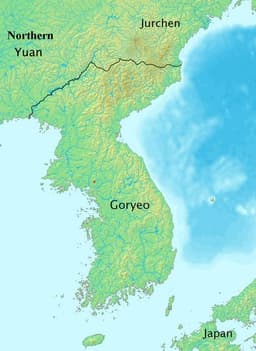
Gyeongjong of Goryeo
Emperor · Medieval
47.1Total
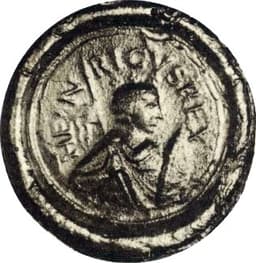
Henry the Fowler
Emperor · Medieval
60.9Total
Basic Information
Born
955
876
Died
981
936
Era
Medieval
Medieval
Nationality
Korea
East Francia
Occupation
Emperor
Emperor
Civilization
Eastern
Western
Score Comparison
Military (10%)
20.0
70.0
Political (20%)
53.8
59.3
Influence (20%)
53.3
55.0
Legacy (20%)
47.5
52.0
Leadership (15%)
48.8
85.0
Strategy (15%)
45.0
55.0
TOTAL
47.1
60.9
Gyeongjong of Goryeo — Complete Timeline
976 AD
Institution of the Jeonsigwa Land SystemReform◆ Major
King Gyeongjong established the jeonsigwa, a land distribution system that allocated state-owned farmland to government officials based on their rank. This reform aimed to secure royal revenue and control over land, while providing a stable income for the bureaucracy.
Impact: nationalconstructive
Henry the Fowler — Complete Timeline
919 AD
Election as King of East FranciaPolitical Action
Henry the Fowler was elected King of East Francia by the Saxon and Frankish nobles at Fritzlar on May 6, 919. He was the first Saxon king, marking the transition from Carolingian to Ottonian rule. His election was contested by other dukes but he prevailed.
ElectionAccessionOttonian Dynasty
Impact: regionalconstructive
921 AD
Treaty of Bonn (921)Political Action◆ Major
Henry the Fowler signed the Treaty of Bonn with Charles the Simple of West Francia, recognizing each other's royal titles and establishing peaceful relations. This treaty ended Carolingian claims over East Francia and solidified Henry's legitimacy as an independent king.
TreatyRecognitionDiplomacy
Impact: regionalconstructive
924 AD
Nine-Year Truce with the MagyarsPolitical Action◆ Major
Henry the Fowler negotiated a nine-year truce with the Magyars, agreeing to pay tribute in exchange for a halt to their raids. He used this period to fortify towns, reorganize the army, and train cavalry. This strategic pause was crucial for his later military reforms.
TruceMagyarsMilitary Reform
Impact: regionalconstructive
929 AD
Battle of Lenzen (929)War◆ Major
Henry the Fowler's forces defeated a Slavic army at the Battle of Lenzen, securing the eastern frontier of East Francia. This victory allowed Henry to consolidate control over the Elbe region and establish the March of Brandenburg, a key step in German eastward expansion.
BattleSlavic WarsEastern Expansion
Impact: regionalconstructive
933 AD
Battle of Riade (933)War
After the truce with the Magyars expired, Henry the Fowler led a German army to victory at the Battle of Riade (near Merseburg). The defeat of the Magyar cavalry ended their raids into East Francia for a generation and established Henry's reputation as a defender of Christendom.
BattleMagyarsVictory
Impact: regionalconstructive
936 AD
Death of Henry the FowlerOther◆ Major
Henry the Fowler died on July 2, 936, at Memleben. He was succeeded by his son, Otto I, who would become Holy Roman Emperor. Henry's reign laid the foundations for the Ottonian dynasty and the medieval German kingdom.
DeathSuccessionOttonian
Impact: regional
Expert Analysis
Gyeongjong of Goryeo vs Henry the Fowler
# The King Who Built a Kingdom and the King Who Codified It
On a summer morning in 933, Henry the Fowler stood before his army near the town of Riade, in what is now central Germany. For nine years, he had paid tribute to the Magyars, those terrifying horsemen from the east who had burned and pillaged across his kingdom. Now the truce was over, and the tribute had stopped. The Magyars were coming again. But Henry had not been idle. He had spent those years building fortresses, training heavy cavalry, and forging a new kind of army. When the Magyar horsemen charged, they met not a fleeing rabble but a wall of armored knights. The victory at Riade was complete. Henry’s son Otto would later be crowned Holy Roman Emperor, and the Ottonian dynasty would dominate Europe for a century. Yet Henry himself never wore an imperial crown. He was simply a king who had turned his kingdom into a fortress.
Half a world away, in 976, another king faced a different kind of challenge. Gyeongjong of Goryeo, a young man of twenty-one, had inherited a throne in a kingdom still consolidating its power. The great King Taejo had unified the Korean peninsula, but the realm was unstable. Powerful aristocratic families held vast lands and private armies. The treasury was drained by endless feuds. Gyeongjong’s solution was not a battlefield victory but a bureaucratic one. He instituted the *jeonsigwa*—a land distribution system that allocated state-owned farmland based on official rank. It was a quiet revolution, written on parchment rather than won with swords. But it would shape Korean governance for centuries.
Origins
Henry the Fowler was born in 876, a time when the Carolingian Empire was crumbling into fragments. His father, Otto the Illustrious, was Duke of Saxony, a region that had long resisted Frankish domination. The young Henry grew up in a world of constant warfare—Viking raids from the north, Magyar invasions from the east, and endless squabbles among the German duchies. He learned early that survival depended on strength, alliances, and the ability to build something lasting from chaos.
Gyeongjong was born in 955, in a very different world. The Goryeo dynasty was young, founded only four decades earlier by King Taejo. Gyeongjong’s father, Gwangjong, had been a ruthless reformer who purged the aristocracy and freed thousands of slaves. The boy grew up in a court where power was a knife’s edge, where loyalty was measured in land grants, and where the king’s word could mean life or death. His education was not in warfare but in governance—in understanding how to balance factions, reward loyalty, and build a state that could endure.
Rise to Power
Henry’s path to the throne was anything but smooth. In 919, when the Frankish and Saxon nobles gathered at Fritzlar to elect a new king, Henry was not the obvious choice. He was a Saxon, and the Franks had long dominated the kingdom. But the nobles were tired of weak kings and endless civil war. Henry offered something different: strength without arrogance, ambition without cruelty. On May 6, 919, they elected him King of East Francia. He was forty-three years old, a seasoned warrior and diplomat.
Gyeongjong’s rise was simpler in form but more fraught in substance. He was the son of a king, born to rule. But his father Gwangjong had died young, leaving a realm that was stable on the surface but seething underneath. The aristocracy, humiliated by Gwangjong’s purges, waited for revenge. The young king had to navigate a court where every smile hid a dagger. He was twenty when he ascended the throne in 975.
Leadership & Governance
Henry’s genius was strategic. He understood that a kingdom could not be defended by walls alone. In 924, when the Magyars came demanding tribute, Henry did what lesser kings had done: he paid. But he made the payment conditional on a nine-year truce. Those nine years were not wasted. Henry ordered the construction of fortified towns—*burgen*—across Saxony and Thuringia. Every ninth man was called to serve in the garrison. He trained a new kind of cavalry, heavily armored and disciplined, capable of meeting the Magyar horsemen on equal terms. When the truce expired in 933, Henry was ready. The victory at Riade was not just a battle; it was the culmination of a decade of patient preparation.
Gyeongjong’s governance was quieter but no less transformative. The *jeonsigwa* system he instituted in 976 was a masterpiece of bureaucratic statecraft. It classified land into categories—for officials, for soldiers, for public use—and allocated it according to rank. This did two things. First, it stabilized state finances by bringing land under official control. Second, it created a loyal bureaucracy whose wealth depended on the king, not on aristocratic patrons. The system was not revolutionary—it built on earlier Chinese models—but it was perfectly suited to Goryeo’s needs. It gave the king a tool to reward loyalty and punish rebellion without raising an army.
Triumph & Tragedy
Henry’s greatest triumph was Riade, but his greatest tragedy was that he never lived to see the full fruit of his labor. He died in 936 at Memleben, just three years after his victory. He had built a kingdom that could stand against the Magyars, but it was his son Otto who would forge that kingdom into an empire. Henry’s last act was to ensure a smooth succession—something rare in medieval Europe. He died knowing his work would continue.
Gyeongjong’s triumph was the *jeonsigwa*, but his tragedy was the brevity of his reign. He ruled only six years, from 975 to 981. He died at the age of twenty-six, likely poisoned by political enemies. His land system survived, but he did not. The reforms he started were carried forward by his successors, but the man himself vanished from the stage almost as soon as he had entered it.
Character & Destiny
Henry was a builder. He thought in decades, not years. He accepted the humiliation of tribute because he saw it as an investment in the future. He was patient, calculating, and ruthless when necessary. His destiny was to lay the foundation for the Holy Roman Empire, a structure that would dominate European politics for a thousand years.
Gyeongjong was a codifier. He saw that a kingdom could not survive on conquest alone; it needed institutions. He was a reformer in a court that hated change, a young man trying to impose order on chaos. His destiny was to create a system that would outlast him, even if he could not outlast his enemies.
Legacy
Henry the Fowler is remembered as the founder of the Ottonian dynasty, the father of Otto the Great, the architect of German resistance to the Magyars. His name is carved into the history of Europe, a king who turned a collection of warring duchies into a kingdom that could face the world.
Gyeongjong is remembered for the *jeonsigwa*, a system that would be refined and used for centuries. His name is less known outside Korea, but within his homeland, he is honored as a king who understood that the pen could be mightier than the sword.
Conclusion
Two kings, two worlds, two different answers to the same question: how do you build a kingdom that lasts? Henry built walls and trained armies. Gyeongjong wrote laws and allocated land. One met his enemies on the battlefield; the other met them in the court. Neither lived to see the full measure of their work. But both left behind something that outlasted them: a foundation on which others could build. In the end, perhaps that is the truest measure of a ruler—not how long they reigned, but how long their work endured.
Rankings
🥇
Henry the FowlerLeader
Mil: 70.0Pol: 59.3Inf: 55.0
60.9
🥈
Gyeongjong of Goryeo
Mil: 20.0Pol: 53.8Inf: 53.3
47.1
+13.8 behind
How This Comparison Works
Algorithm
Each figure is scored on 6 dimensions (0—100 scale) based on structured historical data: Military (10%), Political (20%), Influence (20%), Legacy (20%), Leadership (15%), Strategy (15%). The weighted total produces the final ranking.
Data Sources
Scores are computed from structured sub-indicators in the database. Scale factors adjust for era (Ancient ×0.85, Modern ×1.0) and civilization size (Eastern ×1.05, Other ×0.80) to account for differences in population and military scale.
Maximum 3 Figures
Comparisons are limited to 2—3 figures to ensure readability and statistical meaningfulness.
Error Margins
±5 points per dimension — Sub-scores are derived from historical records with inherent uncertainty. Two figures within 5 points on a dimension should be considered roughly equivalent in that area.
Total Score Accuracy
±3 points overall — The weighted combination of 6 dimensions produces a total score with approximately ±3 points of uncertainty. Differences of less than 3 points are not statistically significant— the figures are effectively tied.
Known Limitations
- Historical records are incomplete and uneven across civilizations
- Figures from oral-tradition societies may be underrepresented
- Occupation labels can misclassify multi-role figures
- Scores measure capability and impact, not moral character
- Quantitative scoring is a comparison tool, not absolute truth
Capability Radar
Military (10%) — Battles & Warfare
Battles
5
55
Win Rate
5
60
Expansion
5
60
Political (20%) — Governance & Reform
Reform
70
75
Diplomacy
40
70
Economy
65
65
Influence (20%) — Cultural & Global Reach
Cultural
30
55
Global
20
40
Legacy (20%) — Historical Impact
Historical
45
65
Longevity
40
60
Leadership (15%) — Power & Stability
Tenure
55
70
Stability
50
70
Strategy (15%) — Tactics & Innovation
Strategy
5
65
Tactics
5
50
Reform
5
70
Similar Comparisons
Comments & Discussion
Arsonist of Riade6/16/2026
Henry the Fowler wasn’t some strategic genius—he was a militarized thug who burned Norse settlements, bribed Magyars for nine years, then fought one solid battle. Give me Gyeongjong any day: while Henry poured coin into war horses, the Goryeo king said, “We can fix this mess with paper and reform.” The jeonsigwa system literally remade Korea’s economy by tying land to civil rank, not birth or plunder. That’s building a kingdom with ink, not just iron. Henry’s just lucky Riade wasn’t a Tuesday.
代码骑兵6/16/2026
亨利算什么改革家?他搞登基战前九年给马扎尔人交保护费,最后靠一场骑兵冲锋翻盘,这叫“构建王国”?笑死。景宗的田地分配制才是真制度硬核——谁见过靠种地和排名稳住一个国家的?公元983年景宗的改革让朝鲜半岛官僚体系稳定了几百年,亨利呢?他儿子奥托称帝后还得跟诸侯撕。军事家吹个屁,当历史是战争游戏?
The Scribe’s Revenge6/16/2026
Here’s a fact that demolishes the “great king” myth: Henry the Fowler never wrote a single surviving law code. Not one. Gyeongjong’s jeonsigwa was a codified, documented system with rank charts, land grades, and oversight. Henry levied tribute, built forts, fought battles—that’s warlord behavior, not legislator. Without Otto I’s imperial coronation, Henry’s a footnote. Gyeongjong laid the fiscal foundation for Goryeo’s golden age. The East Asian bureaucrat outclasses the Saxon strongman.
迷之重构论者6/16/2026
史书都爱吹胜利,但景宗输在哪?他输给“没骑兵冲锋”的叙事贫困。公元976年,景宗颁布《田柴科》,把政府掌控的国有土地按官员品级分配,直接消灭了地方武将的经济根基。这比亨利攒十年钱买马杀敌更聪明——后者只是把一个威胁换成另一个(后来奥托还得斗斯拉夫人)。亨利是战术之王,景宗是战略之神。谁更“建造”?用粮仓而非马厩征服的土地更稳。