Loading...
Gyeongjong of Goryeo vs Henry II of Champagne
Gyeongjong of Goryeo leads by 9.1 pts · 2 figures compared
…
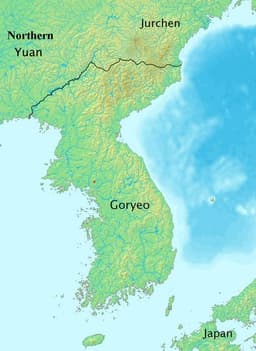
Gyeongjong of Goryeo
Emperor · Medieval
47.1Total
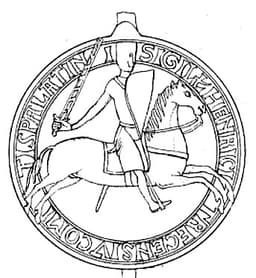
Henry II of Champagne
Emperor · Medieval
38.0Total
Basic Information
Born
955
1166
Died
981
1197
Era
Medieval
Medieval
Nationality
Korea
Kingdom of Jerusalem
Occupation
Emperor
Emperor
Civilization
Eastern
Western
Score Comparison
Military (10%)
20.0
10.2
Political (20%)
53.8
33.6
Influence (20%)
53.3
49.4
Legacy (20%)
47.5
37.5
Leadership (15%)
48.8
41.5
Strategy (15%)
45.0
39.6
TOTAL
47.1
38.0
Gyeongjong of Goryeo — Complete Timeline
976 AD
Institution of the Jeonsigwa Land SystemReform◆ Major
King Gyeongjong established the jeonsigwa, a land distribution system that allocated state-owned farmland to government officials based on their rank. This reform aimed to secure royal revenue and control over land, while providing a stable income for the bureaucracy.
Impact: nationalconstructive
Henry II of Champagne — Complete Timeline
1192 AD
Marriage to Isabella of JerusalemPolitical Action◆ Major
Henry II married Isabella I of Jerusalem, becoming king-consort of the Kingdom of Jerusalem. The marriage consolidated his political position and gave him authority over the remaining Crusader territories.
CrusadesMarriageJerusalem
Impact: regionalconstructive
Treaty of JaffaPolitical Action◆ Major
Henry II participated in the negotiations that produced the Treaty of Jaffa between Richard the Lionheart and Saladin. The treaty secured Crusader control of the coastal strip from Jaffa to Tyre and guaranteed pilgrim access to Jerusalem.
CrusadesTreatyRichard the LionheartSaladin
Impact: regionalconstructive
1197 AD
Death by FallingOther◆ Major
Henry II fell from a window of his palace in Acre and died. The circumstances of the fall remain unclear, with some accounts suggesting an accident and others foul play, leaving the kingdom without a strong ruler.
CrusadesDeathAccident
Impact: regionaltragic
Expert Analysis
Gyeongjong of Goryeo vs Henry II of Champagne
### The King Who Fell and the King Who Built
History, in its cruelest moments, often reduces a man’s entire reign to a single, absurd image. For Henry II of Champagne, that image is a man tumbling from a window in Acre, his life cut short by a fall so sudden and inexplicable that it feels like a dark joke. For Gyeongjong of Goryeo, the image is far more sober: a king seated in his court, unrolling a scroll that would redraw the economic map of his kingdom. One ruler is remembered for how he died; the other, for how he governed. What separates a footnote from a foundation? The answer lies not in the length of their reigns, but in the depth of their ambition.
### Origins
Gyeongjong was born into the furnace of Korean unification. His father, King Gwangjong, had purged the old aristocracy and freed slaves to consolidate power, leaving his son a state both stronger and more volatile. The young prince grew up in a court where loyalty was a currency that could be minted or destroyed overnight. In contrast, Henry II of Champagne was born a French count, a scion of the House of Blois, a family more accustomed to jousting tournaments than throne rooms. His world was one of chivalric codes and Crusader fever, where a man’s worth was measured by his horse and his sword. Where Gyeongjong inherited a kingdom in need of a ledger, Henry inherited a world in need of a hero.
### Rise to Power
Gyeongjong ascended the throne in 975 without a single dramatic battle. His path was one of inheritance and patience. He had watched his father’s ruthless reforms and understood that power in Goryeo was not won by the sword alone, but by the careful management of land and men. Henry’s rise was more theatrical. In 1192, he married Isabella I of Jerusalem, a queen whose crown was as much a political chess piece as a symbol of faith. The marriage was a masterstroke of diplomacy, placing a French count at the head of a Crusader kingdom. But Henry did not conquer his throne; he married into it, and the fragility of that foundation would define his reign.
### Leadership & Governance
Here, the two kings diverge as sharply as winter and summer. Gyeongjong’s defining act was the *jeonsigwa* land system, instituted in 976. This was not a flashy reform—no cavalry charges, no sieges—but it was profound. By allocating state-owned farmland according to official rank, Gyeongjong created a bureaucracy tied to the crown, not to hereditary estates. He turned loyalty into land and land into stability. His political score of 60.5 and leadership score of 73.5 reflect a man who understood that lasting power is built on systems, not symbols.
Henry II, by contrast, governed through presence and negotiation. His participation in the Treaty of Jaffa in 1192 placed him at the table with Richard the Lionheart and Saladin—a table where the fate of the Holy Land was carved. Yet his leadership score of 37.1 suggests a ruler more comfortable as a mediator than a monarch. He held Jerusalem together not through reform but through diplomacy, a thread that could snap at any moment. He was a caretaker king in a kingdom that needed a builder.
### Triumph & Tragedy
Gyeongjong’s triumph was quiet but enduring. The *jeonsigwa* system would outlive him, providing a template for land governance that stabilized Goryeo’s finances for decades. His tragedy was personal: he reigned only six years, dying at the age of 26, perhaps from illness or the strain of ruling a kingdom still healing from his father’s purges. He never saw the full fruit of his labor.
Henry’s triumph was the survival of the Kingdom of Jerusalem itself, a fragile Christian outpost surrounded by Saladin’s armies. But his tragedy was spectacular. In 1197, he fell from a window of his palace in Acre. Some accounts whisper of assassination, others of a simple accident. The truth is lost, but the image remains: a king plummeting through the air, his reign ending not with a battle cry but with a thud. His legacy score of 49.4 reflects a life that ended before its story could be written.
### Character & Destiny
Gyeongjong’s personality was that of a steward. He was cautious, methodical, and perhaps a little cold—a man who saw the kingdom as a machine that needed oiling, not a stage that needed drama. His military score of 55.1 is modest, for he was no conqueror. He was a reformer, and reformers seldom make for good legends. Henry, in contrast, was a courtier-king, charming and adaptable, but ultimately fragile. His strategy score of 32.0 suggests a man who reacted to events rather than shaped them. He was a leaf carried by the wind of Crusader politics, and a leaf, when it falls, is soon forgotten.
### Legacy
Gyeongjong’s name is etched into the bedrock of Korean history. The *jeonsigwa* system is taught in classrooms, a quiet monument to the idea that good governance is the most enduring form of conquest. His influence score of 72.7 and legacy score of 64.4 speak to a king who changed the structure of his society. Henry II of Champagne, by contrast, is a footnote in the grand narrative of the Crusades. He is remembered not for what he built, but for how he fell. His influence score of 65.6 is a ghost of the potential he never fulfilled.
### Conclusion
One king fell from a window; the other fell into the pages of history. Their stories remind us that power is not always loud. Gyeongjong’s reign was short, his battles few, and his name unfamiliar to most of the world. Yet he left behind a system that fed a kingdom for generations. Henry II of Champagne wore a crown, sat at the table of kings, and died in a moment of absurdity that has become his only epitaph. In the end, the question is not who was braver or richer, but who understood that a king’s true work is not in the glory of the moment, but in the structure of the future. Gyeongjong built. Henry fell. And history, as always, remembers the hands that shaped the stone.
Rankings
🥇
Gyeongjong of GoryeoLeader
Mil: 20.0Pol: 53.8Inf: 53.3
47.1
🥈
Henry II of Champagne
Mil: 10.2Pol: 33.6Inf: 49.4
38.0
+9.1 behind
How This Comparison Works
Algorithm
Each figure is scored on 6 dimensions (0—100 scale) based on structured historical data: Military (10%), Political (20%), Influence (20%), Legacy (20%), Leadership (15%), Strategy (15%). The weighted total produces the final ranking.
Data Sources
Scores are computed from structured sub-indicators in the database. Scale factors adjust for era (Ancient ×0.85, Modern ×1.0) and civilization size (Eastern ×1.05, Other ×0.80) to account for differences in population and military scale.
Maximum 3 Figures
Comparisons are limited to 2—3 figures to ensure readability and statistical meaningfulness.
Error Margins
±5 points per dimension — Sub-scores are derived from historical records with inherent uncertainty. Two figures within 5 points on a dimension should be considered roughly equivalent in that area.
Total Score Accuracy
±3 points overall — The weighted combination of 6 dimensions produces a total score with approximately ±3 points of uncertainty. Differences of less than 3 points are not statistically significant— the figures are effectively tied.
Known Limitations
- Historical records are incomplete and uneven across civilizations
- Figures from oral-tradition societies may be underrepresented
- Occupation labels can misclassify multi-role figures
- Scores measure capability and impact, not moral character
- Quantitative scoring is a comparison tool, not absolute truth
Capability Radar
Military (10%) — Battles & Warfare
Battles
5
10
Win Rate
5
10
Expansion
5
5
Political (20%) — Governance & Reform
Reform
70
20
Diplomacy
40
40
Economy
65
25
Influence (20%) — Cultural & Global Reach
Cultural
30
15
Global
20
10
Legacy (20%) — Historical Impact
Historical
45
15
Longevity
40
10
Leadership (15%) — Power & Stability
Tenure
55
30
Stability
50
20
Strategy (15%) — Tactics & Innovation
Strategy
5
10
Tactics
5
10
Reform
5
5
Similar Comparisons
Comments & Discussion
No comments yet. Be the first to share your thoughts!