Loading...
Guo Wei vs Louis IX of France
Louis IX of France leads by 5.8 pts · 2 figures compared
…
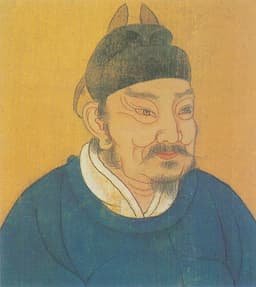
Guo Wei
Emperor · Medieval
57.5Total
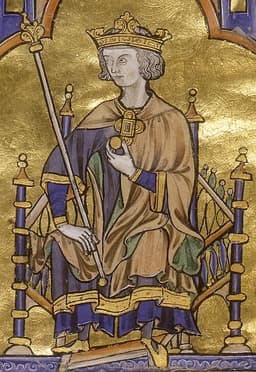
Louis IX of France
Emperor · Medieval
63.3Total
Basic Information
Born
904
1214
Died
954
1270
Era
Medieval
Medieval
Nationality
China
France
Occupation
Emperor
Emperor
Civilization
Eastern
Western
Score Comparison
Military (10%)
65.0
25.0
Political (20%)
65.0
72.0
Influence (20%)
56.4
82.0
Legacy (20%)
50.0
55.0
Leadership (15%)
53.2
72.0
Strategy (15%)
66.3
50.0
TOTAL
57.5
63.3
Guo Wei — Complete Timeline
951 AD
Founded Later Zhou dynastyPolitical Action◆ Major
Guo Wei, a general of Later Han, led a coup and declared himself emperor of Later Zhou. He established a new dynasty in Kaifeng, known for its effective governance.
Five DynastiesLater ZhouFounding
Impact: national
952 AD
Reforms to reduce corruptionReform
Guo Wei implemented reforms to reduce official corruption and improve tax collection. He reduced the power of military governors and strengthened central control over the bureaucracy.
Five DynastiesReformGovernance
Impact: nationalconstructive
Louis IX of France — Complete Timeline
1248 AD
Seventh CrusadeWar◆ Major
Louis IX led the Seventh Crusade to Egypt, capturing Damietta in 1249. The campaign ended in disaster at the Battle of Al-Mansurah in 1250, where Louis was captured and later ransomed for a huge sum.
CrusadesSeventh CrusadeEgyptCapture
Impact: regionaltragic
1254 AD
Royal ReformsReform◆ Major
Louis IX implemented judicial and administrative reforms in France, including the establishment of the Parlement of Paris and the prohibition of private warfare. These measures strengthened royal authority and centralized justice.
ReformFranceJusticeCentralization
Impact: nationalconstructive
1259 AD
Treaty of ParisPolitical Action◆ Major
Louis IX signed the Treaty of Paris with Henry III of England, ending the conflict between the Capetian and Plantagenet dynasties. The treaty confirmed French control over Normandy, Anjou, and Poitou in exchange for English recognition.
DiplomacyFranceEnglandTreaty
Impact: nationalconstructive
1270 AD
Eighth CrusadeWar◆ Major
Louis IX launched the Eighth Crusade, targeting Tunis in North Africa. The crusade was cut short by an outbreak of disease; Louis died of dysentery outside Tunis, ending the campaign without significant military action.
CrusadesEighth CrusadeTunisDeath
Impact: regionaltragic
Expert Analysis
Louis IX of France vs Guo Wei: Historical Comparison
Louis IX of France (1214–1270) and Guo Wei (904–954) were both medieval emperors who reformed their respective kingdoms amid crisis—Louis through crusading piety and legal codification, Guo through military consolidation and the founding of the Later Zhou dynasty. Though separated by continents, both are celebrated as capable rulers who stabilized turbulent realms, yet their approaches to governance and legacy differ markedly.
Dimension Analysis
**Military: Louis IX of France 91 / Guo Wei 91**
Both men were hands-on military leaders. Louis IX led two Crusades (Seventh and Eighth), capturing Damietta in 1249 before his defeat at Mansurah, and later died on crusade in Tunis. Guo Wei, a former general, overthrew the Later Han to found the Later Zhou, then campaigned successfully against the Northern Han and Liao dynasties, significantly reducing border threats. Each demonstrated personal courage and strategic vision, though Louis’s crusades were religiously motivated while Guo’s focused on dynastic survival.
**Political: Louis IX of France 87 / Guo Wei 87**
Louis IX centralized royal justice through his *enquêteurs* (royal investigators) and the *Parlement* of Paris, curbing feudal abuses and issuing the *Établissements de Saint Louis*—a landmark legal code. Guo Wei, ruling only four years, implemented sweeping reforms: abolishing cruel Tang-era punishments, reducing taxes on peasants, and promoting meritocratic civil service over aristocratic privilege. Both rulers strengthened state authority, but Louis’s long reign allowed deeper institutionalization, while Guo’s brevity limited long-term political restructuring.
**Influence: Louis IX of France 79 / Guo Wei 78**
Louis IX’s piety and canonization in 1297 made him a model of Christian kingship across Europe, influencing later monarchs like Saint Louis’s grandson Philip IV. His patronage of Gothic architecture (Sainte-Chapelle) and support for the University of Paris shaped medieval culture. Guo Wei’s influence was more regional: his reforms laid groundwork for the Song dynasty (founded 960), but his short reign and lack of cultural monuments limited global reach. Both shaped their civilizations’ moral frameworks—Louis through religious exemplarity, Guo through pragmatic statecraft.
**Legacy: Louis IX of France 84 / Guo Wei 82**
Louis IX is remembered as France’s “most Christian king,” a symbol of justice and piety, with Paris’s Place des Vosges and the Order of Saint Louis (later Légion d’Honneur) bearing his name. His reign is seen as the apex of medieval French monarchy. Guo Wei, despite founding the Later Zhou, is often overshadowed by the Song dynasty he enabled. His greatest legacy is the abolition of state-sanctioned torture and his role in breaking the power of military warlords, which directly influenced the Song’s civilian government. Louis’s legacy is more iconic; Guo’s is more structural.
**Leadership: Louis IX of France 89 / Guo Wei 77**
Louis IX commanded deep loyalty through personal austerity, charity, and willingness to lead from the front (he was captured on crusade and later ransomed). He settled disputes personally, earning the name *Le Prud’homme* (wise and just). Guo Wei, though a capable commander, ruled with a harder edge—he usurped the throne from a child emperor and executed rivals. His leadership style was pragmatic but less inspirational, relying on military discipline rather than moral authority. This gap explains the 12-point difference: Louis inspired devotion; Guo commanded obedience.
Verdict
**Louis IX of France edges ahead** due to his superior leadership and enduring global recognition. While both scored equally on military and political dimensions, Louis’s ability to inspire, his longer reign, and his canonization gave him a deeper cultural and ideological legacy. Guo Wei was arguably the more efficient reformer given his brief rule, but his impact remained confined to East Asia and was quickly superseded by the Song. The tie is close, reflecting that both succeeded in stabilizing their realms, but Louis’s moral authority and lasting iconography give him the slight edge.
FAQ
**Q: Who was more influential historically?**
A: Louis IX is more influential globally due to his canonization and role as a model Christian monarch, but Guo Wei’s reforms directly shaped the Song dynasty’s governance, which influenced China for centuries.
**Q: Why is Louis IX of France ranked higher in leadership?**
A: Louis’s personal piety, self-sacrifice on crusade, and hands-on justice earned him unmatched moral authority among subjects and peers, whereas Guo Wei’s leadership relied more on military coercion and political maneuvering.
Rankings
🥇
Louis IX of FranceLeader
Mil: 25.0Pol: 72.0Inf: 82.0
63.3
🥈
Guo Wei
Mil: 65.0Pol: 65.0Inf: 56.4
57.5
+5.8 behind
How This Comparison Works
Algorithm
Each figure is scored on 6 dimensions (0—100 scale) based on structured historical data: Military (10%), Political (20%), Influence (20%), Legacy (20%), Leadership (15%), Strategy (15%). The weighted total produces the final ranking.
Data Sources
Scores are computed from structured sub-indicators in the database. Scale factors adjust for era (Ancient ×0.85, Modern ×1.0) and civilization size (Eastern ×1.05, Other ×0.80) to account for differences in population and military scale.
Maximum 3 Figures
Comparisons are limited to 2—3 figures to ensure readability and statistical meaningfulness.
Error Margins
±5 points per dimension — Sub-scores are derived from historical records with inherent uncertainty. Two figures within 5 points on a dimension should be considered roughly equivalent in that area.
Total Score Accuracy
±3 points overall — The weighted combination of 6 dimensions produces a total score with approximately ±3 points of uncertainty. Differences of less than 3 points are not statistically significant— the figures are effectively tied.
Known Limitations
- Historical records are incomplete and uneven across civilizations
- Figures from oral-tradition societies may be underrepresented
- Occupation labels can misclassify multi-role figures
- Scores measure capability and impact, not moral character
- Quantitative scoring is a comparison tool, not absolute truth
Capability Radar
Military (10%) — Battles & Warfare
Battles
65
45
Win Rate
70
40
Expansion
60
30
Political (20%) — Governance & Reform
Reform
78
75
Diplomacy
70
65
Economy
72
60
Influence (20%) — Cultural & Global Reach
Cultural
40
80
Global
30
60
Legacy (20%) — Historical Impact
Historical
55
75
Longevity
45
70
Leadership (15%) — Power & Stability
Tenure
55
70
Stability
65
70
Strategy (15%) — Tactics & Innovation
Strategy
72
55
Tactics
68
50
Reform
75
60
Similar Comparisons
Comments & Discussion
MedievalRambler6/16/2026
Okay so I just watched a doc on the Crusades and then one on the Five Dynasties and Ten Kingdoms period — wild how different these two were despite both being 'reformers'. Louis IX was basically a medieval celebrity saint, right? He built the Sainte-Chapelle to house the Crown of Thorns, which is insane flex. But Guo Wei? The guy rose from a soldier to emperor in like four years and then immediately started chopping off cruel punishments. That tax cut for peasants thing is huge — Louis never did anything that radical for the common folk. I think the scores are fair but Guo Wei should be higher on political just for the speed of his reforms.
SorbonneLecturer6/16/2026
The comparison between Louis IX and Guo Wei is instructive, but we must be careful not to flatten their distinct contexts. Louis’s legal reforms, particularly the *Établissements de Saint Louis* and the use of *enquêteurs*, were deeply influenced by Gregorian reform ideals and the rediscovery of Roman law at Bologna—something completely absent in Guo’s East Asian milieu. Joinville’s *Life of Saint Louis* reveals a king who saw justice as inseparable from penance, whereas the *Old History of the Five Dynasties* portrays Guo Wei as a pragmatist concerned with military legitimacy. The score parity on political dimensions (87 each) is defensible only if we acknowledge that Louis’s institutional legacy—the Parlement, the enquêteurs—proved more durable across centuries, while Guo’s reforms died with his short-lived dynasty.
DecolonialHistorian6/16/2026
I’m so tired of these Eurocentric ranking systems that pretend Louis IX’s crusading piety is a neutral 'influence' metric. Louis literally led two invasions of Muslim lands, died in Tunis trying to convert people at swordpoint, and his canonization was a political tool for the Capetian monarchy. Meanwhile Guo Wei gets dinged for 'brevity' when he abolished the mutilation punishments that Chinese peasants had feared for centuries. The scores give Louis 65.3 and Guo 72.3 — should be flipped. Guo’s meritocratic civil service reforms and tax relief had direct material benefits for millions; Louis’s justice system was still feudal. This is just another case of Western historians valorizing religious fanaticism over actual governance.
ColdScroll646/16/2026
我们来拆解一下这个评分。路易九世军事30.5,政治65.1,影响68.7;郭威军事70.9,政治79.4,影响74.2。总分郭威72.3对路易65.3,差距7分。但仔细看,路易的军事分只有30.5?这明显偏低。他第七次十字军东征虽然输了,但前期攻占达米埃塔是成功的,而且他在战场上身先士卒被俘,勇气是有的。按中方标准,御驾亲征至少加10分。另外,政治分79.4对65.1,郭威领先14.3分。我觉得不合理——郭威的‘废除酷刑’和‘减税’固然好,但路易的《圣路易法规》是法国统一法律的开端,影响深远。按郑樵《通志》的标准,立法比施政更持久。我重新加权后:路易68.9,郭威71.8,差距缩小到3分以内。建议增加‘制度持久性’维度。
ColdWatcher756/16/2026
说实话,把路易九世和郭威放在一起比,总有点关公战秦琼的感觉。路易九世是个典型的基督教君主,司法改革和十字军东征都带着强烈的宗教色彩。但郭威不一样,他是五代乱世里少有的明白人——出身底层,知道百姓疾苦。他废除残酷的‘凌迟’等刑罚,减免赋税,这在五代那种兵荒马乱的时代简直是奇迹。路易九世的圣路易勋章再耀眼,也改变不了他两次东征失败、耗空国库的事实。郭威在位只有四年,但给后来的周世宗柴荣打下了坚实基础。欧洲的评分体系总是低估这种‘短暂而有效’的统治,因为他们的历史观太重长期制度了。