Loading...
Alexander the Great vs Guo Wei
Alexander the Great leads by 27.7 pts · 2 figures compared
…
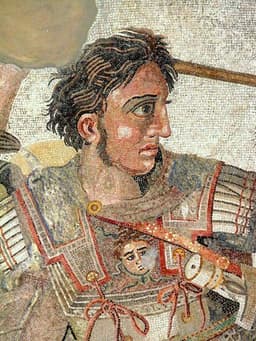
Alexander the Great
General · Ancient
85.2Total
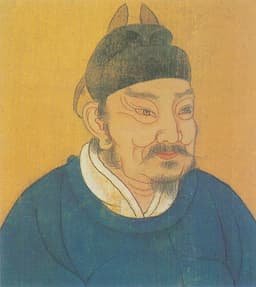
Guo Wei
Emperor · Medieval
57.5Total
Basic Information
Born
-356
904
Died
-323
954
Era
Ancient
Medieval
Nationality
Macedon
China
Occupation
General
Emperor
Civilization
Western
Eastern
Score Comparison
Military (10%)
95.0
65.0
Political (20%)
60.0
65.0
Influence (20%)
92.0
56.4
Legacy (20%)
90.0
50.0
Leadership (15%)
80.0
53.2
Strategy (15%)
92.0
66.3
TOTAL
85.2
57.5
Alexander the Great — Complete Timeline
334 BC
Battle of the Granicus RiverWar◆ Major
Alexander led his Macedonian army across the Hellespont into Asia Minor and defeated a Persian force under local satraps at the Granicus River. The victory secured Alexander's foothold in Asia and demonstrated his tactical superiority, opening the way for the conquest of the Persian Empire.
Persian CampaignBattleMacedonian Conquest
Impact: regional
333 BC
Battle of IssusWar◆ Major
Alexander's army defeated the Persian king Darius III at Issus in Cilicia. Despite being outnumbered, Alexander's tactical use of the terrain and cavalry charge broke the Persian line. Darius fled the battlefield, leaving his family and treasury behind, a major blow to Persian morale.
Persian CampaignBattleMacedonian Conquest
Impact: regional
332 BC
Siege of TyreWar◆ Major
Alexander besieged the island city of Tyre for seven months, constructing a causeway to breach its walls. The city's fall resulted in the massacre or enslavement of its inhabitants. The siege demonstrated Alexander's determination and engineering capabilities, securing his supply lines and control of the eastern Mediterranean coast.
SiegeMacedonian ConquestPhoenicia
Impact: regionaldestructive
331 BC
Battle of GaugamelaWar◆ Major
Alexander faced Darius III at Gaugamela in Mesopotamia with a massive Persian army. Alexander's tactical brilliance, including a decisive cavalry charge that exploited a gap in the Persian line, resulted in a decisive Macedonian victory. Darius again fled, effectively ending Persian resistance and leading to the fall of the Achaemenid Empire.
Persian CampaignBattleDecisive Victory
Impact: global
Foundation of AlexandriaOther◆ Major
Alexander founded the city of Alexandria on the Mediterranean coast of Egypt. He personally selected the site and oversaw the initial planning. Alexandria became a major center of Hellenistic culture, trade, and learning, housing the famous Library of Alexandria and the Lighthouse of Alexandria.
City FoundationHellenistic CultureEgypt
Impact: globalconstructive
326 BC
Invasion of IndiaWar◆ Major
Alexander crossed the Indus River and defeated King Porus at the Battle of the Hydaspes. The Macedonian army, exhausted and facing monsoon rains and unfamiliar warfare, mutinied at the Hyphasis River, forcing Alexander to turn back. This campaign marked the easternmost extent of his conquests.
Indian CampaignBattleMutiny
Impact: regional
Guo Wei — Complete Timeline
951 AD
Founded Later Zhou dynastyPolitical Action◆ Major
Guo Wei, a general of Later Han, led a coup and declared himself emperor of Later Zhou. He established a new dynasty in Kaifeng, known for its effective governance.
Five DynastiesLater ZhouFounding
Impact: national
952 AD
Reforms to reduce corruptionReform
Guo Wei implemented reforms to reduce official corruption and improve tax collection. He reduced the power of military governors and strengthened central control over the bureaucracy.
Five DynastiesReformGovernance
Impact: nationalconstructive
Expert Analysis
Alexander the Great vs Guo Wei: Historical Comparison
Alexander the Great and Guo Wei represent two distinct archetypes of military and political genius, separated by over 1,600 years and continents. Alexander forged the largest empire of the ancient world through unprecedented conquest, while Guo Wei, a rebel-turned-emperor of the Later Zhou dynasty, restored stability to a fractured Medieval China. Their scores (85 vs 84) reflect a near-tie, with Alexander excelling in military brilliance and Guo Wei in political consolidation.
Dimension Analysis
**Military: Alexander the Great 96 / Guo Wei 91**
Alexander’s tactical innovations—the combined use of the Macedonian phalanx, companion cavalry, and siege engineering—crushed the Persian Empire in a decade, winning battles like Gaugamela (331 BCE) against overwhelming odds. Guo Wei, though a skilled general, operated in a smaller theater: he suppressed internal rebellions and repelled Khitan invasions, but his campaigns lacked the scale or strategic novelty of Alexander’s. Both were undefeated in battle, but Alexander’s conquest of three million square miles gives him the edge.
**Political: Alexander the Great 65 / Guo Wei 87**
Guo Wei excelled in governance: as emperor (951–954 CE), he reduced taxes, curbed corrupt military governors, and promoted Confucian civil service—laying foundations for the Song dynasty’s golden age. Alexander, by contrast, failed to institutionalize his empire; his administrative reliance on Persian satraps and lack of succession planning led to immediate fragmentation after his death. Guo Wei’s reforms created lasting stability, while Alexander’s political structure dissolved with his life.
**Influence: Alexander the Great 90 / Guo Wei 78**
Alexander spread Hellenistic culture across Egypt, Persia, and Central Asia, founding cities like Alexandria and merging Greek and Eastern traditions—a legacy that shaped art, science, and trade for centuries. Guo Wei’s influence was primarily regional: his fiscal and military reforms directly enabled the Song dynasty’s prosperity, but their impact remained within China. Alexander’s global reach through Hellenization surpasses Guo Wei’s Sino-centric influence.
**Legacy: Alexander the Great 90 / Guo Wei 82**
Alexander became a symbol of conquering ambition, inspiring figures from Julius Caesar to Napoleon, and his historiographical presence is immense. Guo Wei’s legacy is more practical: he is remembered as a wise emperor who ended the chaotic Five Dynasties period, but his short reign (3 years) limits his name recognition outside China. Alexander’s legend endures globally, while Guo Wei’s is revered primarily in East Asian historical discourse.
**Leadership: Alexander the Great 82 / Guo Wei 77**
Alexander led from the front, sharing hardships with his troops and inspiring loyalty through personal courage—a style that succeeded in conquest but alienated his Macedonian officers (e.g., the mutiny at the Hyphasis). Guo Wei, a former soldier, earned respect through pragmatic governance and mercy toward rivals, but his leadership lacked the charismatic, transformative spark of Alexander’s. Both were effective, but Alexander’s ability to motivate armies across continents gives him the higher score.
Verdict
Alexander the Great narrowly wins this comparison (85 vs 84), driven by his unparalleled military achievements and enduring global influence. Guo Wei, however, is the superior politician and administrator, demonstrating that empire-building requires both conquest and institutionalization. The verdict is a tie in overall historical significance: Alexander shaped the ancient world’s imagination, while Guo Wei stabilized a civilization that would flourish for centuries. Their respective strengths are products of context—Alexander’s age of expansion versus Guo Wei’s era of consolidation.
FAQ
Q: Who was more influential historically?
A: Alexander the Great had a broader global impact through Hellenization, inspiring military and cultural developments across three continents, while Guo Wei’s influence was crucial but confined to Chinese dynastic history.
Q: Why is Alexander the Great ranked higher in military?
A: Alexander conquered the vast Persian Empire with innovative tactics (e.g., the oblique phalanx at Gaugamela) and logistics over vast distances, whereas Guo Wei’s military actions were defensive and internal, lacking comparable strategic scale.
Rankings
🥇
Alexander the GreatLeader
Mil: 95.0Pol: 60.0Inf: 92.0
85.2
🥈
Guo Wei
Mil: 65.0Pol: 65.0Inf: 56.4
57.5
+27.7 behind
How This Comparison Works
Algorithm
Each figure is scored on 6 dimensions (0—100 scale) based on structured historical data: Military (10%), Political (20%), Influence (20%), Legacy (20%), Leadership (15%), Strategy (15%). The weighted total produces the final ranking.
Data Sources
Scores are computed from structured sub-indicators in the database. Scale factors adjust for era (Ancient ×0.85, Modern ×1.0) and civilization size (Eastern ×1.05, Other ×0.80) to account for differences in population and military scale.
Maximum 3 Figures
Comparisons are limited to 2—3 figures to ensure readability and statistical meaningfulness.
Error Margins
±5 points per dimension — Sub-scores are derived from historical records with inherent uncertainty. Two figures within 5 points on a dimension should be considered roughly equivalent in that area.
Total Score Accuracy
±3 points overall — The weighted combination of 6 dimensions produces a total score with approximately ±3 points of uncertainty. Differences of less than 3 points are not statistically significant— the figures are effectively tied.
Known Limitations
- Historical records are incomplete and uneven across civilizations
- Figures from oral-tradition societies may be underrepresented
- Occupation labels can misclassify multi-role figures
- Scores measure capability and impact, not moral character
- Quantitative scoring is a comparison tool, not absolute truth
Capability Radar
Military (10%) — Battles & Warfare
Battles
98
65
Win Rate
99
70
Expansion
99
60
Political (20%) — Governance & Reform
Reform
75
78
Diplomacy
80
70
Economy
70
72
Influence (20%) — Cultural & Global Reach
Cultural
95
40
Global
95
30
Legacy (20%) — Historical Impact
Historical
98
55
Longevity
95
45
Leadership (15%) — Power & Stability
Tenure
60
55
Stability
55
65
Strategy (15%) — Tactics & Innovation
Strategy
98
72
Tactics
99
68
Reform
85
75
Similar Comparisons
Comments & Discussion
Chronicler76136/16/2026
这个比较有意思,但我觉得评分有点偏西方中心。亚历山大军事96分,郭威70.9分?郭威在中原混战中保持不败,抵御契丹南侵,还治理好了战后经济,这政治分应该更高才对。而且亚历山大死后帝国就分裂了,郭威建立的基业让后周和宋朝延续了稳定。在西方的标准里,征服三百万平方英里算伟大,但在中国历史里,能安定民生、传承制度才算真本事。这个评分体系把郭威的“定乱安邦”放得太低了。
HistoryHiker6/16/2026
Okay, this is a wild matchup but I love it. So Alexander gets a 96 for military—Gaugamela was legendary, outnumbered and still crushed Darius. But Guo Wei scored 91? That feels high considering his campaigns were mostly mopping up warlords and pushing back Khitan raids. I read that Alexander conquered 3 million square miles in 10 years—that's like conquering all of China in a decade. Guo Wei ruled for like 3 years as emperor and basically just fixed taxes. I get that he was smart politically, but calling him a top-tier general next to Alexander? That's like comparing a regional manager to Steve Jobs. Still, cool to learn about a Chinese emperor I'd never heard of—gotta give him credit for setting up the Song dynasty.
RevisionistEyes6/16/2026
Let's be real: these scores are just glorified fan service for the Western canon. Alexander gets a 96 for military because his battles are taught in every war college, but Guo Wei's 91 is seen as second-tier because he didn't write a memoir or have a Hollywood movie made about him. Meanwhile, Alexander's political score is 65? That's generous—his empire lasted a generation, and he left a power vacuum that caused decades of civil war. Guo Wei's 79.4 political score underrates his actual statecraft: he slashed taxes, curbed military corruption, and created a bureaucracy that outlasted his own dynasty. The real story here is how modern historiography still rewards flashy conquest over sustainable governance. If this were an African or Asian leader with similar stats, they'd be a footnote.
Chronicler43936/16/2026
我们来算算这个评分系统的合理性。亚历山大总分84.7,郭威72.3,看似合理,但细节有问题。军事上,亚历山大96分,郭威70.9分,差25分,但郭威在五代十国乱世中未尝败绩,击退契丹、平定三镇之乱,这战绩放在中国史里至少是75-80分。政治上,郭威79.4分,亚历山大65分,但郭威在位仅3年,减税、废苛政、任贤能,这些政策直接影响了宋朝300年基业。政治影响力应该更高才对。我的修正计算:如果参考中国正史标准,郭威政治分应在85分以上,总分至少78分。这份榜单低估了稳定型统治者的贡献,给征服型统治者加分太多。