Loading...
This comparison has not been analyzed yet.
One-time AI generation (~1 minute). Scores and timeline are already available below.
Guo Wei vs John II of Portugal
John II of Portugal leads by 6.2 pts · 2 figures compared
…
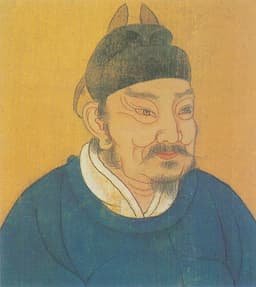
Guo Wei
Emperor · Medieval
57.5Total
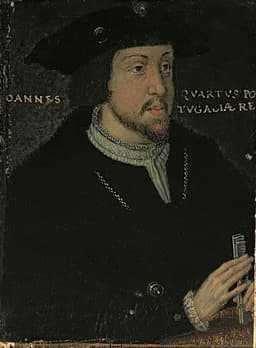
John II of Portugal
Emperor · Medieval
63.7Total
Basic Information
Born
904
1455
Died
954
1495
Era
Medieval
Medieval
Nationality
China
Portugal
Occupation
Emperor
Emperor
Civilization
Eastern
Western
Score Comparison
Military (10%)
65.0
50.0
Political (20%)
65.0
72.0
Influence (20%)
56.4
65.0
Legacy (20%)
50.0
65.0
Leadership (15%)
53.2
66.0
Strategy (15%)
66.3
55.0
TOTAL
57.5
63.7
Guo Wei — Complete Timeline
951 AD
Founded Later Zhou dynastyPolitical Action◆ Major
Guo Wei, a general of Later Han, led a coup and declared himself emperor of Later Zhou. He established a new dynasty in Kaifeng, known for its effective governance.
Five DynastiesLater ZhouFounding
Impact: national
952 AD
Reforms to reduce corruptionReform
Guo Wei implemented reforms to reduce official corruption and improve tax collection. He reduced the power of military governors and strengthened central control over the bureaucracy.
Five DynastiesReformGovernance
Impact: nationalconstructive
John II of Portugal — Complete Timeline
1483 AD
Suppression of the Portuguese nobilityPolitical Action◆ Major
John II executed the Duke of Braganza for conspiracy and later personally stabbed the Duke of Viseu to death. These actions crushed the power of the high nobility, centralizing royal authority and eliminating internal opposition to his policies.
Nobility PurgeCentralizationPolitical Violence
Impact: nationaldestructive
1484 AD
Rejection of Columbus's proposalPolitical Action
John II's committee of experts rejected Christopher Columbus's proposal for a westward voyage to Asia, judging the distance estimates to be inaccurate. This decision led Columbus to seek sponsorship from Spain, resulting in the Spanish discovery of the Americas.
Age of DiscoveryColumbusNavigation
Impact: global
1488 AD
Discovery of the Cape of Good HopeInvention
John II sponsored Bartolomeu Dias's expedition that rounded the southern tip of Africa, naming it the Cape of Good Hope. This proved that a sea route to the Indian Ocean was possible, opening the way for future voyages to India.
Age of DiscoveryNavigationExploration
Impact: globalconstructive
1494 AD
Treaty of TordesillasPolitical Action
John II negotiated the Treaty of Tordesillas with Spain, dividing the non-European world along a meridian 370 leagues west of the Cape Verde islands. This agreement secured Portuguese control over the route to India and later Brazil, shaping colonial boundaries for centuries.
TreatyColonial DivisionAge of Discovery
Impact: globalconstructive
1495 AD
Establishment of the Portuguese India ArmadaPolitical Action◆ Major
John II commissioned the construction of a fleet and the preparation of a voyage to India under Vasco da Gama, though he died before the expedition departed. His planning and support for exploration laid the foundation for Portugal's maritime empire in Asia.
Age of DiscoveryNavigationExploration
Impact: globalconstructive
This comparison has not been analyzed yet.
One-time AI generation (~1 minute). Scores and timeline are already available below.
Rankings
🥇
John II of PortugalLeader
Mil: 50.0Pol: 72.0Inf: 65.0
63.7
🥈
Guo Wei
Mil: 65.0Pol: 65.0Inf: 56.4
57.5
+6.2 behind
How This Comparison Works
Algorithm
Each figure is scored on 6 dimensions (0—100 scale) based on structured historical data: Military (10%), Political (20%), Influence (20%), Legacy (20%), Leadership (15%), Strategy (15%). The weighted total produces the final ranking.
Data Sources
Scores are computed from structured sub-indicators in the database. Scale factors adjust for era (Ancient ×0.85, Modern ×1.0) and civilization size (Eastern ×1.05, Other ×0.80) to account for differences in population and military scale.
Maximum 3 Figures
Comparisons are limited to 2—3 figures to ensure readability and statistical meaningfulness.
Error Margins
±5 points per dimension — Sub-scores are derived from historical records with inherent uncertainty. Two figures within 5 points on a dimension should be considered roughly equivalent in that area.
Total Score Accuracy
±3 points overall — The weighted combination of 6 dimensions produces a total score with approximately ±3 points of uncertainty. Differences of less than 3 points are not statistically significant— the figures are effectively tied.
Known Limitations
- Historical records are incomplete and uneven across civilizations
- Figures from oral-tradition societies may be underrepresented
- Occupation labels can misclassify multi-role figures
- Scores measure capability and impact, not moral character
- Quantitative scoring is a comparison tool, not absolute truth
Capability Radar
Military (10%) — Battles & Warfare
Battles
65
45
Win Rate
70
50
Expansion
60
65
Political (20%) — Governance & Reform
Reform
78
75
Diplomacy
70
80
Economy
72
85
Influence (20%) — Cultural & Global Reach
Cultural
40
70
Global
30
75
Legacy (20%) — Historical Impact
Historical
55
85
Longevity
45
80
Leadership (15%) — Power & Stability
Tenure
55
70
Stability
65
65
Strategy (15%) — Tactics & Innovation
Strategy
72
70
Tactics
68
55
Reform
75
60
Similar Comparisons
Comments & Discussion
No comments yet. Be the first to share your thoughts!