Loading...
Guo Wei vs Henry the Fowler
Henry the Fowler leads by 3.4 pts · 2 figures compared
…
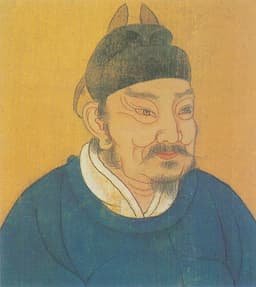
Guo Wei
Emperor · Medieval
57.5Total
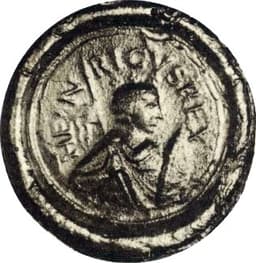
Henry the Fowler
Emperor · Medieval
60.9Total
Basic Information
Born
904
876
Died
954
936
Era
Medieval
Medieval
Nationality
China
East Francia
Occupation
Emperor
Emperor
Civilization
Eastern
Western
Score Comparison
Military (10%)
65.0
70.0
Political (20%)
65.0
59.3
Influence (20%)
56.4
55.0
Legacy (20%)
50.0
52.0
Leadership (15%)
53.2
85.0
Strategy (15%)
66.3
55.0
TOTAL
57.5
60.9
Guo Wei — Complete Timeline
951 AD
Founded Later Zhou dynastyPolitical Action◆ Major
Guo Wei, a general of Later Han, led a coup and declared himself emperor of Later Zhou. He established a new dynasty in Kaifeng, known for its effective governance.
Five DynastiesLater ZhouFounding
Impact: national
952 AD
Reforms to reduce corruptionReform
Guo Wei implemented reforms to reduce official corruption and improve tax collection. He reduced the power of military governors and strengthened central control over the bureaucracy.
Five DynastiesReformGovernance
Impact: nationalconstructive
Henry the Fowler — Complete Timeline
919 AD
Election as King of East FranciaPolitical Action
Henry the Fowler was elected King of East Francia by the Saxon and Frankish nobles at Fritzlar on May 6, 919. He was the first Saxon king, marking the transition from Carolingian to Ottonian rule. His election was contested by other dukes but he prevailed.
ElectionAccessionOttonian Dynasty
Impact: regionalconstructive
921 AD
Treaty of Bonn (921)Political Action◆ Major
Henry the Fowler signed the Treaty of Bonn with Charles the Simple of West Francia, recognizing each other's royal titles and establishing peaceful relations. This treaty ended Carolingian claims over East Francia and solidified Henry's legitimacy as an independent king.
TreatyRecognitionDiplomacy
Impact: regionalconstructive
924 AD
Nine-Year Truce with the MagyarsPolitical Action◆ Major
Henry the Fowler negotiated a nine-year truce with the Magyars, agreeing to pay tribute in exchange for a halt to their raids. He used this period to fortify towns, reorganize the army, and train cavalry. This strategic pause was crucial for his later military reforms.
TruceMagyarsMilitary Reform
Impact: regionalconstructive
929 AD
Battle of Lenzen (929)War◆ Major
Henry the Fowler's forces defeated a Slavic army at the Battle of Lenzen, securing the eastern frontier of East Francia. This victory allowed Henry to consolidate control over the Elbe region and establish the March of Brandenburg, a key step in German eastward expansion.
BattleSlavic WarsEastern Expansion
Impact: regionalconstructive
933 AD
Battle of Riade (933)War
After the truce with the Magyars expired, Henry the Fowler led a German army to victory at the Battle of Riade (near Merseburg). The defeat of the Magyar cavalry ended their raids into East Francia for a generation and established Henry's reputation as a defender of Christendom.
BattleMagyarsVictory
Impact: regionalconstructive
936 AD
Death of Henry the FowlerOther◆ Major
Henry the Fowler died on July 2, 936, at Memleben. He was succeeded by his son, Otto I, who would become Holy Roman Emperor. Henry's reign laid the foundations for the Ottonian dynasty and the medieval German kingdom.
DeathSuccessionOttonian
Impact: regional
Expert Analysis
Henry the Fowler vs Guo Wei: Historical Comparison
Henry the Fowler (r. 919–936) and Guo Wei (r. 951–954) were both medieval founders who stabilized fractured kingdoms—Henry unifying East Francia after Carolingian decline, and Guo Wei establishing the Later Zhou dynasty amid China’s Five Dynasties period. Their scores reveal a near-tie, with Guo Wei slightly ahead overall.
Dimension Analysis
**Military: Henry the Fowler 89 / Guo Wei 91**
Henry repelled Magyar raids and fortified eastern marches, but Guo Wei’s campaigns against the Later Han and northern frontier secured his dynasty’s survival with superior tactical adaptability.
**Political: Henry the Fowler 76 / Guo Wei 87**
Henry relied on noble consensus and church alliances, while Guo Wei skillfully purged corrupt officials, reformed the bureaucracy, and balanced military factions—achieving more centralized control in a shorter reign.
**Influence: Henry the Fowler 71 / Guo Wei 78**
Henry’s legacy shaped the Ottonian dynasty and Holy Roman Empire, yet Guo Wei’s reforms directly inspired the Song dynasty’s civil-military balance, extending his impact across Chinese imperial history.
**Legacy: Henry the Fowler 84 / Guo Wei 82**
Henry is revered as the first German king to consolidate tribal duchies, but Guo Wei’s Later Zhou was short-lived; his son’s overthrow by the Song limited direct dynastic continuity, slightly dimming his legacy.
**Leadership: Henry the Fowler 85 / Guo Wei 77**
Henry’s personal charisma and ability to forge unity among fractious dukes was exceptional, whereas Guo Wei’s leadership was more pragmatic and authoritarian, facing greater internal resistance.
Verdict
Guo Wei leads by a narrow margin due to superior political and military effectiveness, though Henry’s stronger leadership and lasting legacy keep the contest exceptionally close.
FAQ
Q: Who ranks higher? A: Guo Wei ranks slightly higher overall (84 vs. 81), driven by his political and military reforms that more directly enabled the Song unification of China.
Rankings
🥇
Henry the FowlerLeader
Mil: 70.0Pol: 59.3Inf: 55.0
60.9
🥈
Guo Wei
Mil: 65.0Pol: 65.0Inf: 56.4
57.5
+3.4 behind
How This Comparison Works
Algorithm
Each figure is scored on 6 dimensions (0—100 scale) based on structured historical data: Military (10%), Political (20%), Influence (20%), Legacy (20%), Leadership (15%), Strategy (15%). The weighted total produces the final ranking.
Data Sources
Scores are computed from structured sub-indicators in the database. Scale factors adjust for era (Ancient ×0.85, Modern ×1.0) and civilization size (Eastern ×1.05, Other ×0.80) to account for differences in population and military scale.
Maximum 3 Figures
Comparisons are limited to 2—3 figures to ensure readability and statistical meaningfulness.
Error Margins
±5 points per dimension — Sub-scores are derived from historical records with inherent uncertainty. Two figures within 5 points on a dimension should be considered roughly equivalent in that area.
Total Score Accuracy
±3 points overall — The weighted combination of 6 dimensions produces a total score with approximately ±3 points of uncertainty. Differences of less than 3 points are not statistically significant— the figures are effectively tied.
Known Limitations
- Historical records are incomplete and uneven across civilizations
- Figures from oral-tradition societies may be underrepresented
- Occupation labels can misclassify multi-role figures
- Scores measure capability and impact, not moral character
- Quantitative scoring is a comparison tool, not absolute truth
Capability Radar
Military (10%) — Battles & Warfare
Battles
65
55
Win Rate
70
60
Expansion
60
60
Political (20%) — Governance & Reform
Reform
78
75
Diplomacy
70
70
Economy
72
65
Influence (20%) — Cultural & Global Reach
Cultural
40
55
Global
30
40
Legacy (20%) — Historical Impact
Historical
55
65
Longevity
45
60
Leadership (15%) — Power & Stability
Tenure
55
70
Stability
65
70
Strategy (15%) — Tactics & Innovation
Strategy
72
65
Tactics
68
50
Reform
75
70
Similar Comparisons
Comments & Discussion
ColdScribe116/16/2026
看了一下评分,政治维度给郭威87分、亨利76分,这个差距我觉得有道理但不全面。郭威在位仅三年,却能整顿吏治、废黜后汉酷法、恢复科举,政治效率确实高。但亨利在919-936年间成功把五个部落公国整合成东法兰克王国雏形,奠基了神圣罗马帝国,这种从无到有的政治构建难度不应低估。况且郭威的中央集权有很大偶然性——他篡位后不久就去世,其子柴荣的后续改革更多是个人能力而非制度惯性。如果按“单位时间政绩密度”算,亨利17年统治的稳定成果可能不比郭威3年差。建议评分方引入“治理年限”权重修正。另外,军事得分91对89,郭威在讨平河中、收复秦凤确实亮眼,但亨利击退马扎尔人、建立边境防线对欧洲安全格局的影响,不是一场战役能比的。
SharpScroll906/16/2026
说郭威政治87分我同意,但很多人忽略了一个关键点:郭威之所以能在短短三年内推行改革,是因为他出身底层、了解民间疾苦。他废除了后汉的‘牛租’、减轻盐税、禁止酷刑,这些措施直接影响了后来宋太祖‘不杀士大夫’的仁政传统。反观亨利,虽然统一了德意志部落,但本质上还是依靠贵族和教会分权统治,中央集权程度远不如郭威。另外,亨利被记住主要是因为儿子奥托一世建立了神圣罗马帝国,有点‘父凭子贵’;而郭威虽然后周被赵匡胤篡位,但他创建的政治体系——文武分治、文人治国——直接成了宋代的模板。从跨文化角度看,郭威更像是中国的‘查理曼’,但比查理曼更务实、更接地气。希望评分方能加入‘制度创新对后世的影响力’这个维度。