Loading...
Guo Wei vs Gyeongjong of Goryeo
Guo Wei leads by 10.4 pts · 2 figures compared
…
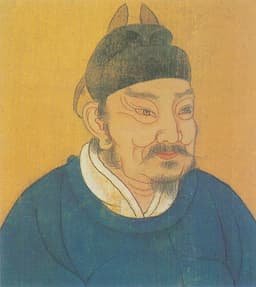
Guo Wei
Emperor · Medieval
57.5Total
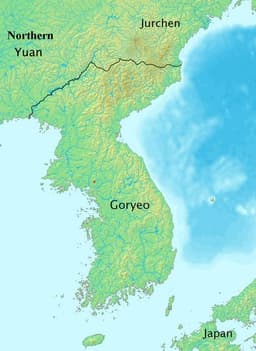
Gyeongjong of Goryeo
Emperor · Medieval
47.1Total
Basic Information
Born
904
955
Died
954
981
Era
Medieval
Medieval
Nationality
China
Korea
Occupation
Emperor
Emperor
Civilization
Eastern
Eastern
Score Comparison
Military (10%)
65.0
20.0
Political (20%)
65.0
53.8
Influence (20%)
56.4
53.3
Legacy (20%)
50.0
47.5
Leadership (15%)
53.2
48.8
Strategy (15%)
66.3
45.0
TOTAL
57.5
47.1
Guo Wei — Complete Timeline
951 AD
Founded Later Zhou dynastyPolitical Action◆ Major
Guo Wei, a general of Later Han, led a coup and declared himself emperor of Later Zhou. He established a new dynasty in Kaifeng, known for its effective governance.
Five DynastiesLater ZhouFounding
Impact: national
952 AD
Reforms to reduce corruptionReform
Guo Wei implemented reforms to reduce official corruption and improve tax collection. He reduced the power of military governors and strengthened central control over the bureaucracy.
Five DynastiesReformGovernance
Impact: nationalconstructive
Gyeongjong of Goryeo — Complete Timeline
976 AD
Institution of the Jeonsigwa Land SystemReform◆ Major
King Gyeongjong established the jeonsigwa, a land distribution system that allocated state-owned farmland to government officials based on their rank. This reform aimed to secure royal revenue and control over land, while providing a stable income for the bureaucracy.
Impact: nationalconstructive
Expert Analysis
Gyeongjong of Goryeo vs Guo Wei
# The Emperor and the Administrator
In the year 951, a grizzled general in northern China watched his soldiers place a yellow robe over his shoulders, the color of imperial sovereignty, while across the Yellow Sea, a boy of four was being groomed for a throne that would not test his sword arm but his patience with ledgers. Guo Wei, founder of the Later Zhou, and Gyeongjong of Goryeo, the Korean king who reformed land taxes, lived only a generation apart, yet their paths could not have diverged more sharply. One seized power through blood and betrayal; the other inherited it through bloodlines, then wielded a brush instead of a blade to shape his kingdom. Why did one man's life explode in coup and conquest, while the other's unfolded in quiet bureaucratic revolution? The answer lies not merely in their personalities but in the very different worlds that demanded different kinds of greatness.
Origins
Guo Wei was born in 904, into the chaos of late Tang China, when warlords carved up the empire like carrion. His father was a minor official killed in the turmoil, and young Guo grew up among soldiers, learning to read men's faces before he learned to read books. He rose through the ranks of the Shatuo Turk armies that dominated northern China, where loyalty was a currency that devalued by the hour. By contrast, Gyeongjong was born in 955, the grandson of Goryeo's founder, Wang Geon, who had unified the Korean peninsula through a careful blend of marriage alliances and military force. Gyeongjong's world was stable enough that a king could afford to think about land distribution rather than survival. The difference in their eras was fundamental: Guo Wei lived in a time when the state itself was a rumor, while Gyeongjong inherited a kingdom that already knew what it was.
Rise to Power
Guo Wei's ascent was a masterclass in survival. He served the Later Han dynasty as a general, crushing rebellions with brutal efficiency. But when the emperor died in 950 and a child took the throne, the court turned on him. Facing execution, Guo Wei did what any Five Dynasties general would do: he marched on the capital. In 951, his troops mutinied, draping him in imperial yellow, and the Later Zhou was born. The coup was swift, almost routine by the standards of the era—another dynasty, another general, another throne. Gyeongjong's rise was the opposite. He became king in 975 at age twenty, inheriting a realm that had existed for nearly sixty years. No rebellion needed. His challenge was not to seize power but to make it work efficiently, to solve the mundane problem of how to pay for government without bankrupting the peasantry.
Leadership & Governance
As emperor, Guo Wei moved with the decisiveness of a man who had seen too many thrones collapse. In 952, he launched reforms to root out corruption, dismissing officials who had grown fat on bribes and streamlining tax collection. He also curbed the power of the military aristocracy that had made and unmade dynasties, reducing the influence of the very generals who had elevated him. His political score of 79.4 reflects a ruler who understood that the sword must serve the law, not the other way around. Yet his military score of 70.9 shows he never forgot that in the Five Dynasties, a weak army meant death.
Gyeongjong's signature achievement was the *jeonsigwa* land system of 976, a reform that allocated state-owned farmland according to official rank. This was not flashy—no battles, no sieges—but it stabilized Goryeo's finances for generations. By tying land grants to bureaucratic position, he reduced the power of local magnates and created a loyal civil service. His political score of 60.5 is modest, but his influence score of 72.7 reveals the lasting impact of his administrative genius. Where Guo Wei slashed and burned, Gyeongjong built a machine that would run long after his death.
Triumph & Tragedy
Guo Wei's greatest triumph was not any single battle but the simple fact that he died in his bed in 954, having reigned for three years. In an era when emperors were murdered, overthrown, or driven to suicide, that was no small feat. His tragedy was the brevity of his rule—he never had time to fully consolidate his reforms, leaving his adopted son Chai Rong to complete the work. Gyeongjong's triumph was the *jeonsigwa*, a reform so elegant that it outlasted his reign. But his tragedy was a different kind of brevity: he died in 981 at just twenty-six, likely from illness, leaving a young son who would be dominated by powerful ministers. Both men built foundations, but neither lived to see the house completed.
Character & Destiny
Guo Wei was a pragmatist forged in fire. He trusted no one, which is why he survived. His personality—cautious, ruthless, but not cruel—shaped a reign focused on stability above all. He executed rivals but also pardoned common soldiers, understanding that loyalty must be earned. Gyeongjong, by contrast, was a product of the court, a man who knew that power in Goryeo flowed through edicts, not armies. His character was that of an administrator, patient and methodical. Destiny gave Guo Wei a sword and Gyeongjong a scroll, and each wielded his tool with equal determination.
Legacy
Guo Wei is remembered as one of the best rulers of the Five Dynasties, a brief bright spot in a dark age. His Later Zhou would fall to the Song dynasty just six years after his death, but his reforms laid the groundwork for the Song's golden age. His legacy score of 67.9 is modest, but historians recognize him as a transitional figure who proved that even in chaos, good governance was possible. Gyeongjong's legacy is more tangible: the *jeonsigwa* became the backbone of Goryeo's land system for centuries, a model of statecraft that influenced later Korean dynasties. His legacy score of 64.4 is similar, but his influence score of 72.7 hints at a deeper, quieter impact.
Conclusion
Standing at the edge of their lives, we see two men who answered the same question—how to rule well—with opposite answers. Guo Wei grabbed power with both hands and used it to build order from chaos. Gyeongjong accepted power as a gift and used it to build a system that needed no strongman. One was a firefighter, the other an architect. Their differences remind us that greatness is not a single mold but a response to the demands of time and place. In the end, both succeeded, not because they were perfect, but because they understood what their world required. And that, perhaps, is the deepest measure of a ruler.
Rankings
🥇
Guo WeiLeader
Mil: 65.0Pol: 65.0Inf: 56.4
57.5
🥈
Gyeongjong of Goryeo
Mil: 20.0Pol: 53.8Inf: 53.3
47.1
+10.4 behind
How This Comparison Works
Algorithm
Each figure is scored on 6 dimensions (0—100 scale) based on structured historical data: Military (10%), Political (20%), Influence (20%), Legacy (20%), Leadership (15%), Strategy (15%). The weighted total produces the final ranking.
Data Sources
Scores are computed from structured sub-indicators in the database. Scale factors adjust for era (Ancient ×0.85, Modern ×1.0) and civilization size (Eastern ×1.05, Other ×0.80) to account for differences in population and military scale.
Maximum 3 Figures
Comparisons are limited to 2—3 figures to ensure readability and statistical meaningfulness.
Error Margins
±5 points per dimension — Sub-scores are derived from historical records with inherent uncertainty. Two figures within 5 points on a dimension should be considered roughly equivalent in that area.
Total Score Accuracy
±3 points overall — The weighted combination of 6 dimensions produces a total score with approximately ±3 points of uncertainty. Differences of less than 3 points are not statistically significant— the figures are effectively tied.
Known Limitations
- Historical records are incomplete and uneven across civilizations
- Figures from oral-tradition societies may be underrepresented
- Occupation labels can misclassify multi-role figures
- Scores measure capability and impact, not moral character
- Quantitative scoring is a comparison tool, not absolute truth
Capability Radar
Military (10%) — Battles & Warfare
Battles
65
5
Win Rate
70
5
Expansion
60
5
Political (20%) — Governance & Reform
Reform
78
70
Diplomacy
70
40
Economy
72
65
Influence (20%) — Cultural & Global Reach
Cultural
40
30
Global
30
20
Legacy (20%) — Historical Impact
Historical
55
45
Longevity
45
40
Leadership (15%) — Power & Stability
Tenure
55
55
Stability
65
50
Strategy (15%) — Tactics & Innovation
Strategy
72
5
Tactics
68
5
Reform
75
5
Similar Comparisons
Comments & Discussion
WarhorseWeaver6/16/2026
Guo Wei wasn't some heroic founder; he was a warlord who happened to die before his regime collapsed. His Later Zhou lasted a pathetic four years after his death before being swallowed by Zhao Kuangyin—who used the same yellow robe trick! Meanwhile, Gyeongjong's land reforms made Goryeo stable enough to survive 400+ years. I'll take the quiet bureaucrat who built a system over the flashy general who built a house of cards any day.
读史老饕6/16/2026
别被郭威的"黄袍加身"骗了,这故事后来被赵匡胤照抄作业,可见五代武将夺权都一个套路。反观高丽景宗推行田柴科,直接把土地分给官僚巩固中央,高丽能扛住契丹骑兵靠的就是这套制度。一个只会copy政变剧本,一个原创改革纲领,高下立判。
SkepticalStat6/16/2026
"Gyeongjong's land reforms" sound nice in textbooks, but let's check the math. The 전시과 system gave land rights based on rank, not productivity—a bureaucratic nightmare. Guo Wei at least slashed taxes and curbed the hated "rental" land system that was bleeding peasants dry. One created a paper empire for aristocrats, the other actually tried to fix a broken economy. Reform means results, not just parchment.
画虎不成反类犬6/16/2026
说郭威是"英雄不问出处"的典范?他出身寒微不假,但屠戮前朝皇室、连幼童都不放过,这和五代的豺狼武夫有何区别?景宗虽幼年即位,至少懂得倚重双冀这样的能臣搞改革。专治乱世用重典?暴力只会催生更多暴力,高丽和平过渡才是真本事。
ClassicistCynic6/16/2026
You're all missing the context. Guo Wei operated in the Five Dynasties meat grinder where every emperor was dead within a decade—you can't legislate your way out of that chaos. Gyeongjong had the luxury of a unified peninsula and a dynasty that already had legitimacy. Put Gyeongjong in Kaifeng in 951, and he'd be dead in a month. Guo Wei's harshness was adaptation, not barbarism. Don't moralize survival.