Loading...
Gundobad vs Seti I
Seti I leads by 10.8 pts · 2 figures compared
…

Gundobad
Emperor · Ancient
47.5Total
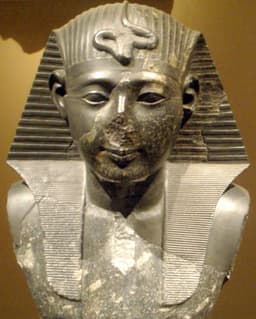
Seti I
Emperor · Ancient
58.3Total
Basic Information
Born
452
-1290
Died
516
-1279
Era
Ancient
Ancient
Nationality
Burgundy
Egypt
Occupation
Emperor
Emperor
Civilization
Western
Middle Eastern
Score Comparison
Military (10%)
25.0
74.7
Political (20%)
62.7
62.7
Influence (20%)
51.8
56.7
Legacy (20%)
45.8
54.0
Leadership (15%)
40.0
53.2
Strategy (15%)
51.7
58.0
TOTAL
47.5
58.3
Gundobad — Complete Timeline
486 AD
Murder of his brother Chilperic IIPolitical Action◆ Major
Gundobad killed his brother Chilperic II, a fellow Burgundian king, and exiled Chilperic's family. This act consolidated Gundobad's sole rule over the Burgundians and eliminated a rival claimant to the throne.
RegicidePower ConsolidationBurgundy
Impact: nationaldestructive
500 AD
Defeat by Clovis I at the Battle of DijonWar◆ Major
Gundobad was defeated by the Frankish king Clovis I at the Battle of Dijon. He was forced to pay tribute and acknowledge Frankish suzerainty, though he retained his throne and later recovered his independence.
BattleFrankish ExpansionBurgundy
Impact: regional
Issuance of the Lex GundobadaReform◆ Major
King Gundobad promulgated the Lex Gundobada, a legal code for the Burgundian kingdom. This law code combined Roman legal principles with Germanic customary law, governing both Burgundians and Romans in his realm.
Law CodeBurgundian KingdomLegal Reform
Impact: regionalconstructive
Seti I — Complete Timeline
1290 BC
Establishment of the 19th Dynasty's Power BasePolitical Action◆ Major
Seti I, son of Ramesses I, solidified the 19th Dynasty's rule by strengthening the military and administrative structures. He appointed his son Ramesses II as co-regent, ensuring a smooth succession and laying the foundation for Ramesses II's long reign.
DynastySuccessionRamesses II
Impact: nationalconstructive
1288 BC
Military Campaigns in Syria and LibyaWar◆ Major
Seti I led military campaigns into Syria to reassert Egyptian control over Canaan and against Libyan tribes in the west. He recaptured the city of Kadesh and defeated the Libyans, securing Egypt's borders and restoring its military reputation.
MilitarySyriaLibya
Impact: regional
1285 BC
Construction of the Temple of AbydosCultural◆ Major
Seti I built the magnificent Temple of Abydos, dedicated to Osiris. The temple features exquisite reliefs and the famous King List, which records the names of 76 pharaohs from Menes to Seti I, providing a crucial chronological record.
ArchitectureAbydosKing List
Impact: globalconstructive
1280 BC
Construction of the Great Hypostyle Hall at Karnak (Completion)Cultural◆ Major
Seti I completed the Great Hypostyle Hall at Karnak, begun by Horemheb. The hall's 134 columns are covered with reliefs depicting Seti I's military victories and religious ceremonies, making it a masterpiece of New Kingdom architecture.
ArchitectureKarnakHypostyle Hall
Impact: globalconstructive
Expert Analysis
Origins
Gundobad (c. 452–516 AD) was the king of the Burgundians, a Germanic tribe that settled in the region of modern-day southeastern France. He was the son of King Gondioc and likely received a Roman-influenced education, as the Burgundians were foederati of the Roman Empire. Gundobad rose to prominence amid the collapse of Roman authority in Gaul. Seti I (c. 1323–1279 BC) was the second pharaoh of the 19th Dynasty of Egypt. He was the son of Ramesses I, a vizier who became pharaoh, and Queen Sitre. Seti I was groomed for military command from youth, as his father relied on the army to secure the dynasty.
Rise to Power
Gundobad became king of the Burgundians around 473 AD, initially co-ruling with his brothers Chilperic II, Godomar, and Godegisel. To consolidate power, he murdered Chilperic II in 486 AD and exiled his family, becoming sole ruler. He also allied with the Visigoths and later with the Franks. Seti I ascended the throne in 1290 BC after his father's brief reign. He immediately launched campaigns to reassert Egyptian control over Canaan and Libya, securing trade routes and resources. He also appointed his son Ramesses II as co-regent to ensure dynastic continuity.
Leadership & Governance
Gundobad's most enduring act was issuing the Lex Gundobada (c. 502 AD), a legal code that blended Roman law with Germanic customs. This code provided a framework for settling disputes and established penalties for crimes, helping integrate Burgundian and Gallo-Roman populations. However, his governance was marred by brutality, such as the murder of his brother. Seti I focused on building projects and military restoration. He completed the Great Hypostyle Hall at Karnak, a massive architectural achievement, and constructed the Temple of Abydos with its famous King List. His military campaigns were methodical, recapturing Kadesh and quelling Libyan incursions.
Triumph & Tragedy
Gundobad's greatest success was the Lex Gundobada, which survived as a legal code for centuries. His failure was his defeat by Clovis I at the Battle of Dijon (c. 500 AD), forcing him to pay tribute and acknowledge Frankish suzerainty. This diminished Burgundian independence. Seti I's triumph was the restoration of Egyptian prestige abroad and his monumental architecture. His tragedy was that his son Ramesses II overshadowed him, and many of his campaigns were later reversed. Seti I also failed to permanently secure Egyptian control over Syria, as the Hittites regained influence.
Character & Destiny
Gundobad was pragmatic but ruthless, prioritizing consolidation of power over moral considerations. His murder of his brother set a precedent for dynastic violence among the Burgundians. His decision to issue a written law code showed a forward-thinking approach to governance. Seti I was a capable military leader and builder, but his personality is less vivid in the historical record. He appears methodical and devoted to tradition, as seen in his temple reliefs. His destiny was to be a transitional figure between his father and his famous son.
Legacy
Gundobad's Lex Gundobada influenced later legal codes in Burgundy and beyond, remaining in use until the 9th century. His kingdom, however, was absorbed by the Franks after his death. Seti I's legacy is more visible: the Temple of Abydos and the Hypostyle Hall at Karnak are major tourist attractions. His military campaigns laid the groundwork for Ramesses II's later successes. In scores, Seti I leads with 58.3 total versus Gundobad's 47.5, with significant gaps in military (74.7 vs 25.0) and strategy (58.0 vs 51.7).
Conclusion
While Gundobad's legal code was innovative, Seti I had greater overall impact due to his military achievements and monumental architecture. Seti I's scores are higher across most categories, reflecting his more substantial contributions to history. Gundobad's influence was regionally important but ultimately transient, whereas Seti I's constructions endure as cultural heritage. Therefore, Seti I is the more significant figure.
Rankings
🥇
Seti ILeader
Mil: 74.7Pol: 62.7Inf: 56.7
58.3
🥈
Gundobad
Mil: 25.0Pol: 62.7Inf: 51.8
47.5
+10.8 behind
How This Comparison Works
Algorithm
Each figure is scored on 6 dimensions (0—100 scale) based on structured historical data: Military (10%), Political (20%), Influence (20%), Legacy (20%), Leadership (15%), Strategy (15%). The weighted total produces the final ranking.
Data Sources
Scores are computed from structured sub-indicators in the database. Scale factors adjust for era (Ancient ×0.85, Modern ×1.0) and civilization size (Eastern ×1.05, Other ×0.80) to account for differences in population and military scale.
Maximum 3 Figures
Comparisons are limited to 2—3 figures to ensure readability and statistical meaningfulness.
Error Margins
±5 points per dimension — Sub-scores are derived from historical records with inherent uncertainty. Two figures within 5 points on a dimension should be considered roughly equivalent in that area.
Total Score Accuracy
±3 points overall — The weighted combination of 6 dimensions produces a total score with approximately ±3 points of uncertainty. Differences of less than 3 points are not statistically significant— the figures are effectively tied.
Known Limitations
- Historical records are incomplete and uneven across civilizations
- Figures from oral-tradition societies may be underrepresented
- Occupation labels can misclassify multi-role figures
- Scores measure capability and impact, not moral character
- Quantitative scoring is a comparison tool, not absolute truth
Capability Radar
Military (10%) — Battles & Warfare
Battles
30
70
Win Rate
35
75
Expansion
40
65
Political (20%) — Governance & Reform
Reform
70
60
Diplomacy
65
65
Economy
50
60
Influence (20%) — Cultural & Global Reach
Cultural
40
70
Global
30
55
Legacy (20%) — Historical Impact
Historical
50
65
Longevity
45
60
Leadership (15%) — Power & Stability
Tenure
60
55
Stability
55
65
Strategy (15%) — Tactics & Innovation
Strategy
45
70
Tactics
40
65
Reform
25
60
Similar Comparisons
Comments & Discussion
No comments yet. Be the first to share your thoughts!