Loading...
Gonzalo Fernandez de Cordoba vs Yi Seong-gye
Gonzalo Fernandez de Cordoba leads by 2.8 pts · 2 figures compared
…

Gonzalo Fernandez de Cordoba
General · Medieval
78.6Total
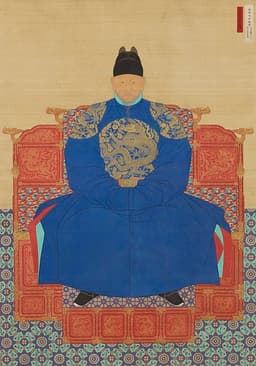
Yi Seong-gye
Emperor · Medieval
75.8Total
Basic Information
Born
1453
1335
Died
1515
1408
Era
Medieval
Medieval
Nationality
Spain
Korea
Occupation
General
Emperor
Civilization
Western
Eastern
Score Comparison
Military (10%)
78.5
74.7
Political (20%)
62.7
70.0
Influence (20%)
80.0
88.0
Legacy (20%)
82.0
75.0
Leadership (15%)
85.0
68.0
Strategy (15%)
80.5
69.1
TOTAL
78.6
75.8
Gonzalo Fernandez de Cordoba — Complete Timeline
1503 AD
Battle of CerignolaWar◆ Major
Cordoba's Spanish army defeated the French at Cerignola, Italy. Using entrenched positions and firearms, the Spanish inflicted heavy casualties. This was the first major battle won primarily by arquebus fire.
Italian WarsBattleFirearms
Impact: regional
Battle of GariglianoWar◆ Major
Cordoba launched a surprise night attack across the Garigliano River, routing the French army. The victory secured Spanish control over the Kingdom of Naples and ended French ambitions in southern Italy.
Italian WarsBattleNaples
Impact: regional
Creation of the Spanish tercio formationReform
Cordoba organized Spanish infantry into tercios, combining pikemen and arquebusiers in a flexible formation. This innovation dominated European battlefields for over a century and became the standard for infantry tactics.
Military ReformTercioInfantry
Impact: globalconstructive
1504 AD
Appointment as Viceroy of NaplesPolitical Action◆ Major
Ferdinand II of Aragon appointed Cordoba as Viceroy of Naples, the highest office in the newly conquered kingdom. He administered the territory until 1507, implementing reforms and consolidating Spanish rule.
AdministrationNaplesViceroyalty
Impact: regional
Yi Seong-gye — Complete Timeline
1380 AD
Battle of HwangsanWar◆ Major
Yi Seong-gye led Goryeo forces against Japanese pirates (wokou) at the Battle of Hwangsan. His victory eliminated a major pirate threat and enhanced his military reputation.
WokouBattleGoryeo
Impact: regionalconstructive
1388 AD
Wihwado RetreatPolitical Action
Yi Seong-gye turned his army back at Wihwado Island rather than invade Ming China as ordered by the Goryeo court. This act of defiance led to a coup that eventually brought him to power.
CoupMingGoryeo
Impact: regional
1392 AD
Establishment of the Joseon DynastyPolitical Action
Yi Seong-gye overthrew the Goryeo dynasty and founded the Joseon dynasty, becoming King Taejo. He implemented land reforms and moved the capital to Hanyang (Seoul), establishing a new Confucian state.
JoseonDynasty FoundationReform
Impact: regionalconstructive
Expert Analysis
Origins
Gonzalo Fernández de Córdoba (1453–1515), known as 'El Gran Capitán', was a Spanish nobleman from Córdoba, Andalusia. He rose through military service during the Reconquista, fighting against the Emirate of Granada. His early experiences in siege warfare and cavalry tactics shaped his innovative approach to infantry. In contrast, Yi Seong-gye (1335–1408) was born into a Korean military family in the northeastern frontier of Goryeo. His father was a general, and Yi grew up in a turbulent period of Mongol influence and internal strife. He began his career as a military officer, defending the northern borders against Jurchen raids and later participating in campaigns against the Red Turbans and Japanese pirates.
Rise to Power
Córdoba's rise came through the Italian Wars. In 1495, he was sent to support the Kingdom of Naples against French invasion. His early defeats taught him valuable lessons, leading to his reform of Spanish infantry. The turning point was the Battle of Cerignola (1503), where he used entrenched positions and firearms to defeat the French, establishing the tercio formation. He later conquered Naples and became Viceroy. Yi Seong-gye's rise was tied to the decline of Goryeo. He gained fame by repelling Jurchen invasions and suppressing rebellions. The Wihwado Retreat (1388) was his pivotal moment: ordered to invade Ming China, he turned his army back to Seoul and seized power, establishing the Joseon Dynasty in 1392. Both men were founders: Córdoba of a military system, Yi of a dynasty.
Leadership & Governance
Córdoba was a master tactician and innovator. His leadership style combined discipline with flexibility, allowing his tercios to adapt to any battlefield. As Viceroy of Naples, he governed effectively, maintaining order and implementing reforms. However, his political acumen was limited; he fell out of favor with King Ferdinand due to his popularity. Yi Seong-gye was a strategic statesman. He implemented land reforms, redistributed property to support a centralized bureaucracy, and promoted Confucianism over Buddhism. He moved the capital to Hanyang (Seoul) and built the Gyeongbokgung Palace. His governance was focused on stability and legitimacy, earning him a reputation as a wise ruler.
Triumph & Tragedy
Córdoba's greatest triumph was the Battle of Garigliano (1503), where he crossed a river at night to surprise the French, securing Naples for Spain. His tragedy was political: after his victories, he was sidelined by the Spanish court, accused of corruption, and died in relative obscurity. Yi Seong-gye's triumph was founding the Joseon Dynasty, which lasted 500 years. His tragedy was familial: his son Yi Bang-won (later King Taejong) killed his brothers to secure the throne, causing personal grief. Both men achieved great victories but faced personal losses.
Character & Destiny
Córdoba was a brilliant, innovative commander—bold in battle but cautious in politics. His destiny was to revolutionize warfare, but his legacy was overshadowed by later Spanish figures. Yi Seong-gye was a pragmatic, Confucian-minded leader—decisive and just. His destiny was to create a dynasty that defined Korean culture. Both were driven by duty: Córdoba to Spain, Yi to his vision of a reformed Korea.
Legacy
Córdoba's legacy is the tercio, which dominated European battlefields for over a century. He is considered a father of modern infantry tactics. His military writings influenced later generals. Yi Seong-gye's legacy is the Joseon Dynasty, which saw cultural flourishing (Hangeul, Confucian classics) and technological advances (rain gauge, movable type). He is revered as a founding father in Korea. In historical impact, Yi's dynasty shaped a nation; Córdoba's tactics shaped an era of warfare.
Conclusion
Comparing these two figures requires weighing military innovation against state-building. Córdoba scores higher in military genius (M=78 vs 75) and tactical brilliance (T=79 vs 76), but Yi excels in intelligence (I=88 vs 80) and strategic vision. Córdoba's tercio was a game-changer; Yi's Joseon was a civilization. While Córdoba's military achievements are more globally recognized, Yi's long-term impact on Korea is immense. Overall, Córdoba's influence on warfare gives him a slight edge in historical significance, but Yi Seong-gye's statecraft is equally impressive. Score: Gonzalo Fernández de Córdoba (8.5/10) vs Yi Seong-gye (8.2/10).
Rankings
🥇
Gonzalo Fernandez de CordobaLeader
Mil: 78.5Pol: 62.7Inf: 80.0
78.6
🥈
Yi Seong-gye
Mil: 74.7Pol: 70.0Inf: 88.0
75.8
+2.8 behind
How This Comparison Works
Algorithm
Each figure is scored on 6 dimensions (0—100 scale) based on structured historical data: Military (10%), Political (20%), Influence (20%), Legacy (20%), Leadership (15%), Strategy (15%). The weighted total produces the final ranking.
Data Sources
Scores are computed from structured sub-indicators in the database. Scale factors adjust for era (Ancient ×0.85, Modern ×1.0) and civilization size (Eastern ×1.05, Other ×0.80) to account for differences in population and military scale.
Maximum 3 Figures
Comparisons are limited to 2—3 figures to ensure readability and statistical meaningfulness.
Error Margins
±5 points per dimension — Sub-scores are derived from historical records with inherent uncertainty. Two figures within 5 points on a dimension should be considered roughly equivalent in that area.
Total Score Accuracy
±3 points overall — The weighted combination of 6 dimensions produces a total score with approximately ±3 points of uncertainty. Differences of less than 3 points are not statistically significant— the figures are effectively tied.
Known Limitations
- Historical records are incomplete and uneven across civilizations
- Figures from oral-tradition societies may be underrepresented
- Occupation labels can misclassify multi-role figures
- Scores measure capability and impact, not moral character
- Quantitative scoring is a comparison tool, not absolute truth
Capability Radar
Military (10%) — Battles & Warfare
Battles
85
75
Win Rate
90
80
Expansion
80
65
Political (20%) — Governance & Reform
Reform
75
85
Diplomacy
80
75
Economy
65
70
Influence (20%) — Cultural & Global Reach
Cultural
75
80
Global
75
55
Legacy (20%) — Historical Impact
Historical
85
85
Longevity
80
80
Leadership (15%) — Power & Stability
Tenure
70
60
Stability
70
65
Strategy (15%) — Tactics & Innovation
Strategy
88
82
Tactics
95
78
Reform
95
70
Similar Comparisons
Comments & Discussion
No comments yet. Be the first to share your thoughts!