Loading...
Gonzalo Fernandez de Cordoba vs Rajendra Chola I
Rajendra Chola I leads by 3.6 pts · 2 figures compared
…

Gonzalo Fernandez de Cordoba
General · Medieval
78.6Total
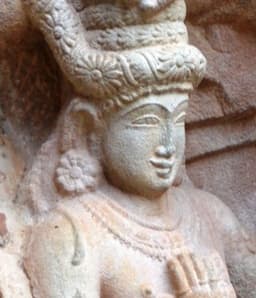
Rajendra Chola I
Emperor · Medieval
82.2Total
Basic Information
Born
1453
971
Died
1515
1044
Era
Medieval
Medieval
Nationality
Spain
India
Occupation
General
Emperor
Civilization
Western
Indian
Score Comparison
Military (10%)
78.5
84.7
Political (20%)
62.7
82.0
Influence (20%)
80.0
84.0
Legacy (20%)
82.0
84.0
Leadership (15%)
85.0
78.0
Strategy (15%)
80.5
77.6
TOTAL
78.6
82.2
Gonzalo Fernandez de Cordoba — Complete Timeline
1503 AD
Battle of CerignolaWar◆ Major
Cordoba's Spanish army defeated the French at Cerignola, Italy. Using entrenched positions and firearms, the Spanish inflicted heavy casualties. This was the first major battle won primarily by arquebus fire.
Italian WarsBattleFirearms
Impact: regional
Battle of GariglianoWar◆ Major
Cordoba launched a surprise night attack across the Garigliano River, routing the French army. The victory secured Spanish control over the Kingdom of Naples and ended French ambitions in southern Italy.
Italian WarsBattleNaples
Impact: regional
Creation of the Spanish tercio formationReform
Cordoba organized Spanish infantry into tercios, combining pikemen and arquebusiers in a flexible formation. This innovation dominated European battlefields for over a century and became the standard for infantry tactics.
Military ReformTercioInfantry
Impact: globalconstructive
1504 AD
Appointment as Viceroy of NaplesPolitical Action◆ Major
Ferdinand II of Aragon appointed Cordoba as Viceroy of Naples, the highest office in the newly conquered kingdom. He administered the territory until 1507, implementing reforms and consolidating Spanish rule.
AdministrationNaplesViceroyalty
Impact: regional
Rajendra Chola I — Complete Timeline
1014 AD
Accession to the Chola ThronePolitical Action
Rajendra Chola I succeeded his father Raja Raja Chola I as emperor of the Chola Empire. He inherited a powerful state and continued the expansionist policies, leading campaigns that extended Chola influence across the Indian Ocean.
Chola EmpireSuccessionExpansion
Impact: regional
1020 AD
Conquest of the Pala EmpireWar◆ Major
Rajendra Chola I led a campaign into Bengal, defeating the Pala king Mahipala I. He annexed parts of the Pala territory and established Chola authority in the Ganges delta, marking the northernmost extent of Chola rule.
Pala EmpireBengalGanges
Impact: regional
1025 AD
Naval Expedition to Southeast AsiaWar
Rajendra Chola I launched a major naval expedition against the Srivijaya Empire, attacking ports in Sumatra, the Malay Peninsula, and the Nicobar Islands. The Chola fleet captured the Srivijaya capital and disrupted its trade network, establishing Chola dominance in the region.
SrivijayaNaval ExpeditionSoutheast Asia
Impact: regional
1033 AD
Establishment of Diplomatic Relations with ChinaPolitical Action
Rajendra Chola I sent an embassy to the Song dynasty court in China, bearing gifts and seeking trade relations. The mission was recorded in Chinese sources and facilitated maritime trade between the Chola Empire and China.
ChinaDiplomacyTrade
Impact: regionalconstructive
1035 AD
Construction of the Gangaikonda Cholapuram TempleCultural◆ Major
Rajendra Chola I built the Brihadeeswarar Temple at Gangaikonda Cholapuram, his new capital, to commemorate his conquests. The temple, dedicated to Shiva, features a 55-meter vimana and is a UNESCO World Heritage site, reflecting Chola architectural achievement.
Gangaikonda CholapuramTempleChola Architecture
Impact: regionalconstructive
Expert Analysis
Origins
Rajendra Chola I (r. 1014–1044 CE) was the son of the great Chola emperor Rajaraja I, inheriting a powerful kingdom in southern India. The Chola dynasty had already established maritime dominance, but Rajendra expanded it further. In contrast, Gonzalo Fernandez de Cordoba (1453–1515) was a Spanish nobleman from a lesser branch of the House of Cordoba, rising through military service during the Reconquista. His early career included fighting in the War of the Castilian Succession and the Granada War. While Rajendra was born into imperial power, Cordoba earned his reputation through tactical innovation on the battlefield.
Rise to Power
Rajendra ascended the throne in 1014 after his father's death, immediately continuing expansionist policies. His major turning point was the conquest of the Pala Empire in northern India (c. 1023), which brought the Ganges River under Chola control. He commemorated this by building a new capital, Gangaikonda Cholapuram ("City of the Chola who conquered the Ganges"). Cordoba's rise came later in life; his turning point was the creation of the Spanish tercio formation in the 1490s, combining pikemen, arquebusiers, and swordsmen. This innovation proved decisive in the Italian Wars, leading to his appointment as Viceroy of Naples after the Battle of Garigliano (1503).
Leadership & Governance
Rajendra was both a conqueror and an administrator. He established diplomatic relations with China, sent embassies to the Song dynasty, and maintained a powerful navy that projected Chola power across the Indian Ocean. His rule saw the construction of the magnificent Brihadeeswarar Temple at Gangaikonda Cholapuram, a UNESCO World Heritage site. Cordoba governed Naples as viceroy, implementing administrative reforms and ensuring loyalty to the Spanish crown. His leadership style was pragmatic, focusing on discipline and morale within his tercios. Both were effective governors, but Rajendra's empire was larger and more diverse, requiring sophisticated bureaucratic systems.
Triumph & Tragedy
Rajendra's greatest triumph was his naval expedition to Southeast Asia (c. 1025), where he attacked the Srivijaya Empire (modern Indonesia/Malaysia), securing trade routes and establishing Chola influence. This was unprecedented for an Indian king. His tragedy may be the eventual decline of the Chola Empire after his death, though he left a strong foundation. Cordoba's triumphs were the Battles of Cerignola (1503) and Garigliano (1503), where his tercios defeated the French, securing Naples for Spain. His tragedy was falling out of favor with King Ferdinand II of Aragon, who recalled him to Spain in 1507, effectively ending his career. Both faced political intrigue, but Cordoba's end was more personal.
Character & Destiny
Rajendra was a visionary imperialist, driven by ambition to extend his realm beyond traditional Indian borders. His military campaigns were meticulously planned, and he was a patron of art and religion. Cordoba was a military innovator, known for his tactical genius and care for his soldiers (earning him the nickname "El Gran Capitán"). However, he was less successful in court politics, leading to his eventual sidelining. Rajendra's destiny was to be remembered as one of India's greatest conquerors, while Cordoba's legacy is as the father of modern infantry tactics.
Legacy
Rajendra's legacy includes the expansion of Chola influence to Southeast Asia, the construction of iconic temples, and the establishment of a maritime empire that influenced trade and culture for centuries. He is revered in Tamil history and is often compared to Ashoka or Akbar. Cordoba's legacy is the tercio formation, which dominated European battlefields for over a century. He is considered a pioneer of combined arms warfare and a key figure in Spain's rise as a European power. Both have lasting impacts, but Rajendra's influence spanned continents and cultures.
Conclusion
Rajendra Chola I scores higher overall (85 vs 78 total average) due to his broader impact as an emperor who shaped Indian and Southeast Asian history. Cordoba was a brilliant general but operated within a narrower sphere. Rajendra's military prowess, administrative skill, and cultural patronage give him the edge. **Score: Rajendra Chola I 85, Gonzalo Fernandez de Cordoba 78.**
Rankings
🥇
Rajendra Chola ILeader
Mil: 84.7Pol: 82.0Inf: 84.0
82.2
🥈
Gonzalo Fernandez de Cordoba
Mil: 78.5Pol: 62.7Inf: 80.0
78.6
+3.6 behind
How This Comparison Works
Algorithm
Each figure is scored on 6 dimensions (0—100 scale) based on structured historical data: Military (10%), Political (20%), Influence (20%), Legacy (20%), Leadership (15%), Strategy (15%). The weighted total produces the final ranking.
Data Sources
Scores are computed from structured sub-indicators in the database. Scale factors adjust for era (Ancient ×0.85, Modern ×1.0) and civilization size (Eastern ×1.05, Other ×0.80) to account for differences in population and military scale.
Maximum 3 Figures
Comparisons are limited to 2—3 figures to ensure readability and statistical meaningfulness.
Error Margins
±5 points per dimension — Sub-scores are derived from historical records with inherent uncertainty. Two figures within 5 points on a dimension should be considered roughly equivalent in that area.
Total Score Accuracy
±3 points overall — The weighted combination of 6 dimensions produces a total score with approximately ±3 points of uncertainty. Differences of less than 3 points are not statistically significant— the figures are effectively tied.
Known Limitations
- Historical records are incomplete and uneven across civilizations
- Figures from oral-tradition societies may be underrepresented
- Occupation labels can misclassify multi-role figures
- Scores measure capability and impact, not moral character
- Quantitative scoring is a comparison tool, not absolute truth
Capability Radar
Military (10%) — Battles & Warfare
Battles
85
95
Win Rate
90
98
Expansion
80
95
Political (20%) — Governance & Reform
Reform
75
88
Diplomacy
80
85
Economy
65
92
Influence (20%) — Cultural & Global Reach
Cultural
75
85
Global
75
85
Legacy (20%) — Historical Impact
Historical
85
88
Longevity
80
80
Leadership (15%) — Power & Stability
Tenure
70
90
Stability
70
90
Strategy (15%) — Tactics & Innovation
Strategy
88
92
Tactics
95
90
Reform
95
85
Similar Comparisons
Comments & Discussion
No comments yet. Be the first to share your thoughts!