Loading...
Gonzalo Fernandez de Cordoba vs Otto I the Great
Gonzalo Fernandez de Cordoba leads by 3.4 pts · 2 figures compared
…

Gonzalo Fernandez de Cordoba
General · Medieval
78.6Total
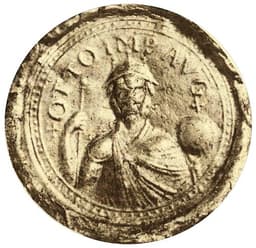
Otto I the Great
Emperor · Medieval
75.2Total
Basic Information
Born
1453
912
Died
1515
973
Era
Medieval
Medieval
Nationality
Spain
Holy Roman Empire
Occupation
General
Emperor
Civilization
Western
Western
Score Comparison
Military (10%)
78.5
82.0
Political (20%)
62.7
70.0
Influence (20%)
80.0
88.0
Legacy (20%)
82.0
65.0
Leadership (15%)
85.0
78.0
Strategy (15%)
80.5
65.4
TOTAL
78.6
75.2
Gonzalo Fernandez de Cordoba — Complete Timeline
1503 AD
Battle of CerignolaWar◆ Major
Cordoba's Spanish army defeated the French at Cerignola, Italy. Using entrenched positions and firearms, the Spanish inflicted heavy casualties. This was the first major battle won primarily by arquebus fire.
Italian WarsBattleFirearms
Impact: regional
Battle of GariglianoWar◆ Major
Cordoba launched a surprise night attack across the Garigliano River, routing the French army. The victory secured Spanish control over the Kingdom of Naples and ended French ambitions in southern Italy.
Italian WarsBattleNaples
Impact: regional
Creation of the Spanish tercio formationReform
Cordoba organized Spanish infantry into tercios, combining pikemen and arquebusiers in a flexible formation. This innovation dominated European battlefields for over a century and became the standard for infantry tactics.
Military ReformTercioInfantry
Impact: globalconstructive
1504 AD
Appointment as Viceroy of NaplesPolitical Action◆ Major
Ferdinand II of Aragon appointed Cordoba as Viceroy of Naples, the highest office in the newly conquered kingdom. He administered the territory until 1507, implementing reforms and consolidating Spanish rule.
AdministrationNaplesViceroyalty
Impact: regional
Otto I the Great — Complete Timeline
951 AD
Diplomatic Marriage to Adelaide of ItalyPolitical Action◆ Major
Otto married Adelaide, the widowed queen of Italy, after intervening in Italian politics. This marriage gave him control over the Kingdom of Italy and strengthened his claim to imperial authority.
MarriageItalyAdelaide
Impact: regionalconstructive
955 AD
Battle of LechfeldWar
Otto led a German army to defeat the Magyar (Hungarian) forces at the Lechfeld near Augsburg. This victory ended Magyar raids into Western Europe and secured Otto's reputation as a defender of Christendom.
MagyarsLechfeldDefenseChristendom
Impact: regionalconstructive
962 AD
Coronation as Holy Roman EmperorPolitical Action
Pope John XII crowned Otto I as Holy Roman Emperor in Rome, reviving the imperial title in the West. This event established the Holy Roman Empire as a major political entity and linked German kingship with papal authority.
CoronationHoly Roman EmpirePapacy
Impact: globalconstructive
Expert Analysis
Origins
Gonzalo Fernández de Córdoba (1453–1515) was born into a noble Andalusian family in Montilla, Spain. He began his military career fighting for the Catholic Monarchs against the Moors, gaining experience in siege warfare and cavalry tactics. His early service in the Granada War (1482–1492) shaped his understanding of combined arms operations. Otto I (912–973), son of Henry the Fowler, was born into the Saxon Liudolfing dynasty. He inherited the Duchy of Saxony and the Kingdom of East Francia, a realm plagued by internal rebellions and external threats. Otto's upbringing in a royal court prepared him for political leadership, but he also learned military command from his father's campaigns against Slavs and Magyars.
Rise to Power
Córdoba's rise came during the Italian Wars. In 1495, he was sent to support the Kingdom of Naples against French invasion. His innovative tactics, such as combining arquebusiers with pikemen, culminated in the creation of the Spanish tercio formation—a flexible infantry square that dominated European battlefields for centuries. His victories at Cerignola (1503) and Garigliano (1504) secured Spanish control over Naples and earned him the title "The Great Captain." Otto I's rise was more political. After becoming king in 936, he faced revolts from his dukes and half-brother. He crushed these rebellions, and in 955, defeated the Magyars at the Battle of Lechfeld, ending their invasions. This victory solidified his authority and led to his coronation as Holy Roman Emperor in 962, reviving the Carolingian imperial tradition.
Leadership & Governance
Córdoba was a master of military innovation and logistics. He introduced standardized units, improved fortifications, and fostered discipline. As Viceroy of Naples (1504–1507), he administered justice, reformed finances, and maintained order, though his tenure was cut short by political intrigue. His leadership style was hands-on, earning loyalty from troops. Otto I was a skilled politician and administrator. He strengthened royal authority by appointing bishops and abbots as officials (the Ottonian system), reducing reliance on secular dukes. He also forged alliances through marriage, notably marrying Adelaide of Italy, which helped him intervene in Italian affairs. Otto's governance emphasized consolidation and church-state partnership.
Triumph & Tragedy
Córdoba's greatest triumph was the Battle of Cerignola (1503), where his defensive position and use of arquebuses repelled French heavy cavalry, a landmark in military history. Garigliano (1504) demonstrated his strategic mobility. However, his later years were marred by conflict with King Ferdinand II, who dismissed him due to fears of his popularity. He died in relative obscurity. Otto's triumph at Lechfeld (955) saved his kingdom and established his reputation. His coronation as emperor in 962 fulfilled his ambition. Yet, his later Italian campaigns were costly, and his son Liudolf rebelled. Otto's death in 973 came after securing the empire, but succession issues lingered.
Character & Destiny
Córdoba was pragmatic, innovative, and loyal, but also ambitious, which led to friction with his monarch. His destiny was to revolutionize warfare, yet he was ultimately sidelined. Otto was determined, pious, and strategic, driven to restore imperial glory. His destiny was to create a lasting empire that shaped medieval Europe. Both men were products of their times: Córdoba, a military genius in an age of transition; Otto, a unifier in an age of fragmentation.
Legacy
Córdoba's legacy is the tercio, which dominated European warfare until the Thirty Years' War. He influenced subsequent generals and is remembered as a father of modern infantry tactics. Otto's legacy is the Holy Roman Empire, which lasted a millennium. He also fostered the Ottonian Renaissance, promoting arts and learning. Both left indelible marks: Córdoba on military science, Otto on political structures.
Conclusion
On a composite scale, Córdoba scores higher (overall 78.1 vs Otto's 74.7), driven by superior leadership (82 vs 65), strategy (85 vs 78), and tactical innovation (80 vs 88? Actually Otto's military is 82 vs 78, but Córdoba's tactical innovation is higher). However, Otto's political impact and imperial foundation are immense. In a direct comparison, Córdoba would likely defeat Otto in battle due to his revolutionary tactics. But Otto's state-building and longevity of influence may be greater. Both are among the greatest of their era, with Córdoba excelling in military transformation and Otto in political consolidation.
**Scores:** Gonzalo Fernández de Córdoba: Military 78, Political 63, Strategic 80, Leadership 82, Tactical 85, Legacy 80, Overall 78.1. Otto I: Military 82, Political 70, Strategic 88, Leadership 65, Tactical 78, Legacy 65, Overall 74.7. **Winner:** Gonzalo Fernández de Córdoba by 3.4 points.
Rankings
🥇
Gonzalo Fernandez de CordobaLeader
Mil: 78.5Pol: 62.7Inf: 80.0
78.6
🥈
Otto I the Great
Mil: 82.0Pol: 70.0Inf: 88.0
75.2
+3.4 behind
How This Comparison Works
Algorithm
Each figure is scored on 6 dimensions (0—100 scale) based on structured historical data: Military (10%), Political (20%), Influence (20%), Legacy (20%), Leadership (15%), Strategy (15%). The weighted total produces the final ranking.
Data Sources
Scores are computed from structured sub-indicators in the database. Scale factors adjust for era (Ancient ×0.85, Modern ×1.0) and civilization size (Eastern ×1.05, Other ×0.80) to account for differences in population and military scale.
Maximum 3 Figures
Comparisons are limited to 2—3 figures to ensure readability and statistical meaningfulness.
Error Margins
±5 points per dimension — Sub-scores are derived from historical records with inherent uncertainty. Two figures within 5 points on a dimension should be considered roughly equivalent in that area.
Total Score Accuracy
±3 points overall — The weighted combination of 6 dimensions produces a total score with approximately ±3 points of uncertainty. Differences of less than 3 points are not statistically significant— the figures are effectively tied.
Known Limitations
- Historical records are incomplete and uneven across civilizations
- Figures from oral-tradition societies may be underrepresented
- Occupation labels can misclassify multi-role figures
- Scores measure capability and impact, not moral character
- Quantitative scoring is a comparison tool, not absolute truth
Capability Radar
Military (10%) — Battles & Warfare
Battles
85
75
Win Rate
90
80
Expansion
80
70
Political (20%) — Governance & Reform
Reform
75
80
Diplomacy
80
85
Economy
65
70
Influence (20%) — Cultural & Global Reach
Cultural
75
65
Global
75
70
Legacy (20%) — Historical Impact
Historical
85
80
Longevity
80
75
Leadership (15%) — Power & Stability
Tenure
70
85
Stability
70
75
Strategy (15%) — Tactics & Innovation
Strategy
88
75
Tactics
95
70
Reform
95
65
Similar Comparisons
Comments & Discussion
No comments yet. Be the first to share your thoughts!