Loading...
Gobryas vs Hasdrubal Barca
Hasdrubal Barca leads by 8.3 pts · 2 figures compared
…

Gobryas
General · Ancient
39.8Total
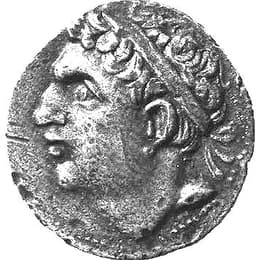
Hasdrubal Barca
General · Ancient
48.1Total
Basic Information
Born
-550
-245
Died
-490
-207
Era
Ancient
Ancient
Nationality
Achaemenid Empire
Carthage
Occupation
General
General
Civilization
Middle Eastern
Middle Eastern
Score Comparison
Military (10%)
46.7
74.0
Political (20%)
35.0
25.0
Influence (20%)
44.8
53.3
Legacy (20%)
38.3
45.8
Leadership (15%)
35.4
40.4
Strategy (15%)
38.3
61.3
TOTAL
39.8
48.1
Gobryas — Complete Timeline
522 BC
Participated in the conspiracy of the SevenPolitical Action
Gobryas was one of the seven Persian nobles who conspired to overthrow the Magian usurper Gaumata. He was a key supporter of Darius I and helped secure the throne for him.
ConspiracyDarius IPersian Empire
Impact: globalconstructive
521 BC
Commanded Persian forces in the conquest of BabylonWar◆ Major
Gobryas commanded Persian troops in the suppression of a revolt in Babylon. He played a key role in the capture of the city, demonstrating his military skill and loyalty to Darius I.
ConquestBabylonRevolt
Impact: regional
Married his daughter to Darius IPolitical Action◆ Major
Gobryas married his daughter to Darius I, strengthening the familial ties between the two noble houses. This marriage helped consolidate Darius' rule and ensured Gobryas' influence in the court.
MarriageAllianceDarius I
Impact: nationalconstructive
490 BC
Death and legacyOther
Gobryas died around 490 BC. He is remembered as a key conspirator in the rise of Darius I and as a loyal general and father-in-law to the king.
DeathLegacy
Hasdrubal Barca — Complete Timeline
218 BC
Commanded Carthaginian Forces in SpainWar◆ Major
Hasdrubal Barca was left in command of Carthaginian forces in Spain while Hannibal invaded Italy. He defended Carthaginian territories against Roman attacks, including a victory at the Battle of the Ebro River in 217 BC.
Second Punic WarSpainMilitary Command
Impact: regional
208 BC
Defeated at the Battle of BaeculaWar◆ Major
Hasdrubal Barca was defeated by Scipio Africanus at the Battle of Baecula in Spain. Despite the loss, he managed to escape with a significant portion of his army and decided to march to Italy to reinforce Hannibal.
Second Punic WarBattleSpain
Impact: regionaltragic
207 BC
Killed at the Battle of the MetaurusWar
Hasdrubal Barca was defeated and killed at the Battle of the Metaurus in Italy while attempting to join forces with Hannibal. His head was thrown into Hannibal's camp as a sign of defeat, ending the Carthaginian threat to Italy.
Second Punic WarBattleDeath
Impact: regionaltragic
Expert Analysis
Origins
Gobryas, a Persian noble of the Achaemenid Empire, was born around 520 BC into a prominent family. Little is known of his early life, but he rose to become a trusted advisor and general. His daughter married Darius I, linking him to the royal line. Hasdrubal Barca, born c. 245 BC in Carthage, was the second son of Hamilcar Barca. He grew up in a military family, trained alongside his brother Hannibal, and commanded forces in Spain during the Second Punic War.
Rise to Power
Gobryas rose to prominence in 522 BC when he joined six other Persian nobles, including Darius, in the conspiracy to overthrow the Magian usurper Gaumata. After Darius became king, Gobryas was rewarded with high command and married his daughter to Darius. Hasdrubal Barca's rise came when Hannibal left him in charge of Carthaginian forces in Spain (218 BC). He defended Carthaginian territories against Roman attacks, notably at the Battle of the Ebro River (217 BC) where he repelled a Roman fleet.
Leadership & Governance
Gobryas's leadership was characterized by loyalty and military competence. He commanded Persian forces in the suppression of a revolt in Babylon (521 BC), demonstrating his ability to execute orders. Politically, his score of 35.0 reflects his role as a supporter rather than a ruler. Hasdrubal Barca's leadership in Spain involved managing diverse troops and facing the rising Roman general Scipio Africanus. His political score of 25.0 indicates weak governance skills, as he failed to secure lasting alliances. Militarily, Hasdrubal scored 74.0, significantly higher than Gobryas's 46.7, due to his tactical maneuvers in Spain and Italy.
Triumph & Tragedy
Gobryas's greatest success was his part in the conspiracy that placed Darius I on the throne, securing his own status. His failure was limited impact beyond that; he scored 38.3 in legacy, as his achievements were overshadowed by Darius. Hasdrubal Barca's triumph was his escape from the Battle of Baecula (208 BC) with a significant portion of his army after being defeated by Scipio. His tragedy came at the Battle of the Metaurus (207 BC), where he was killed and his head thrown into Hannibal's camp, ending hopes of reinforcement. His legacy score of 45.8 reflects his role as a supporting figure in the Barca family.
Character & Destiny
Gobryas was a loyal conspirator and general, whose destiny was tied to Darius's rise. His character, marked by reliability, secured him a place in history but limited his independent fame. Hasdrubal Barca was a capable commander who faced the challenge of fighting in multiple theaters. His decision to attempt a risky march to Italy led to his death, highlighting a bold but flawed strategy. His strategy score of 61.3 contrasts with Gobryas's 38.3, showing greater tactical skill but poor strategic judgment in the end.
Legacy
Gobryas is remembered primarily as a conspirator and father-in-law of Darius I. His influence score of 44.8 reflects his role in the Achaemenid court. Hasdrubal Barca is remembered as Hannibal's brother who failed to reinforce him. His legacy is tied to the Second Punic War, and his defeat at Metaurus is seen as a turning point. Neither left lasting institutions, but Hasdrubal's military actions had more impact on Roman history.
Conclusion
Hasdrubal Barca had a greater impact than Gobryas. His total score of 48.1 vs 39.8 reflects his higher military and strategic scores. While Gobryas helped secure the Persian throne, his influence was limited to a single event. Hasdrubal's campaigns in Spain and Italy directly affected the course of the Second Punic War, even though he ultimately failed. Historical assessments favor Hasdrubal as a more significant figure in military history.
Rankings
🥇
Hasdrubal BarcaLeader
Mil: 74.0Pol: 25.0Inf: 53.3
48.1
🥈
Gobryas
Mil: 46.7Pol: 35.0Inf: 44.8
39.8
+8.3 behind
How This Comparison Works
Algorithm
Each figure is scored on 6 dimensions (0—100 scale) based on structured historical data: Military (10%), Political (20%), Influence (20%), Legacy (20%), Leadership (15%), Strategy (15%). The weighted total produces the final ranking.
Data Sources
Scores are computed from structured sub-indicators in the database. Scale factors adjust for era (Ancient ×0.85, Modern ×1.0) and civilization size (Eastern ×1.05, Other ×0.80) to account for differences in population and military scale.
Maximum 3 Figures
Comparisons are limited to 2—3 figures to ensure readability and statistical meaningfulness.
Error Margins
±5 points per dimension — Sub-scores are derived from historical records with inherent uncertainty. Two figures within 5 points on a dimension should be considered roughly equivalent in that area.
Total Score Accuracy
±3 points overall — The weighted combination of 6 dimensions produces a total score with approximately ±3 points of uncertainty. Differences of less than 3 points are not statistically significant— the figures are effectively tied.
Known Limitations
- Historical records are incomplete and uneven across civilizations
- Figures from oral-tradition societies may be underrepresented
- Occupation labels can misclassify multi-role figures
- Scores measure capability and impact, not moral character
- Quantitative scoring is a comparison tool, not absolute truth
Capability Radar
Military (10%) — Battles & Warfare
Battles
20
70
Win Rate
20
65
Expansion
15
60
Political (20%) — Governance & Reform
Reform
10
20
Diplomacy
30
50
Economy
10
30
Influence (20%) — Cultural & Global Reach
Cultural
15
30
Global
10
30
Legacy (20%) — Historical Impact
Historical
25
45
Longevity
15
30
Leadership (15%) — Power & Stability
Tenure
30
40
Stability
25
35
Strategy (15%) — Tactics & Innovation
Strategy
15
70
Tactics
15
75
Reform
5
30
Similar Comparisons
Comments & Discussion
No comments yet. Be the first to share your thoughts!