Loading...
Gaius Julius Verus Maximinus vs Hasdrubal Barca
Gaius Julius Verus Maximinus leads by 0.1 pts · 2 figures compared
…

Gaius Julius Verus Maximinus
General · Ancient
48.2Total
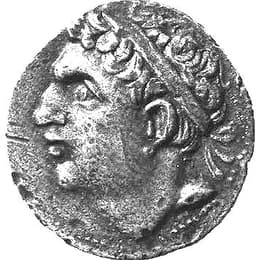
Hasdrubal Barca
General · Ancient
48.1Total
Basic Information
Born
173
-245
Died
238
-207
Era
Ancient
Ancient
Nationality
Roman Empire
Carthage
Occupation
General
General
Civilization
Western
Middle Eastern
Score Comparison
Military (10%)
65.0
74.0
Political (20%)
35.0
25.0
Influence (20%)
44.8
53.3
Legacy (20%)
39.2
45.8
Leadership (15%)
68.0
40.4
Strategy (15%)
52.5
61.3
TOTAL
48.2
48.1
Gaius Julius Verus Maximinus — Complete Timeline
235 AD
Campaigns on the Rhine and Danube FrontiersWar◆ Major
Maximinus Thrax led successful campaigns against Germanic tribes along the Rhine and Danube. He defeated the Alemanni and the Sarmatians, earning the title Germanicus Maximus and securing the frontiers, though at great cost to the treasury.
Germanic WarsFrontier DefenseMilitary Campaign
Impact: regional
Proclamation as Emperor by the Pannonian LegionsPolitical Action◆ Major
After the assassination of Emperor Severus Alexander, the Pannonian legions proclaimed their commander, Maximinus Thrax, as emperor. His accession marked the first time a man of non-senatorial, barbarian background became Roman emperor.
Imperial AccessionMilitary EmperorCrisis of the Third Century
Impact: global
238 AD
Siege of AquileiaWar◆ Major
During the Year of the Six Emperors, Maximinus marched on Italy to suppress a senatorial rebellion. He besieged the city of Aquileia, but the prolonged siege drained his army's morale and supplies, leading to his downfall.
Year of the Six EmperorsCivil WarSiege
Impact: regional
Assassination by His Own TroopsPolitical Action◆ Major
Disillusioned by the failed siege of Aquileia and Maximinus's harsh discipline, soldiers of the Legio II Parthica assassinated him in his tent. His son Maximus was also killed, ending his three-year reign and plunging the empire into further chaos.
AssassinationMilitary RevoltCrisis of the Third Century
Impact: globaltragic
Hasdrubal Barca — Complete Timeline
218 BC
Commanded Carthaginian Forces in SpainWar◆ Major
Hasdrubal Barca was left in command of Carthaginian forces in Spain while Hannibal invaded Italy. He defended Carthaginian territories against Roman attacks, including a victory at the Battle of the Ebro River in 217 BC.
Second Punic WarSpainMilitary Command
Impact: regional
208 BC
Defeated at the Battle of BaeculaWar◆ Major
Hasdrubal Barca was defeated by Scipio Africanus at the Battle of Baecula in Spain. Despite the loss, he managed to escape with a significant portion of his army and decided to march to Italy to reinforce Hannibal.
Second Punic WarBattleSpain
Impact: regionaltragic
207 BC
Killed at the Battle of the MetaurusWar
Hasdrubal Barca was defeated and killed at the Battle of the Metaurus in Italy while attempting to join forces with Hannibal. His head was thrown into Hannibal's camp as a sign of defeat, ending the Carthaginian threat to Italy.
Second Punic WarBattleDeath
Impact: regionaltragic
Expert Analysis
Origins
Gaius Julius Verus Maximinus, known as Maximinus Thrax, was born around 173 AD in Thrace or Moesia, of humble origins. His father was a Gothic or Alanic herdsman, and his mother was an Alanic woman. He joined the Roman army as a young man and rose through the ranks due to his immense physical strength and size, reportedly over 8 feet tall. His early military service included campaigns under Emperor Septimius Severus and later under Alexander Severus.
Hasdrubal Barca was born around 245 BC into the prominent Barcid family of Carthage. He was the second son of Hamilcar Barca and brother of Hannibal. Little is known of his early life, but he likely received military training under his father in Spain. After Hamilcar's death, Hasdrubal served under his brother-in-law Hasdrubal the Fair and later under Hannibal, commanding forces in Spain during the Second Punic War.
Rise to Power
Maximinus Thrax rose to prominence through military service. In 235 AD, Emperor Severus Alexander was assassinated by his own troops during a campaign against Germanic tribes. The Pannonian legions proclaimed Maximinus as emperor, bypassing the Senate. His accession marked the first time a man of non-senatorial, barbarian background became Roman emperor, signaling the growing power of the army.
Hasdrubal Barca gained command in Spain when Hannibal departed for Italy in 218 BC. He was left in charge of Carthaginian territories and forces, tasked with defending against Roman attacks and eventually reinforcing Hannibal. His rise was based on family connections and proven military ability.
Leadership & Governance
Maximinus Thrax's leadership was characterized by direct military command and harsh discipline. He focused on frontier defense, leading campaigns against the Alemanni and Sarmatians on the Rhine and Danube, achieving victories but at high cost. His governance was autocratic and unpopular with the Senate and Italian landowners, as he raised taxes and confiscated property to fund his wars. He never set foot in Rome during his reign, which alienated the political elite.
Hasdrubal Barca's leadership in Spain was defensive and strategic. He faced the rising Roman general Scipio Africanus and managed to avoid total defeat for several years. He was known for his ability to retreat and preserve forces, as seen after the Battle of Baecula in 208 BC, where he escaped with a significant portion of his army. However, his strategy of delaying reinforcement to Hannibal ultimately failed.
Triumph & Tragedy
Maximinus's greatest triumph was his successful campaigns on the Rhine and Danube, where he defeated Germanic tribes and secured the frontiers temporarily. His tragedy was the siege of Aquileia in 238 AD during the Year of the Six Emperors. The prolonged siege, combined with his harsh discipline, led to his assassination by soldiers of Legio II Parthica. His reign lasted only three years, ending in chaos.
Hasdrubal's greatest achievement was his successful defense of Carthaginian Spain for years against Roman offensives. His tragedy was the Battle of the Metaurus in 207 BC. Attempting to join Hannibal in Italy, he was intercepted by Roman armies under Gaius Claudius Nero and Marcus Livius Salinator. He was defeated and killed, and his head was thrown into Hannibal's camp as a grim message. This loss sealed Carthage's fate in Italy.
Character & Destiny
Maximinus Thrax was a soldier's emperor: physically imposing, personally brave, but politically naive. His lack of political acumen and failure to legitimize his rule with the Senate led to rebellion. His destiny was tied to the army's loyalty, which he lost through excessive demands. Historical assessments view him as a transitional figure in the Crisis of the Third Century.
Hasdrubal Barca was a capable general but overshadowed by his brother Hannibal. He showed strategic sense in preserving his army but lacked the decisiveness to force a junction with Hannibal. His character was cautious, which may have been prudent but ultimately contributed to his failure. He is remembered as a loyal brother who attempted the impossible.
Legacy
Maximinus Thrax's legacy is mixed. He demonstrated that a low-born soldier could become emperor, foreshadowing the barracks emperors of the later third century. His military campaigns temporarily stabilized the frontiers, but his reign highlighted the growing power of the army and the decline of senatorial authority. He scored 39.2 in Legacy.
Hasdrubal Barca's legacy is tied to the Second Punic War. His defeat at Metaurus is considered one of the decisive battles of history, as it prevented the reinforcement of Hannibal and allowed Rome to take the offensive. He scored 45.8 in Legacy, slightly higher than Maximinus.
Conclusion
While both men were competent military commanders, Hasdrubal Barca had a greater impact on history. His defeat at Metaurus was a turning point in the Second Punic War, ensuring Roman dominance. Maximinus Thrax, despite his military achievements, ruled briefly and his death plunged Rome into civil war. Hasdrubal's strategic role in a world-changing conflict gives him the edge. Thus, Hasdrubal Barca emerges as the more significant figure, despite a lower total score (48.1 vs 48.2). The score gap is negligible, but the historical weight of his actions is greater.
Rankings
🥇
Gaius Julius Verus MaximinusLeader
Mil: 65.0Pol: 35.0Inf: 44.8
48.2
🥈
Hasdrubal Barca
Mil: 74.0Pol: 25.0Inf: 53.3
48.1
+0.1 behind
How This Comparison Works
Algorithm
Each figure is scored on 6 dimensions (0—100 scale) based on structured historical data: Military (10%), Political (20%), Influence (20%), Legacy (20%), Leadership (15%), Strategy (15%). The weighted total produces the final ranking.
Data Sources
Scores are computed from structured sub-indicators in the database. Scale factors adjust for era (Ancient ×0.85, Modern ×1.0) and civilization size (Eastern ×1.05, Other ×0.80) to account for differences in population and military scale.
Maximum 3 Figures
Comparisons are limited to 2—3 figures to ensure readability and statistical meaningfulness.
Error Margins
±5 points per dimension — Sub-scores are derived from historical records with inherent uncertainty. Two figures within 5 points on a dimension should be considered roughly equivalent in that area.
Total Score Accuracy
±3 points overall — The weighted combination of 6 dimensions produces a total score with approximately ±3 points of uncertainty. Differences of less than 3 points are not statistically significant— the figures are effectively tied.
Known Limitations
- Historical records are incomplete and uneven across civilizations
- Figures from oral-tradition societies may be underrepresented
- Occupation labels can misclassify multi-role figures
- Scores measure capability and impact, not moral character
- Quantitative scoring is a comparison tool, not absolute truth
Capability Radar
Military (10%) — Battles & Warfare
Battles
55
70
Win Rate
60
65
Expansion
40
60
Political (20%) — Governance & Reform
Reform
15
20
Diplomacy
10
50
Economy
10
30
Influence (20%) — Cultural & Global Reach
Cultural
15
30
Global
10
30
Legacy (20%) — Historical Impact
Historical
25
45
Longevity
20
30
Leadership (15%) — Power & Stability
Tenure
20
40
Stability
5
35
Strategy (15%) — Tactics & Innovation
Strategy
45
70
Tactics
50
75
Reform
30
30
Similar Comparisons
Comments & Discussion
No comments yet. Be the first to share your thoughts!