Loading...
Gnaeus Julius Agricola vs Sulla
Sulla leads by 8.2 pts · 2 figures compared
…
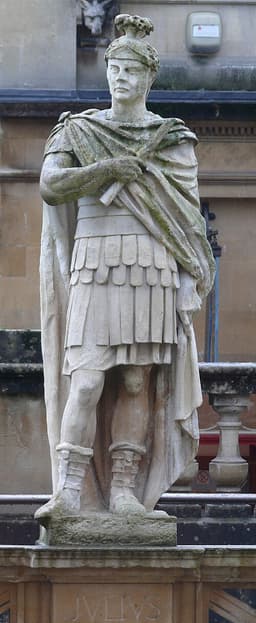
Gnaeus Julius Agricola
General · Ancient
52.5Total

Sulla
General · Ancient
60.7Total
Basic Information
Born
40
-138
Died
93
-78
Era
Ancient
Ancient
Nationality
Roman Empire
Roman Republic
Occupation
General
General
Civilization
Western
Western
Score Comparison
Military (10%)
72.0
80.0
Political (20%)
35.1
68.0
Influence (20%)
54.1
55.0
Legacy (20%)
47.5
52.0
Leadership (15%)
61.1
54.2
Strategy (15%)
55.0
76.0
TOTAL
52.5
60.7
Gnaeus Julius Agricola — Complete Timeline
74 AD
Governorship of AquitaniaPolitical Action
Agricola was appointed governor of Aquitania, a Roman province in Gaul. He administered the province for three years, focusing on legal and financial reforms. This post prepared him for higher command and demonstrated his administrative skills.
Provincial AdministrationGaulCareer
Impact: regionalconstructive
78 AD
Conquest of the OrdovicesWar◆ Major
As governor of Britain, Agricola launched a campaign against the Ordovices tribe in northern Wales. He defeated them and then conquered the island of Anglesey, a stronghold of Druids and resistance, completing the Roman subjugation of Wales.
Roman BritainWalesMilitary Campaign
Impact: regional
83 AD
Battle of Mons GraupiusWar◆ Major
Agricola's army defeated a large Caledonian force led by Calgacus at Mons Graupius in northern Scotland. The Roman victory was decisive, but Agricola did not pursue the defeated tribes into the Highlands, leaving the conquest of Scotland incomplete.
BattleScotlandCaledonia
Impact: regional
Circumnavigation of BritainOther
Agricola ordered a Roman fleet to circumnavigate Britain, proving it was an island. The fleet sailed around the northern coast, encountering the Orkney Islands. This exploration provided valuable geographical knowledge and demonstrated Roman naval power.
ExplorationNavyGeography
Impact: regionalconstructive
Sulla — Complete Timeline
88 BC
March on Rome (Sulla)Political Action
Sulla led his army into Rome, the first Roman general to do so, to seize control from Marius and his supporters. He declared Marius and his allies enemies of the state, establishing a precedent of military intervention in politics.
Civil WarMilitary DictatorshipPrecedent
Impact: globaldestructive
82 BC
Battle of the Colline GateWar◆ Major
Sulla's forces defeated the Samnite and Lucanian allies of the Marians at the Colline Gate in Rome. The victory secured Sulla's control of the city and ended the civil war in Italy.
Civil WarBattleRome
Impact: national
Sulla's Dictatorship and Constitutional ReformsReform
After defeating his enemies, Sulla was appointed dictator with unlimited powers. He enacted reforms to strengthen the Senate, limit tribunician power, and reorganize the courts, aiming to restore aristocratic control.
DictatorshipConstitutional ReformSenate
Impact: nationalconstructive
Proscriptions of 82 BCPolitical Action◆ Major
Sulla published lists of political enemies, offering rewards for their killing and confiscating their property. Thousands of Roman citizens, including senators and equestrians, were executed or exiled, terrorizing the opposition.
ProscriptionsPolitical ViolenceTerror
Impact: nationaldestructive
79 BC
Abdication of DictatorshipPolitical Action◆ Major
Sulla voluntarily resigned his dictatorship and retired to private life, an unprecedented act. He died the following year, leaving a legacy of constitutional reform and military autocracy.
DictatorshipRetirementPrecedent
Impact: national
Expert Analysis
Origins
Gnaeus Julius Agricola was born in 40 AD in Forum Julii (modern Fréjus, France) to a senatorial family. His father was a senator and his mother was from a wealthy Gallic family. Agricola studied philosophy in Massilia and began his military career as a tribune in Britain under Suetonius Paulinus. His early exposure to military command shaped his future.
Lucius Cornelius Sulla was born in 138 BC into a patrician but impoverished branch of the Cornelii family. His early life was marked by financial struggles, but he received a good education. Sulla began his military career as a quaestor under Gaius Marius in the Jugurthine War, where he distinguished himself by capturing the Numidian king Jugurtha through treachery.
Rise to Power
Agricola's rise was steady and provincial. He served as tribune in Britain, then as legate in Asia, and as praetor in Rome. His major break came when he was appointed governor of Aquitania (73-76 AD), where he reformed provincial administration. In 77 AD, he became governor of Britain, where he launched campaigns that extended Roman control into northern Scotland. His victory at Mons Graupius in 83 AD was his greatest military achievement, but he was recalled by Emperor Domitian shortly after.
Sulla's rise was meteoric and disruptive. After his success in the Jugurthine War, he served in the Social War (91-88 BC) as a successful general. However, his rivalry with Marius intensified. In 88 BC, when the command against Mithridates was transferred from Sulla to Marius, Sulla marched his army on Rome, a first in Roman history. He then fought a civil war against the Marians, eventually capturing Rome and being appointed dictator in 82 BC.
Leadership & Governance
Agricola's leadership style was disciplined and methodical. He focused on consolidating Roman control through fortifications, roads, and alliances with local tribes. As governor, he implemented fair taxation and justice, winning over many Britons. His military campaigns were characterized by careful planning and logistics, scoring 55.0 in strategy. He also ordered the circumnavigation of Britain, proving it was an island.
Sulla's leadership was ruthless and transformative. As dictator, he enacted constitutional reforms to strengthen the Senate and weaken the popular assemblies. He used proscriptions to eliminate enemies, killing thousands and confiscating their property. His military strategy scored 76.0, reflecting his tactical brilliance, but his political methods were divisive. He voluntarily abdicated in 79 BC, an unprecedented act, but his reforms destabilized the Republic.
Triumph & Tragedy
Agricola's greatest triumph was the conquest of northern Britain and the victory at Mons Graupius, where his forces of about 20,000 defeated a Caledonian army of 30,000. However, his failure to fully subjugate Scotland and his recall by Domitian left his work incomplete. He died in 93 AD, possibly poisoned by the emperor, with his achievements underappreciated.
Sulla's triumph was his successful seizure of power and his reforms, which aimed to restore the Republic but instead weakened it. His greatest tragedy was the proscriptions, which created a culture of political violence. His abdication, while a personal triumph, left a power vacuum that led to the rise of Julius Caesar. Sulla's legacy is mixed: he saved the Republic from civil war but undermined its foundations.
Character & Destiny
Agricola was known for his integrity, moderation, and competence. He avoided political intrigue and focused on his duties. His destiny was to be a capable but ultimately limited figure, overshadowed by more ambitious contemporaries. He scored 61.1 in leadership, reflecting his effective but cautious command.
Sulla was ambitious, ruthless, and unpredictable. He showed great military talent and political cunning, but his character was marked by cruelty and a disregard for law. His destiny was to be a revolutionary who changed Rome forever. His political score of 68.0 and total score of 60.7 reflect his greater impact, but also his destructive methods.
Legacy
Agricola's legacy is as the conqueror of Britain and a model Roman governor. His campaigns laid the groundwork for Roman control of northern England and Wales. His biography by Tacitus provides a detailed account of Roman imperialism. However, his long-term influence is limited, scoring 54.1 in influence and 47.5 in legacy.
Sulla's legacy is profound. He set the precedent for using military force to seize political power, directly influencing Caesar and the end of the Republic. His constitutional reforms, though short-lived, shaped Roman governance. His proscriptions introduced state-sanctioned terror. Sulla's legacy scores 55.0 in influence and 52.0 in legacy, reflecting his enduring but controversial impact.
Conclusion
Sulla had a greater impact on history than Agricola. His total score of 60.7 versus Agricola's 52.5 reflects his higher military and political achievements. While Agricola was a competent general who expanded the empire, his influence was provincial and temporary. Sulla's march on Rome, dictatorship, and reforms fundamentally altered Roman politics and set the stage for the empire. Agricola's legacy is important for British history, but Sulla's actions resonated throughout Roman history and beyond. Therefore, Sulla is the more significant historical figure.
Rankings
🥇
SullaLeader
Mil: 80.0Pol: 68.0Inf: 55.0
60.7
🥈
Gnaeus Julius Agricola
Mil: 72.0Pol: 35.1Inf: 54.1
52.5
+8.2 behind
How This Comparison Works
Algorithm
Each figure is scored on 6 dimensions (0—100 scale) based on structured historical data: Military (10%), Political (20%), Influence (20%), Legacy (20%), Leadership (15%), Strategy (15%). The weighted total produces the final ranking.
Data Sources
Scores are computed from structured sub-indicators in the database. Scale factors adjust for era (Ancient ×0.85, Modern ×1.0) and civilization size (Eastern ×1.05, Other ×0.80) to account for differences in population and military scale.
Maximum 3 Figures
Comparisons are limited to 2—3 figures to ensure readability and statistical meaningfulness.
Error Margins
±5 points per dimension — Sub-scores are derived from historical records with inherent uncertainty. Two figures within 5 points on a dimension should be considered roughly equivalent in that area.
Total Score Accuracy
±3 points overall — The weighted combination of 6 dimensions produces a total score with approximately ±3 points of uncertainty. Differences of less than 3 points are not statistically significant— the figures are effectively tied.
Known Limitations
- Historical records are incomplete and uneven across civilizations
- Figures from oral-tradition societies may be underrepresented
- Occupation labels can misclassify multi-role figures
- Scores measure capability and impact, not moral character
- Quantitative scoring is a comparison tool, not absolute truth
Capability Radar
Military (10%) — Battles & Warfare
Battles
65
85
Win Rate
70
90
Expansion
75
60
Political (20%) — Governance & Reform
Reform
45
85
Diplomacy
50
65
Economy
40
55
Influence (20%) — Cultural & Global Reach
Cultural
35
60
Global
30
55
Legacy (20%) — Historical Impact
Historical
55
80
Longevity
40
65
Leadership (15%) — Power & Stability
Tenure
55
75
Stability
50
20
Strategy (15%) — Tactics & Innovation
Strategy
72
80
Tactics
68
85
Reform
30
70
Similar Comparisons
Comments & Discussion
No comments yet. Be the first to share your thoughts!