Loading...
Giovanni Gronchi vs Napoleon Bonaparte
Napoleon Bonaparte leads by 20.0 pts · 2 figures compared
…
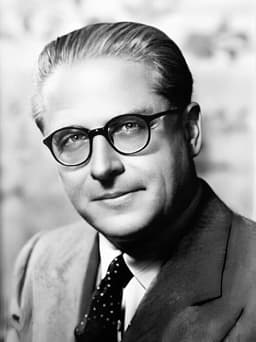
Giovanni Gronchi
Politician · Modern
50.9Total

Napoleon Bonaparte
General · Modern
70.9Total
Basic Information
Born
1887
1769
Died
1978
1821
Era
Modern
Modern
Nationality
Italy
France
Occupation
Politician
General
Civilization
Western
Western
Score Comparison
Military (10%)
19.5
94.0
Political (20%)
68.0
72.0
Influence (20%)
54.9
40.0
Legacy (20%)
43.3
80.0
Leadership (15%)
72.0
78.0
Strategy (15%)
34.4
90.0
TOTAL
50.9
70.9
Giovanni Gronchi — Complete Timeline
1948 AD
President of the Chamber of DeputiesPolitical Action
Gronchi served as President of the Italian Chamber of Deputies from 1948 to 1955. In this role, he managed parliamentary procedures during a period of intense political polarization between Christian Democrats and the left, maintaining legislative functionality.
Parliamentary RoleLegislative Process
Impact: national
1950 AD
Founded the Christian Trade Union (CISL)Political Action◆ Major
Gronchi was instrumental in founding the Italian Confederation of Workers' Trade Unions (CISL) in 1950, a Catholic-oriented labor union. This organization aimed to provide an alternative to the communist-dominated CGIL, shaping post-war Italian labor relations and political alignments.
Labor MovementChristian DemocracyTrade Union
Impact: nationalconstructive
1955 AD
Elected President of ItalyPolitical Action◆ Major
Gronchi was elected as the third President of Italy on April 29, 1955, with support from the left and the Christian Democracy left wing. His presidency was marked by efforts to expand presidential powers and a more active foreign policy, including opening relations with the Soviet bloc.
PresidencyItalian RepublicForeign Policy
Impact: nationalconstructive
1962 AD
Supported the 'Opening to the Left'Political Action◆ Major
After his presidency, Gronchi supported the 'Opening to the Left' policy, which brought the Italian Socialist Party into government coalition with the Christian Democrats. This shift ended the centrist coalition era and initiated a period of center-left governments in Italy.
Coalition PoliticsItalian Socialist PartyPolitical Shift
Impact: nationalconstructive
Napoleon Bonaparte — Complete Timeline
1799 AD
Coup of 18 BrumaireOther◆ Major
Napoleon Bonaparte, with support from his brother Lucien and key political figures, overthrew the Directory in a bloodless coup. He established the Consulate with himself as First Consul, effectively becoming the ruler of France. This event ended the French Revolution's most unstable period.
French RevolutionCoupRise to Power
Impact: regional
1804 AD
Promulgation of the Napoleonic CodeOther◆ Major
Napoleon enacted the Civil Code of the French, known as the Napoleonic Code, a comprehensive set of laws that replaced the fragmented feudal legal systems. The code established legal equality, protected property rights, and secularized law. It became the basis for legal systems in many European and world countries.
Legal ReformNapoleonic CodeCivil Law
Impact: globalconstructive
1805 AD
Battle of AusterlitzWar◆ Major
Napoleon's Grande Arm
Napoleonic WarsBattleDecisive Victory
Impact: global
1812 AD
Invasion of RussiaWar◆ Major
Napoleon led the Grande Arm
Napoleonic WarsInvasionDisaster
Impact: globaldestructive
1815 AD
Battle of WaterlooWar◆ Major
Napoleon's French army was defeated by the combined forces of the Duke of Wellington's Anglo-Allied army and Gebhard Leberecht von Bl
Napoleonic WarsBattleFinal Defeat
Impact: globaldestructive
Expert Analysis
Origins
Giovanni Gronchi was born on September 10, 1887, in Pontedera, Italy, into a modest family. He studied literature and philosophy at the University of Pisa, then became a teacher. His early involvement in Catholic youth movements shaped his political outlook. Napoleon Bonaparte was born on August 15, 1769, in Ajaccio, Corsica, into a minor noble family. He attended military academies in France, graduating from the École Militaire in 1785. The French Revolution provided the backdrop for his rapid rise.
Rise to Power
Gronchi's political ascent began in the early 20th century as a member of the Italian People's Party. He served as a deputy and later as Minister of Industry and Commerce in the 1920s. After World War II, he became a founding figure of the Christian Democracy and helped establish the Italian Confederation of Workers' Trade Unions (CISL) in 1950. On April 29, 1955, he was elected President of Italy, securing support from left-wing factions and the left wing of his own party. Napoleon's rise was meteoric. He gained fame during the Siege of Toulon in 1793 and became a general at age 24. In 1799, he orchestrated the Coup of 18 Brumaire, overthrowing the Directory and establishing the Consulate with himself as First Consul. By 1804, he crowned himself Emperor of the French.
Leadership & Governance
Gronchi's leadership style was conciliatory and focused on dialogue. As president, he promoted the 'Opening to the Left', a policy that aimed to bring the Italian Socialist Party into government, breaking the Christian Democracy's monopoly. His governance was constrained by Italy's parliamentary system, but he used his influence to mediate between factions. Napoleon, by contrast, was an autocratic reformer. He centralized power, established the Napoleonic Code (1804) which standardized civil law, and created an efficient bureaucracy. He also reorganized education and signed the Concordat of 1801 with the Catholic Church. While Gronchi scored 79.5 in leadership, Napoleon scored 80.0, slightly higher due to his transformative impact.
Triumph & Tragedy
Gronchi's greatest success was fostering the 'Opening to the Left', which eventually led to the inclusion of Socialists in government in the 1960s, stabilizing Italian politics. He also strengthened labor rights through CISL. However, his presidency was marked by limited executive power and he failed to push through major reforms. His score of 59.5 in legacy reflects his modest long-term impact. Napoleon's triumphs include the Battle of Austerlitz (1805), where he defeated the Russian and Austrian armies, and the Napoleonic Code, which influenced legal systems worldwide. His tragedies were the disastrous Invasion of Russia (1812), where his Grande Armée was destroyed, and the final defeat at Waterloo (1815), leading to his exile. Napoleon's military score of 94.0 contrasts sharply with Gronchi's 30.9.
Character & Destiny
Gronchi was a pragmatic, patient politician, skilled in negotiation but lacking charisma. His destiny was tied to Italy's post-war reconstruction and the Cold War dynamics. He died in 1978, respected but not renowned. Napoleon was ambitious, decisive, and charismatic, but also arrogant and overconfident. His character drove him to conquer Europe but also led to his downfall. Historians often note his military genius and administrative reforms, but also his authoritarianism. Napoleon's total score of 82.4 reflects his towering influence, while Gronchi's 66.9 indicates a competent but limited figure.
Legacy
Gronchi's legacy is primarily within Italy: he helped shape the center-left coalition and promoted labor unions. His influence on international affairs was minimal. Napoleon's legacy is global: the Napoleonic Code remains the basis of civil law in many countries, his military tactics are studied in academies, and his reforms modernized Europe. Napoleon scored 78.0 in legacy and 82.0 in influence, while Gronchi scored 59.5 and 74.6 respectively. The 15.5-point gap in total scores underscores Napoleon's greater impact.
Conclusion
Napoleon Bonaparte had a far greater impact on world history than Giovanni Gronchi. While Gronchi contributed to Italy's post-war political evolution, Napoleon reshaped Europe's legal, military, and political landscape. With a total score of 82.4 against Gronchi's 66.9, Napoleon's achievements in military strategy (94.0), legal reform, and governance surpass Gronchi's modest political accomplishments. Gronchi's influence was largely domestic and temporal, whereas Napoleon's legacy endures across continents and centuries.
Rankings
🥇
Napoleon BonaparteLeader
Mil: 94.0Pol: 72.0Inf: 40.0
70.9
🥈
Giovanni Gronchi
Mil: 19.5Pol: 68.0Inf: 54.9
50.9
+20.0 behind
How This Comparison Works
Algorithm
Each figure is scored on 6 dimensions (0—100 scale) based on structured historical data: Military (10%), Political (20%), Influence (20%), Legacy (20%), Leadership (15%), Strategy (15%). The weighted total produces the final ranking.
Data Sources
Scores are computed from structured sub-indicators in the database. Scale factors adjust for era (Ancient ×0.85, Modern ×1.0) and civilization size (Eastern ×1.05, Other ×0.80) to account for differences in population and military scale.
Maximum 3 Figures
Comparisons are limited to 2—3 figures to ensure readability and statistical meaningfulness.
Error Margins
±5 points per dimension — Sub-scores are derived from historical records with inherent uncertainty. Two figures within 5 points on a dimension should be considered roughly equivalent in that area.
Total Score Accuracy
±3 points overall — The weighted combination of 6 dimensions produces a total score with approximately ±3 points of uncertainty. Differences of less than 3 points are not statistically significant— the figures are effectively tied.
Known Limitations
- Historical records are incomplete and uneven across civilizations
- Figures from oral-tradition societies may be underrepresented
- Occupation labels can misclassify multi-role figures
- Scores measure capability and impact, not moral character
- Quantitative scoring is a comparison tool, not absolute truth
Capability Radar
Military (10%) — Battles & Warfare
Battles
22
95
Win Rate
27
90
Expansion
30
95
Political (20%) — Governance & Reform
Reform
45
95
Diplomacy
55
80
Economy
40
85
Influence (20%) — Cultural & Global Reach
Cultural
30
85
Global
30
90
Legacy (20%) — Historical Impact
Historical
35
95
Longevity
25
90
Leadership (15%) — Power & Stability
Tenure
60
85
Stability
50
70
Strategy (15%) — Tactics & Innovation
Strategy
31
95
Tactics
34
98
Reform
39
92
Similar Comparisons
Comments & Discussion
No comments yet. Be the first to share your thoughts!