Loading...
Giorgio Napolitano vs Manuel Roxas
Giorgio Napolitano leads by 12.8 pts · 2 figures compared
…

Giorgio Napolitano
Politician · Modern
61.5Total
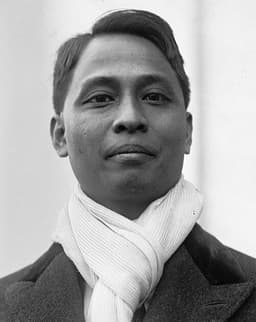
Manuel Roxas
Politician · Modern
48.7Total
Basic Information
Born
1925
1892
Died
—
1948
Era
Modern
Modern
Nationality
Italy
Philippines
Occupation
Politician
Politician
Civilization
Western
Eastern
Score Comparison
Military (10%)
37.0
15.4
Political (20%)
72.0
68.0
Influence (20%)
60.0
54.1
Legacy (20%)
56.0
44.2
Leadership (15%)
80.0
64.0
Strategy (15%)
60.0
27.5
TOTAL
61.5
48.7
Giorgio Napolitano — Complete Timeline
2006 AD
Elected President of ItalyPolitical Action◆ Major
Napolitano was elected as the 11th President of Italy by the Parliament in a joint session. He succeeded Carlo Azeglio Ciampi, becoming the first former communist to hold the office, a symbol of national reconciliation.
PresidencyItalian PoliticsNational Unity
Impact: nationalconstructive
2011 AD
Appointed Mario Monti as Prime MinisterPolitical Action◆ Major
During the European debt crisis, Napolitano appointed technocrat Mario Monti as Prime Minister to lead a government of national unity. This action was seen as a response to the financial emergency and Berlusconi's resignation.
Debt CrisisTechnocratic GovernmentEconomic Policy
Impact: national
2013 AD
Re-elected as President of ItalyPolitical Action◆ Major
Napolitano reluctantly accepted re-election as President at age 87 to resolve a political deadlock after the 2013 general election. He became the first Italian president to serve a second term, citing institutional stability.
PresidencyPolitical CrisisInstitutional Role
Impact: national
2015 AD
Resigned as President of ItalyPolitical Action◆ Major
Napolitano resigned at age 89, citing advanced age and the completion of his mandate's key goals. His resignation triggered a new presidential election, which resulted in the election of Sergio Mattarella.
PresidencyTransitionEnd of Term
Impact: national
Manuel Roxas — Complete Timeline
1946 AD
Suppressed the Hukbalahap RebellionWar◆ Major
Roxas launched a military campaign against the Hukbalahap (Huk) guerrillas, a communist-led peasant army in Central Luzon. The conflict escalated into a full-scale rebellion that continued after his death.
InsurgencyHukbalahapMilitary Campaign
Impact: regionaldestructive
Became First President of Independent PhilippinesPolitical Action◆ Major
Roxas was inaugurated as the first president of the independent Republic of the Philippines on July 4, 1946, after the United States granted independence. He oversaw the transition from colonial rule to sovereignty.
IndependencePresidencyTransition
Impact: nationalconstructive
Signed the Philippine Trade Act (Bell Trade Act)Political Action◆ Major
Roxas signed the Philippine Trade Act, which granted the United States preferential trade terms and parity rights for American citizens in the Philippines. The act was controversial and seen as limiting Philippine economic sovereignty.
Trade AgreementUS RelationsEconomic Policy
Impact: nationaldestructive
1948 AD
Died in OfficeOther◆ Major
Roxas died of a heart attack at Clark Air Base in Pampanga at the age of 56. His death cut short his presidency and led to the succession of Vice President Elpidio Quirino.
DeathSuccessionPresidency
Impact: nationaltragic
Expert Analysis
Origins
Giorgio Napolitano was born on June 29, 1925, in Naples, Italy, into a middle-class family. He graduated in law from the University of Naples and joined the Italian Communist Party (PCI) in 1945, participating in the anti-fascist resistance. His early political formation was shaped by the Cold War and the PCI's role as a major opposition force.
Manuel Roxas was born on January 1, 1892, in Capiz, Philippines, to a wealthy political family. He studied law at the University of the Philippines and later at the University of Manila. He served as a lawyer and entered politics early, becoming governor of Capiz at age 27. His career was influenced by the American colonial period and the struggle for independence.
Rise to Power
Napolitano rose through the ranks of the PCI, becoming a member of the party's central committee in 1956 and later serving in the Italian Parliament from 1953 to 1992. He held various ministerial positions, including Minister of the Interior (1996-1998) under Prime Minister Romano Prodi. His political acumen and moderate stance led to his election as President of the Republic on May 10, 2006, succeeding Carlo Azeglio Ciampi. He received 543 votes out of 1,009 in the joint session.
Roxas rose to prominence as a key figure in the Philippine independence movement. He served as a delegate to the 1934 Constitutional Convention, then as Speaker of the House (1935-1938) and Secretary of Finance (1938-1941). During World War II, he collaborated with the Japanese occupation, but later rejoined the Commonwealth government. He was elected president of the Senate in 1945 and then ran for president in 1946, winning with 54% of the vote. He became the first president of the independent Republic of the Philippines on July 4, 1946.
Leadership & Governance
Napolitano's leadership was defined by his role as a stabilizing force during Italy's political crises. He scored 80.0 in leadership, reflecting his ability to navigate partisan divides. He appointed technocrat Mario Monti as Prime Minister in 2011 to address the European debt crisis, a decisive move that averted economic collapse. He also reluctantly accepted re-election in 2013 at age 87 to resolve a parliamentary deadlock, becoming the first president to serve a second term. His governance style was constitutional and reserved, prioritizing national unity over partisan interests.
Roxas, with a leadership score of 64.0, focused on rebuilding the Philippines after World War II. He signed the Philippine Trade Act (Bell Trade Act), which granted the US preferential trade terms and parity rights, a controversial move that critics argue compromised Philippine sovereignty. He also launched a military campaign against the Hukbalahap rebellion, using force rather than negotiation. His governance was marked by pro-American policies and efforts to attract foreign investment, but his administration was marred by corruption and economic inequality.
Triumph & Tragedy
Napolitano's greatest triumph was his role in steering Italy through the debt crisis by appointing Monti and supporting austerity measures, which stabilized the economy. He also successfully managed the 2013 political crisis by accepting re-election, ensuring a transition to a new government. His tragedy was the personal cost: he reluctantly served beyond his planned term, facing criticism for extending his presidency. He resigned in 2015 at age 89, citing advanced age.
Roxas's triumph was achieving Philippine independence and becoming its first president, a historic milestone. He also oversaw the rehabilitation of war-torn infrastructure and the establishment of diplomatic relations. His tragedy was the controversial Bell Trade Act, which many Filipinos saw as a sellout to American interests. Additionally, his suppression of the Huk rebellion escalated into a full-scale insurgency that continued after his death. He died suddenly of a heart attack in 1948, leaving his legacy incomplete.
Character & Destiny
Napolitano was a pragmatic and strategic politician, scoring 60.0 in strategy. He was known for his calm demeanor and ability to build consensus across party lines. His communist past evolved into a moderate social democracy, and he prioritized institutional stability. His destiny was shaped by Italy's recurring political crises, which thrust him into a central role despite his personal reluctance. He died in 2023 at age 98, respected as a guardian of the republic.
Roxas was ambitious and pro-American, with a strategy score of 27.5, indicating less strategic foresight. He was a skilled orator and politician but made decisions that prioritized short-term stability over long-term sovereignty. His collaboration with the Japanese during the war haunted his reputation, and his death in office cut short his presidency. He is remembered as a founder of the republic but also as a controversial figure who deepened US influence.
Legacy
Napolitano's legacy is that of a stabilizing president who preserved Italy's democratic institutions during turbulent times. He scored 56.0 in legacy. His appointments and constitutional interpretations set precedents for presidential power. He is remembered as the longest-serving president, with a tenure that saw Italy through economic and political crises. His impact is measured in the continuity of Italian democracy.
Roxas's legacy is mixed. He scored 44.2 in legacy. He is honored as the first president of independent Philippines, but his policies, especially the Bell Trade Act, are criticized for entrenching American economic dominance. The Huk rebellion's suppression also tarnished his record. He died before fully implementing his vision, and his successors bore the consequences. Nonetheless, he remains a key figure in Philippine history.
Conclusion
Giorgio Napolitano had a greater overall impact than Manuel Roxas, as reflected in his total score of 61.5 versus Roxas's 48.7. Napolitano's leadership (80.0) and strategy (60.0) were superior, and his role in stabilizing Italy during the Eurozone crisis was more consequential than Roxas's short presidency. Roxas's historical importance as first president is undeniable, but his flawed policies and early death limited his influence. Napolitano's careful stewardship of Italian democracy, combined with his longer tenure, gives him the edge. The 12.8-point gap in total scores underscores this assessment.
Rankings
🥇
Giorgio NapolitanoLeader
Mil: 37.0Pol: 72.0Inf: 60.0
61.5
🥈
Manuel Roxas
Mil: 15.4Pol: 68.0Inf: 54.1
48.7
+12.8 behind
How This Comparison Works
Algorithm
Each figure is scored on 6 dimensions (0—100 scale) based on structured historical data: Military (10%), Political (20%), Influence (20%), Legacy (20%), Leadership (15%), Strategy (15%). The weighted total produces the final ranking.
Data Sources
Scores are computed from structured sub-indicators in the database. Scale factors adjust for era (Ancient ×0.85, Modern ×1.0) and civilization size (Eastern ×1.05, Other ×0.80) to account for differences in population and military scale.
Maximum 3 Figures
Comparisons are limited to 2—3 figures to ensure readability and statistical meaningfulness.
Error Margins
±5 points per dimension — Sub-scores are derived from historical records with inherent uncertainty. Two figures within 5 points on a dimension should be considered roughly equivalent in that area.
Total Score Accuracy
±3 points overall — The weighted combination of 6 dimensions produces a total score with approximately ±3 points of uncertainty. Differences of less than 3 points are not statistically significant— the figures are effectively tied.
Known Limitations
- Historical records are incomplete and uneven across civilizations
- Figures from oral-tradition societies may be underrepresented
- Occupation labels can misclassify multi-role figures
- Scores measure capability and impact, not moral character
- Quantitative scoring is a comparison tool, not absolute truth
Capability Radar
Military (10%) — Battles & Warfare
Battles
46
14
Win Rate
49
15
Expansion
56
21
Political (20%) — Governance & Reform
Reform
60
35
Diplomacy
75
45
Economy
55
30
Influence (20%) — Cultural & Global Reach
Cultural
40
30
Global
50
25
Legacy (20%) — Historical Impact
Historical
65
40
Longevity
55
25
Leadership (15%) — Power & Stability
Tenure
85
30
Stability
70
25
Strategy (15%) — Tactics & Innovation
Strategy
54
21
Tactics
57
28
Reform
62
31
Similar Comparisons
Comments & Discussion
No comments yet. Be the first to share your thoughts!