Loading...
Giorgio Napolitano vs Paul Keating
Giorgio Napolitano leads by 2.2 pts · 2 figures compared
…

Giorgio Napolitano
Politician · Modern
61.5Total
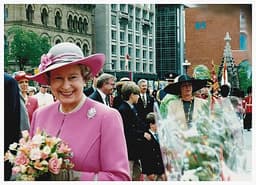
Paul Keating
Politician · Modern
59.3Total
Basic Information
Born
1925
1944
Died
—
—
Era
Modern
Modern
Nationality
Italy
Australia
Occupation
Politician
Politician
Civilization
Western
Western
Score Comparison
Military (10%)
37.0
49.4
Political (20%)
72.0
72.0
Influence (20%)
60.0
62.0
Legacy (20%)
56.0
52.0
Leadership (15%)
80.0
72.0
Strategy (15%)
60.0
42.8
TOTAL
61.5
59.3
Giorgio Napolitano — Complete Timeline
2006 AD
Elected President of ItalyPolitical Action◆ Major
Napolitano was elected as the 11th President of Italy by the Parliament in a joint session. He succeeded Carlo Azeglio Ciampi, becoming the first former communist to hold the office, a symbol of national reconciliation.
PresidencyItalian PoliticsNational Unity
Impact: nationalconstructive
2011 AD
Appointed Mario Monti as Prime MinisterPolitical Action◆ Major
During the European debt crisis, Napolitano appointed technocrat Mario Monti as Prime Minister to lead a government of national unity. This action was seen as a response to the financial emergency and Berlusconi's resignation.
Debt CrisisTechnocratic GovernmentEconomic Policy
Impact: national
2013 AD
Re-elected as President of ItalyPolitical Action◆ Major
Napolitano reluctantly accepted re-election as President at age 87 to resolve a political deadlock after the 2013 general election. He became the first Italian president to serve a second term, citing institutional stability.
PresidencyPolitical CrisisInstitutional Role
Impact: national
2015 AD
Resigned as President of ItalyPolitical Action◆ Major
Napolitano resigned at age 89, citing advanced age and the completion of his mandate's key goals. His resignation triggered a new presidential election, which resulted in the election of Sergio Mattarella.
PresidencyTransitionEnd of Term
Impact: national
Paul Keating — Complete Timeline
1991 AD
Became Prime Minister of AustraliaPolitical Action◆ Major
Keating successfully challenged Bob Hawke for the leadership of the Australian Labor Party, becoming prime minister. His victory marked the beginning of a period of intense economic reform and a push for an Australian republic.
LeadershipLabor PartyPrime Minister
Impact: national
1992 AD
Introduced Superannuation GuaranteeReform◆ Major
Keating's government introduced the Superannuation Guarantee, requiring employers to contribute to employees' retirement savings. This policy created a compulsory national savings system, transforming Australia's retirement income landscape.
SuperannuationRetirementEconomic Reform
Impact: nationalconstructive
Delivered the Redfern SpeechCultural◆ Major
Keating delivered a landmark speech at Redfern Park in Sydney, acknowledging the dispossession and suffering of Indigenous Australians. The speech was a powerful call for reconciliation and marked a shift in official discourse on Aboriginal issues.
IndigenousReconciliationSpeech
Impact: nationalprogressive
1993 AD
Promoted Australian RepublicanismPolitical Action◆ Major
Keating established the Republic Advisory Committee to explore options for Australia becoming a republic. He argued that a republic was necessary for Australia to have a fully independent identity, though the proposal was not implemented during his term.
RepublicConstitutional ReformIdentity
Impact: nationalprogressive
1996 AD
Defeated in 1996 ElectionPolitical Action◆ Major
Keating's Labor government was defeated by John Howard's Liberal-National coalition in the 1996 federal election. The loss ended 13 years of Labor rule and marked the beginning of a long period of conservative government.
ElectionDefeatLiberal Party
Impact: nationaltragic
Expert Analysis
Origins
Giorgio Napolitano was born in Naples on June 29, 1925, into a middle-class family. He studied law at the University of Naples and joined the Italian Communist Party in 1945, influenced by the anti-fascist resistance. His early political career was shaped by the Cold War, as he rose through party ranks while maintaining a reformist stance. Paul Keating was born in Sydney on January 18, 1944, into a working-class Irish Catholic family. He left school at 15 to work, but joined the Australian Labor Party early. His sharp intellect and ambition were evident, and he became a protégé of party leader Gough Whitlam. Both men entered politics from different ideological backgrounds: Napolitano from communism, Keating from laborism.
Rise to Power
Napolitano's rise was gradual within the Italian Communist Party. He became a member of the Central Committee in 1956 and later served as a deputy in the Italian Parliament from 1953 to 1996. His political ascent culminated in 2006 when he was elected President of Italy, a largely ceremonial role but with significant influence in times of crisis. His re-election in 2013 at age 87 was unprecedented, as he was the first president to serve a second term. Keating's rise was more dramatic. He entered Parliament in 1969 and quickly became Minister for Northern Australia in 1975. After the Whitlam government's dismissal, he became a key figure in the Labor opposition. In 1991, he challenged and defeated Bob Hawke for the prime ministership, taking office on December 20, 1991. His rise was marked by a tough, confrontational style and a vision for economic and social change.
Leadership & Governance
Napolitano's leadership style was constitutional and restrained. As president, he wielded power primarily through moral suasion and behind-the-scenes negotiations. During the European debt crisis, he appointed technocrat Mario Monti as Prime Minister in 2011, a move that stabilized Italy's finances but bypassed elected officials. Napolitano scored 80.0 in leadership, reflecting his ability to guide Italy through political instability. Keating's governance was hands-on and transformative. As Prime Minister, he pushed through economic reforms including the Superannuation Guarantee (1992), which forced employers to contribute to workers' retirement funds, and the National Competition Policy. He also championed Indigenous reconciliation, delivering the Redfern Speech in 1992. His leadership score of 72.0 is lower than Napolitano's, partly due to his abrasive style and eventual electoral defeat.
Triumph & Tragedy
Napolitano's greatest triumph was his role in resolving political deadlocks. His appointment of Monti during the debt crisis averted a potential default, and his willingness to serve a second term at age 87 demonstrated dedication. However, his decision to support Monti's technocratic government was criticized as anti-democratic. His resignation in 2015 at age 89 marked the end of an era. Keating's triumphs include the Redfern Speech, which acknowledged Indigenous dispossession, and the Superannuation Guarantee, which built a retirement savings system worth over $3 trillion by 2024. His push for an Australian republic, however, failed: the 1999 referendum rejected the model he proposed. His defeat in the 1996 election to John Howard ended 13 years of Labor rule, a significant personal and political failure.
Character & Destiny
Napolitano was known for his calm, measured demeanor and ability to work across party lines. His background in the Communist Party, which later evolved into the Democratic Party, gave him a pragmatic worldview. He scored 60.0 in strategy, reflecting his cautious approach. Keating was fiery and confrontational, earning the nickname "the ambitious kid." His strategic score of 42.8 is low, as his aggressive style alienated allies and voters. His character drove his successes—like the Redfern Speech—but also his downfall, as he could not sustain the broad coalition needed to win re-election.
Legacy
Napolitano's legacy is as a stabilizing force in Italian politics. He is remembered for his role during the debt crisis, but his actions also set a precedent for presidential intervention. He scored 56.0 in legacy. Keating's legacy is more transformative. The Superannuation Guarantee alone has reshaped Australian society, and his advocacy for republicanism and Indigenous recognition remains influential. However, his legacy is mixed due to his electoral defeat and the failure of the republic referendum. He scored 52.0 in legacy, slightly lower than Napolitano.
Conclusion
Comparing a president and a prime minister is challenging, but Napolitano's higher total score of 61.5 versus Keating's 59.3 reflects his greater impact in a crisis. Napolitano's leadership during the debt crisis was decisive, while Keating's reforms, though significant, were not fully realized. However, Keating's economic and social changes have a more lasting effect on daily life in Australia. On balance, Napolitano's influence on Italy's stability during a critical period gives him the edge, but Keating's legacy of concrete policy achievements is equally profound. The score gap of 2.2 points is narrow, but Napolitano's ability to navigate political crises without losing power tilts the comparison in his favor.
Rankings
🥇
Giorgio NapolitanoLeader
Mil: 37.0Pol: 72.0Inf: 60.0
61.5
🥈
Paul Keating
Mil: 49.4Pol: 72.0Inf: 62.0
59.3
+2.2 behind
How This Comparison Works
Algorithm
Each figure is scored on 6 dimensions (0—100 scale) based on structured historical data: Military (10%), Political (20%), Influence (20%), Legacy (20%), Leadership (15%), Strategy (15%). The weighted total produces the final ranking.
Data Sources
Scores are computed from structured sub-indicators in the database. Scale factors adjust for era (Ancient ×0.85, Modern ×1.0) and civilization size (Eastern ×1.05, Other ×0.80) to account for differences in population and military scale.
Maximum 3 Figures
Comparisons are limited to 2—3 figures to ensure readability and statistical meaningfulness.
Error Margins
±5 points per dimension — Sub-scores are derived from historical records with inherent uncertainty. Two figures within 5 points on a dimension should be considered roughly equivalent in that area.
Total Score Accuracy
±3 points overall — The weighted combination of 6 dimensions produces a total score with approximately ±3 points of uncertainty. Differences of less than 3 points are not statistically significant— the figures are effectively tied.
Known Limitations
- Historical records are incomplete and uneven across civilizations
- Figures from oral-tradition societies may be underrepresented
- Occupation labels can misclassify multi-role figures
- Scores measure capability and impact, not moral character
- Quantitative scoring is a comparison tool, not absolute truth
Capability Radar
Military (10%) — Battles & Warfare
Battles
46
29
Win Rate
49
32
Expansion
56
36
Political (20%) — Governance & Reform
Reform
60
75
Diplomacy
75
70
Economy
55
80
Influence (20%) — Cultural & Global Reach
Cultural
40
55
Global
50
55
Legacy (20%) — Historical Impact
Historical
65
60
Longevity
55
50
Leadership (15%) — Power & Stability
Tenure
85
65
Stability
70
60
Strategy (15%) — Tactics & Innovation
Strategy
54
37
Tactics
57
43
Reform
62
44
Similar Comparisons
Comments & Discussion
No comments yet. Be the first to share your thoughts!