Loading...
Germanicus vs Han Xin
Han Xin leads by 7.8 pts · 2 figures compared
…

Germanicus
General · Ancient
52.6Total
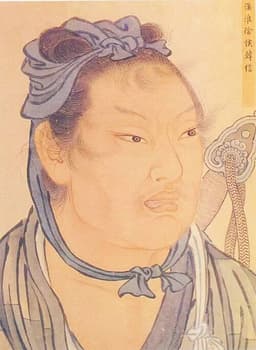
Han Xin
General · Ancient
60.4Total
Basic Information
Born
-15
-230
Died
19
-196
Era
Ancient
Ancient
Nationality
Roman Empire
China
Occupation
General
General
Civilization
Western
Eastern
Score Comparison
Military (10%)
76.0
88.0
Political (20%)
29.3
25.0
Influence (20%)
58.3
65.0
Legacy (20%)
52.0
70.8
Leadership (15%)
46.3
33.5
Strategy (15%)
61.3
88.6
TOTAL
52.6
60.4
Germanicus — Complete Timeline
14 AD
Germanic Campaigns (14-16 AD)War◆ Major
Germanicus led Roman legions into Germania to avenge the Teutoburg Forest disaster. He defeated Arminius at the Battle of the Weser River and recovered two of the three lost legionary eagles, though he failed to permanently subdue the region.
Germanic WarsArminiusLegionary EaglesTeutoburg
Impact: regional
Suppression of the Rhine MutinyPolitical Action
After Augustus's death, legions on the Rhine mutinied over pay and conditions. Germanicus quelled the revolt by addressing grievances and executing ringleaders, restoring discipline.
MutinyMilitary DisciplineRhine Legions
Impact: regional
19 AD
Recall to Rome and DeathPolitical Action◆ Major
Emperor Tiberius recalled Germanicus from the East amid tensions with the governor of Syria, Gnaeus Piso. Germanicus died suddenly in Antioch under suspicious circumstances, leading to rumors of poisoning and a public trial of Piso.
TiberiusPisoDeathTrial
Impact: nationaltragic
Han Xin — Complete Timeline
205 BC
Battle of JingxingWar◆ Major
Han Xin led a Han army through the narrow Jingxing Pass, facing a larger Zhao force. He used a stratagem of placing his troops with their backs to a river, forcing them to fight without retreat. The Han won decisively, capturing the Zhao king.
Military StrategyZhao CampaignDecisive Victory
Impact: regional
204 BC
Battle of Wei RiverWar◆ Major
Han Xin defeated the Qi army at the Wei River. He used a feigned retreat to lure the Qi forces across the river, then attacked them while they were crossing. This victory secured the Qi state for Han and eliminated a major rival.
Qi CampaignMilitary TacticsRiver Battle
Impact: regional
203 BC
Appointment as King of QiPolitical Action
After his victories, Liu Bang appointed Han Xin as King of Qi, granting him control over the conquered territory. This elevated Han Xin from general to a regional ruler, but also created tensions with Liu Bang, who feared his growing power.
AppointmentFeudal TitlePower Dynamics
Impact: regional
201 BC
Demotion and ArrestPolitical Action◆ Major
Emperor Gaozu, suspecting Han Xin of rebellion, tricked him into attending a meeting and arrested him. Han Xin was demoted from king to marquis and placed under house arrest in Chang'an. This reflected the emperor's fear of powerful generals.
Political PurgeHouse ArrestImperial Suspicion
Impact: nationaltragic
196 BC
Execution of Han XinPolitical Action◆ Major
Han Xin was executed on charges of plotting rebellion with Chen Xi. He was killed in the palace by Empress L
ExecutionPolitical ViolenceLü Zhi
Impact: nationaltragic
Expert Analysis
Origins
Germanicus Julius Caesar (15 BC–19 AD) was born into the Julio-Claudian dynasty, son of Nero Claudius Drusus and Antonia Minor. His father died when he was young, and he was raised by his grandmother Livia. He received a thorough Roman education in rhetoric, law, and military command. His marriage to Agrippina the Elder connected him to Augustus's bloodline.
Han Xin (c. 230–196 BC) was born into poverty in the state of Chu during the late Warring States period. As a youth, he endured humiliation when a local bully forced him to crawl between his legs. Despite his low status, he studied military strategy and carried a sword, dreaming of command. He initially served under Xiang Yu, but his advice was ignored.
Rise to Power
Germanicus rose through the cursus honorum: quaestor (7 AD), consul (12 AD), and proconsul of Gaul (13 AD). His big break came in 14 AD when Augustus died and legions on the Rhine mutinied. Germanicus quelled the revolt by addressing grievances and executing ringleaders, earning him the loyalty of the army. In 14–16 AD, he launched campaigns across the Rhine to avenge the Teutoburg Forest disaster, recovering two of the three lost eagles.
Han Xin left Xiang Yu for Liu Bang, but initially was ignored. He fled, only to be brought back by Xiao He, who convinced Liu Bang to make Han Xin supreme commander. In 206 BC, he conquered Wei, Zhao, and Qi in rapid succession. At Jingxing (205 BC), he faced a Zhao army of 200,000 with only 30,000 men, using the back-to-river formation to prevent retreat and secure victory.
Leadership & Governance
Germanicus was a charismatic leader who led from the front, sharing hardships with his men. He was popular with the legions but struggled with political intrigue at court. As governor of the East, he clashed with Gnaeus Piso, the governor of Syria, over jurisdiction. His governance was lenient, seeking to win over local elites.
Han Xin was a master of strategy but politically naive. He accepted the title King of Qi from Liu Bang, which aroused suspicion. He failed to secure alliances or navigate court politics, leading to his downfall. His military governance was effective, but he never established a political base.
Triumph & Tragedy
Germanicus's greatest triumph was the recovery of the two eagles and defeat of Arminius at the Weser River (16 AD). His tragedy was his sudden death in Antioch in 19 AD, likely poisoned by Piso on Tiberius's orders. He died at age 34, his potential unfulfilled.
Han Xin's triumphs include the battles of Jingxing (205 BC) and Wei River (203 BC), where he annihilated Qi forces. His tragedy was his execution in 196 BC, tricked by Empress Lü Zhi into a trap. He was accused of plotting rebellion, though evidence was flimsy. His death eliminated the last major general from the founding of Han.
Character & Destiny
Germanicus was courageous and empathetic, but his popularity made him a threat to Tiberius. His decision to accept the recall to Rome rather than march on the capital showed his loyalty but sealed his fate. He scored 46.3 in leadership, reflecting his inability to secure his position.
Han Xin was brilliant in strategy (88.6) but weak in politics (25.0). His hesitation to support Liu Bang during the Chu-Han Contention and his acceptance of the kingship of Qi showed poor judgment. His destitution and execution were direct results of his political blindness.
Legacy
Germanicus's legacy is mixed: his son Caligula became emperor, and his grandson Nero ruled. He is remembered as a tragic hero in Roman history, immortalized in Tacitus's Annals. His military campaigns set the pattern for Roman frontier policy in Germania, though the Rhine remained the border.
Han Xin is celebrated as one of China's greatest generals, often called the "God of War." His stratagems are studied in military academies. He scored 70.8 in legacy, higher than Germanicus's 52.0. His tactics influenced later generals like Yue Fei and Cao Cao.
Conclusion
Han Xin had a greater impact on history. His military score (88.0) dwarfs Germanicus's (76.0), and his strategic genius (88.6 vs 61.3) revolutionized warfare. While Germanicus's campaigns temporarily stabilized the Rhine frontier, Han Xin's conquests secured the Han dynasty's control over China for centuries. Han Xin's legacy in military theory is enduring, while Germanicus is largely a figure of Roman literature. The total score gap of 7.8 points reflects this: Han Xin's 60.4 vs Germanicus's 52.6. Han Xin is the more consequential figure.
Rankings
🥇
Han XinLeader
Mil: 88.0Pol: 25.0Inf: 65.0
60.4
🥈
Germanicus
Mil: 76.0Pol: 29.3Inf: 58.3
52.6
+7.8 behind
How This Comparison Works
Algorithm
Each figure is scored on 6 dimensions (0—100 scale) based on structured historical data: Military (10%), Political (20%), Influence (20%), Legacy (20%), Leadership (15%), Strategy (15%). The weighted total produces the final ranking.
Data Sources
Scores are computed from structured sub-indicators in the database. Scale factors adjust for era (Ancient ×0.85, Modern ×1.0) and civilization size (Eastern ×1.05, Other ×0.80) to account for differences in population and military scale.
Maximum 3 Figures
Comparisons are limited to 2—3 figures to ensure readability and statistical meaningfulness.
Error Margins
±5 points per dimension — Sub-scores are derived from historical records with inherent uncertainty. Two figures within 5 points on a dimension should be considered roughly equivalent in that area.
Total Score Accuracy
±3 points overall — The weighted combination of 6 dimensions produces a total score with approximately ±3 points of uncertainty. Differences of less than 3 points are not statistically significant— the figures are effectively tied.
Known Limitations
- Historical records are incomplete and uneven across civilizations
- Figures from oral-tradition societies may be underrepresented
- Occupation labels can misclassify multi-role figures
- Scores measure capability and impact, not moral character
- Quantitative scoring is a comparison tool, not absolute truth
Capability Radar
Military (10%) — Battles & Warfare
Battles
65
95
Win Rate
70
95
Expansion
55
90
Political (20%) — Governance & Reform
Reform
15
30
Diplomacy
50
50
Economy
20
20
Influence (20%) — Cultural & Global Reach
Cultural
60
85
Global
50
80
Legacy (20%) — Historical Impact
Historical
65
90
Longevity
55
88
Leadership (15%) — Power & Stability
Tenure
20
40
Stability
25
25
Strategy (15%) — Tactics & Innovation
Strategy
70
97
Tactics
75
98
Reform
30
85
Similar Comparisons
Comments & Discussion
No comments yet. Be the first to share your thoughts!