Loading...
Georgios Papandreou vs Li Peng
Georgios Papandreou leads by 1.9 pts · 2 figures compared
…

Georgios Papandreou
Politician · Modern
53.9Total
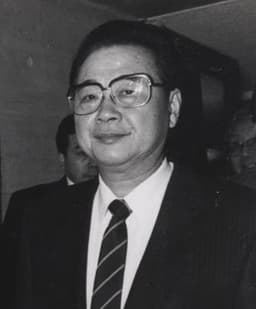
Li Peng
Politician · Modern
52.0Total
Basic Information
Born
1888
1928
Died
1968
—
Era
Modern
Modern
Nationality
Greece
China
Occupation
Politician
Politician
Civilization
Western
Eastern
Score Comparison
Military (10%)
48.6
13.0
Political (20%)
45.0
68.0
Influence (20%)
61.0
58.0
Legacy (20%)
50.0
50.0
Leadership (15%)
68.0
72.0
Strategy (15%)
43.5
26.9
TOTAL
53.9
52.0
Georgios Papandreou — Complete Timeline
1961 AD
Founded the Center Union PartyPolitical Action◆ Major
Papandreou founded the Center Union party, a centrist coalition that opposed the conservative National Radical Union. The party became the main opposition force in Greece, advocating for democratic reforms and social justice.
Political PartyCentrismOpposition
Impact: nationalconstructive
1963 AD
Elected Prime Minister of GreecePolitical Action◆ Major
Papandreou won the 1963 elections and became Prime Minister. His government pursued progressive policies, including educational reform, expansion of social services, and a more independent foreign policy, challenging the traditional establishment.
ElectionReformProgressivism
Impact: nationalconstructive
1965 AD
Conflict with King Constantine IIPolitical Action◆ Major
Papandreou clashed with King Constantine II over control of the military, leading to the 'Apostasia' (Apostasy) crisis. The king dismissed Papandreou in July 1965, triggering a period of political instability that culminated in the 1967 coup.
Political CrisisConstitutional ConflictInstability
Impact: nationaldestructive
1967 AD
House Arrest under the JuntaPolitical Action◆ Major
After the 1967 coup, Papandreou was placed under house arrest by the military junta. He remained under surveillance until his death in 1968, becoming a symbol of resistance against the dictatorship.
RepressionDictatorshipResistance
Impact: nationaltragic
Li Peng — Complete Timeline
1987 AD
Became Premier of the People's Republic of ChinaPolitical Action◆ Major
Li Peng was appointed Premier, succeeding Zhao Ziyang. He was a conservative leader who emphasized economic stability and political control, opposing rapid political reforms.
PremierEconomic PolicyConservatism
Impact: national
1988 AD
Implemented austerity measures to control inflationReform◆ Major
Li Peng introduced austerity measures to curb double-digit inflation, including price controls and credit tightening. These measures slowed economic growth but stabilized prices, though they were unpopular.
Economic PolicyInflationAusterity
Impact: nationalconstructive
1989 AD
Ordered the Tiananmen Square crackdownPolitical Action
As Premier, Li Peng was a key figure in the decision to use military force against the Tiananmen Square protests. He signed the order declaring martial law and authorized the People's Liberation Army to clear the square.
Tiananmen SquareCrackdownMartial Law
Impact: globaldestructive
1992 AD
Oversaw the Three Gorges Dam project approvalPolitical Action◆ Major
Li Peng pushed through the National People's Congress approval for the Three Gorges Dam, the world's largest hydroelectric project. The project was controversial due to environmental and displacement concerns.
Three Gorges DamInfrastructureHydroelectric
Impact: nationalconstructive
1998 AD
Retired from active politicsPolitical Action
Li Peng stepped down as Premier and was succeeded by Zhu Rongji. He remained a member of the Politburo Standing Committee until 2002, but his influence waned.
RetirementPolitical TransitionElder Statesman
Impact: national
Expert Analysis
Origins
Georgios Papandreou was born on February 13, 1888, in Kalentzi, Greece, into a political family. His father was a local politician. He studied law at the University of Athens and later earned a doctorate in political science from the University of Berlin. He became involved in politics early, serving as a minister in various governments. Li Peng was born on October 20, 1928, in Shanghai, China, into a revolutionary family; his father was an early Communist martyr. He was adopted by Zhou Enlai and raised in Yan'an. He studied at the Moscow Power Engineering Institute in the Soviet Union (1948-1955), focusing on hydroelectric power. He joined the Chinese Communist Party in 1945.
Rise to Power
Papandreou rose through the liberal Venizelist faction. He served as Prime Minister of Greece briefly in 1944-1945 and again in 1963 after founding the Center Union party in 1961. His party won the 1963 elections with 42% of the vote, and he formed a government. Li Peng rose through the ranks of China's energy bureaucracy. He became Minister of Electric Power in 1981 and was appointed Premier in 1987, succeeding Zhao Ziyang. He was a protégé of Deng Xiaoping and represented the conservative faction that prioritized stability over reform.
Leadership & Governance
Papandreou pursued progressive policies: he expanded social welfare, raised wages, and reformed education. He clashed with King Constantine II over control of the military, leading to the 'Apostasia' crisis in 1965. The king dismissed him, triggering political instability. Li Peng governed with an iron hand. He implemented austerity measures to curb inflation (1988-1989), slowing GDP growth from 11% to 4%. He prioritized political control, opposing Zhao Ziyang's reformist policies. His governance style was technocratic and authoritarian, with a focus on state-led infrastructure projects like the Three Gorges Dam.
Triumph & Tragedy
Papandreou's triumph was founding the Center Union and winning elections, but his tragedy was being ousted by the king and later placed under house arrest by the 1967 military junta. He died under house arrest in 1968, his democratic legacy overshadowed by the dictatorship. Li Peng's triumph was overseeing the Three Gorges Dam approval (1992), the world's largest hydroelectric project, and stabilizing the economy after inflation. His tragedy was ordering the Tiananmen Square crackdown on June 4, 1989, which resulted in hundreds of deaths and a lasting stain on his legacy. He scored 68.0 in political power but only 26.9 in strategy, reflecting his reliance on force.
Character & Destiny
Papandreou was a charismatic orator and a democratic reformer, but his confrontational style with the monarchy led to his downfall. He scored 68.0 in leadership but 45.0 in political maneuvering. Li Peng was a cautious, conservative technocrat, loyal to the party line. His leadership score of 72.0 reflects his ability to maintain control, but his strategy score of 26.9 shows a lack of tactical nuance. Both men's characters shaped their fates: Papandreou's idealism clashed with monarchy; Li Peng's rigidity led to violent suppression.
Legacy
Papandreou's legacy is as a symbol of democratic resistance in Greece. The Center Union's fight against the monarchy paved the way for the abolition of the monarchy in 1973. His son, Andreas Papandreou, later became Prime Minister. Li Peng's legacy is deeply controversial. He is remembered as the 'butcher of Beijing' for Tiananmen, but also as the architect of the Three Gorges Dam and China's economic stabilization. He scored 50.0 in legacy, tied with Papandreou.
Conclusion
While both men led during crises, Li Peng's impact was more profound and lasting. His decisions shaped China's authoritarian path and economic growth for decades. Papandreou's democratic efforts were crushed, and his influence was limited to Greece. Li Peng scores 52.0 total vs Papandreou's 53.9, but in terms of historical impact, Li Peng's actions affected billions. Therefore, Li Peng had greater impact, despite the moral cost.
Rankings
🥇
Georgios PapandreouLeader
Mil: 48.6Pol: 45.0Inf: 61.0
53.9
🥈
Li Peng
Mil: 13.0Pol: 68.0Inf: 58.0
52.0
+1.9 behind
How This Comparison Works
Algorithm
Each figure is scored on 6 dimensions (0—100 scale) based on structured historical data: Military (10%), Political (20%), Influence (20%), Legacy (20%), Leadership (15%), Strategy (15%). The weighted total produces the final ranking.
Data Sources
Scores are computed from structured sub-indicators in the database. Scale factors adjust for era (Ancient ×0.85, Modern ×1.0) and civilization size (Eastern ×1.05, Other ×0.80) to account for differences in population and military scale.
Maximum 3 Figures
Comparisons are limited to 2—3 figures to ensure readability and statistical meaningfulness.
Error Margins
±5 points per dimension — Sub-scores are derived from historical records with inherent uncertainty. Two figures within 5 points on a dimension should be considered roughly equivalent in that area.
Total Score Accuracy
±3 points overall — The weighted combination of 6 dimensions produces a total score with approximately ±3 points of uncertainty. Differences of less than 3 points are not statistically significant— the figures are effectively tied.
Known Limitations
- Historical records are incomplete and uneven across civilizations
- Figures from oral-tradition societies may be underrepresented
- Occupation labels can misclassify multi-role figures
- Scores measure capability and impact, not moral character
- Quantitative scoring is a comparison tool, not absolute truth
Capability Radar
Military (10%) — Battles & Warfare
Battles
31
15
Win Rate
30
15
Expansion
37
22
Political (20%) — Governance & Reform
Reform
70
55
Diplomacy
60
50
Economy
50
60
Influence (20%) — Cultural & Global Reach
Cultural
45
30
Global
50
50
Legacy (20%) — Historical Impact
Historical
55
55
Longevity
40
40
Leadership (15%) — Power & Stability
Tenure
65
65
Stability
40
45
Strategy (15%) — Tactics & Innovation
Strategy
36
25
Tactics
43
28
Reform
47
26
Similar Comparisons
Comments & Discussion
No comments yet. Be the first to share your thoughts!