Loading...
Georges Danton vs Qin Shi Huang
Qin Shi Huang leads by 37.4 pts · 2 figures compared
…

Georges Danton
Revolutionary · Modern
47.8Total
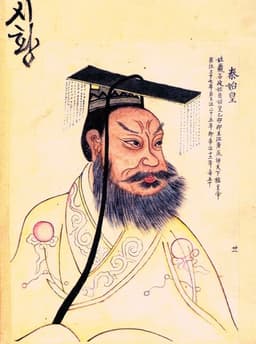
Qin Shi Huang
Emperor · Ancient
85.2Total
Basic Information
Born
1759
-259
Died
1794
-210
Era
Modern
Ancient
Nationality
France
China
Occupation
Revolutionary
Emperor
Civilization
Western
Eastern
Score Comparison
Military (10%)
10.7
80.0
Political (20%)
68.0
90.0
Influence (20%)
53.3
85.0
Legacy (20%)
44.2
90.0
Leadership (15%)
61.1
78.0
Strategy (15%)
29.7
82.0
TOTAL
47.8
85.2
Georges Danton — Complete Timeline
1790 AD
Co-founded the Cordeliers ClubPolitical Action◆ Major
Danton co-founded the Cordeliers Club, a radical political club that advocated for popular democracy and direct action. The club became a powerful force in the French Revolution, rivaling the Jacobins.
French RevolutionCordeliersRadicalism
Impact: nationalprogressive
1792 AD
Led the Insurrection of August 10, 1792Political Action◆ Major
Danton helped organize the insurrection that overthrew the monarchy. The attack on the Tuileries Palace led to the arrest of King Louis XVI and the establishment of the National Convention.
French RevolutionInsurrectionMonarchy
Impact: national
Appointed Minister of JusticePolitical Action◆ Major
Danton was appointed Minister of Justice after the insurrection. He became a key figure in the Revolutionary government, known for his fiery speeches and calls for national defense against foreign invasion.
French RevolutionMinistryNational Defense
Impact: nationalconstructive
1793 AD
Voted for the Execution of Louis XVIPolitical Action◆ Major
As a deputy in the National Convention, Danton voted for the execution of King Louis XVI. This decision aligned him with the radical Jacobins and contributed to the Reign of Terror.
French RevolutionRegicideTerror
Impact: nationaldestructive
1794 AD
Executed by GuillotinePolitical Action◆ Major
Danton was arrested by the Committee of Public Safety on charges of corruption and leniency. He was tried and guillotined on April 5, 1794, alongside Camille Desmoulins, becoming a victim of the Terror he helped create.
French RevolutionReign of TerrorExecution
Impact: nationaltragic
Qin Shi Huang — Complete Timeline
246 BC
Construction of the Mausoleum and Terracotta ArmyOther◆ Major
Qin Shi Huang commissioned a vast mausoleum complex near Xi'an, guarded by thousands of life-sized terracotta soldiers, horses, and chariots. The project employed hundreds of thousands of workers and reflected his obsession with immortality and imperial power.
Impact: global
230 BC
Conquest of the Six Warring StatesWar
From 230 to 221 BCE, Ying Zheng led the Qin state in a series of campaigns that conquered the Han, Zhao, Wei, Chu, Yan, and Qi states. This unified China under a single ruler for the first time, ending the Warring States period.
Impact: global
221 BC
Standardization of Writing, Currency, and MeasurementsReform◆ Major
Qin Shi Huang ordered the standardization of Chinese script, currency, and weights and measures across the unified empire. This facilitated administration, trade, and cultural integration, laying a foundation for future dynasties.
Impact: globalconstructive
Proclamation of the Qin DynastyPolitical Action
After conquering the last independent state, Ying Zheng declared himself Shi Huangdi (First Emperor), founding the Qin Dynasty. He adopted a new title to signify his supreme authority and initiated centralized imperial rule.
Impact: global
214 BC
Initiation of the Great Wall ConstructionOther◆ Major
Qin Shi Huang ordered the connection and extension of existing northern fortifications to create a unified defensive wall against nomadic Xiongnu raids. This project involved massive conscripted labor and became the precursor to the later Great Wall.
Impact: regional
213 BC
Burning of Books and Burying of ScholarsPolitical Action◆ Major
On the advice of Li Si, Qin Shi Huang ordered the burning of historical records and philosophical texts not aligned with Legalist doctrine. He also had 460 Confucian scholars buried alive to suppress dissent and consolidate ideological control.
Impact: nationaldestructive
Expert Analysis
georges-danton-vs-qin-shi-huang
# The Revolutionary and the Emperor: Ambition, Power, and the Price of Order
On a spring morning in 1794, Georges Danton stood before the Revolutionary Tribunal in Paris, his voice thundering across the crowded chamber. "You will see me go to sleep in the glory of history," he declared, moments before the guillotine claimed him. Across the centuries and half a world away, another man had prepared for his own eternity with equal grandeur: Qin Shi Huang, whose tomb near Xi'an would be guarded by an army of terracotta soldiers, silent witnesses to a power that had remade the world. Both men sought to forge order from chaos, but their paths—and their fates—could not have diverged more sharply.
Origins
Ying Zheng was born in 259 BC into a world of warring states, where seven kingdoms bled one another for supremacy. His father was a king, his mother a concubine, and his childhood was spent as a hostage in a rival court. This precarious existence forged in him a ruthless pragmatism and an obsession with control. He inherited the Qin throne at thirteen, surrounded by scheming ministers and a mother who took a lover who plotted against him. The crucible of his youth taught him that trust was weakness and that absolute power was the only security.
Georges Danton, born in 1759 in Arcis-sur-Aube, came from a more modest but comfortable background. His father was a prosecutor, and young Georges studied law in Paris, where he developed a booming voice and a talent for public oratory that would shake the foundations of Europe. Where Qin Shi Huang learned to command through isolation and fear, Danton learned to persuade through charisma and connection. The French Revolution, when it erupted in 1789, found him ready—not as a prince born to rule, but as a man who could ride the storm.
Rise to Power
Qin Shi Huang's ascent was methodical and military. From 230 to 221 BC, he directed the conquest of the six rival states—Han, Zhao, Wei, Chu, Yan, and Qi—in campaigns that combined strategic brilliance with calculated brutality. Each victory brought new territory, new resources, and new enemies to subdue. When the last independent kingdom fell in 221 BC, Ying Zheng declared himself Shi Huangdi, the First Emperor, and proclaimed the Qin Dynasty. His power rested on the sword, and he never forgot it.
Danton's rise was different—a whirlwind of revolutionary politics. In 1790, he co-founded the Cordeliers Club, a radical voice for popular democracy that pulsed with the energy of the Paris streets. When the monarchy faltered, Danton helped organize the insurrection of August 10, 1792, that stormed the Tuileries Palace and arrested King Louis XVI. Appointed Minister of Justice in its aftermath, he became the revolution's voice of urgency and action. "De l'audace, encore de l'audace, toujours de l'audace!"—audacity, more audacity, always audacity—he thundered, and France followed.
Leadership & Governance
The First Emperor's governance was a revolution in itself. He standardized writing, currency, and weights and measures across his vast domain, creating the administrative skeleton that would hold China together for two millennia. He ordered the connection of northern fortifications into what would become the Great Wall, a monument to his vision of unified defense. His political score of 88 reflects a mind that understood power not merely as conquest but as system-building. Yet his methods were terrifying: in 213 BC, on the advice of his minister Li Si, he ordered the burning of historical records and philosophical texts that did not align with Qin ideology, and scholars who resisted were buried alive. Unity, for him, meant uniformity—and dissent was death.
Danton governed differently. As a revolutionary leader, he understood that legitimacy came from the people, not from divine mandate. He voted for the execution of Louis XVI in 1793, aligning himself with the radical Jacobins, but he also sought to temper the revolution's excesses. Where Qin Shi Huang destroyed books to control thought, Danton argued for clemency and moderation. His political score of 57.6 reflects a man caught between ideals and realities—a revolutionary who wanted to build a new order but could not control the forces he had helped unleash.
Triumph & Tragedy
Qin Shi Huang's greatest triumph was the unification itself—a feat that earned him a legacy score of 85 and an influence score of 82. He created something that had never existed before: a single Chinese empire. His tragedy was the price of that creation. He grew paranoid in his later years, obsessed with immortality, sending expeditions for the elixir of life while his mausoleum consumed the labor of hundreds of thousands. He died in 210 BC at the age of 49, and his dynasty collapsed within four years of his death, undone by the very harshness that had built it.
Danton's triumph was the revolution itself—the overthrow of a thousand-year monarchy and the proclamation of a republic. His tragedy was the Reign of Terror that followed. In 1794, his former ally Maximilien Robespierre turned the revolutionary tribunal against him, accusing him of corruption and leniency. Danton was executed by the same guillotine he had helped legitimize. His death score of 56.1 reflects not a failure of vision but a failure of survival—a revolutionary consumed by the revolution he had helped create.
Character & Destiny
The differences between these two men are not merely circumstantial but fundamental. Qin Shi Huang was a builder of systems, a man who saw the world as raw material to be shaped by his will. His personality—cold, calculating, and absolute—drove him to create an order so rigid that it could not bend without breaking. Danton was a man of the moment, a creature of passion and oratory, who lived in the storm and could not imagine the calm that would follow. The First Emperor died in his bed, feared and isolated; Danton died on the scaffold, still shouting, still believing in the glory of history.
Legacy
What remains of these two men tells their story. The Terracotta Army, buried for two thousand years and rediscovered in 1974, stands as a monument to Qin Shi Huang's vision of eternity—an army of clay, frozen in time, guarding a dream of absolute power. Danton left no such monument, only the memory of his voice and the example of his fate. The First Emperor's legacy score of 85 reflects the endurance of his administrative achievements; Danton's legacy score of 60.6 reflects the more ambiguous legacy of a revolutionary who failed to control what he began.
Conclusion
History has judged them differently. Qin Shi Huang is remembered as the unifier of China, his harshness often excused as the necessary price of creation. Danton is remembered as a revolutionary who was devoured by his own revolution, a warning about the limits of audacity. But perhaps the deepest difference lies in what they sought to build. The First Emperor wanted to freeze time, to create an order that would last ten thousand generations. Danton wanted to ride the wave of history, to bend the arc of change toward justice. One built a tomb; the other left a trial. Both achieved greatness, and both paid the price.
Rankings
🥇
Qin Shi HuangLeader
Mil: 80.0Pol: 90.0Inf: 85.0
85.2
🥈
Georges Danton
Mil: 10.7Pol: 68.0Inf: 53.3
47.8
+37.4 behind
How This Comparison Works
Algorithm
Each figure is scored on 6 dimensions (0—100 scale) based on structured historical data: Military (10%), Political (20%), Influence (20%), Legacy (20%), Leadership (15%), Strategy (15%). The weighted total produces the final ranking.
Data Sources
Scores are computed from structured sub-indicators in the database. Scale factors adjust for era (Ancient ×0.85, Modern ×1.0) and civilization size (Eastern ×1.05, Other ×0.80) to account for differences in population and military scale.
Maximum 3 Figures
Comparisons are limited to 2—3 figures to ensure readability and statistical meaningfulness.
Error Margins
±5 points per dimension — Sub-scores are derived from historical records with inherent uncertainty. Two figures within 5 points on a dimension should be considered roughly equivalent in that area.
Total Score Accuracy
±3 points overall — The weighted combination of 6 dimensions produces a total score with approximately ±3 points of uncertainty. Differences of less than 3 points are not statistically significant— the figures are effectively tied.
Known Limitations
- Historical records are incomplete and uneven across civilizations
- Figures from oral-tradition societies may be underrepresented
- Occupation labels can misclassify multi-role figures
- Scores measure capability and impact, not moral character
- Quantitative scoring is a comparison tool, not absolute truth
Capability Radar
Military (10%) — Battles & Warfare
Battles
12
85
Win Rate
16
90
Expansion
16
90
Political (20%) — Governance & Reform
Reform
65
95
Diplomacy
60
75
Economy
50
90
Influence (20%) — Cultural & Global Reach
Cultural
45
95
Global
45
85
Legacy (20%) — Historical Impact
Historical
55
95
Longevity
40
95
Leadership (15%) — Power & Stability
Tenure
55
70
Stability
30
65
Strategy (15%) — Tactics & Innovation
Strategy
21
85
Tactics
21
80
Reform
27
95
Similar Comparisons
Comments & Discussion
TERRACOTTA REBEL6/17/2026
Love how the analysis frames these two as "chaos-to-order" types, but Danton was practically a libertine compared to Qin's obsessions. The First Emperor literally measured his empire in standardized axle lengths and script reforms. Danton couldn't even keep his own head on straight—metaphorically and literally. The terracotta army shows Qin's method: total centralization, not just political but cosmological. Danton was a bourgeois revolutionary who got caught in his own machine. Give me the guy
历史独裁判官6/17/2026
这种比较根本是时空错位。秦始皇统一文字、度量衡,修长城、开灵渠,建立了中国两千年官僚制的根基。而丹东呢?他连自己发动的革命都驾驭不了,1794年3月还在呼吁"宽容",一个月后就被自己人送上断头台。一个用二十年打造了帝国遗产,一个在风暴中心挣扎了两年就灰飞烟灭。把丹东和千古一帝并列,是对历史的侮辱。
DATA DISSECTOR6/17/2026
I'm calling out the unstated assumption in this comparison: that both men pursued "order from chaos" similarly. Qin Shi Huang's unification was a 230-year project finished by one man—standardized coins, laws, even cart axles. Danton's "order" was nine months as Justice Minister before Robespierre turned on him. Quantitatively, Qin centralized 7 warring states into a system that lasted 2,000 years. Danton's legacy? A few speeches and a death warrant. This isn't a contest of ambition; it's a misma
古典学猎犬6/17/2026
你们忽略了最关键的文化维度:秦始皇灭了六国后,烧掉各国史书、坑杀儒生,要把历史从他开始重写。丹东虽然也搞过恐怖统治,但他至少允许巴黎的印刷机自由运转,让马拉、德穆兰这帮人继续出版。秦制是文化清零,彻底抹去对手的记忆;法国大革命则是内部斗争,言论场还在运作。一个是要让历史消失,一个是要在历史中留下自己的名字。这两者能比较吗?
CAMBRIDGE CLASSICIST6/17/2026
Danton's "glory of history" speech is genuinely moving, but Qin wins on scale of ambition alone. The First Emperor didn't just want power—he wanted immortality, literally. He sent Xu Fu with ships of boys and girls to find the elixir of life, built a necropolis bigger than any palace, and linked his empire to cosmic forces. Danton's ambition was political: control the Revolution, then the government. Qin's was metaphysical. One man's failure was getting guillotined; the other's was poisoning him