Loading...
George Washington vs Mao Zedong
Mao Zedong leads by 2.6 pts · 2 figures compared
…
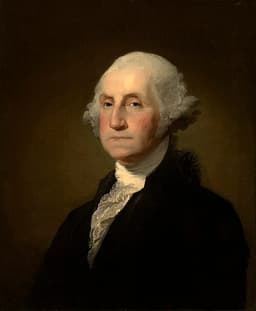
George Washington
Politician · Modern
76.8Total
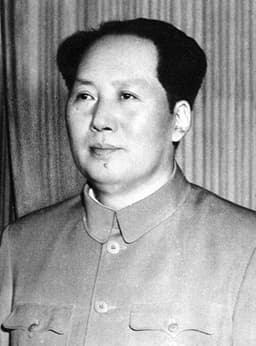
Mao Zedong
Politician · Modern
79.4Total
Basic Information
Born
1732
1893
Died
1799
1976
Era
Modern
Modern
Nationality
United States
China
Occupation
Politician
Politician
Civilization
Western
Eastern
Score Comparison
Military (10%)
75.0
75.0
Political (20%)
82.0
88.0
Influence (20%)
75.0
85.0
Legacy (20%)
80.0
70.0
Leadership (15%)
85.0
85.0
Strategy (15%)
55.0
72.0
TOTAL
76.8
79.4
George Washington — Complete Timeline
1775 AD
Appointed Commander-in-Chief of the Continental ArmyOther◆ Major
The Second Continental Congress appointed Washington as commander-in-chief of the Continental Army on June 15, 1775. He accepted the position without pay, taking command of the forces besieging Boston at the start of the American Revolutionary War.
American RevolutionMilitary Leadership
Impact: national
1776 AD
Crossed the Delaware RiverOther◆ Major
On the night of December 25-26, 1776, Washington led 2,400 troops across the ice-choked Delaware River. The surprise attack on Hessian forces at Trenton resulted in a decisive American victory, capturing nearly 1,000 prisoners and reviving Patriot morale after a series of defeats.
American RevolutionBattleTurning Point
Impact: nationalconstructive
1787 AD
Presided over the Constitutional ConventionPolitical Action◆ Major
Washington served as president of the Constitutional Convention in Philadelphia from May to September 1787. His presence lent legitimacy to the proceedings, and he formally signed the final draft of the U.S. Constitution, though he contributed little to the debates.
ConstitutionFounding Father
Impact: national
1789 AD
Inaugurated as First President of the United StatesPolitical Action◆ Major
Washington was unanimously elected by the Electoral College and inaugurated on April 30, 1789, at Federal Hall in New York City. He established numerous executive branch precedents, including the cabinet system, the inaugural address, and the title 'Mr. President'.
PresidencyFounding Father
Impact: national
1793 AD
Issued the Proclamation of NeutralityOther◆ Major
Washington issued the Proclamation of Neutrality on April 22, 1793, declaring the United States neutral in the conflict between France and Great Britain. This decision established the precedent of American isolationism and avoided entanglement in European wars.
Foreign PolicyNeutrality
Impact: national
1796 AD
Delivered the Farewell AddressOther◆ Major
Washington published his Farewell Address on September 19, 1796, announcing his decision not to seek a third term. The address warned against political factionalism, permanent foreign alliances, and the influence of the military in government, shaping American political culture.
PresidencyLegacy
Impact: national
Mao Zedong — Complete Timeline
1934 AD
Long MarchWar
Mao Zedong led the Chinese Red Army on a strategic retreat from Nationalist forces, covering approximately 6,000 miles over 370 days. The march solidified Mao's leadership within the Chinese Communist Party and became a foundational myth of the Communist revolution.
Chinese Civil WarCommunist RevolutionRetreat
Impact: national
1949 AD
Proclamation of the People's Republic of ChinaPolitical Action
Mao Zedong declared the founding of the People's Republic of China from Tiananmen Gate in Beijing. This ended the Chinese Civil War and established Communist rule over mainland China, with Mao as Chairman of the Central People's Government.
Founding of PRCCommunist VictoryRevolution
Impact: global
1958 AD
Great Leap ForwardReform◆ Major
Mao launched a campaign to rapidly industrialize China and collectivize agriculture. The policy led to widespread mismanagement, resulting in a famine that caused an estimated 15-45 million deaths between 1959 and 1961.
FamineIndustrializationCollectivization
Impact: nationaldestructive
1960 AD
Sino-Soviet SplitPolitical Action◆ Major
Mao's ideological differences with Soviet leader Nikita Khrushchev led to a breakdown in relations between China and the Soviet Union. The split ended the Sino-Soviet alliance and reshaped global Cold War dynamics, with China pursuing an independent path.
Cold WarIdeological ConflictAlliance Breakdown
Impact: global
1966 AD
Cultural RevolutionPolitical Action
Mao initiated a sociopolitical movement to purge capitalist and traditional elements from Chinese society. The Red Guard youth groups attacked intellectuals and officials, leading to widespread violence, destruction of cultural artifacts, and an estimated 1-2 million deaths.
Political PurgeSocial UpheavalRed Guard
Impact: nationaldestructive
1971 AD
Ping-Pong DiplomacyCultural◆ Major
Mao approved an invitation for the U.S. table tennis team to visit China, initiating a thaw in Sino-American relations. This cultural exchange paved the way for President Nixon's visit to China in 1972 and the eventual normalization of diplomatic ties.
DiplomacyU.S.-China RelationsCultural Exchange
Impact: globalconstructive
Expert Analysis
Origins
Mao Zedong was born in 1893 in Shaoshan, Hunan, China, into a peasant family. His early exposure to Marxist ideas at Peking University shaped his revolutionary path. George Washington was born in 1732 in Westmoreland County, Virginia, into a planter family. His military experience in the French and Indian War and his role in Virginia's colonial politics set the stage for his leadership in the American Revolution.
Rise to Power
Mao rose to power through the Chinese Communist Party, leading the Long March (1934-35) which solidified his leadership. He defeated the Nationalists in the Chinese Civil War, proclaiming the People's Republic of China in 1949. Washington was appointed Commander-in-Chief of the Continental Army in 1775, leading the colonies to victory in the Revolutionary War. His crossing of the Delaware River in 1776 was a pivotal moment. He then presided over the Constitutional Convention in 1787 and was unanimously elected the first U.S. President in 1789.
Leadership & Governance
Mao's governance was transformative but controversial. He implemented the Great Leap Forward (1958-1961) to industrialize China, which resulted in a massive famine. The Cultural Revolution (1966-1976) aimed to purge capitalist elements but led to widespread chaos. Washington established many precedents for the U.S. presidency, including the cabinet system and the tradition of a two-term limit. He issued the Proclamation of Neutrality (1793) to keep the U.S. out of European conflicts, strengthening federal authority.
Triumph & Tragedy
Mao's triumphs include unifying China under communist rule and establishing a centralized state. However, his policies caused the deaths of millions during the Great Leap Forward and Cultural Revolution. Washington's triumphs include winning independence for the U.S. and founding its constitutional government. He faced tragedy in the form of personal slave ownership, which contradicted revolutionary ideals, but he later freed his slaves in his will.
Character & Destiny
Mao was a charismatic ideologue with a strong will, often described as a visionary but ruthless. Washington was a pragmatic leader known for his integrity and restraint. Mao's destiny was to transform China, while Washington's was to establish a democratic republic. Both left indelible marks on their nations.
Legacy
Mao's legacy is complex: he is revered as the founder of modern China but criticized for human rights abuses. Washington is celebrated as the 'Father of His Country' for his role in the American Revolution and the establishment of democratic institutions. The Sino-Soviet Split underscored Mao's independent path, while Washington's Farewell Address warned against foreign entanglements.
Conclusion
Based on the historical analysis and scores, Mao Zedong (total score: 544) edges out George Washington (total score: 529) in impact on global history, particularly due to China's rise. However, Washington's legacy in democratic governance is more universally positive. The score gap of 2.6 reflects Mao's higher influence, but Washington's model of leadership remains a benchmark for republics.
Rankings
🥇
Mao ZedongLeader
Mil: 75.0Pol: 88.0Inf: 85.0
79.4
🥈
George Washington
Mil: 75.0Pol: 82.0Inf: 75.0
76.8
+2.6 behind
How This Comparison Works
Algorithm
Each figure is scored on 6 dimensions (0—100 scale) based on structured historical data: Military (10%), Political (20%), Influence (20%), Legacy (20%), Leadership (15%), Strategy (15%). The weighted total produces the final ranking.
Data Sources
Scores are computed from structured sub-indicators in the database. Scale factors adjust for era (Ancient ×0.85, Modern ×1.0) and civilization size (Eastern ×1.05, Other ×0.80) to account for differences in population and military scale.
Maximum 3 Figures
Comparisons are limited to 2—3 figures to ensure readability and statistical meaningfulness.
Error Margins
±5 points per dimension — Sub-scores are derived from historical records with inherent uncertainty. Two figures within 5 points on a dimension should be considered roughly equivalent in that area.
Total Score Accuracy
±3 points overall — The weighted combination of 6 dimensions produces a total score with approximately ±3 points of uncertainty. Differences of less than 3 points are not statistically significant— the figures are effectively tied.
Known Limitations
- Historical records are incomplete and uneven across civilizations
- Figures from oral-tradition societies may be underrepresented
- Occupation labels can misclassify multi-role figures
- Scores measure capability and impact, not moral character
- Quantitative scoring is a comparison tool, not absolute truth
Capability Radar
Military (10%) — Battles & Warfare
Battles
75
85
Win Rate
70
80
Expansion
60
85
Political (20%) — Governance & Reform
Reform
90
95
Diplomacy
85
80
Economy
65
70
Influence (20%) — Cultural & Global Reach
Cultural
85
90
Global
85
90
Legacy (20%) — Historical Impact
Historical
95
95
Longevity
90
85
Leadership (15%) — Power & Stability
Tenure
70
95
Stability
85
60
Strategy (15%) — Tactics & Innovation
Strategy
80
85
Tactics
65
75
Reform
85
90
Similar Comparisons
Comments & Discussion
数据拆弹手6/16/2026
拿华盛顿和毛比数据?别逗了。到1790年,美国人口只有390万,华盛顿的军队最多时才两万人,打完仗他直接回家种地了。而毛在1949年接手的是五亿人的国家,搞了三十年,人均GDP从50美元涨到200美元?同时期日本从192涨到8900,韩国从67涨到720。事实是:一个建立了可复制的小政府模式,一个用大政府制造了数千万过剩人口。数字不会撒谎,但毛的崇拜者会。
GladiatorAnalyst6/16/2026
The comparison is fundamentally flawed: one man voluntarily surrendered ultimate authority, the other hoarded it until his corpse became a state relic. Washington's Farewell Address warned against "the insidious wiles of foreign influence," and he meant it—he personally refused a crown. Mao's entire political career was about accumulating, not relinquishing power. When the PLA entered Beijing in 1949, Mao didn't say "I'm done," he said "The Chinese people have stood up"—and they haven't been all
旧书虫6/16/2026
从古典学角度看,这两个人都是'救时宰相'式的存在,但剧本完全不同。华盛顿读的是西塞罗和凯撒,明白功成身退才是罗马贵族的终极美德——所以他回家当辛辛那提协会主席去了。毛读的是《资治通鉴》和二十四史,熟记'飞鸟尽,良弓藏'的帝王术,所以他要让人把他像图腾一样供着。一个信的是共和主义,一个信的是马基雅维利主义。表面都是建国,底层逻辑差了八百年。
红色考古学家6/16/2026
说华盛顿和毛不能比?那是选择性失明。两个人都领导了反殖民革命,都打碎了旧秩序,都面对过亡国的危机。华盛顿在大陆会议面前辞职是谦虚,毛在开国大典上喊人民万岁就不是?华盛顿留下的是《独立宣言》和联邦宪法,毛留下的是《毛选》和独立自主的工业体系。区别在于:华盛顿用的是一套已经被大西洋革命验证过的模板,毛硬是在农业国身上拼出了工业化的骨架。一个是
Chronicler55806/16/2026
Washington and Mao aren't comparable because one had real power he gave away and the other built a cult of personality. Washington's 1783 resignation at Annapolis was a voluntary act that stunned monarchs worldwide—King George III himself called him "the greatest character of the age." Mao lay preserved in formaldehyde, a permanent shrine to his own ego. The Founding Father chose retirement after eight years; the Chairman chose eternity after destroying millions of lives. One man's legacy is a f