Loading...
George W. Bush vs Raymond Poincare
Raymond Poincare leads by 2.2 pts · 2 figures compared
…
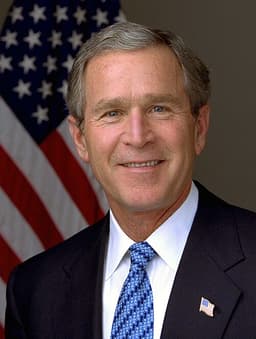
George W. Bush
Politician · Modern
55.4Total
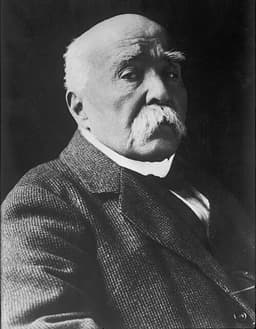
Raymond Poincare
Politician · Modern
57.6Total
Basic Information
Born
1946
1860
Died
—
1934
Era
Modern
Modern
Nationality
United States
France
Occupation
Politician
Politician
Civilization
Western
Western
Score Comparison
Military (10%)
50.0
50.0
Political (20%)
48.0
62.7
Influence (20%)
61.0
58.0
Legacy (20%)
50.0
50.0
Leadership (15%)
74.0
79.8
Strategy (15%)
43.7
41.8
TOTAL
55.4
57.6
George W. Bush — Complete Timeline
2000 AD
Elected PresidentPolitical Action
Bush won the 2000 presidential election after a contested recount in Florida, ultimately decided by the Supreme Court in Bush v. Gore. He became the 43rd president.
PresidencyElection
Impact: national
2001 AD
Responded to 9/11 AttacksPolitical Action
After the September 11 attacks, Bush declared a War on Terror, signing the USA PATRIOT Act and creating the Department of Homeland Security. He also launched military operations in Afghanistan.
9/11War on Terror
Impact: global
2003 AD
Invaded IraqWar
Bush ordered the invasion of Iraq, citing Saddam Hussein's alleged weapons of mass destruction. The invasion toppled Hussein's regime but led to a prolonged insurgency and no WMDs were found.
Iraq WarWMD
Impact: globaldestructive
2005 AD
Hurricane Katrina ResponsePolitical Action◆ Major
The federal response to Hurricane Katrina was widely criticized as slow and inadequate. Bush's approval ratings fell sharply, and the disaster highlighted failures in emergency management.
Natural DisasterGovernment Response
Impact: nationaldestructive
2008 AD
Financial Crisis of 2008Political Action◆ Major
Bush's administration responded to the global financial crisis with the Troubled Asset Relief Program (TARP), bailing out major banks and automakers. The crisis deepened the recession.
Financial CrisisBailout
Impact: globaldestructive
Raymond Poincare — Complete Timeline
1912 AD
Became Prime Minister for the First TimePolitical Action◆ Major
Poincaré became Prime Minister of France for the first time, serving from January 1912 to January 1913. His government focused on strengthening the French military and preparing for potential conflict with Germany.
Prime MinisterPre-War
Impact: national
1913 AD
Elected President of FrancePolitical Action◆ Major
Raymond Poincar
PresidencyWorld War I
Impact: national
1922 AD
Became Prime Minister for the Second TimePolitical Action◆ Major
Poincaré returned as Prime Minister from 1922 to 1924. He ordered the occupation of the Ruhr in 1923 to force German reparations payments, a controversial policy that strained Franco-German relations.
Prime MinisterRuhr OccupationReparations
Impact: regionaldestructive
1926 AD
Became Prime Minister for the Third TimePolitical Action◆ Major
Poincaré became Prime Minister for a third term from 1926 to 1929. He implemented austerity measures and stabilized the French franc, restoring confidence in the economy after a period of inflation.
Prime MinisterEconomic Stabilization
Impact: nationalconstructive
Expert Analysis
Origins
George Walker Bush was born on July 6, 1946, in New Haven, Connecticut, into a political dynasty: his father, George H. W. Bush, would become the 41st president. He attended Yale University and Harvard Business School, later working in the oil industry and as a managing partner of the Texas Rangers baseball team. His early political career included serving as Governor of Texas from 1995 to 2000.
Raymond Poincaré was born on August 20, 1860, in Bar-le-Duc, France, into a family of civil servants and intellectuals. He studied law at the University of Paris and became a prominent lawyer and politician. He served as Minister of Public Instruction, then Minister of Finance, before becoming Prime Minister for the first time in 1912.
Rise to Power
Bush won the 2000 presidential election after a contested recount in Florida, decided by the Supreme Court in Bush v. Gore. He became the 43rd president with a narrow Electoral College victory. His early presidency focused on tax cuts and education reform.
Poincaré was elected President of France in 1913, a position largely ceremonial but influential during wartime. He had previously been Prime Minister from 1912 to 1913, strengthening the French military and forging alliances with Russia and Britain. His presidency was dominated by World War I, where he worked closely with military leaders.
Leadership & Governance
Bush's leadership style was decisive and ideological, particularly after 9/11. He launched the War on Terror, invading Afghanistan in 2001 and Iraq in 2003. His administration created the Department of Homeland Security and signed the USA PATRIOT Act, expanding surveillance powers. Domestically, he enacted tax cuts and the Medicare Part D prescription drug benefit. However, his response to Hurricane Katrina in 2005 was criticized as slow and inadequate, scoring low in crisis management.
Poincaré, as president and later prime minister, focused on national unity and economic stability. During WWI, he supported the Union Sacrée (Sacred Union) government. After the war, as Prime Minister from 1922 to 1924, he ordered the occupation of the Ruhr in 1923 to force German reparations, a controversial move that strained international relations. In his third term (1926-1929), he implemented austerity measures and stabilized the French franc, restoring confidence in the economy. His leadership scores 79.8, higher than Bush's 74.0.
Triumph & Tragedy
Bush's greatest success was the initial response to 9/11, rallying global support and toppling the Taliban in Afghanistan. His greatest failure was the Iraq War, based on flawed intelligence about weapons of mass destruction, leading to a protracted insurgency and regional instability. The financial crisis of 2008 also tarnished his legacy, though the TARP program prevented a total collapse.
Poincaré's triumph was stabilizing the franc and restoring France's economy in the late 1920s. His tragedy was the Ruhr occupation, which alienated allies and failed to secure reparations, contributing to Germany's resentment. His leadership during WWI was steady but not transformative, as France suffered immense casualties.
Character & Destiny
Bush was known for his plain-spoken, decisive style, but also for stubbornness and over-reliance on ideology. His approval ratings peaked after 9/11 but plummeted during the Iraq insurgency and Katrina. His character shaped a presidency defined by crisis and controversy.
Poincaré was methodical, cautious, and nationalistic. He believed in a strong state and fiscal conservatism. His destiny was to lead France during war and economic turmoil, but his rigid approach limited his flexibility. Historical assessments often view him as competent but not visionary.
Legacy
Bush's legacy includes the War on Terror, the PATRIOT Act, and the creation of the Department of Homeland Security. His foreign policy, particularly the Iraq War, damaged America's reputation and led to long-term conflicts. His domestic policies, such as tax cuts and Medicare Part D, remain influential. His overall score of 55.4 reflects mixed assessments.
Poincaré's legacy is tied to the stabilization of the French franc and his role in WWI. The Ruhr occupation is remembered as a failure. His leadership helped France recover economically, but he is less known internationally. His total score of 57.6 edges out Bush.
Conclusion
While Poincaré scores slightly higher overall (57.6 vs. 55.4), Bush's impact on global affairs was more profound. The War on Terror reshaped international relations, domestic security, and military strategy for decades. Poincaré's achievements were important for France but did not alter the global order. Therefore, George W. Bush had greater historical impact.
Rankings
🥇
Raymond PoincareLeader
Mil: 50.0Pol: 62.7Inf: 58.0
57.6
🥈
George W. Bush
Mil: 50.0Pol: 48.0Inf: 61.0
55.4
+2.2 behind
How This Comparison Works
Algorithm
Each figure is scored on 6 dimensions (0—100 scale) based on structured historical data: Military (10%), Political (20%), Influence (20%), Legacy (20%), Leadership (15%), Strategy (15%). The weighted total produces the final ranking.
Data Sources
Scores are computed from structured sub-indicators in the database. Scale factors adjust for era (Ancient ×0.85, Modern ×1.0) and civilization size (Eastern ×1.05, Other ×0.80) to account for differences in population and military scale.
Maximum 3 Figures
Comparisons are limited to 2—3 figures to ensure readability and statistical meaningfulness.
Error Margins
±5 points per dimension — Sub-scores are derived from historical records with inherent uncertainty. Two figures within 5 points on a dimension should be considered roughly equivalent in that area.
Total Score Accuracy
±3 points overall — The weighted combination of 6 dimensions produces a total score with approximately ±3 points of uncertainty. Differences of less than 3 points are not statistically significant— the figures are effectively tied.
Known Limitations
- Historical records are incomplete and uneven across civilizations
- Figures from oral-tradition societies may be underrepresented
- Occupation labels can misclassify multi-role figures
- Scores measure capability and impact, not moral character
- Quantitative scoring is a comparison tool, not absolute truth
Capability Radar
Military (10%) — Battles & Warfare
Battles
30
27
Win Rate
35
31
Expansion
30
33
Political (20%) — Governance & Reform
Reform
40
55
Diplomacy
45
65
Economy
35
50
Influence (20%) — Cultural & Global Reach
Cultural
40
30
Global
55
50
Legacy (20%) — Historical Impact
Historical
55
55
Longevity
45
40
Leadership (15%) — Power & Stability
Tenure
60
70
Stability
30
60
Strategy (15%) — Tactics & Innovation
Strategy
40
37
Tactics
20
40
Reform
25
43
Similar Comparisons
Comments & Discussion
No comments yet. Be the first to share your thoughts!